Wild Garlic Pesto Recipe (Simple & Full of Spring Flavour)
This wild garlic pesto is fresh, savoury, and ready in 10 minutes. Made with walnuts, parmesan, and lemon, it’s perfect for pasta, bread, or vegetables.

Wild garlic pesto is a seasonal sauce made from foraged wild garlic leaves blended with nuts, cheese, and olive oil. It has a deeper, more savoury flavour than basil pesto, with a softer but more pronounced garlic note. It’s most commonly made in early spring when wild garlic is at its peak.
Foraging Wild Garlic Safely
Wild garlic grows in damp woodland areas in early spring, usually from March to May, and is easiest to pick before it flowers. The most reliable way to identify it is by smell — crush a leaf between your fingers and it should release a clear garlic scent. If it doesn’t smell like garlic, don’t pick it.
Take care not to confuse it with poisonous lookalikes such as lily of the valley, which has similar leaves but no garlic aroma. Always double-check before harvesting.
When foraging, pick only a few leaves from each plant rather than stripping entire patches. This allows the plant to continue growing and ensures there is plenty for the next season.
I have written a small guide on how to correctly identify wild garlic (and not accidentally take its poisionous lookalike) on a previous post for Wild Garlic Ketchup.
Ingredients You’ll Need
- 50 g wild garlic leaves
- 45 g walnuts
- 40 g parmesan, grated
- 80–100 ml olive oil
- Juice of ½ lemon
- ½ tsp salt
- Black pepper
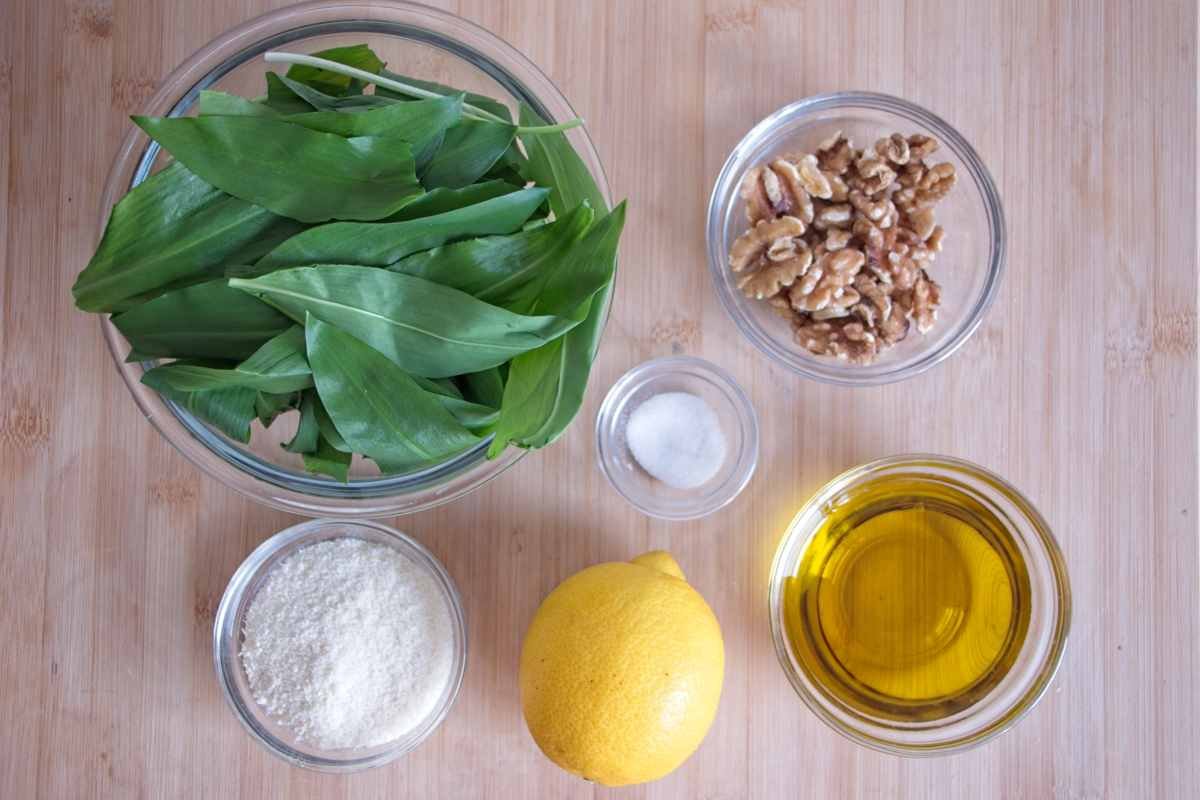
Best Nuts for Wild Garlic Pesto
Walnuts are a solid choice for wild garlic pesto. They bring an earthy depth and a slight bitterness that balances the green, garlicky flavour of the leaves. They are also budget friendly, so you can make huge batches and give it to all your friends without breaking the bank.
Pine nuts are the classic option. They give a softer, creamier result with a mild, buttery taste, but they’re more expensive and less distinctive.
Hazelnuts sit somewhere in between, adding a subtle sweetness and a rounder flavour. They taste great but they are more crumbly and less fatty than both pine nuts and walnuts, so you will need to add a little more oil to get a buttery smooth texture.
How to Make Wild Garlic Pesto
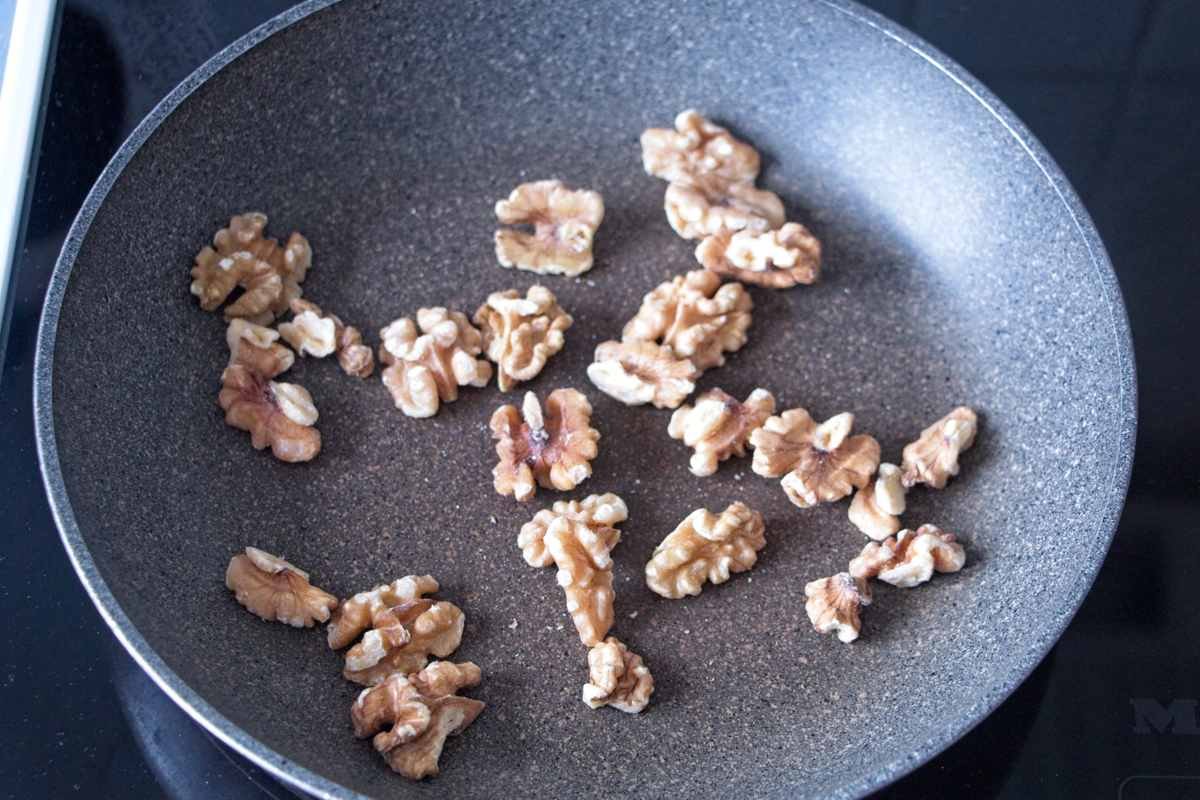
Toast the walnuts.
Place the walnuts in a dry medium frying pan over medium heat. Toast for 3–4 minutes, shaking the pan or stirring often, until they smell nutty and have taken on a little colour. Do not walk away here — walnuts can catch quickly. Tip them onto a plate and leave to cool for a few minutes.
Wash and dry the wild garlic well.
Rinse the wild garlic leaves in cold water, then dry them thoroughly with a clean tea towel or salad spinner. This matters: wet leaves make the pesto loose and watery, and it will not keep as well in the fridge.
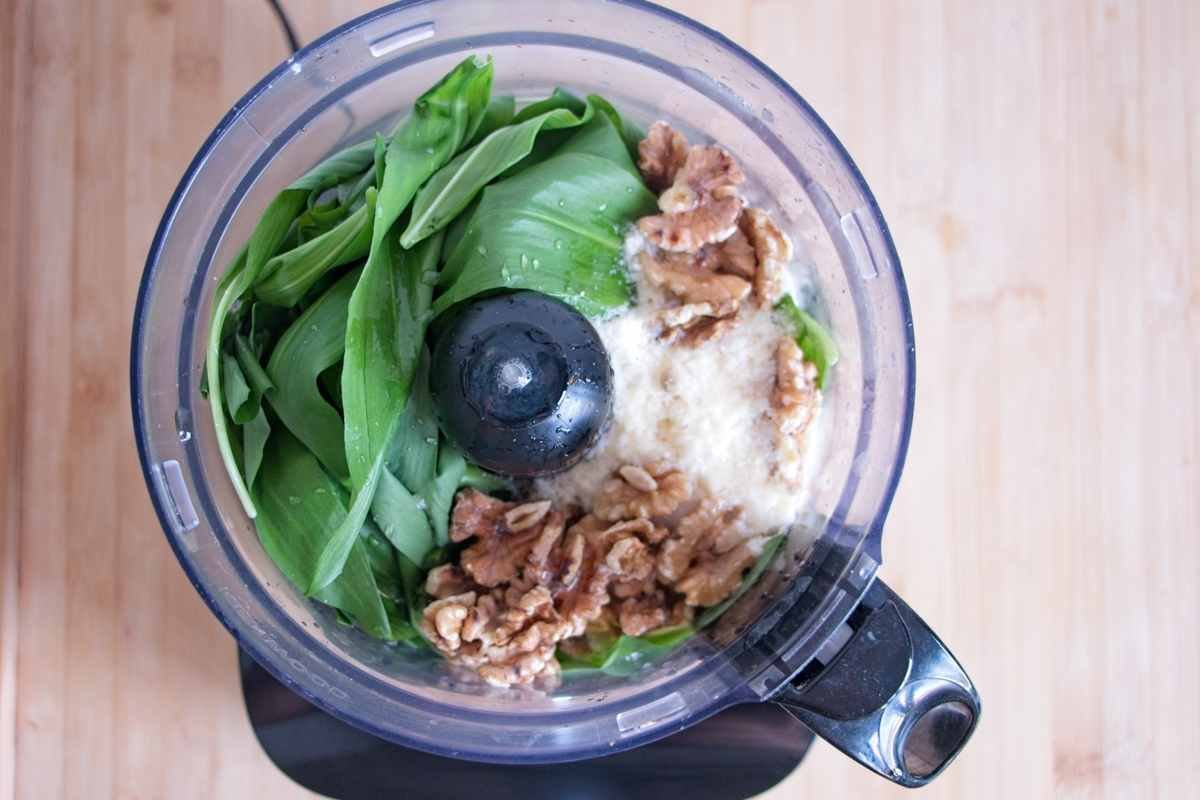
Add the main ingredients to the processor.
Put the wild garlic, toasted walnuts, grated parmesan, lemon juice, salt, a few grinds of black pepper, and about half of the olive oil into a food processor or blender.
A small to medium processor works best for this quantity, as a very large bowl can make the mixture smear rather than blend evenly.
Blend to your preferred texture.
Pulse a few times first to break everything down, then blend until the pesto is as coarse or smooth as you like. Stop once or twice to scrape down the sides. For a looser, smoother pesto, add more olive oil gradually while blending. For a thicker spread, use less oil and stop blending earlier.
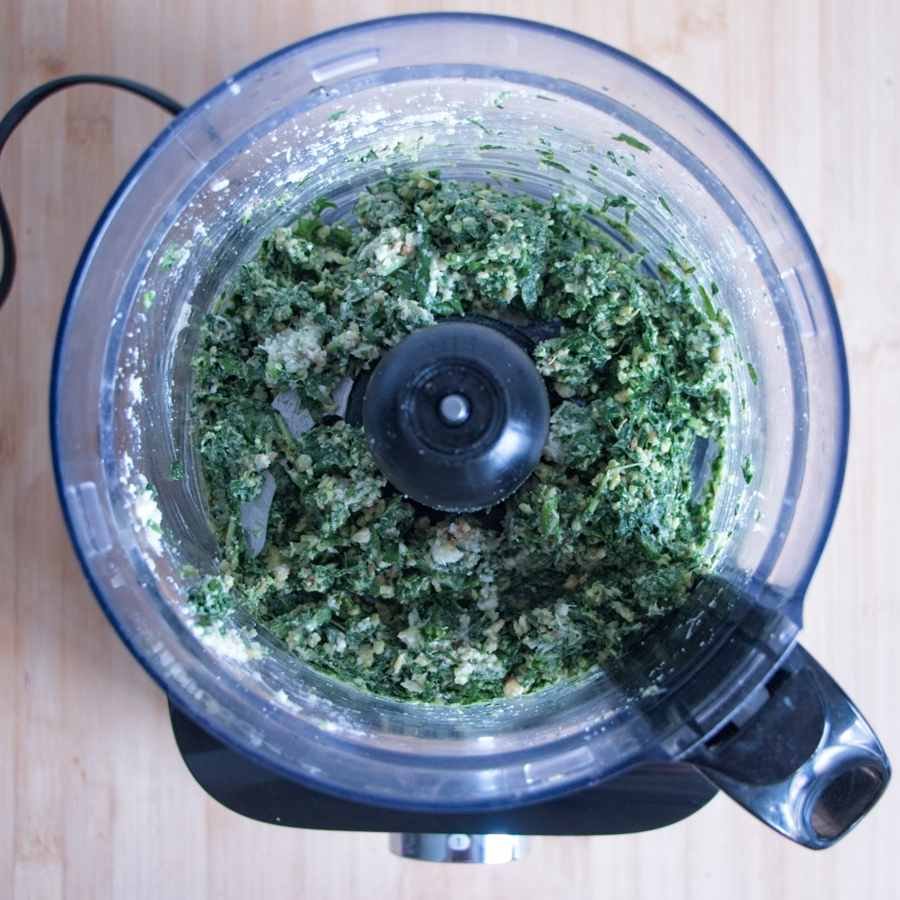
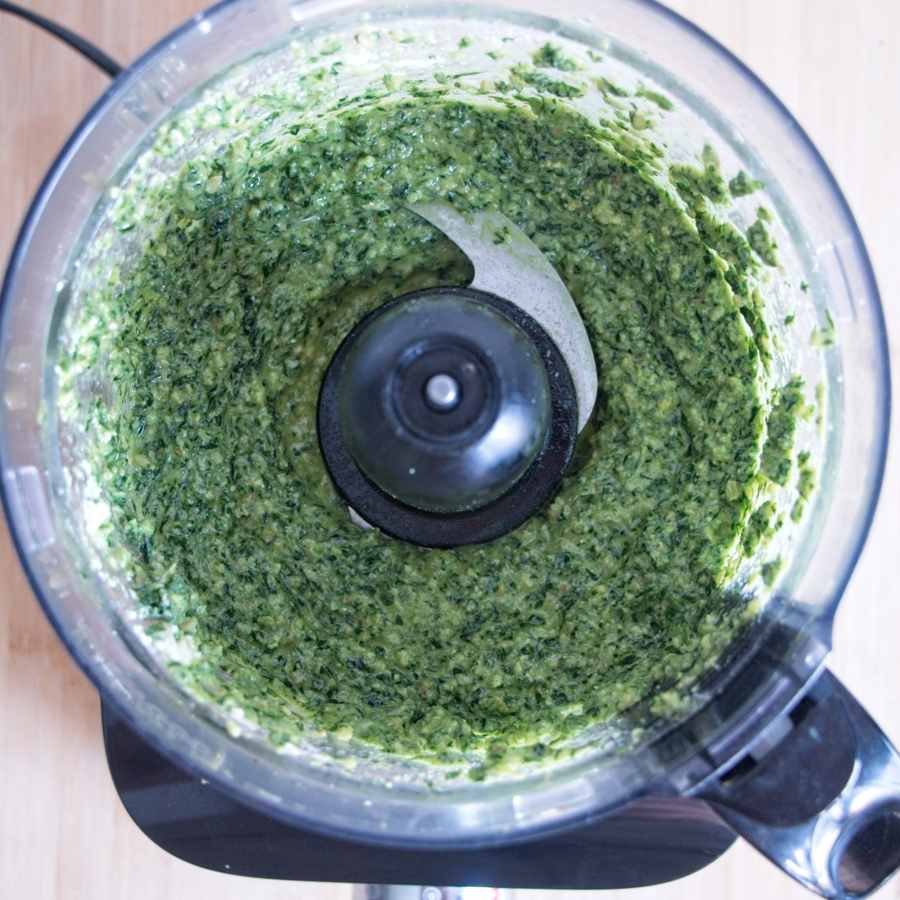
Taste and adjust.
Taste the pesto before adding anything else. If it tastes too sharp, add a little more parmesan or a few extra walnuts. If it feels too thick, loosen it with a splash more olive oil.
If it needs brightness, add a little more lemon juice, but do this in small amounts so it does not overpower the wild garlic.
How to Adjust the Flavour
- Too strong: add a little more olive oil or a few extra walnuts
- Too bitter: add a small squeeze of lemon juice or a bit more parmesan
- Too thick: loosen with a splash of olive oil or a spoonful of warm pasta water
- Too sharp or acidic: stir in a little extra parmesan to round it out
Transfer to a jar.
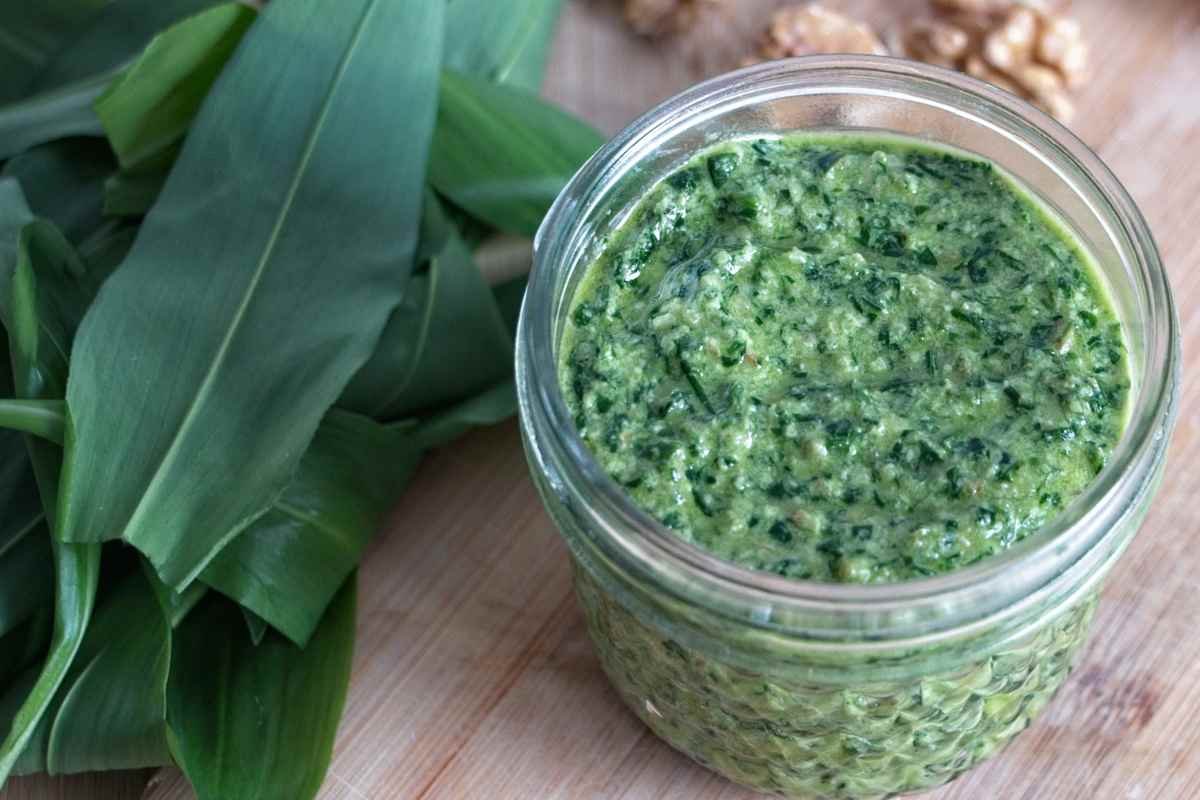
Spoon the pesto into a clean jar or airtight container, pressing it down lightly to remove air pockets. Pour a thin layer of olive oil over the surface to help protect the colour and reduce exposure to air.
Storage and Freezing
- Fridge: store in a clean jar for up to 1 week, keeping the surface covered with a thin layer of olive oil to protect flavour and colour
- Freezer: freeze in small portions (such as ice cube trays) for 2–3 months; defrost in the fridge and stir before using
Pro Tips for the Best Pesto
Dry the leaves properly (prevents watery pesto)
After washing, dry the wild garlic thoroughly using a salad spinner or a clean tea towel. Any excess water will dilute the flavour and make the pesto loose, which also shortens its shelf life.
Don’t overblend (keeps texture + colour)
Blend just until the pesto comes together. Overblending can turn it dull in colour and overly smooth. A slightly coarse texture gives better flavour and a more natural finish.
Add oil gradually for better consistency
Start with half the olive oil, then add the rest slowly while blending. This helps you control the thickness and prevents the pesto from becoming greasy or too thin.
Taste before adding extra salt (cheese is salty)
Parmesan already brings saltiness, so always taste first. Add salt only if needed, otherwise you risk overpowering the balance of the pesto.
How to Use Wild Garlic Pesto
Wild garlic pesto is versatile and easy to work into everyday meals:
- Pasta: toss with hot pasta and a splash of cooking water for a simple sauce
- Spread on bread: use on toast, sandwiches, or flatbreads
- Stir into potatoes: mix through boiled or roasted potatoes while still warm
- Drizzle over roasted vegetables: especially good with carrots, courgettes, or asparagus
- Add to soups: swirl into soups just before serving for extra depth
Wild Garlic Pesto
Ingredients
- 50 g wild garlic leaves washed and dried
- 45 g walnuts
- 40 g parmesan finely grated
- 100 ml 100 olive oil
- 15 ml lemon juice
- ½ tsp fine salt
Optional
- Extra lemon juice to taste
Instructions
- Place the walnuts in a dry frying pan and toast over medium heat for 3–4 minutes until fragrant. Remove from the heat and leave to cool slightly.
- Add the wild garlic leaves, toasted walnuts, parmesan, lemon juice, salt, black pepper, and 50 ml of the olive oil to a food processor or blender.
- Blend until the mixture is mostly smooth, stopping to scrape down the sides as needed.
- Add the remaining olive oil gradually until the pesto reaches your preferred consistency.
- Taste and adjust with a little more salt, black pepper, or lemon juice if needed.
- Spoon into a clean jar and pour a thin layer of olive oil over the surface before sealing.
Notes
Yes, wild garlic pesto freezes well. Spoon it into ice cube trays or small containers and freeze for up to 2–3 months. Defrost in the fridge and stir in a little olive oil or lemon juice to refresh the texture before using.
Wild garlic pesto will keep in the fridge for up to 1 week if stored in a sealed jar with a thin layer of olive oil on top. Always use a clean spoon to prevent it spoiling early.
Yes. Simply leave out the parmesan and add a little extra salt and nuts for balance. Nutritional yeast can also be used if you want a similar savoury depth.
Yes. If you don’t have enough wild garlic, you can blend it with parsley, spinach, or basil to soften the flavour and stretch the batch.