Roasted Butternut Squash with Cranberries and Pecans
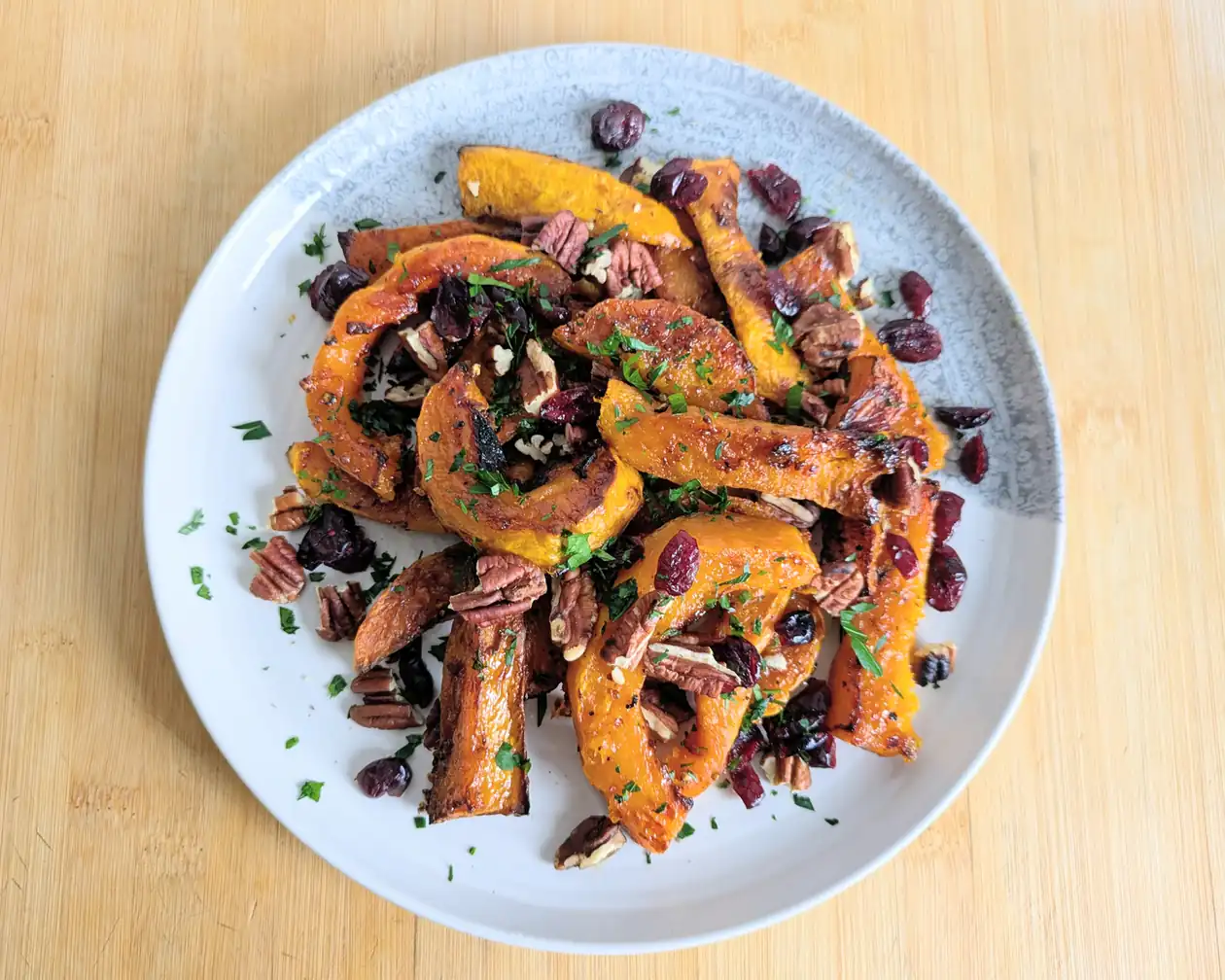
Roasted butternut squash with cranberries, toasted pecans and a maple–mustard dressing. A colourful side for autumn dinners and festive gatherings.
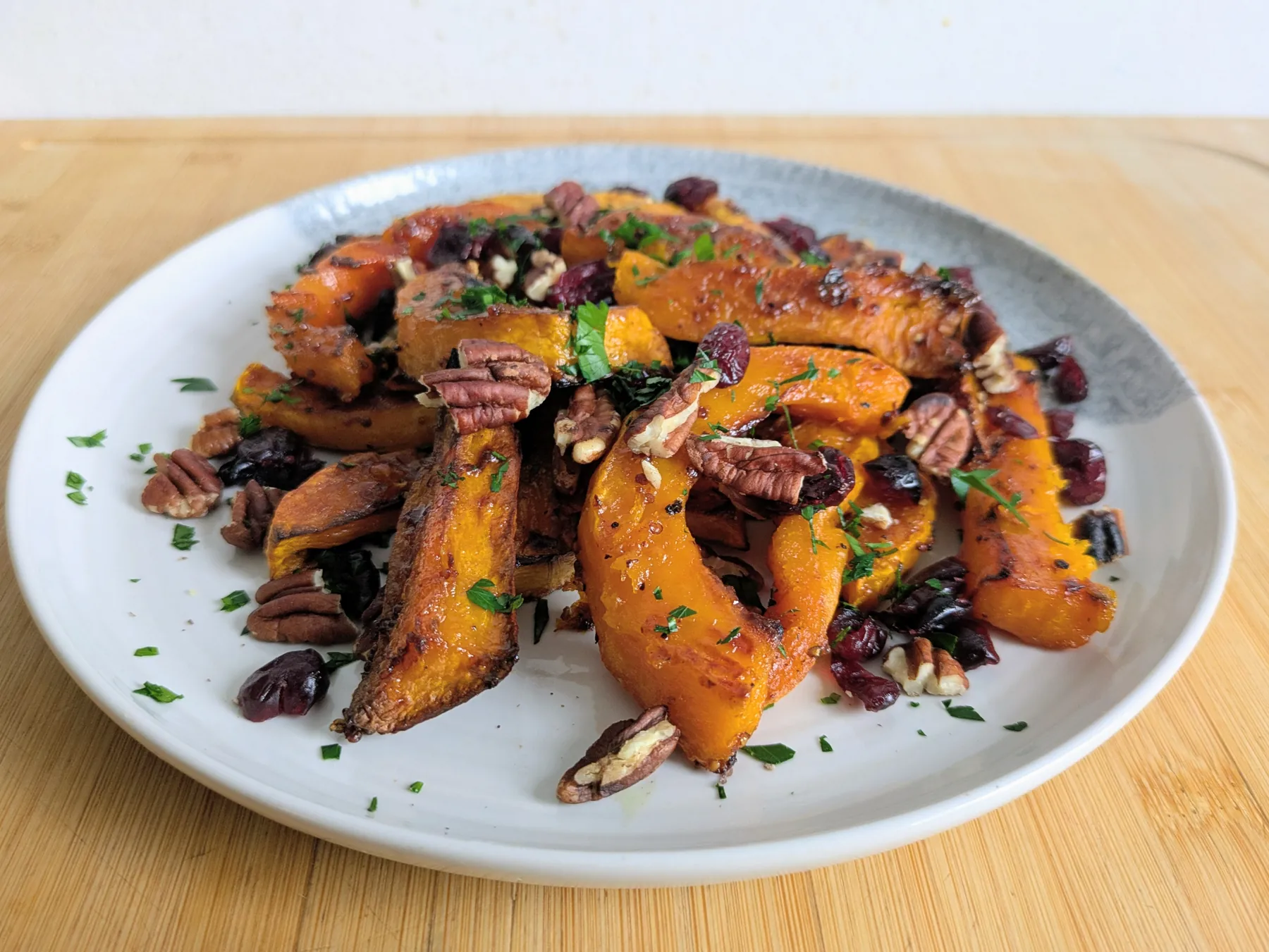
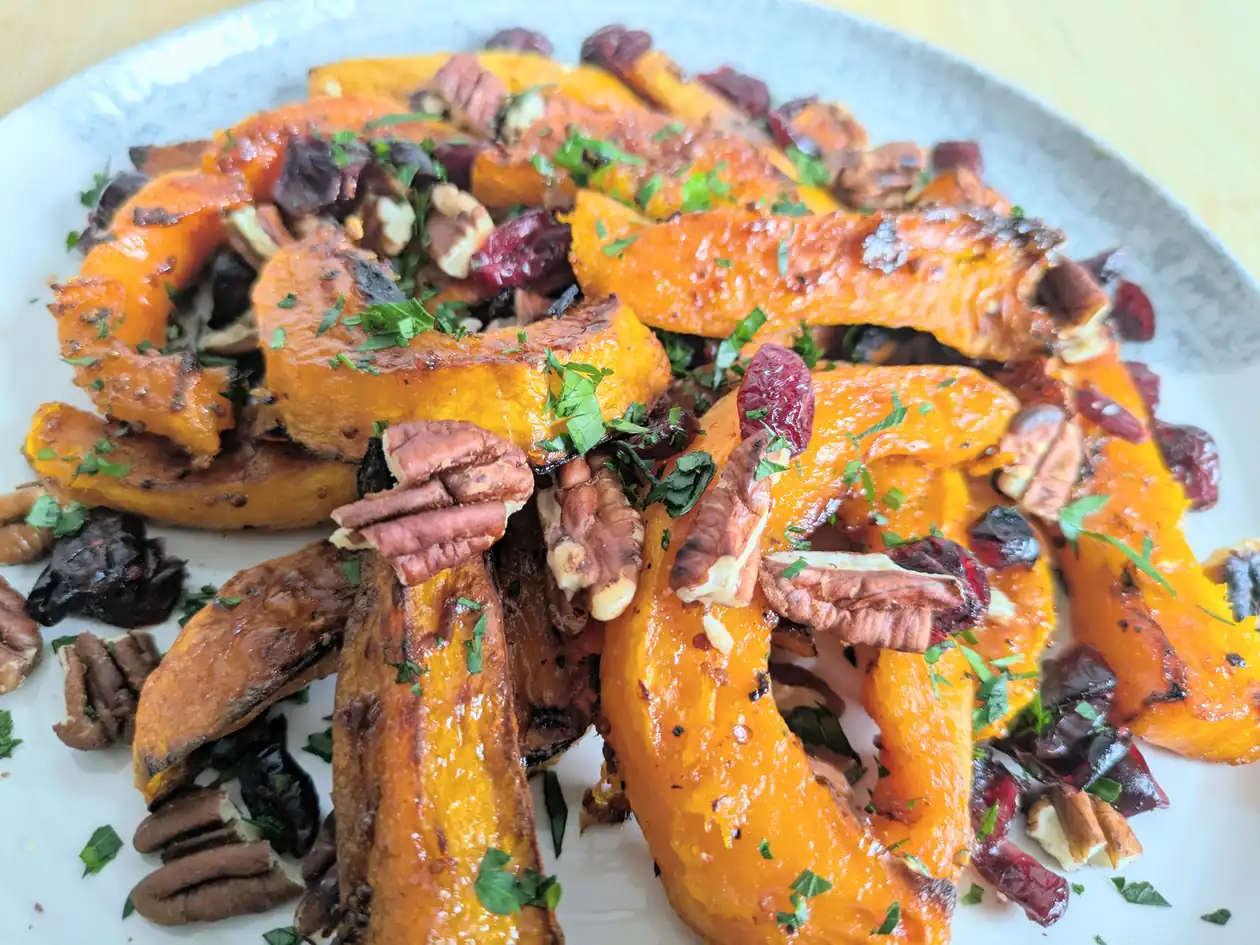
Roasted butternut squash with cranberries and pecans brings together tender squash, caramelised edges, chewy dried fruit and toasted nuts. A maple–mustard dressing with cider vinegar adds a sharp finish that balances the sweetness.
For me, the golden squash, cranberries and toasted pecans bring together some of autumn’s best colours and flavours. It’s the kind of side dish I like to put on a shared platter for family get-togethers as the days turn colder, whether that’s Christmas, a Sunday roast or Thanksgiving for our American friends.
Roasted Butternut Squash with Cranberries Ingredients
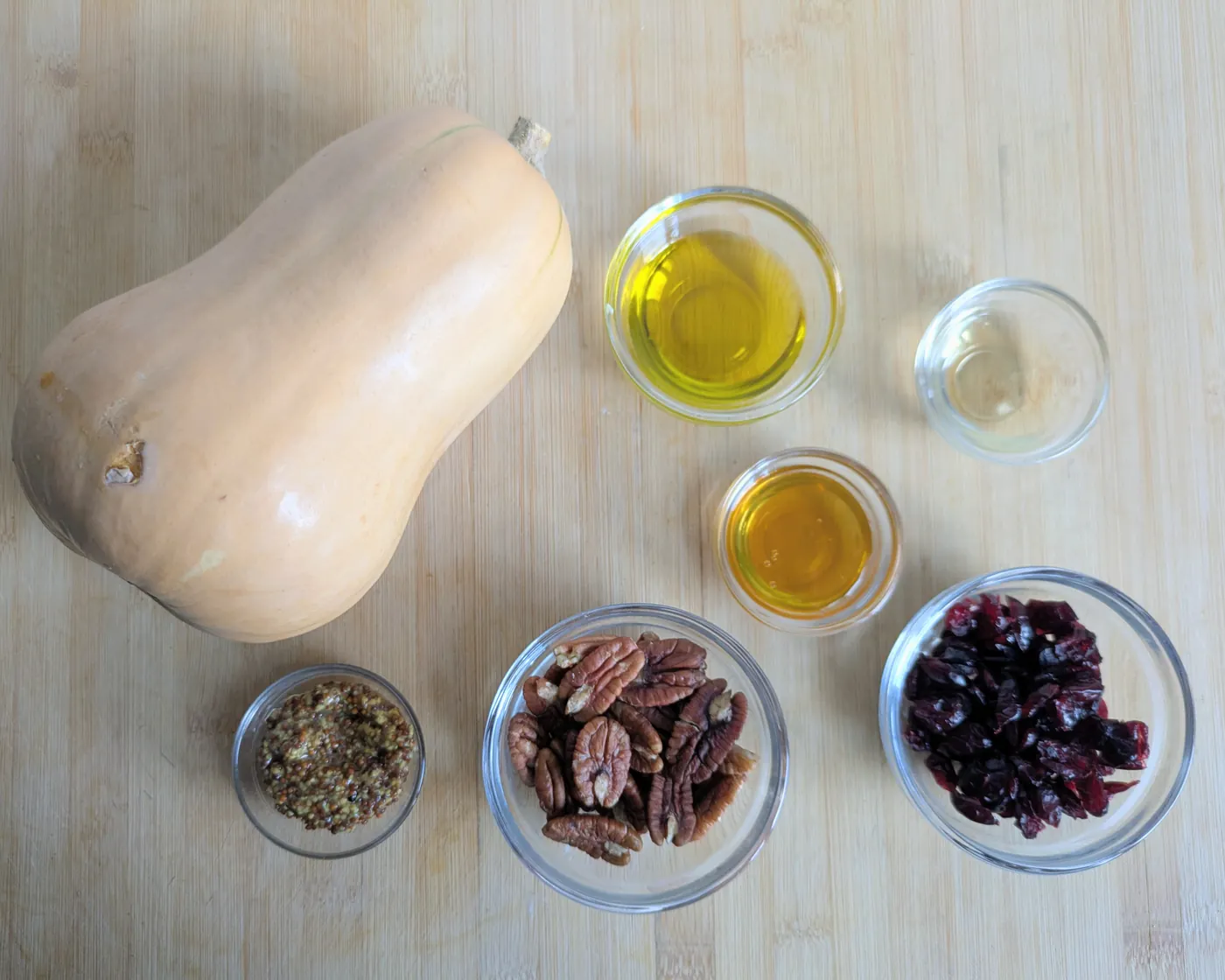
- Butternut squash: Use one medium squash, approximately 1.2 kg before peeling and removing the seeds. Cut it into wedges of similar thickness so they cook evenly.
- Pecans: Choose plain, unsalted pecans. A mixture of halves and roughly broken pieces gives you both visible nuts and smaller pieces throughout the dish.
- Dried cranberries: These add chewy texture and a little tartness. Sweetened dried cranberries work well with the sharp dressing.
- Olive oil: Used for both roasting the squash and making the dressing.
- Maple syrup: A small amount rounds out the mustard and vinegar without making the dish overly sweet.
- Wholegrain mustard: Adds savoury flavour and texture to the dressing.
- Apple cider vinegar: Balances the sweet squash, maple syrup and cranberries.
How to Make Roasted Butternut Squash with Cranberries
Peel and cut the squash
Heat the oven to 220°C / 200°C fan / 425°F.
Trim the ends of the butternut squash and peel it with a sturdy vegetable peeler. Cut crossways where the straight neck meets the rounded bulb.
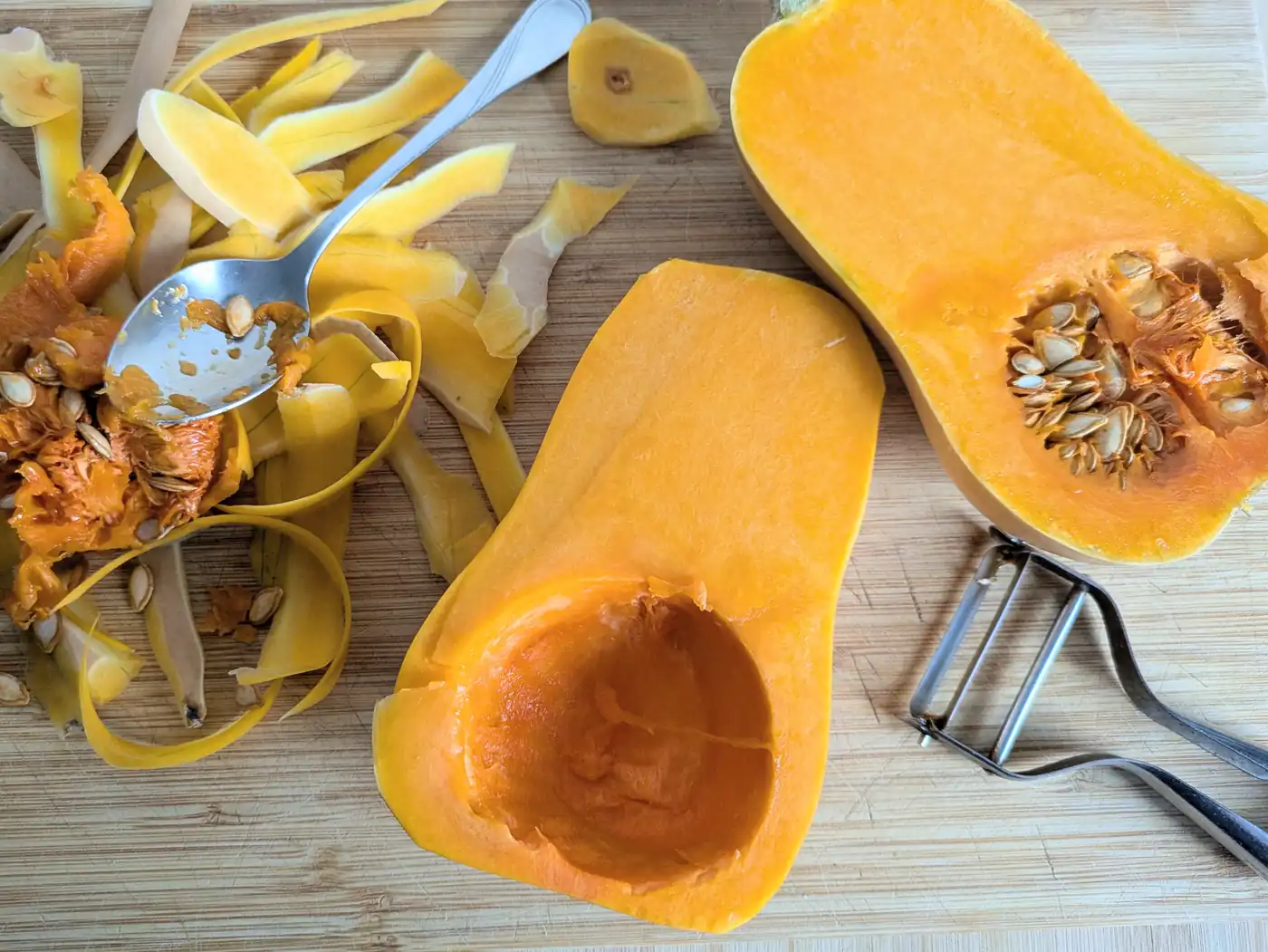
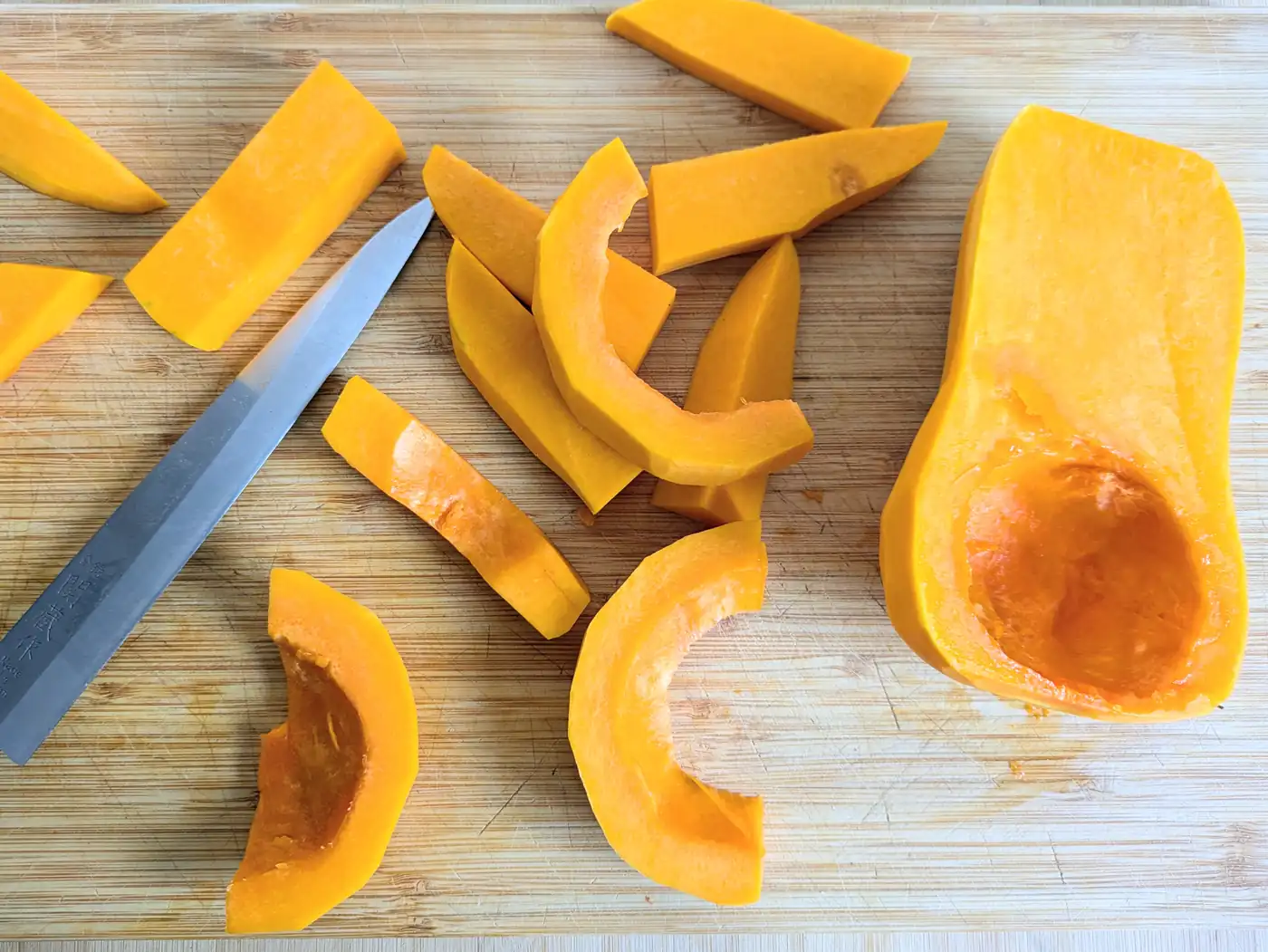
Cut the neck lengthways into wedges or thick batons. Halve the bulb lengthways, scoop out the seeds and cut it into curved wedges. Aim for pieces approximately 2 cm thick; their thickness matters more than having identical shapes.
Season and roast
Toss the squash with the olive oil, salt and black pepper. Spread it across a large baking tray, placing a flat cut surface against the tray wherever possible.
Leave a little space between the pieces. If the tray is crowded, divide the squash between two trays.
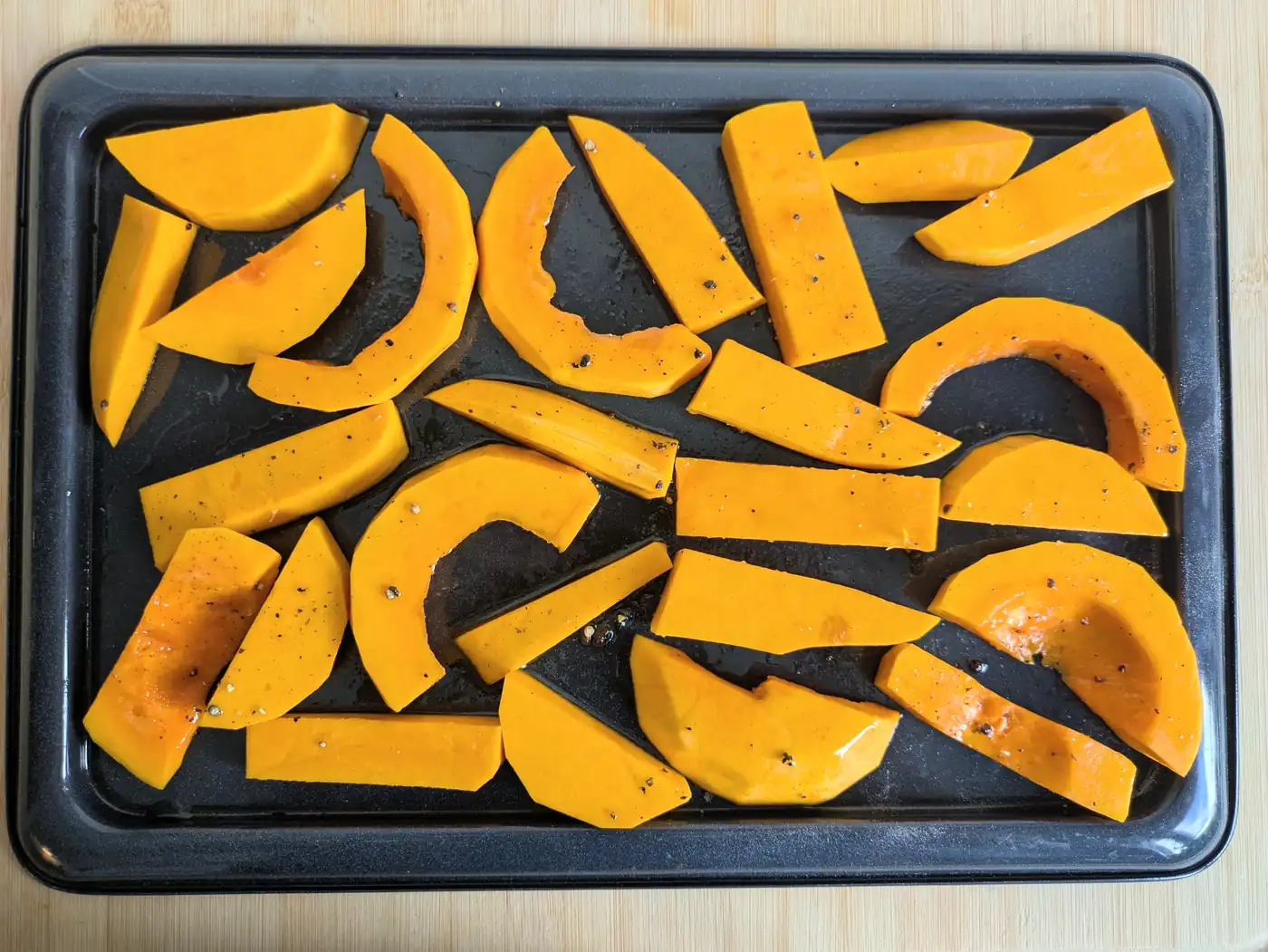
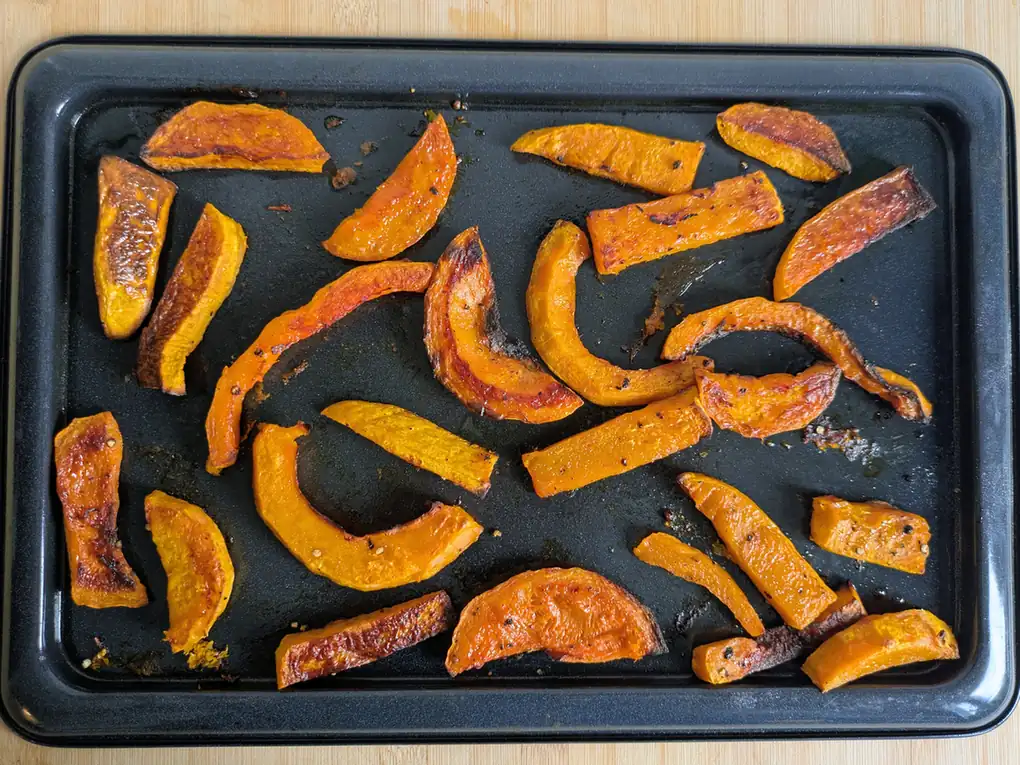
Roast for 30–40 minutes, turning after about 20 minutes. The squash should be browned around the edges and easily pierced with a knife. If it is still firm, give it longer before adding the dressing.
Toast the pecans and mix the dressing
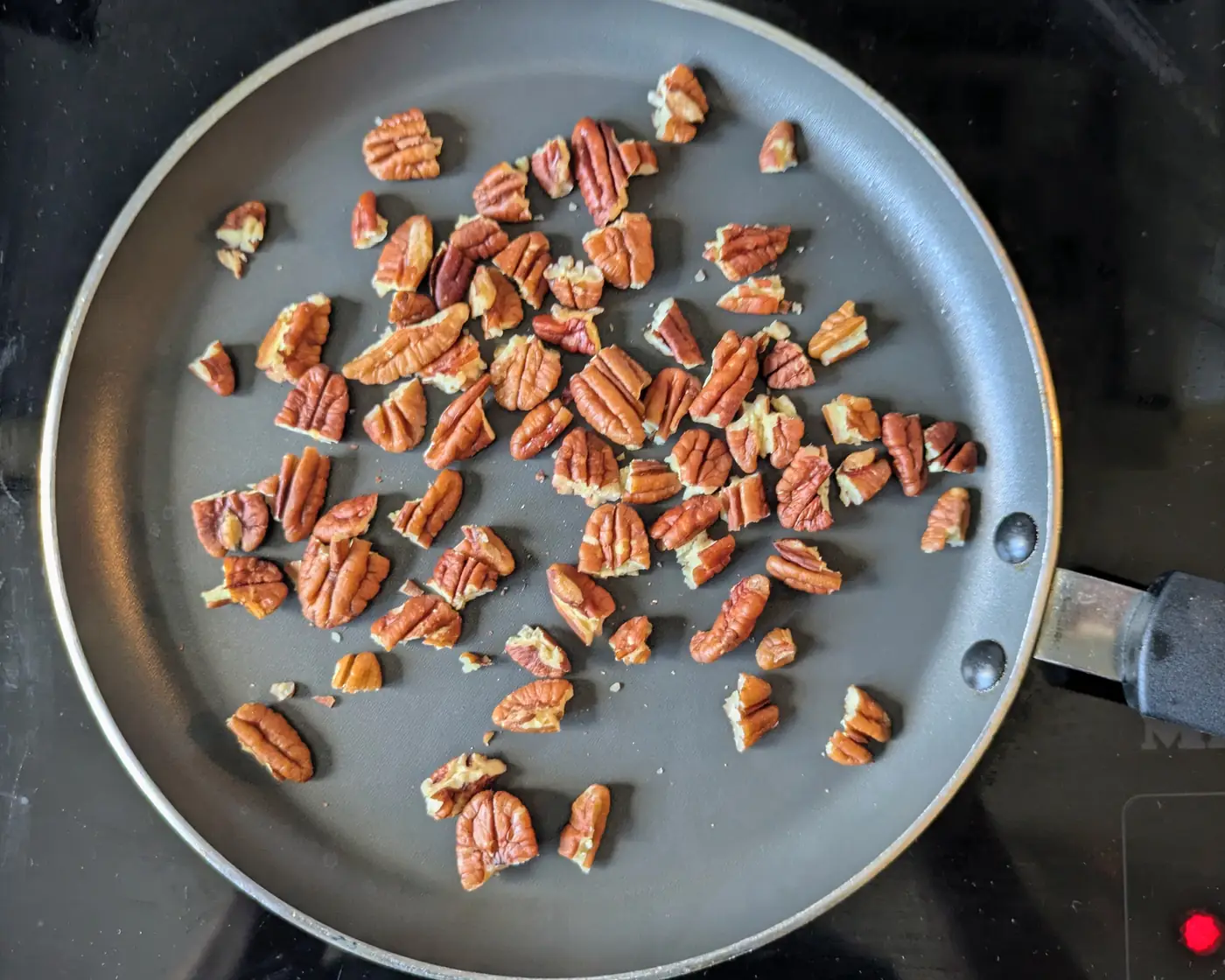
While the squash roasts, place the pecans in a dry frying pan over medium-low heat. Toast for 3–5 minutes, stirring frequently, until fragrant. Transfer them to a plate so they stop cooking.
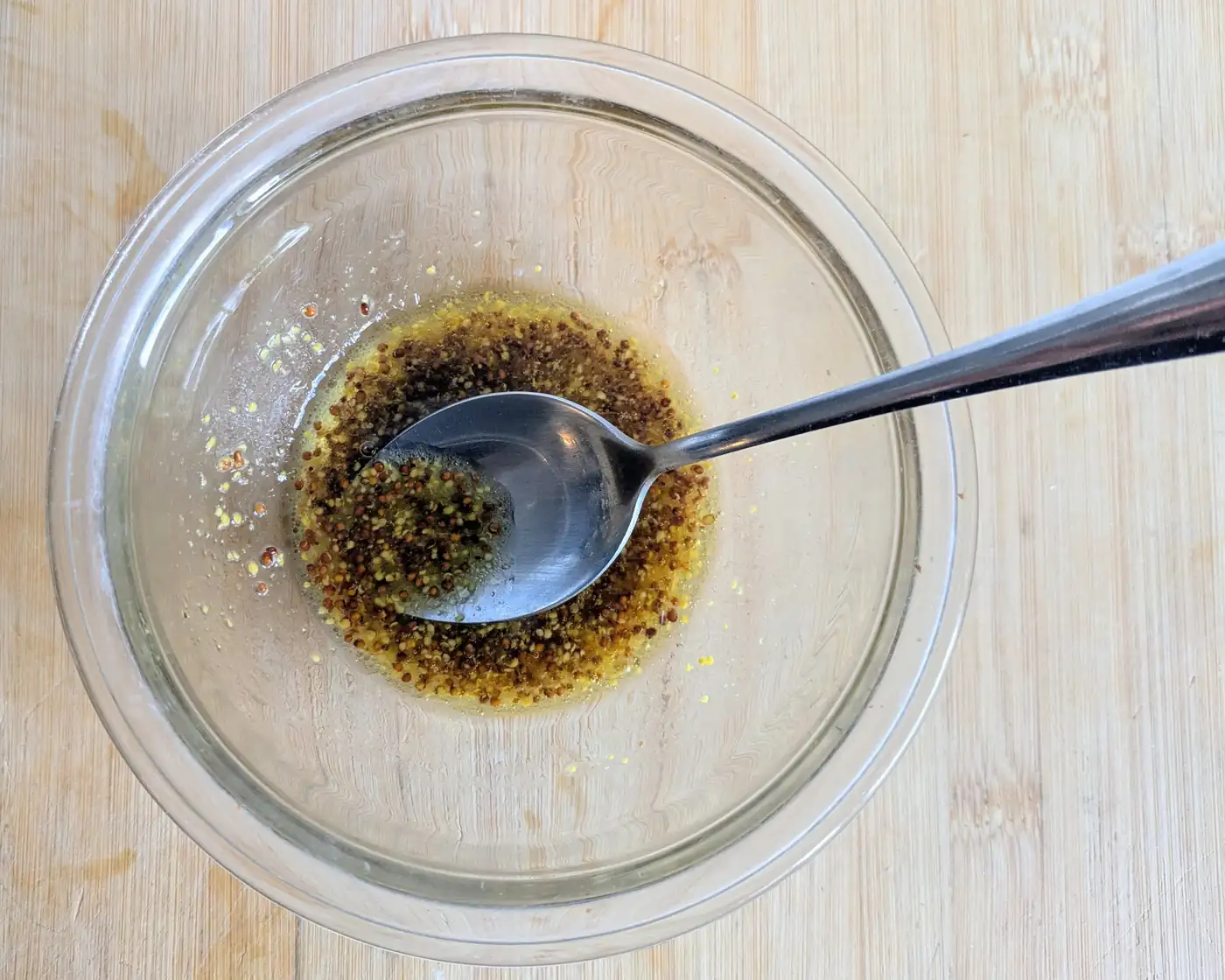
Whisk together the maple syrup, wholegrain mustard, cider vinegar and olive oil.
Glaze the squash
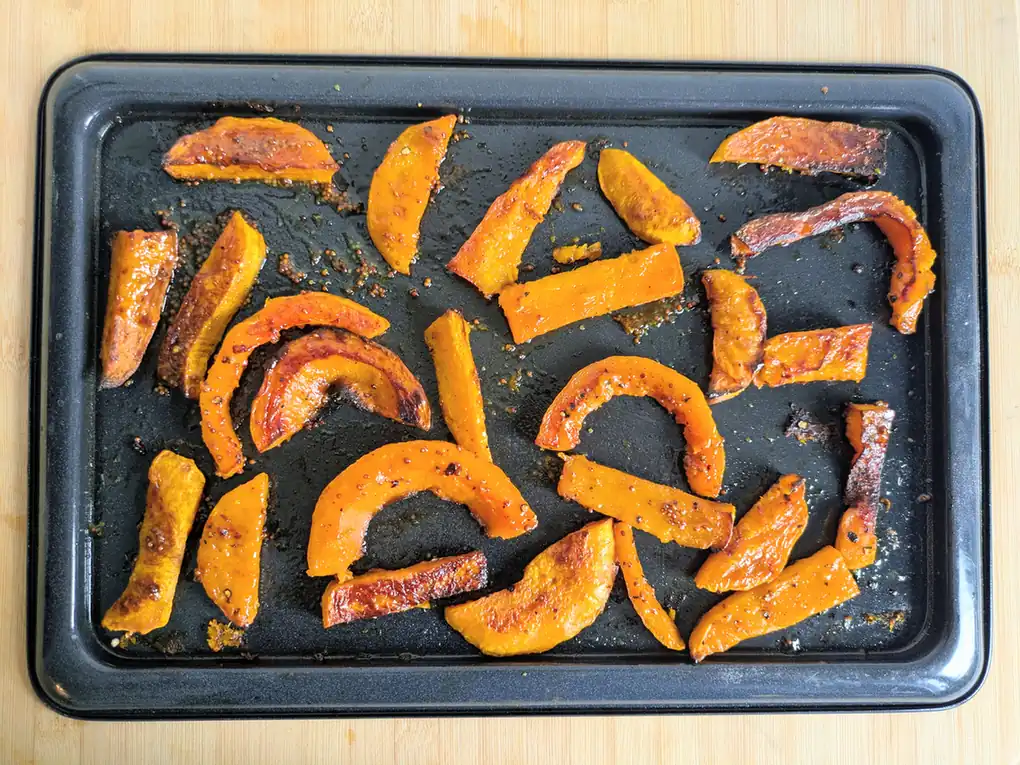
Once the squash is tender, drizzle over half the dressing and gently turn the pieces to coat.
Return the tray to the oven for another 5 minutes. Watch closely during this final stage, as the maple syrup can catch around the edges.
Add the cranberries and pecans
Transfer the roasted squash to a serving platter. Scatter over the dried cranberries and toasted pecans, then spoon over the remaining dressing.
Finish with chopped parsley and serve warm.
Tips for Caramelised Squash
- Use a shallow baking tray. Spread the wedges out rather than piling them into a deep roasting dish.
- Keep the thickness consistent. Thin ends can burn before much thicker pieces become tender.
- Let the cut surfaces brown. Leave the squash undisturbed for the first part of roasting before turning it.
- Add the glaze towards the end. Roast the squash until tender before introducing the maple dressing.
- Finish gently. Use a wide spatula to lift the cooked wedges without breaking them.
Substitutions and Variations
Use Hokkaido squash: Leave the skin on and cut it into similar-sized wedges. Start checking for tenderness after 25 minutes, as cooking time will depend on the squash and thickness of the pieces.
Swap the pecans: Walnuts work well with the squash and mustard dressing. Toast them separately in the same way.
Swap the sweetener: I used maple syrup here, but honey would also be great as it’s so sticky. Just bear in mind it won’t be vegan then. Another great vegan alternative to honey would be dandelion syrup!
Make Ahead, Storage and Reheating
To prepare ahead: Peel and cut the squash the day before, then refrigerate it in a covered container. Mix the dressing separately and keep it chilled. Toast the pecans, allow them to cool completely and store them in an airtight container.
Roast the squash shortly before serving for the best texture.
To store leftovers: Cool promptly and refrigerate in a covered container within two hours. Eat within 48 hours or freeze. Keep any reserved pecans separately to preserve their crunch.
To reheat: Spread the squash on a baking tray and heat at 180°C / 160°C fan / 350°F until steaming hot throughout. Start checking after 15 minutes; the time will depend on the size and quantity of the pieces.
Roasted Butternut Squash with Cranberries FAQs
For this recipe, yes. Peeling gives the wedges a consistent, tender texture. If using Hokkaido squash instead, you can leave the skin on.
Fresh cranberries aren’t a direct substitute here. They are much sharper and need cooking, whereas the dried cranberries are scattered over the finished squash. Use dried cranberries for the method and quantities given.
Yes. Cut it into approximately 2–3 cm cubes and start checking after 25 minutes. Roast until tender and browned before adding the glaze.
Yes. It uses olive oil and maple syrup, with no butter, honey or cheese.
The tray may be overcrowded, or the squash may need longer in the oven. Spread the pieces in a single layer with gaps between them, and roast until the cut surfaces develop colour. The centres should be tender rather than crisp.
Roasted Butternut Squash with Cranberries and Pecans
Ingredients
For the squash
- 1.2 kg whole butternut squash peeled and deseeded
- 30 ml olive oil
- ½ tsp fine salt
- ¼ tsp ground black pepper
- 60 g pecans roughly broken
- 50 g dried cranberries
- 1 tbsp finely chopped flat-leaf parsley
For the maple–mustard dressing
- 15 ml maple syrup
- 15 ml wholegrain mustard
- 15 ml apple cider vinegar
- 15 ml olive oil
Instructions
- Preheat the oven to 220°C / 200°C fan / 425°F.
- Cut the peeled squash crossways where the neck meets the bulb. Cut the neck lengthways into wedges or thick batons. Halve and deseed the bulb, then cut into curved wedges. Keep the pieces approximately 2 cm thick.
- Toss the squash with 30 ml olive oil, salt and pepper. Arrange in a single layer on a large baking tray, with a flat cut surface against the tray. Use two trays if necessary to avoid crowding.
- Roast for 30–40 minutes, turning after 20 minutes, until browned around the edges and easily pierced with a knife.
- Meanwhile, toast the pecans in a dry frying pan over medium-low heat for 3–5 minutes, stirring frequently until fragrant. Transfer to a plate.
- Whisk together the maple syrup, wholegrain mustard, cider vinegar and remaining 15 ml olive oil.
- Drizzle half the dressing over the tender squash and turn gently to coat. Roast for another 5 minutes, watching that the glaze does not burn.
- Transfer to a serving platter. Scatter over the dried cranberries and toasted pecans, spoon over the remaining dressing and finish with parsley. Serve warm.
Notes
- Squash weight: The 1.2 kg is the whole weight before peeling and deseeding.
- Hokkaido alternative: Leave the skin on, cut into similar wedges and start checking for tenderness after 25 minutes.
- Cranberries: Use dried cranberries. Add after roasting to keep them chewy.
- Make ahead: Prepare the squash and dressing separately up to a day ahead and refrigerate. Store cooled, toasted pecans in an airtight container.
- Storage: Cool and refrigerate within two hours. Eat within 48 hours or freeze.
- Reheating: Reheat at 180°C / 160°C fan / 350°F until steaming hot throughout, checking after 15 minutes. Reheat only once. Keep the pecans separate where possible.