Quince Paste (Membrillo) – Stovetop or Slow Cooker
Sweet, fragrant quince paste for serving with cheese and crackers. This membrillo recipe includes stovetop, Instant Pot and slow-cooker options.
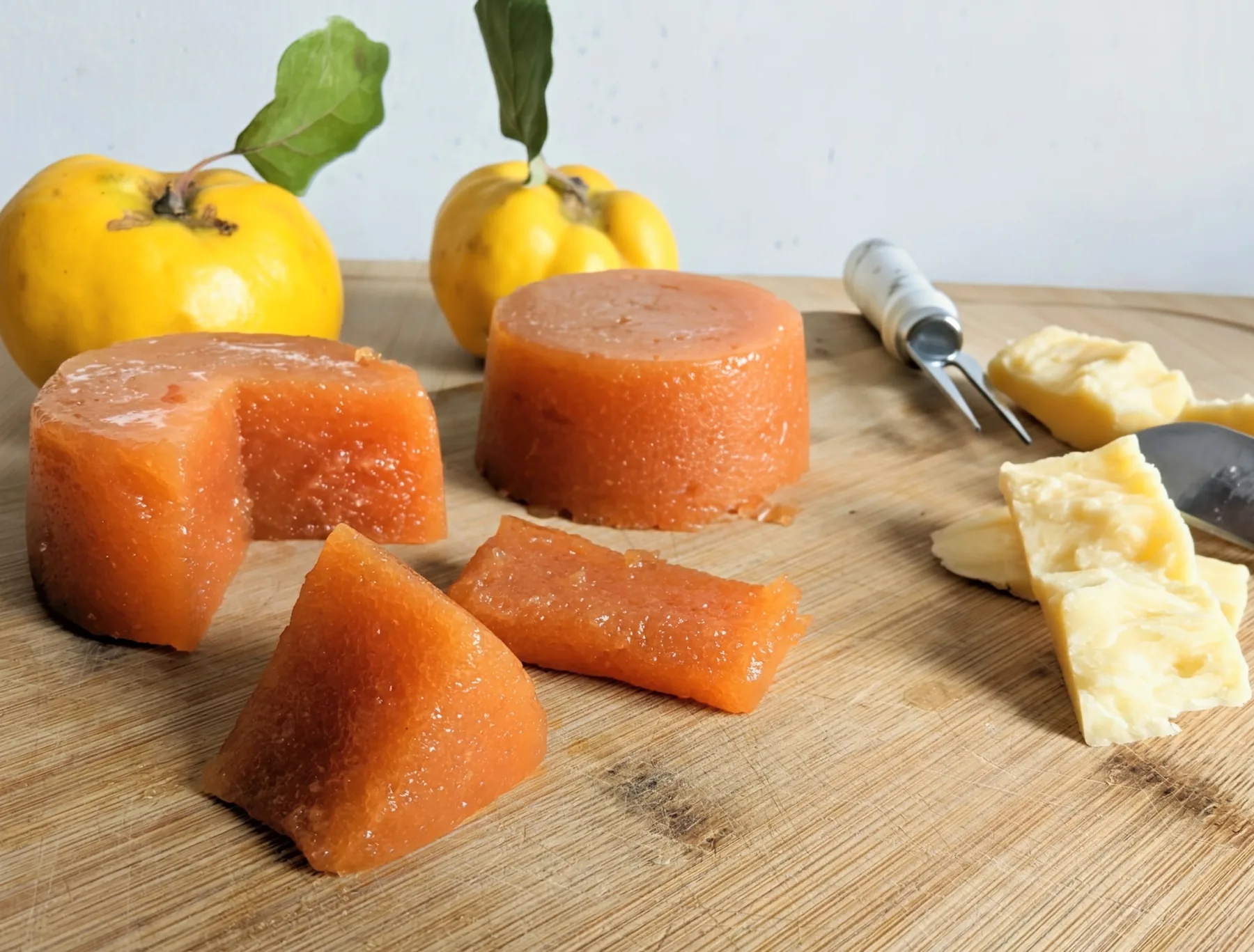
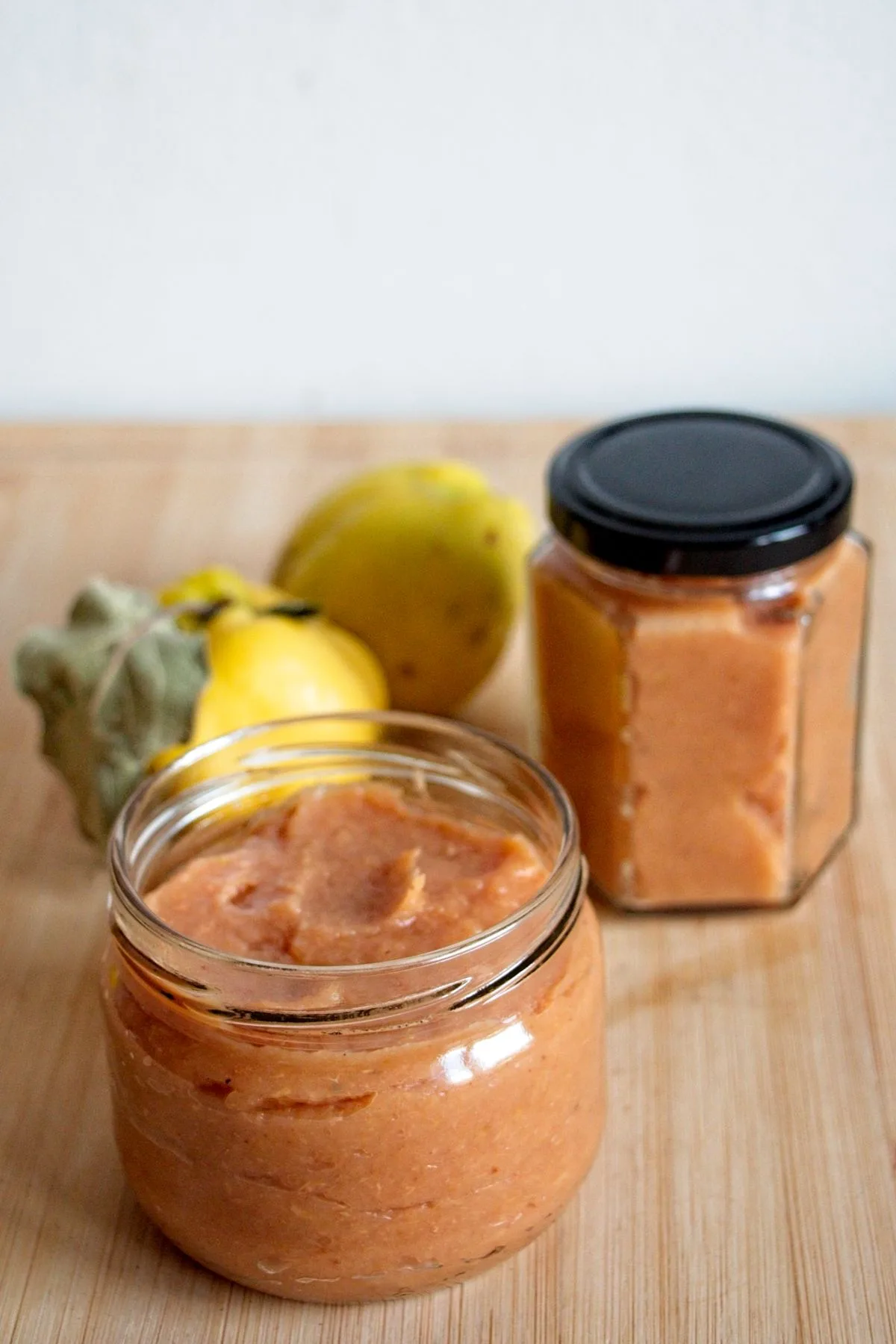
Quince paste, also known as membrillo or quince cheese, is a sweet, fragrant preserve served in slices alongside cheese. Cooking concentrates the fruit into a dense paste, with a colour that can range from deep amber to orange-red.
This quince paste recipe keeps the skins on and includes a traditional stovetop method, plus options for softening the fruit in an Instant Pot and reducing it in a slow cooker.
Whichever method you choose, the key is cooking the purée until a cooled sample holds its shape.
With around 15 kg of quinces to work through this season, I wanted to add something different to my quince jelly, butter and cordial.
With Christmas approaching, making quince paste seemed a good way to put some of the harvest towards festive cheese boards.
What Is Membrillo?
Membrillo, or dulce de membrillo, is a sweet quince paste closely associated with Spanish cooking. It is usually set in a block or mould, then cut into slices or cubes. You may also know it as quince cheese, although the paste itself contains no dairy.
Manchego with quince paste is a traditional pairing: the sweet, floral fruit complements the salty, nutty cheese. For a vegetarian cheese board, check that your cheese uses vegetarian rennet, or serve the paste with vegetarian mature cheddar.
Unlike quince jelly, which uses strained juice, membrillo uses the fruit pulp. It is also reduced further than quince butter, giving it a firm consistency rather than a spreadable texture.
What Are Quinces?
Quinces are fragrant autumn fruits related to apples and pears, with golden-yellow skins, often knobbly shapes and firm flesh. They have a long history in cooking and preserving, although they are less familiar today than their orchard relatives.
Most varieties are too hard and astringent to enjoy raw. Cooking softens the flesh and brings out a distinctive floral flavour, while the colour can deepen from pale yellow to amber or pink-red.
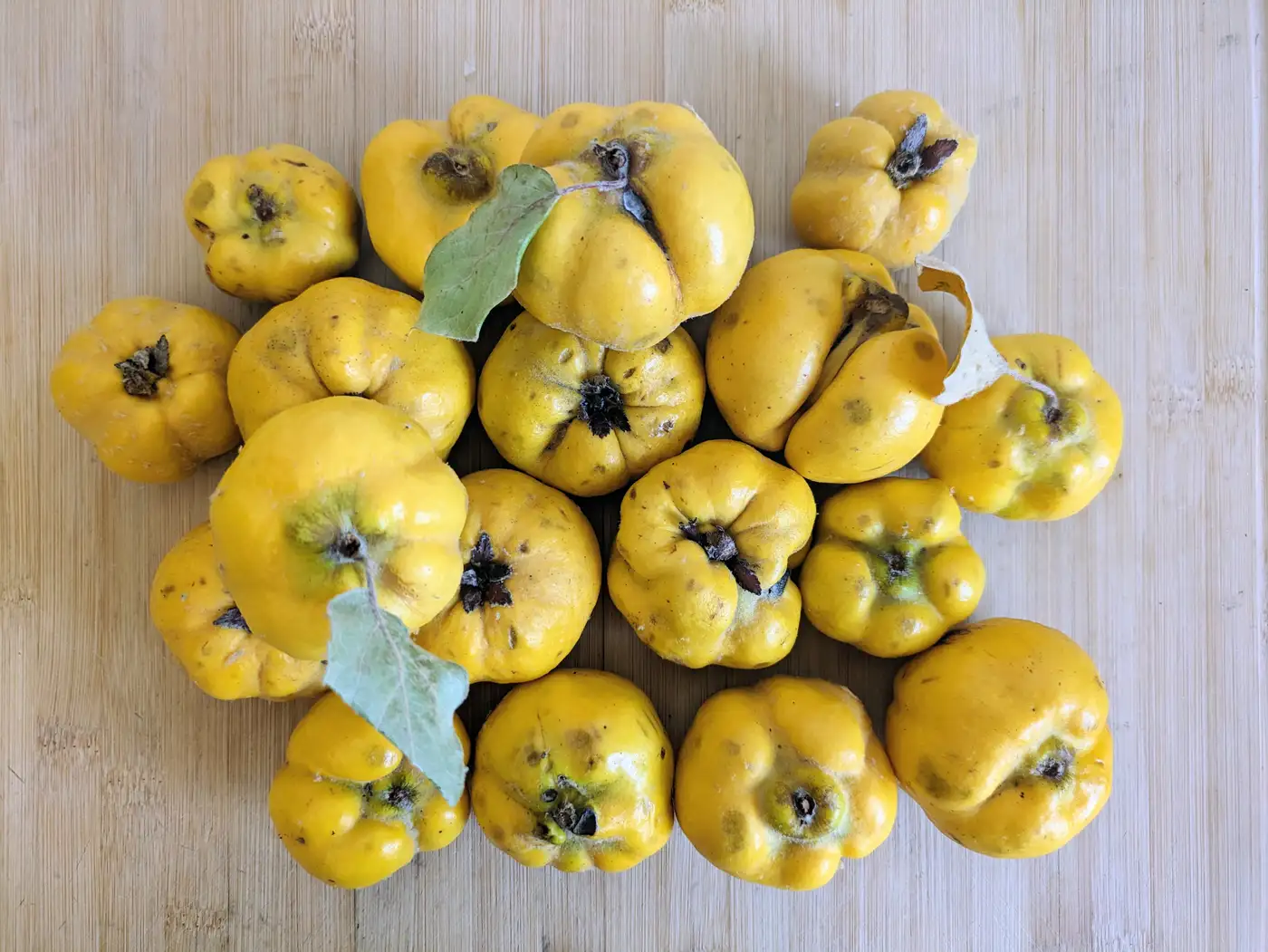
They can be harder to find in supermarkets, but look out for them at farmers’ markets, greengrocers and in local orchards during autumn. Their strong fragrance is one of my favourite things about quince season.
Their natural pectin makes quinces particularly useful for preserves, helping quince jelly set and giving membrillo its firm, sliceable texture. Beyond quince paste, the fruit also makes fragrant cordial, compote and quince butter.
Ingredients for Making Quince Paste
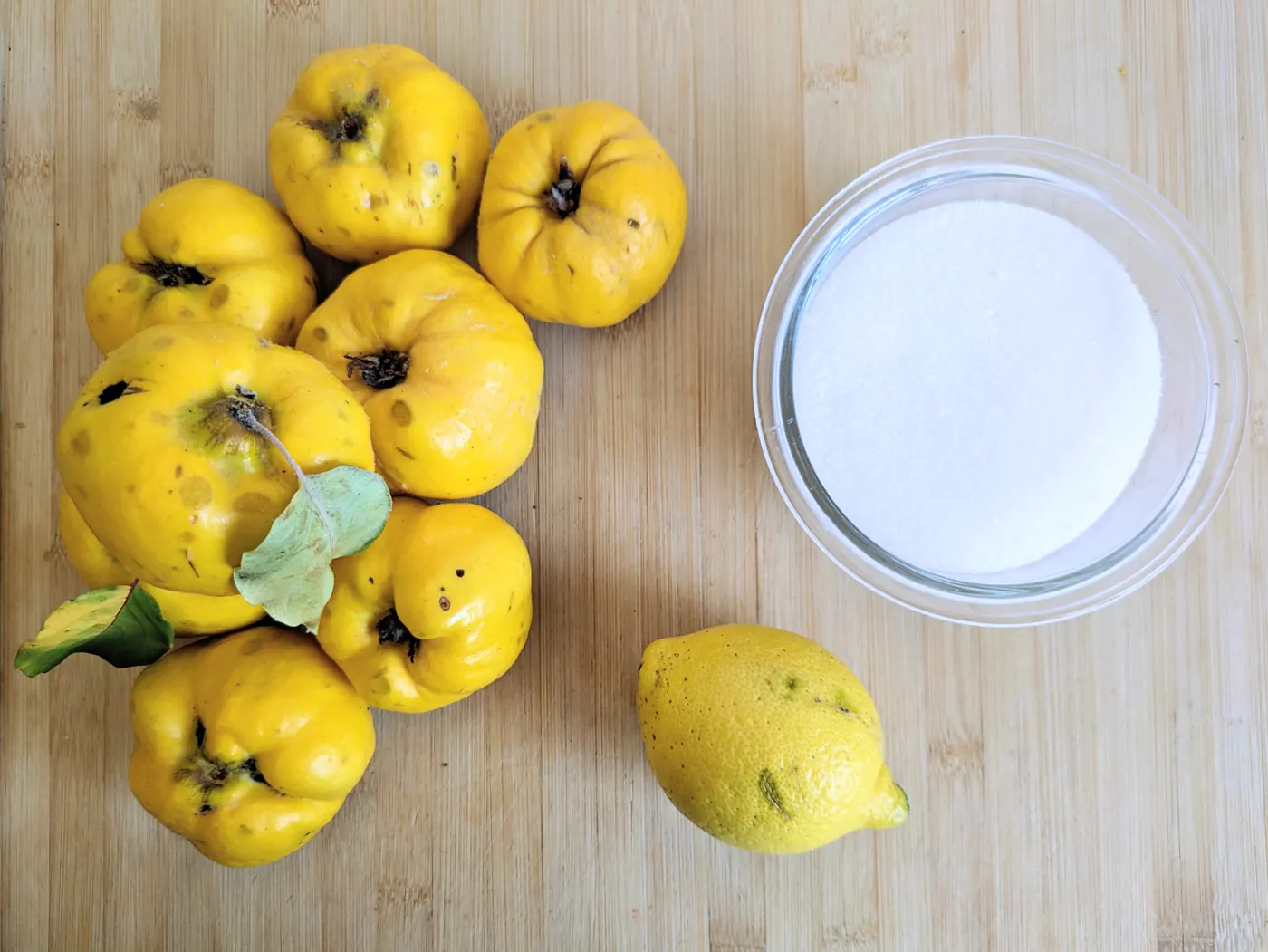
Quinces
Start with 1.5 kg whole quinces, weighed before coring and trimming.
I leave the skins on and remove the seeds, hard cores and tough surrounding tissue. There is no need to reach a specific prepared weight because the sugar is calculated after cooking.
Granulated sugar
Use the same weight of sugar as cooked, drained quince purée.
For example, 1 kg purée needs 1 kg sugar. Weighing at this stage accounts for differences in trimming and avoids guessing the sugar quantity from the whole-fruit weight.
Lemon juice
Add 30 ml lemon juice with the sugar. It adds acidity and balances some of the sweetness.
Water
For stovetop cooking, use just enough water to cover the chopped fruit.
For pressure cooking, use the minimum water quantity specified for your Instant Pot model. Do not halve that minimum when cooking a smaller batch.
You will also need a little neutral oil for greasing the moulds.
Preparing the Quinces
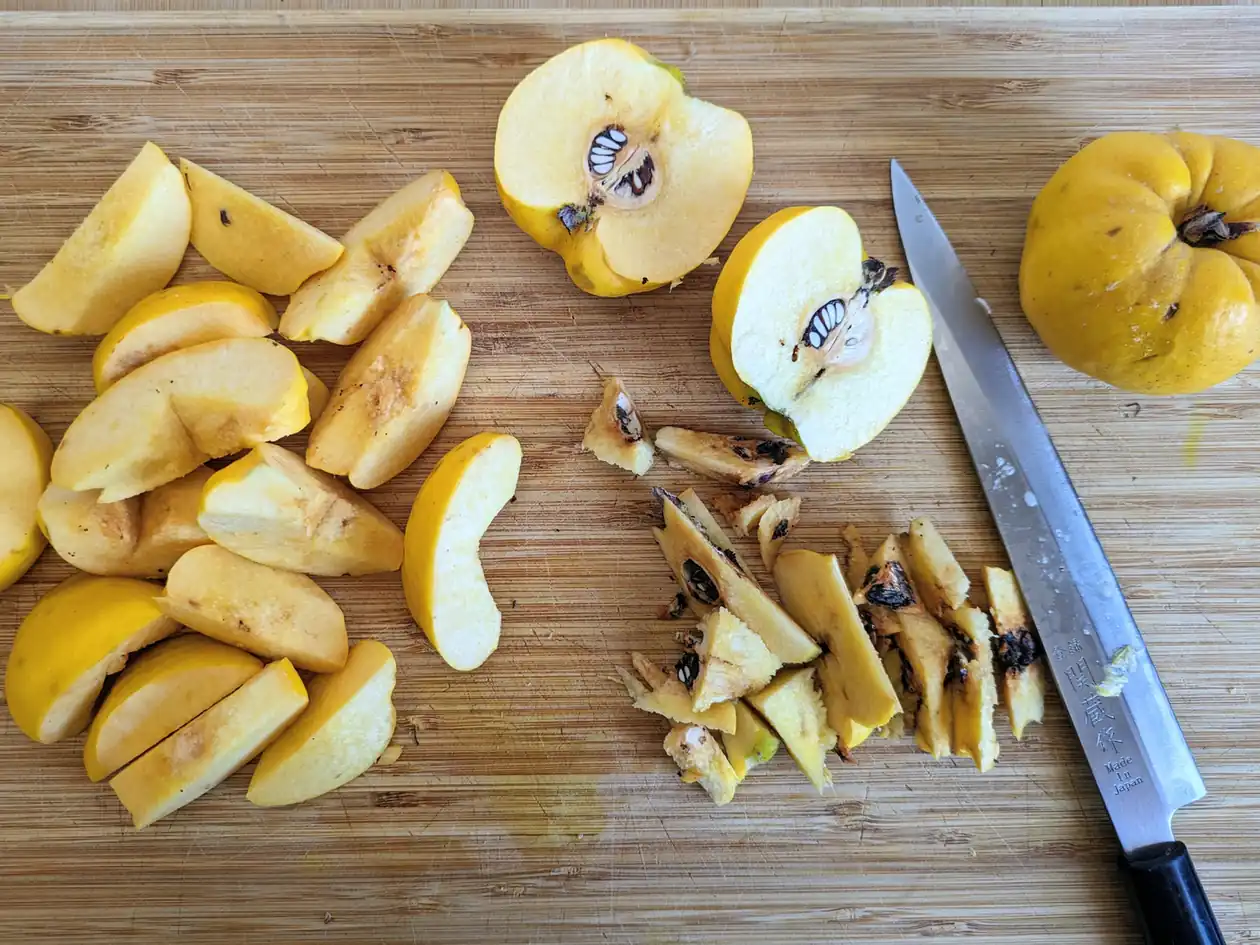
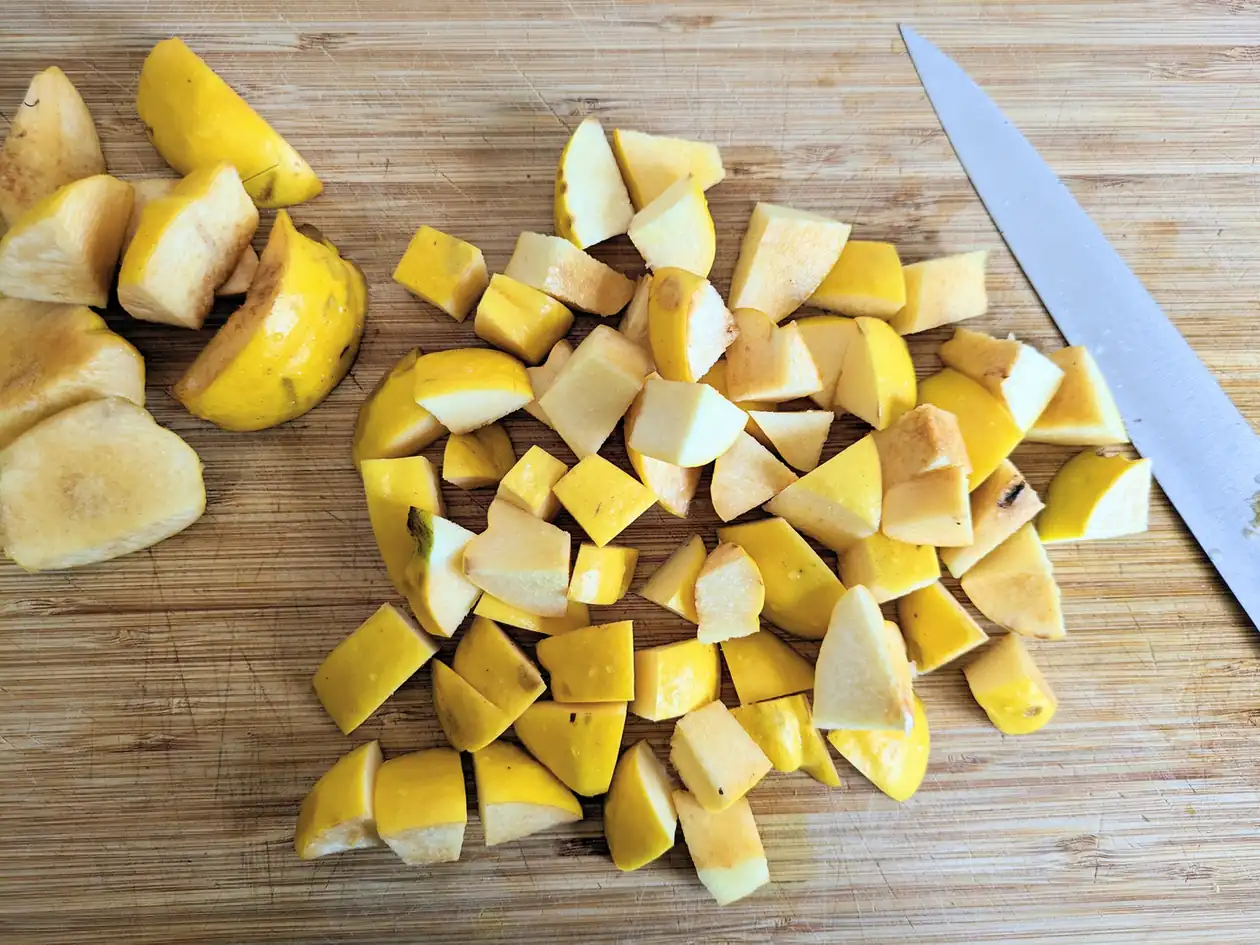
Wash the quinces and rub away any fuzz. Quarter them, remove the cores and seeds, then cut into approximately 2 cm pieces.
Use a stable chopping board and take care around the hard centre. Cut away any woody tissue surrounding the seed cavity.
Checking for codling moth damage
Some of my quinces have codling moth damage. I look for small brown holes in the skin and dark, crumbly trails running through the flesh towards the core.
I cut away the affected flesh and core, checking each piece as I prepare it. Discard fruit showing mould or rot.
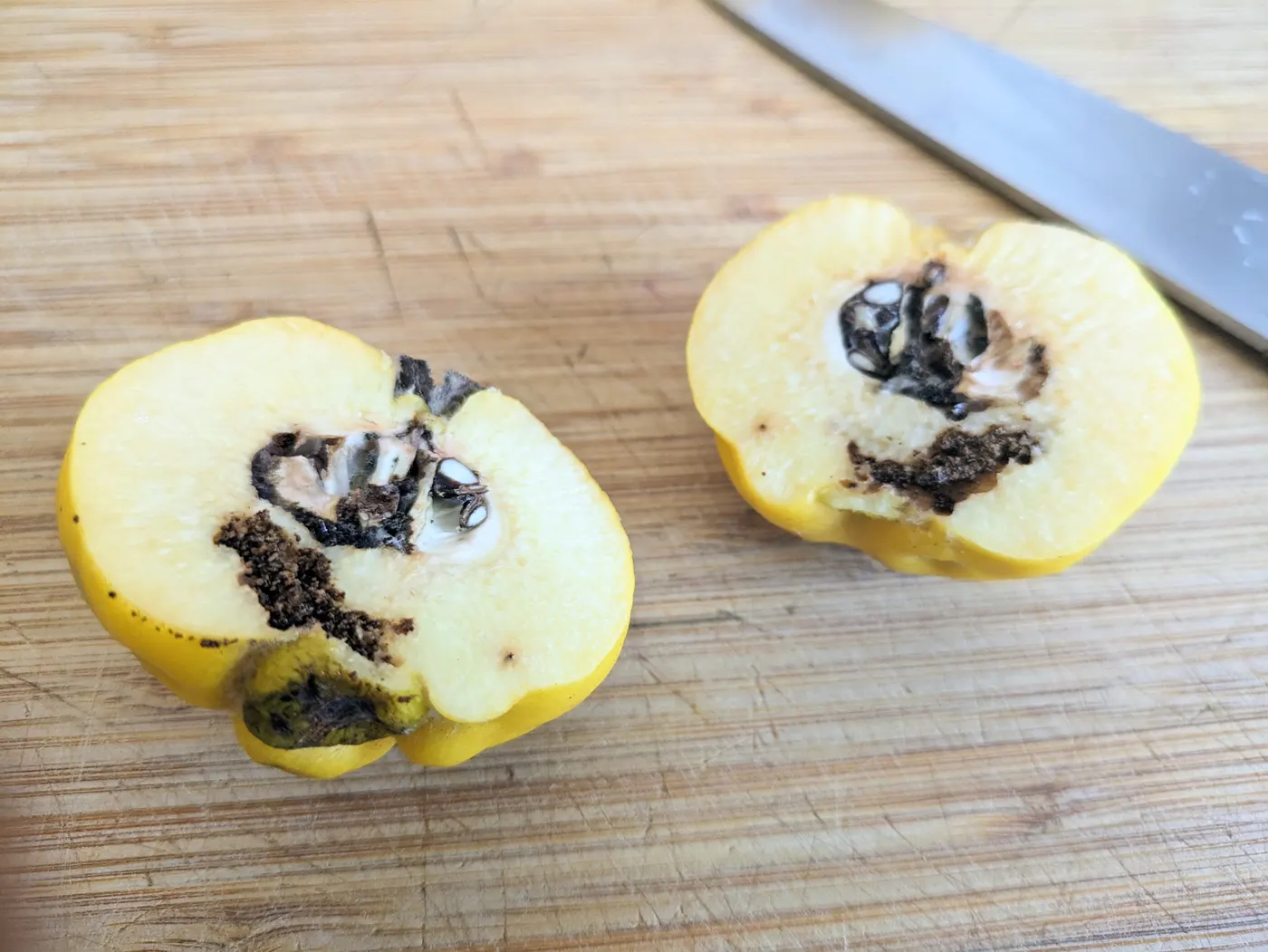
This trimming can make a noticeable difference to the prepared weight, particularly with smaller fruit. That is another reason to weigh the cooked purée before adding sugar.
How to Make Quince Paste
There are two stages: softening the fruit, then reducing the purée with sugar. You can complete both on the hob, or use the Instant Pot and slow-cooker options below.
Soften the quinces
Stovetop method
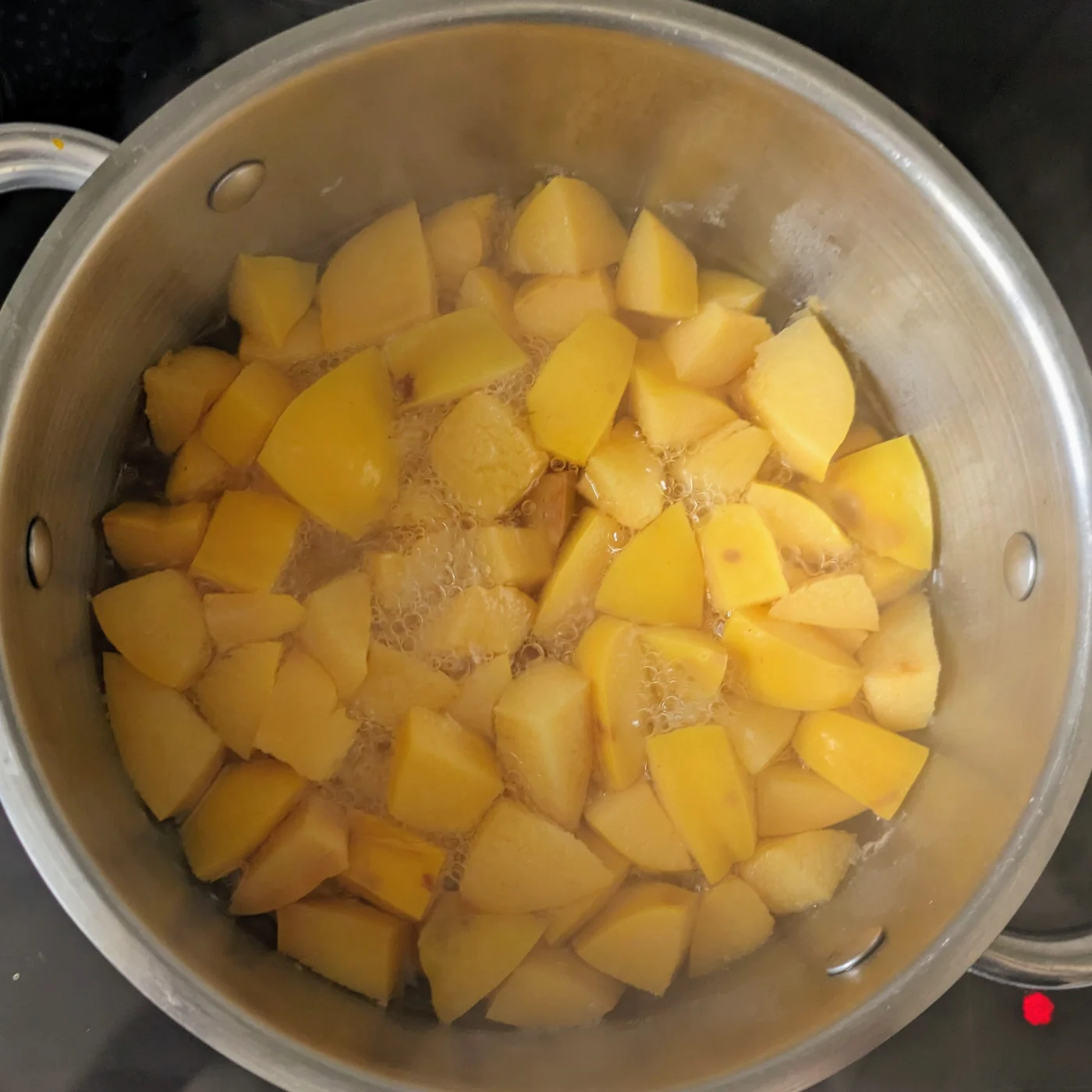
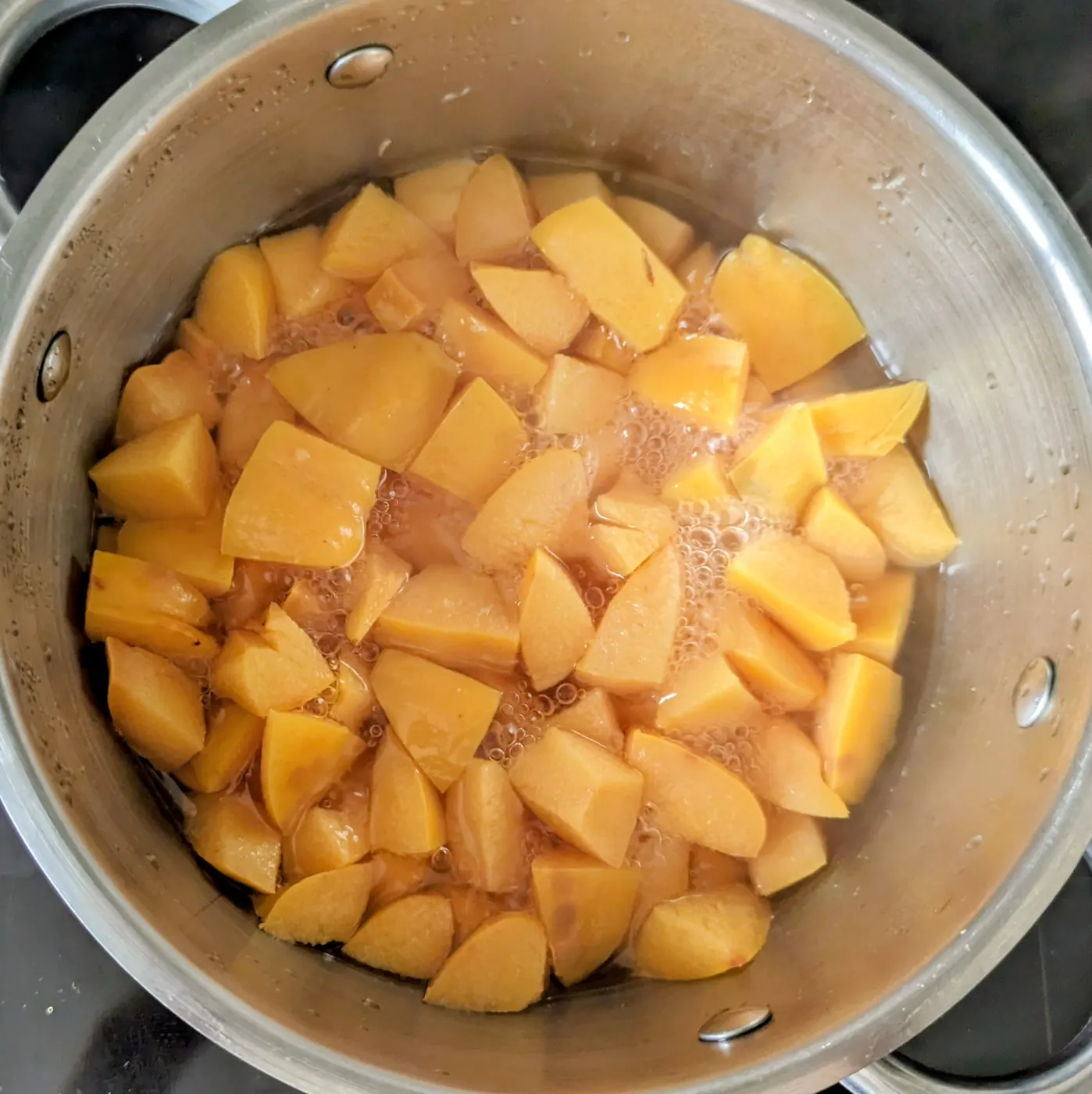
Place the chopped quinces in a saucepan and add just enough water to cover.
Bring to a gentle simmer, partially cover and cook until the flesh and skins crush easily with a fork. Start checking after 25 minutes; allow approximately 30–45 minutes, continuing if necessary.
Instant Pot method
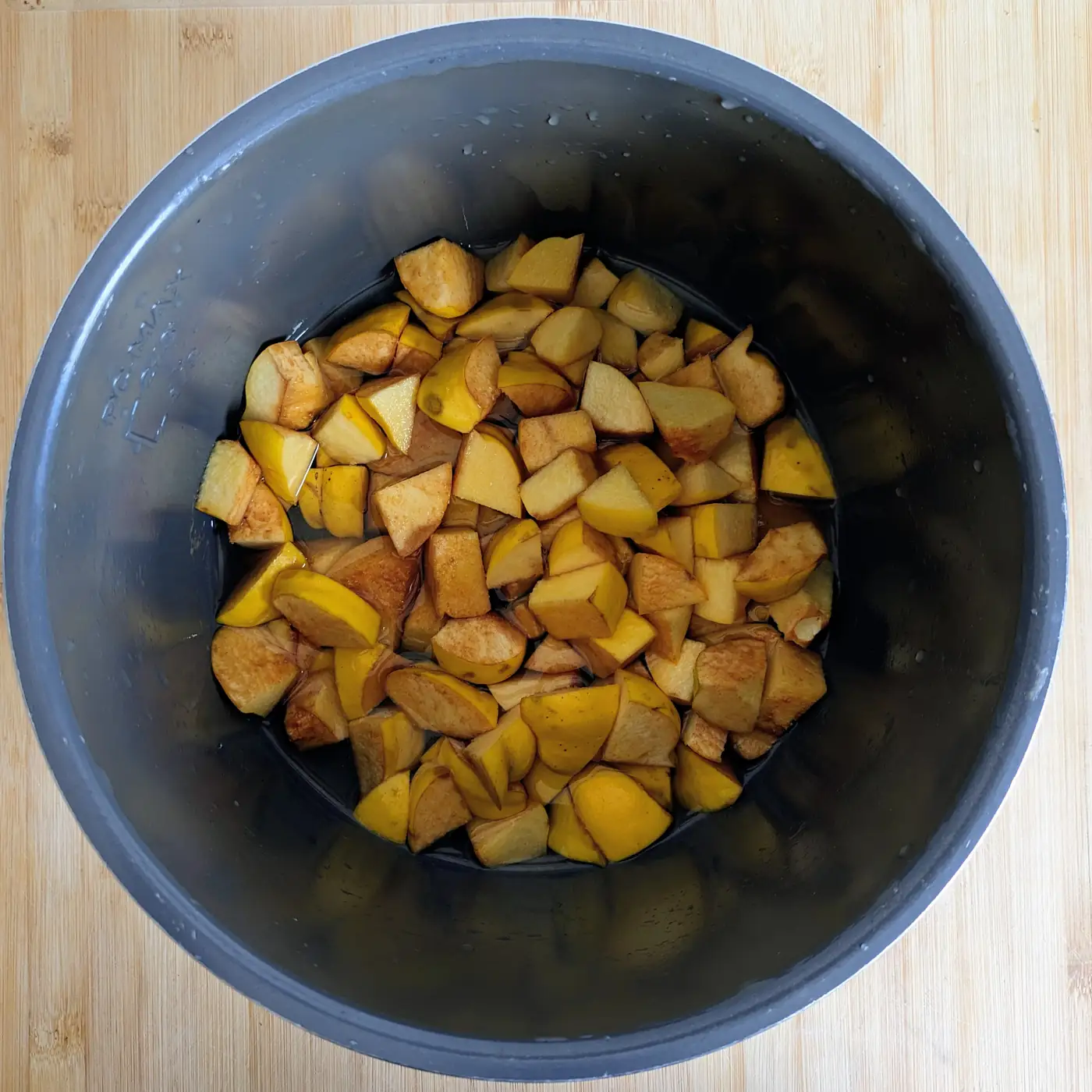
Add the prepared fruit and your model’s minimum required water quantity.
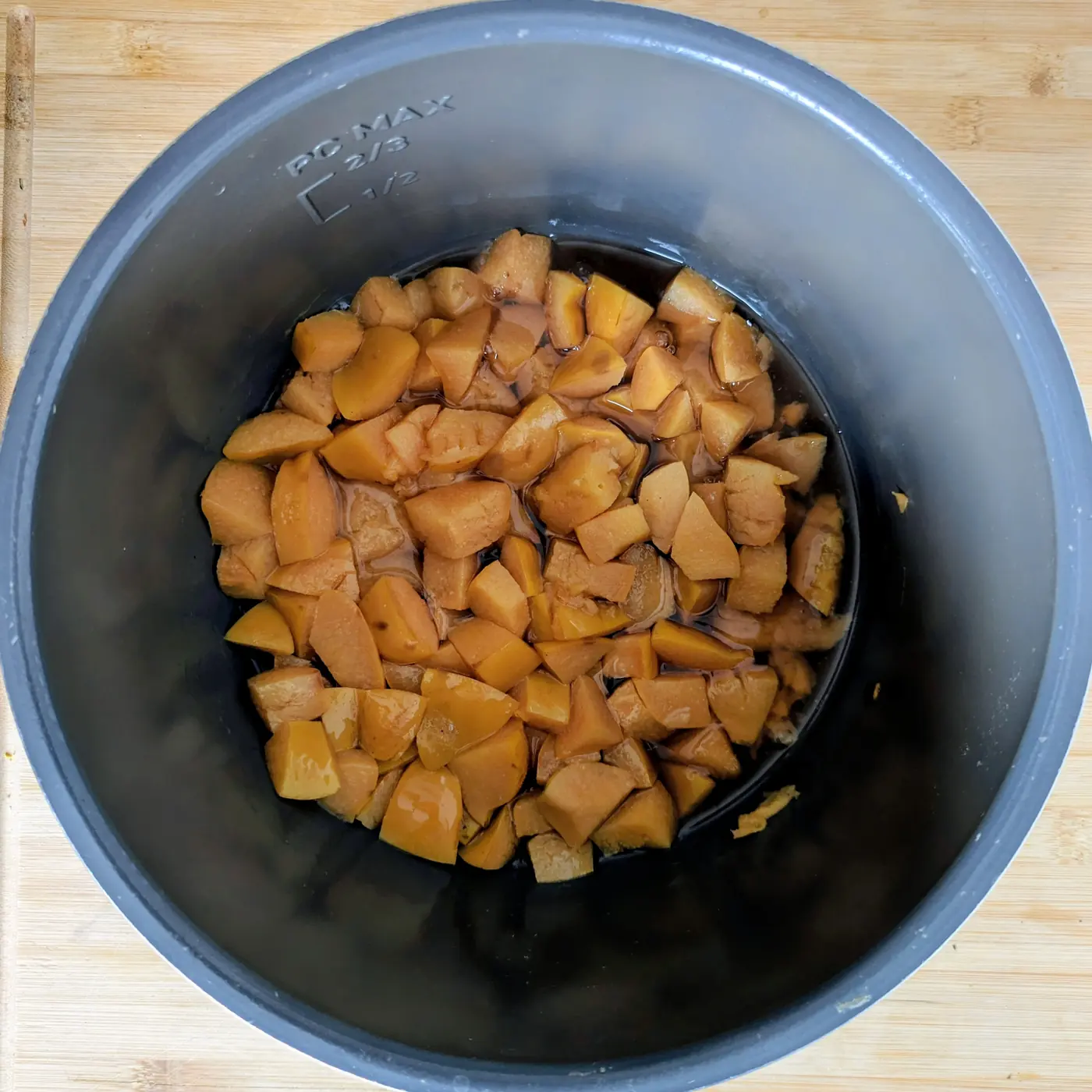
Cook on High Pressure for 10 minutes, followed by 10 minutes natural pressure release, then carefully release the remaining pressure.
Check that the fruit crushes easily. In my test, the quinces softened well and were already deep amber after pressure cooking.
Drain and blend
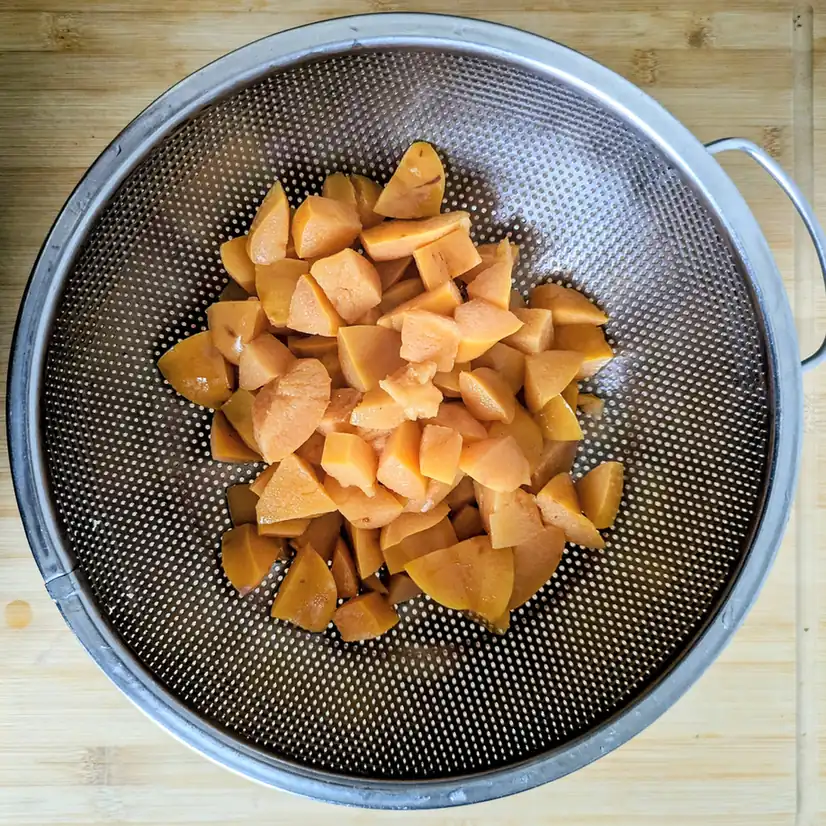
Drain the fruit in a sieve for five minutes, reserving the cooking liquid.
Blend until smooth, avoiding additional liquid unless a little is needed to help the blender work.
Check the texture before adding sugar. If any pieces of flesh or skin remain firm, soften them further before blending again. For a finer finish, pass the purée through a sieve.
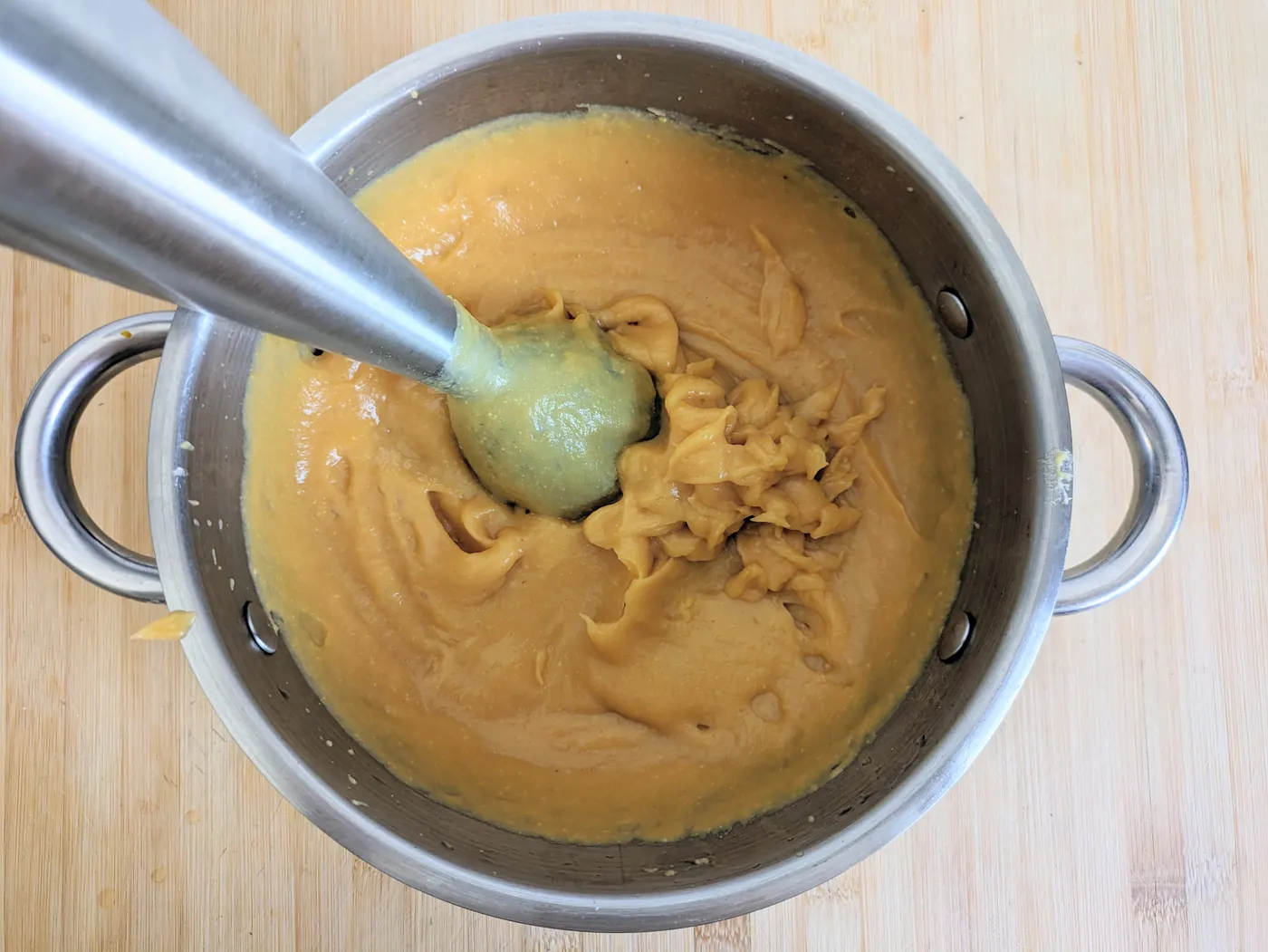
Weigh the purée and add sugar
Weigh the purée actually transferred into the cooking pot.
Add an equal weight of granulated sugar, followed by 30 ml lemon juice for the full batch. Stir thoroughly to combine.
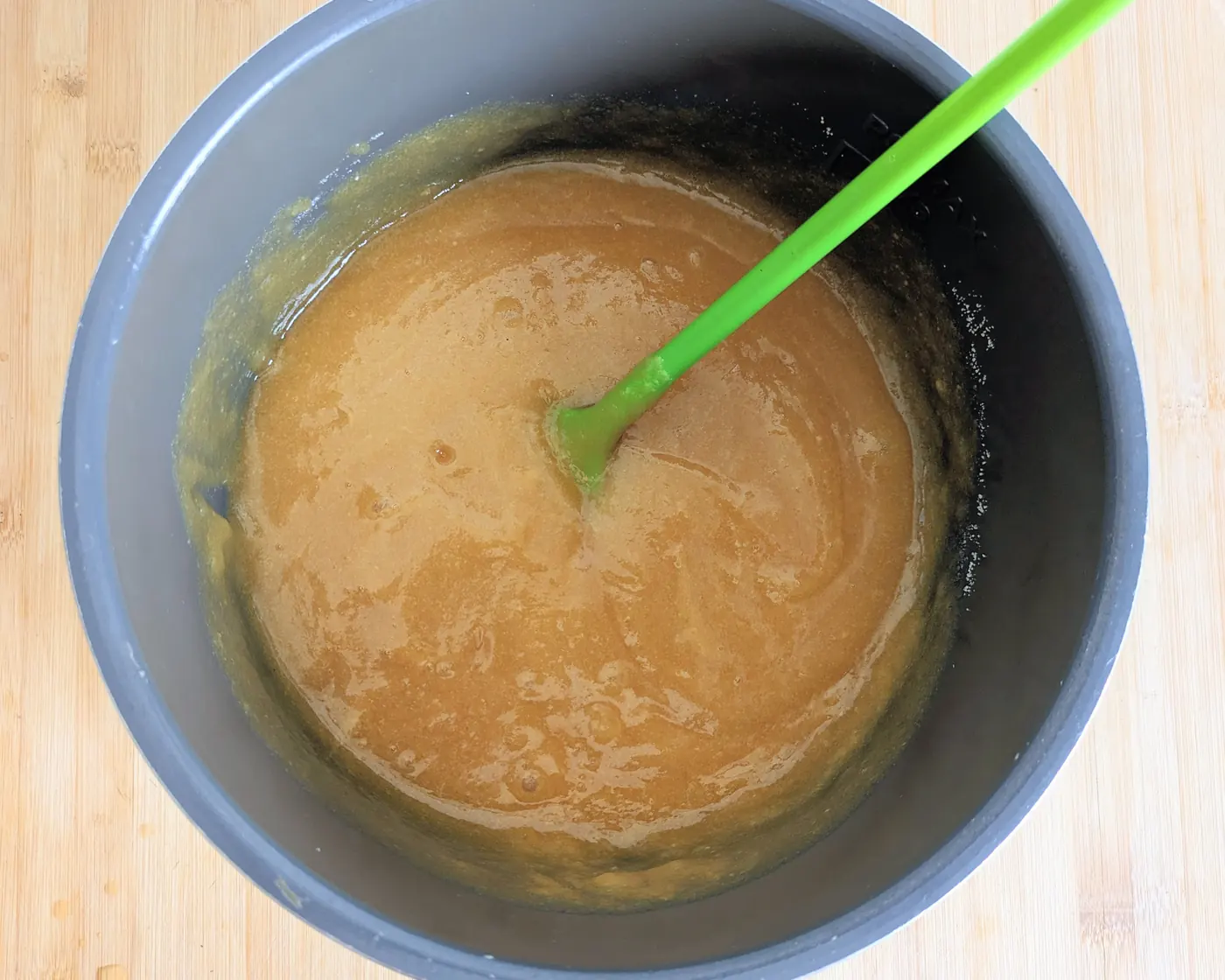
Reduce until thick
Stovetop reduction
Use a wide, heavy-based saucepan. Heat gently, stirring until the sugar dissolves, then maintain a gentle simmer.
Cook uncovered, stirring frequently and scraping the base and corners. As the paste thickens, lower the heat if necessary and stir almost continuously to prevent it catching.
Allow approximately 60–120 minutes or longer, judging readiness by the texture tests below. Pan width, batch size and the amount of water in the purée will affect the timing.
Take care: the hot, sugary paste can spit.
Slow-cooker reduction
Set the slow cooker to HIGH or 85°C if you can set the temperature yourself, and leave the lid off throughout, provided your appliance permits uncovered operation.
My batch took 5 hours at 85°C to reach a setting texture.
Stir regularly, scraping the base and sides, and increase the frequency as it thickens. Leaving the lid off allows moisture to escape.
Use five hours as a guide for this batch and appliance. Different slow cookers, pot shapes and quantities may take longer or finish sooner. If your cooker does not reduce the mixture effectively, transfer it to a wide saucepan to finish.
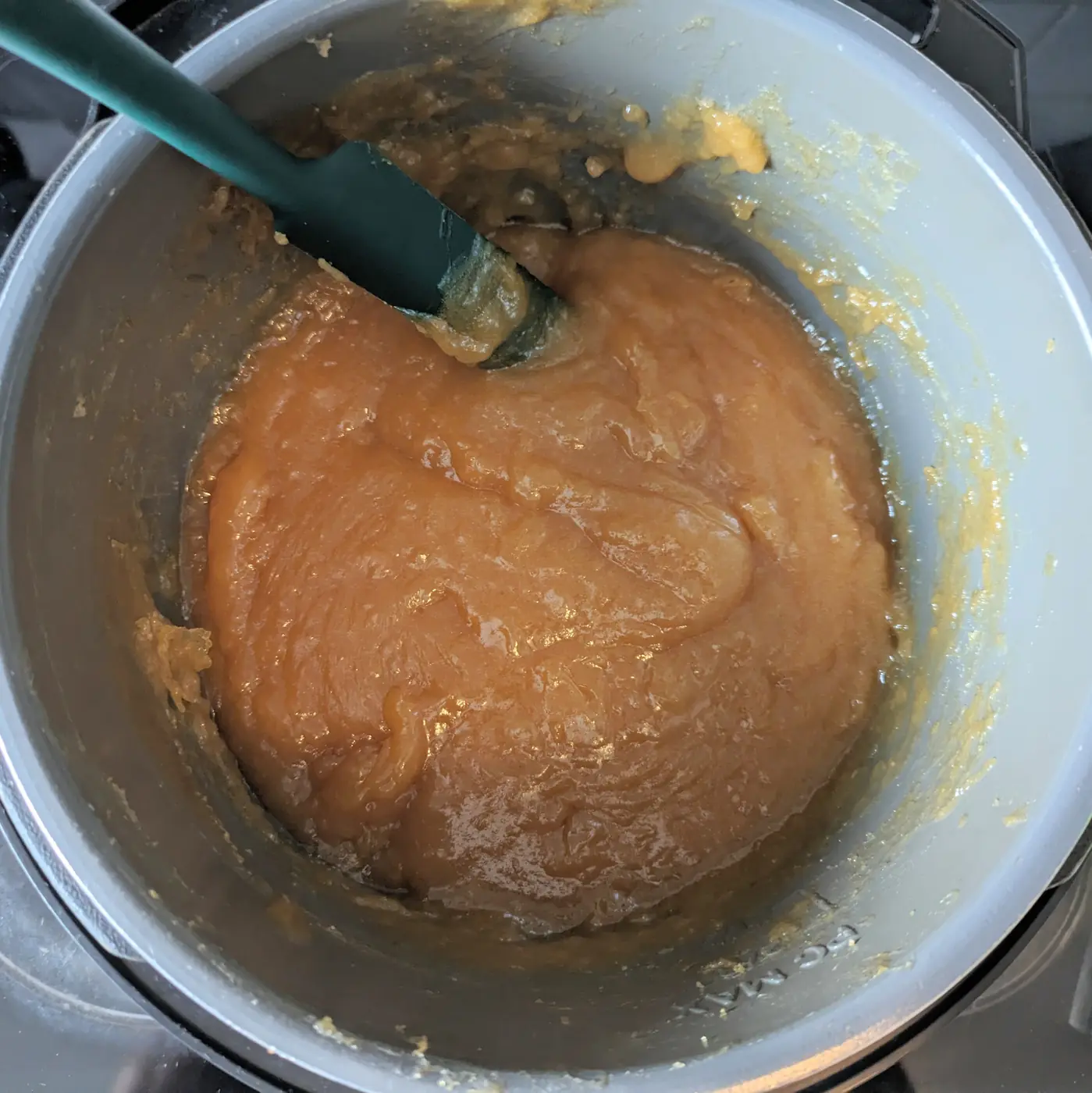
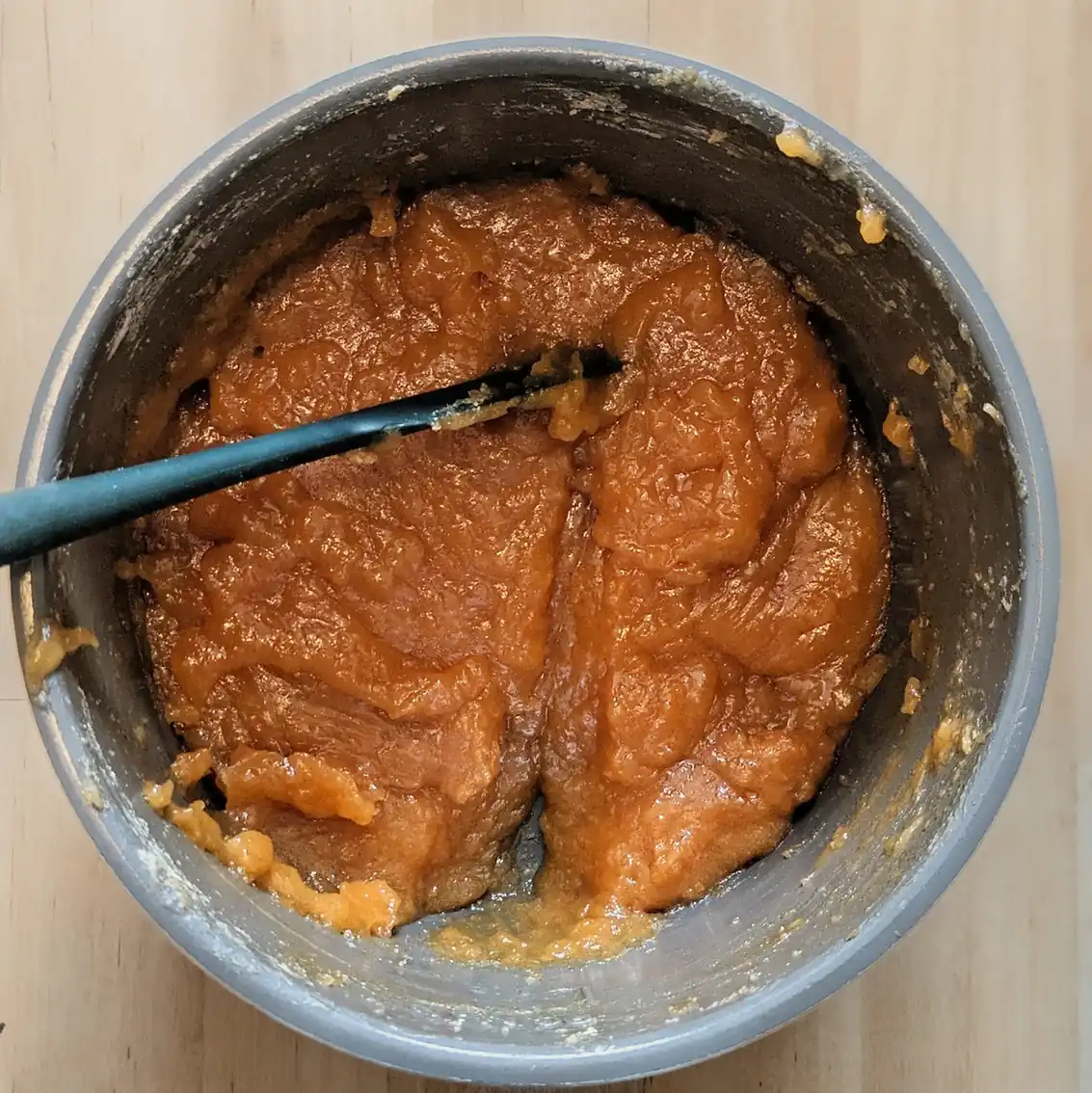
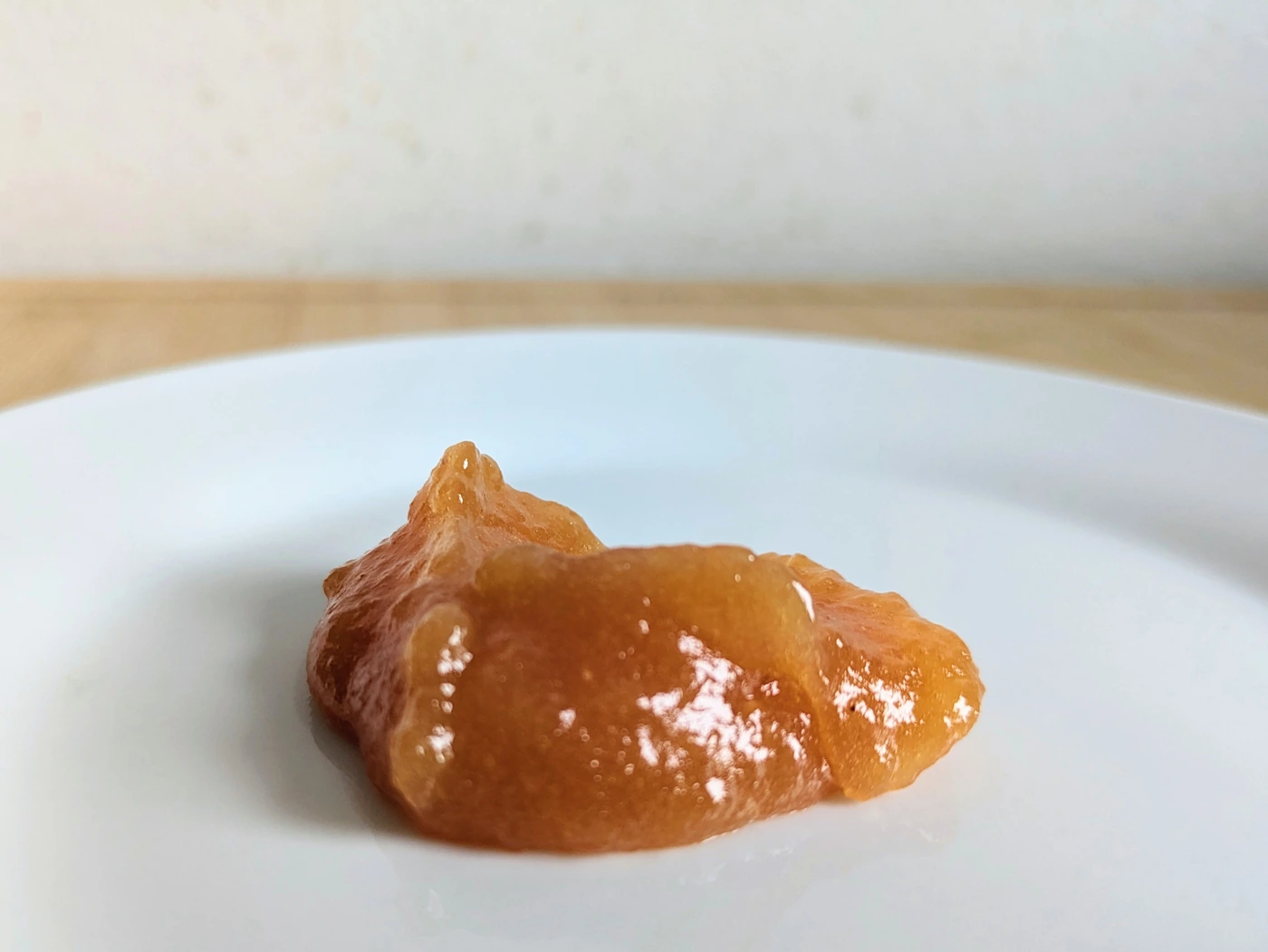
Test the setting texture
The paste should become dense enough to gather into a mound. A spatula drawn across the base should leave a visible track for several seconds.
Check a sample cold before molding the batch:
- Chill a plate in the freezer.
- Spoon a little paste onto it.
- Allow it to cool thoroughly.
- Push it with your finger or cut through it with a teaspoon.
The sample should hold together as a soft, cohesive piece. If it smears like quince butter or flows back together, continue reducing and test again.
Do not wait for the hot paste to become as firm as the finished block. It will firm further as it cools.
Fill the moulds
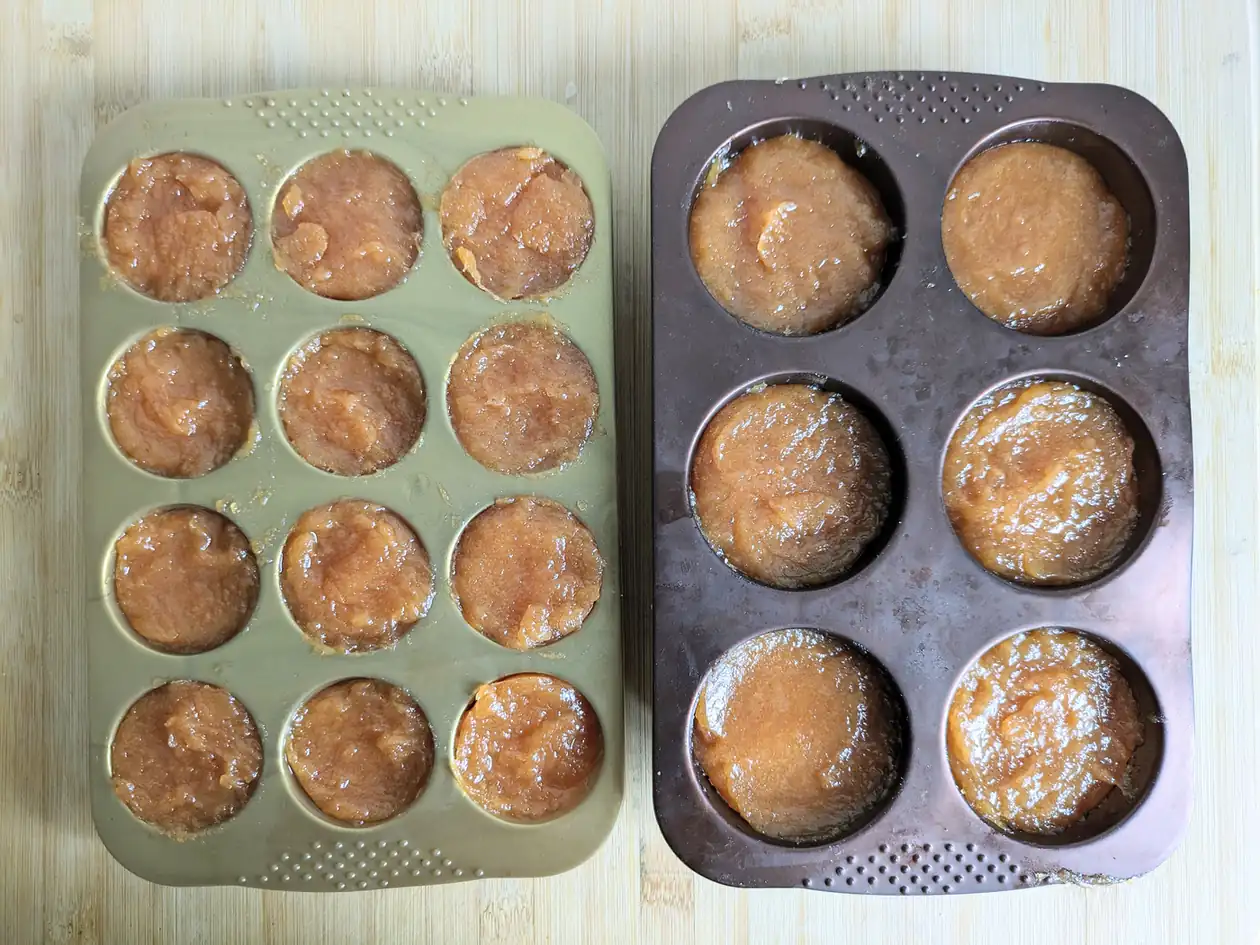
Silicone muffin moulds are useful for making individual portions. Place them on a firm tray and wipe the base and sides with a very thin coating of neutral oil.
Spoon in the paste approximately 2–3 cm deep and smooth the surface.
Alternatively, use a shallow heatproof container lined with lightly greased baking parchment.
Cool and chill
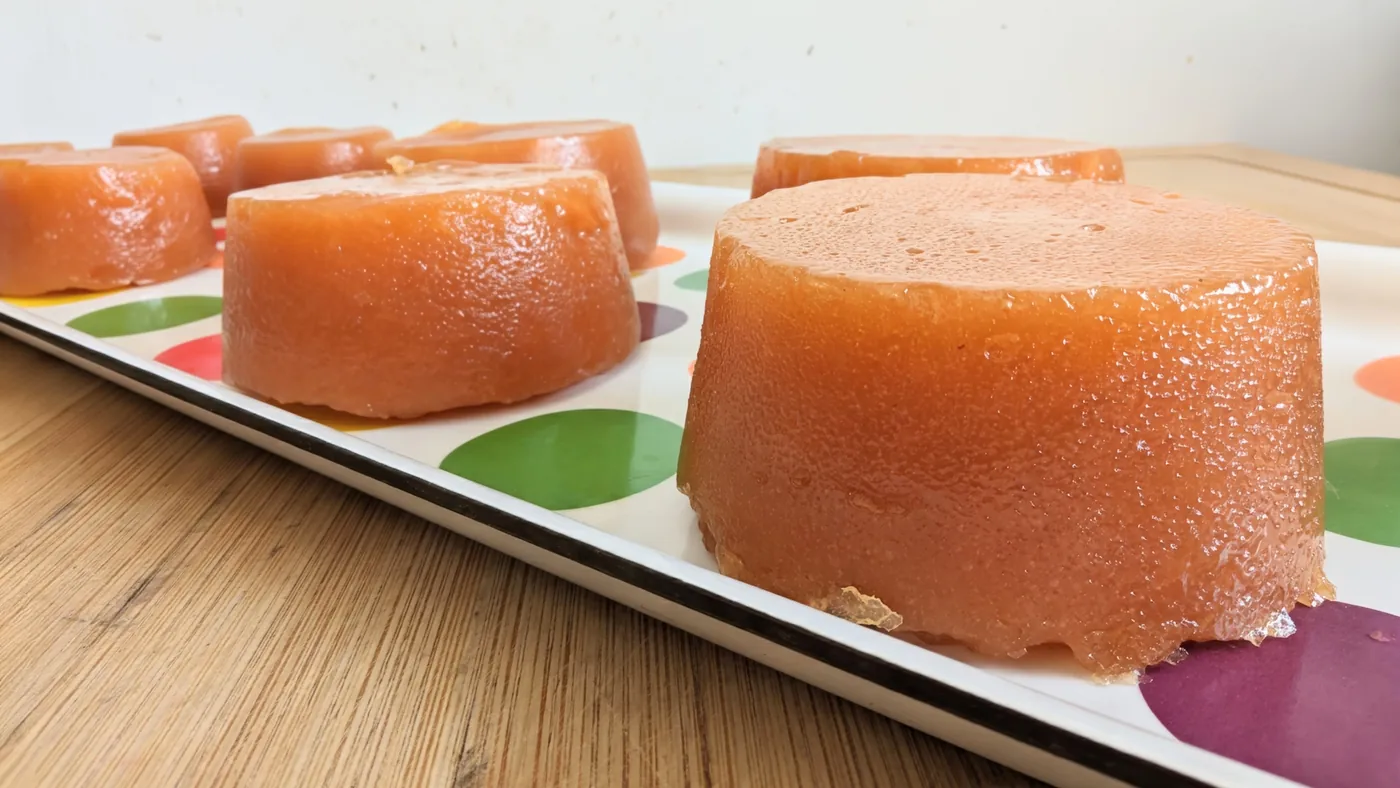
Cool promptly, then cover and refrigerate overnight. Leave the portions in their moulds until fully set.
Check after 24 hours, allowing up to 48 hours if necessary. Gently peel the silicone away from the paste. A finished portion should hold its shape and cut into neat slices.
Tips for Making Quince Paste
Weigh the purée
The sugar quantity is based on cooked, drained purée, not the whole quinces or the prepared raw fruit. Weigh after sieving if you choose to sieve it.
Keep the reduction stage uncovered
When making quince paste, moisture needs to escape so the purée can thicken. My batch took five hours in the slow cooker at 85°C, with the lid off throughout.
Judge texture rather than colour
My quinces were deep amber before the sugar was added. Colour alone does not tell you whether the paste has reduced enough to set.
Check before the timer finishes
Smaller or drier batches may finish sooner. Test the consistency during cooking rather than automatically leaving it for the full suggested time.
Don’t let it become too dry
The hot paste should still be workable enough to spoon into moulds. If it becomes excessively stiff, stir in hot water a tablespoon at a time until workable, then repeat the cooled-sample test.
How to Serve Quince Paste
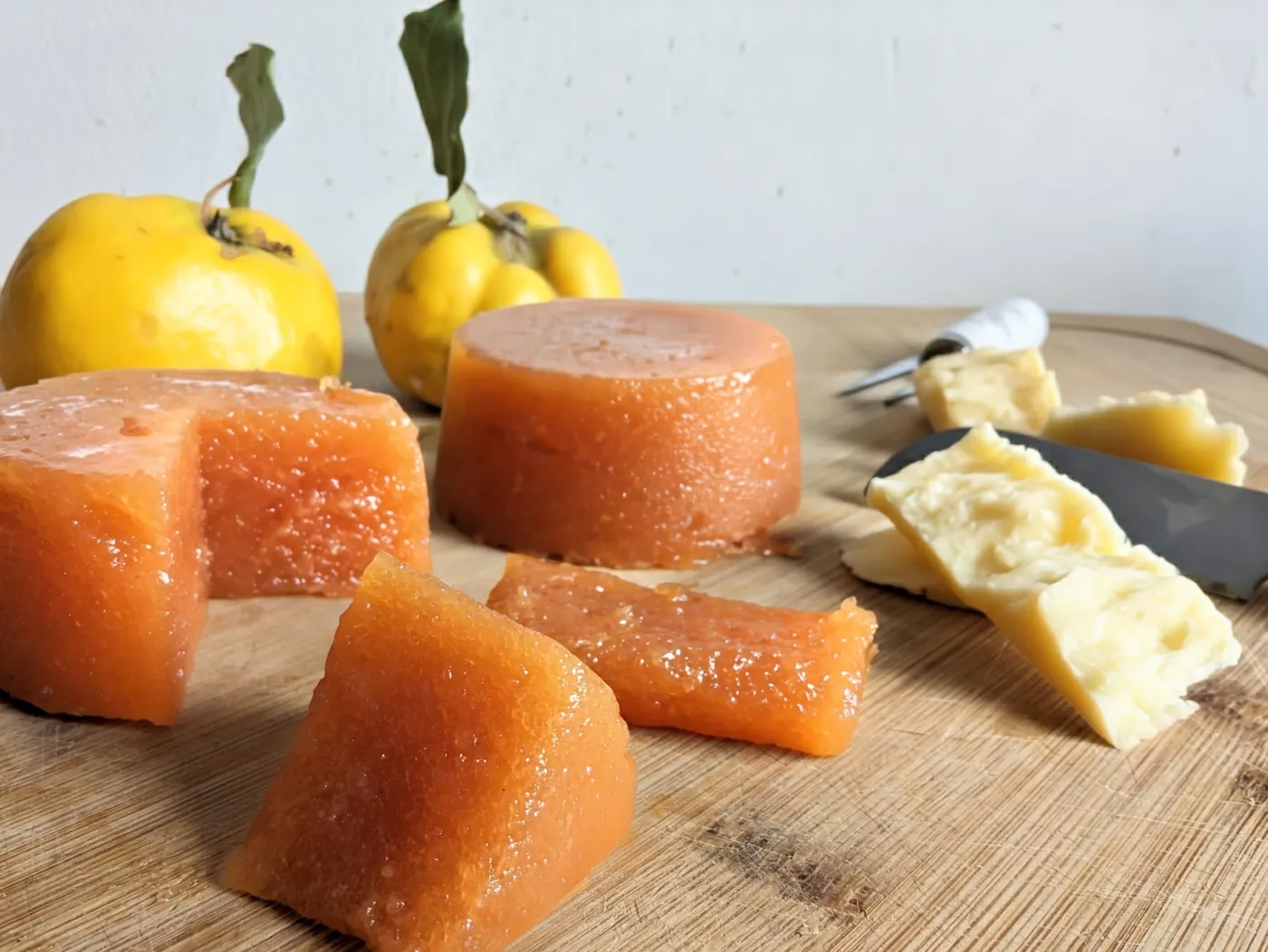
Manchego and quince paste are a traditional pairing, combining salty, nutty cheese with sweet, floral fruit. Serve thin slices of each with crackers or bread. Check the rennet if you need a vegetarian cheese, or choose vegetarian mature cheddar instead.
For a fuller cheese board, add oatcakes, crusty bread and a handful of walnuts or hazelnuts. Quince paste also works well thinly sliced over cream cheese on toast.
Take out the portion you plan to serve and let it lose its fridge chill before eating. Small moulded portions make a useful addition to a festive cheese platter.
How to Store Quince Paste
Once the portions have cooled, set and been unmoulded, wrap them individually in cling film. Keep the wrapped portions in an airtight container in the fridge to prevent them drying out.
I prefer to keep my quince paste in the freezer, with the individually wrapped portions in a freezer-safe container or bag. The high sugar content can help it stay softer when frozen, with mine always being easy to slice directly out of the freezer.
Thaw larger portions in the fridge when needed. Keep this homemade quince paste refrigerated or frozen rather than storing it at room temperature.
Frequently Asked Questions
Not for this recipe. I leave the skins on, cook the fruit until soft and blend thoroughly. For a finer texture, pass the purée through a sieve before weighing it and adding sugar.
Yes. Simmer the chopped fruit in water until tender, then drain, blend and weigh. Add an equal weight of sugar and the lemon juice, then reduce uncovered in a wide saucepan until a cooled sample holds together.
No. The methods are interchangeable at each stage. You can pressure cook the fruit and reduce it on the hob, or soften it on the hob and use a slow cooker for the reduction.
Check that the fruit and skins are fully softened, then blend thoroughly. If the texture still bothers you, press the purée through a fine sieve before weighing it for the sugar.
It may need further reduction. Allow it to chill fully before assessing it.
If it remains spreadable, return it to the cooking pot, reduce further and repeat the cooled-sample test before moulding again.
This version uses equal weights of sugar and drained purée. A lower-sugar version would need separate testing because it changes the set and keeping qualities.
Different quinces will turn a different shade with cooking. Some barely darken where as others become a deep red.
Use the texture and cooled-sample test to judge readiness rather than cooking solely to achieve a redder colour.
More Quince Recipes
- Quince Jelly
- Apple and Quince Ketchup
- Homemade Quince Cordial
- Instant Pot Quince Butter
- Caramelised Onion and Quince Chutney
Quince Paste (Membrillo)
Ingredients
- 1.5 kg whole quinces skins left on, cores and seeds removed
- Granulated sugar equal to the weight of the cooked drained purée; have approximately 1.5 kg available
- 30 ml lemon juice 2 tbsp
- Water as required for the chosen softening method
- A little neutral oil for greasing the moulds
Instructions
- Prepare the fruit. Wash the quinces and rub off any fuzz. Remove the cores, seeds and hard surrounding tissue, leaving the skins on. Trim as needed and cut into approximately 2 cm pieces.
Soften using either method.
- Stovetop: Add to a saucepan with water just to cover. Bring to a gentle simmer, partially cover and cook for approximately 30–45 minutes, until the flesh and skins crush easily. Start checking after 25 minutes.
- Instant Pot: Add the fruit and your model’s minimum required water quantity. Cook on High Pressure for 10 minutes, allow 10 minutes natural release, then carefully release the remaining pressure. Check that the fruit is completely tender.
- Drain and blend. Drain in a sieve for five minutes, reserving the liquid. Blend until smooth, adding a little reserved liquid only if necessary. Sieve for a finer texture if desired.
- Weigh and add sugar. Weigh the purée transferred into the reduction pot. Add the same weight of granulated sugar and the lemon juice. Stir thoroughly.
Reduce using either method.
- Stovetop: Heat gently in a wide, heavy-based saucepan until the sugar dissolves. Simmer uncovered for approximately 60–120 minutes or longer. Stir frequently, scraping the base and corners, then almost continuously as it thickens. Lower the heat as needed.
- Slow cooker: Cook at 85°C with the lid off throughout, if permitted by your appliance. My batch took five hours to reach a setting texture. Stir regularly, scraping the base and sides, and more frequently towards the end.
- Check readiness. The paste should hold a mound and leave a spatula track across the base for several seconds. Cool a small sample thoroughly on a chilled plate: it should hold together as a soft piece rather than spread. Continue reducing if necessary.
- Fill the moulds. Lightly oil silicone moulds and place on a tray, or line a shallow heatproof container with lightly greased baking parchment. Spoon in the paste approximately 2–3 cm deep and smooth the tops.
- Cool promptly, cover and refrigerate overnight. Check after 24 hours, allowing up to 48 hours if needed. Unmould once firm.
- Wrap individual portions in cling film and refrigerate in an airtight container. Freeze surplus portions in a freezer-safe container or bag.