Cornelian Cherry Jam – Easy No-Pectin Recipe
A simple Cornelian cherry jam made with fresh fruit, sugar and lemon. No added pectin is needed for this tart, soft-set homemade preserve.
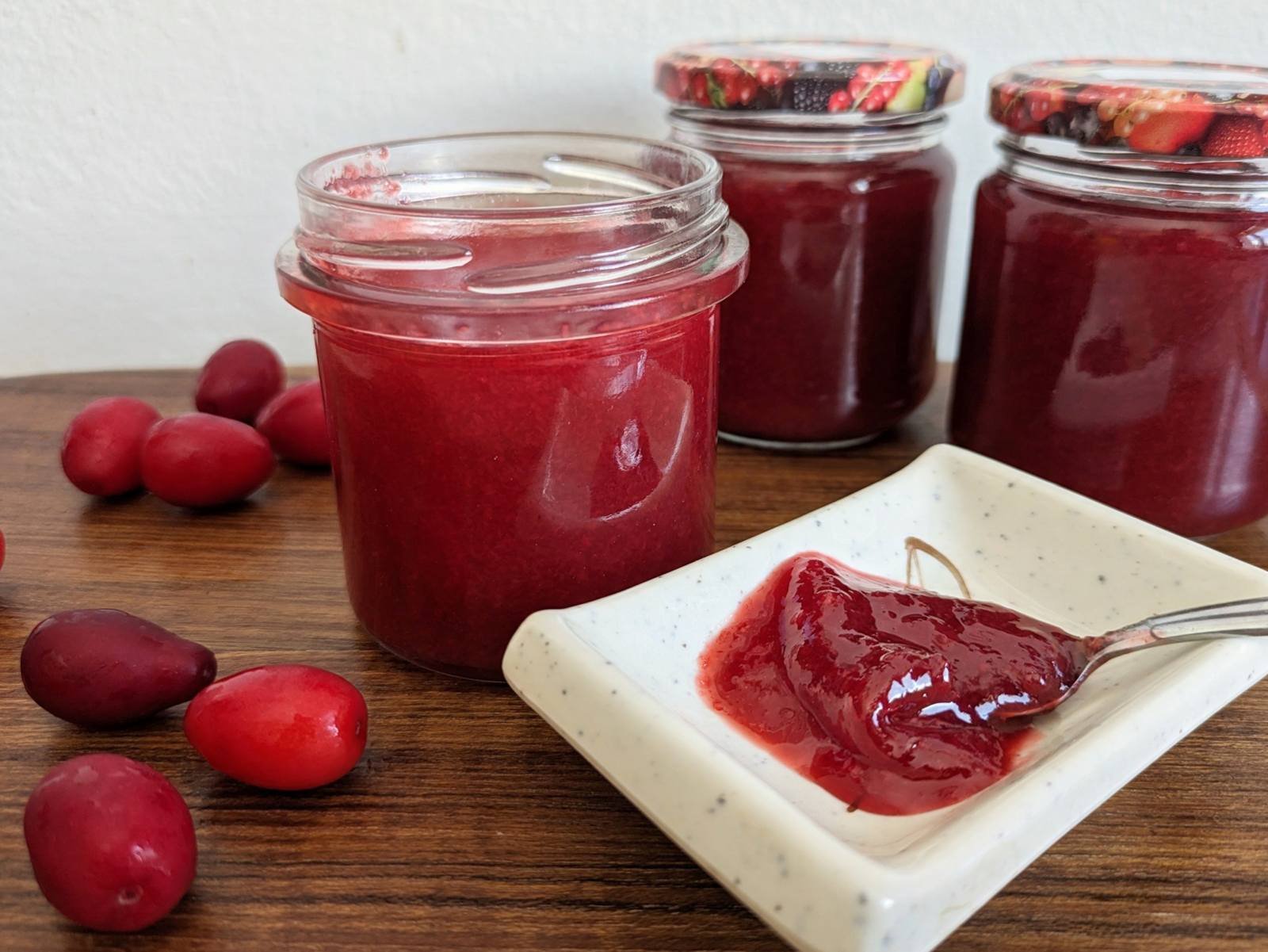
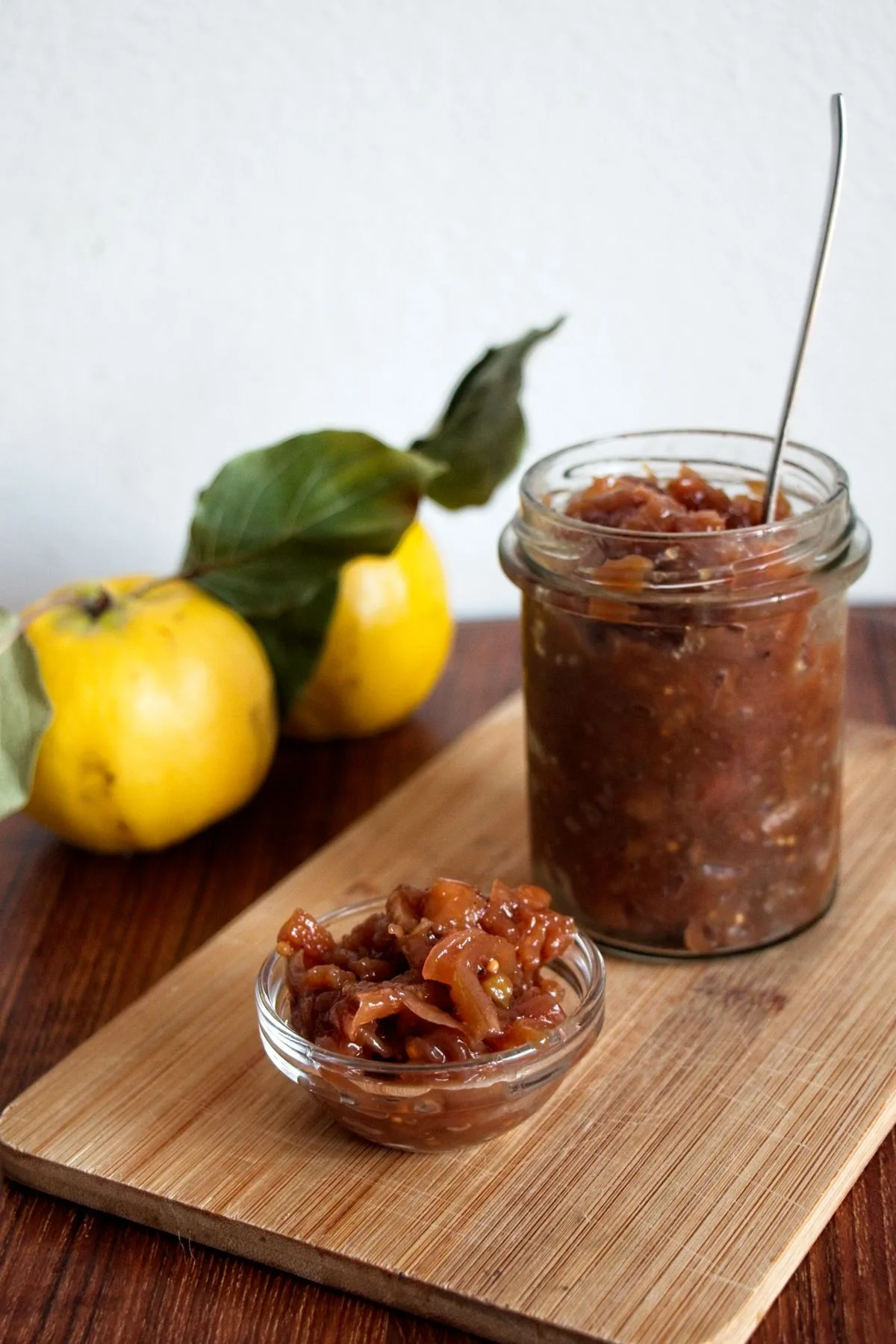
This Cornelian cherry jam has a rich, tart fruit flavour balanced with just enough sugar and a little lemon juice. Made without added pectin, it’s a simple way to preserve fresh Cornelian cherries when the fruit is in season.
If you’ve ever picked Cornelian cherries, you’ll know just how much fruit one tree can produce. This year’s crop was even bigger than usual, and a quick shake of the branches was enough to send several kilos of ripe cherries raining down.
With that much fruit coming down at once, we needed to get started quickly to preserve some of it for the rest of the year. First up was Cornelian cherry jam, especially as we’d just finished the last jar from the previous harvest at the start of the summer!
Cornel Cherry Jam Ingredients
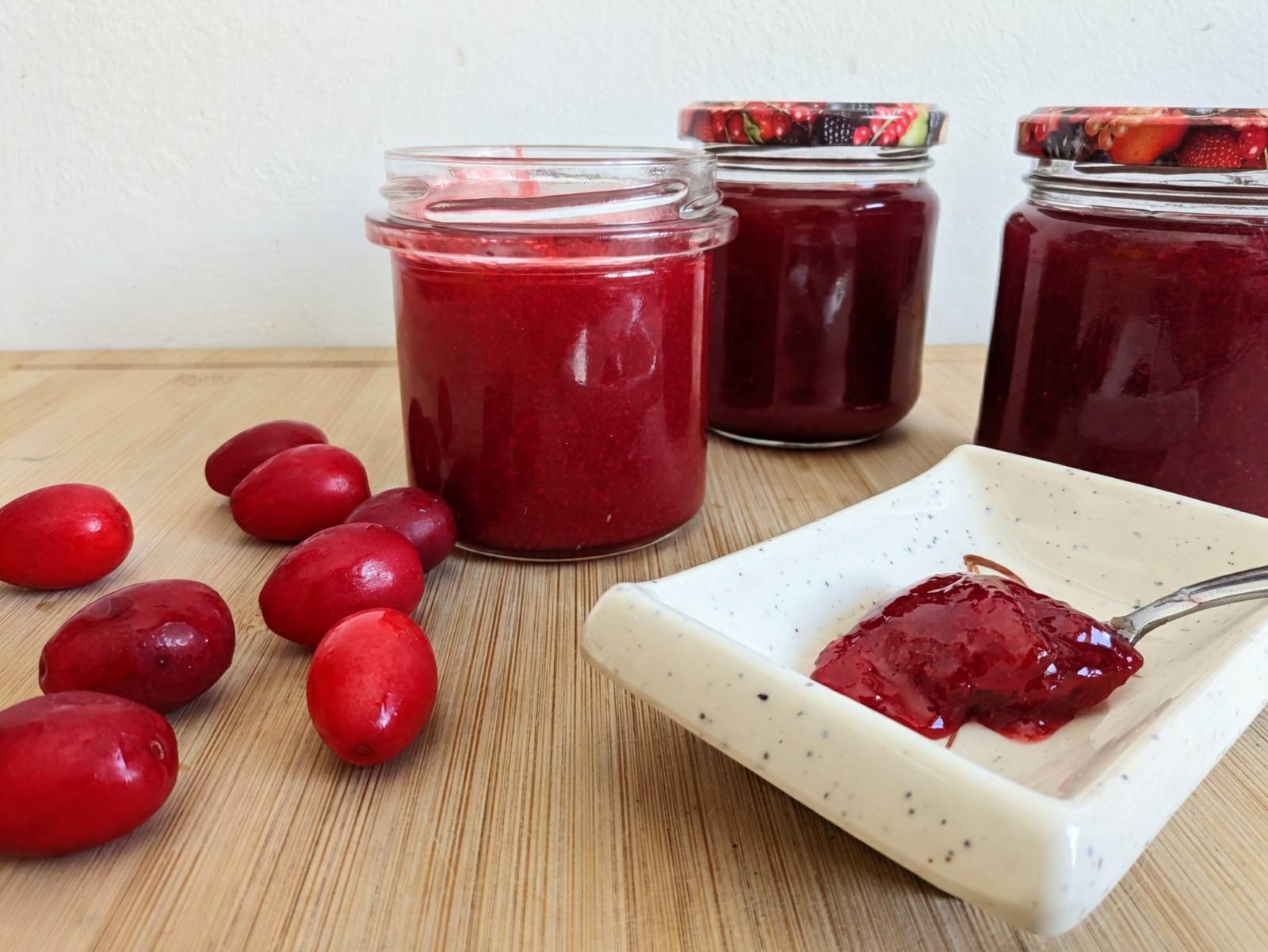
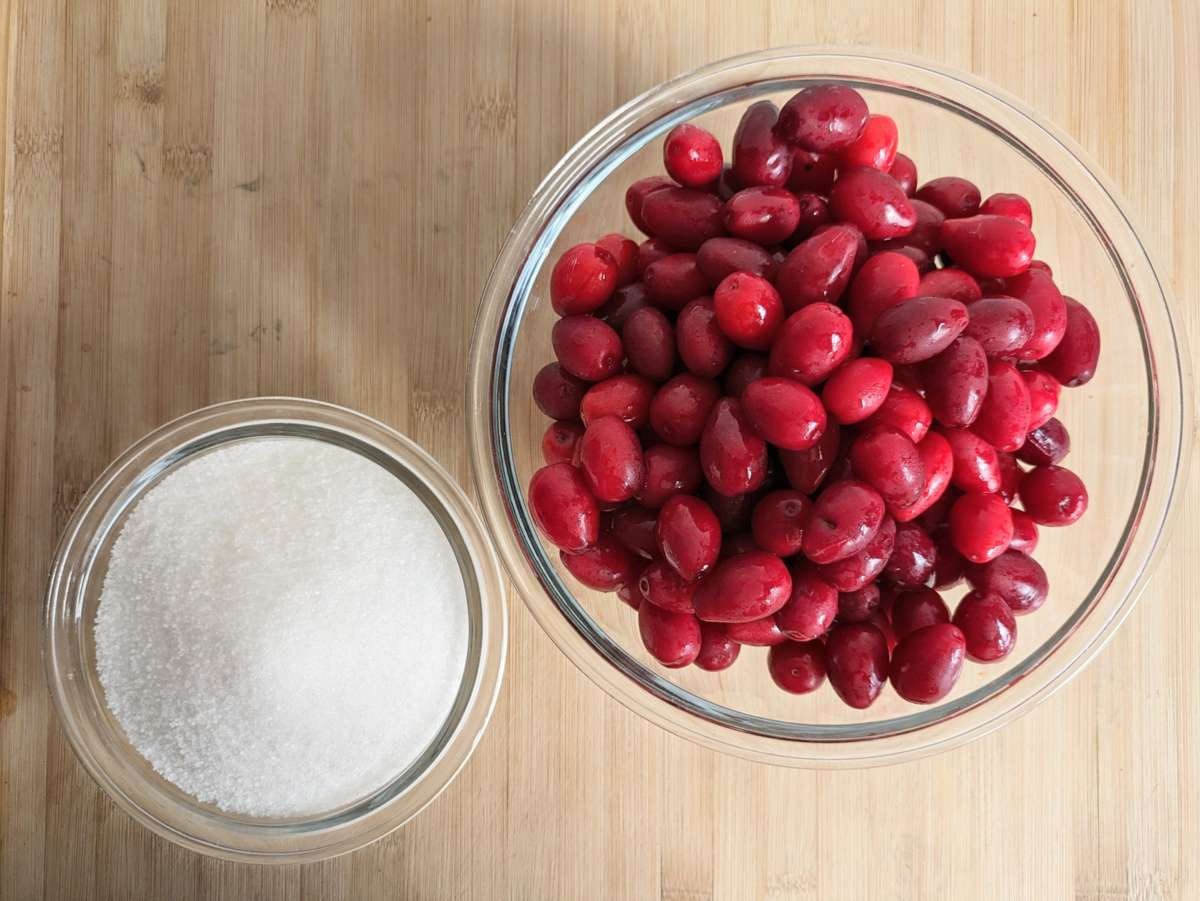
- Cornelian cherries – I like to use a mixture of very ripe, dark-red cherries and less ripe, bright-red fruit. The riper cherries give the jam a full flavour, while the slightly underripe fruit contains more pectin and helps the jam set naturally without added pectin.
- Granulated sugar – Sweetens the naturally tart cherries and helps the jam thicken and set as it cooks. This recipe has enough sugar to set properly while keeping the jam a little sour. Feel free to add more if you like your jam to be a little sweeter.
- Lemon juice – Adds acidity, balances the sweetness and helps the natural pectin in the fruit set.
- Water – A small amount prevents the cherries from catching while they soften and release their own juices.
How to Make Cornelian Cherry Jam
Cook the Cornelian Cherries Until Soft
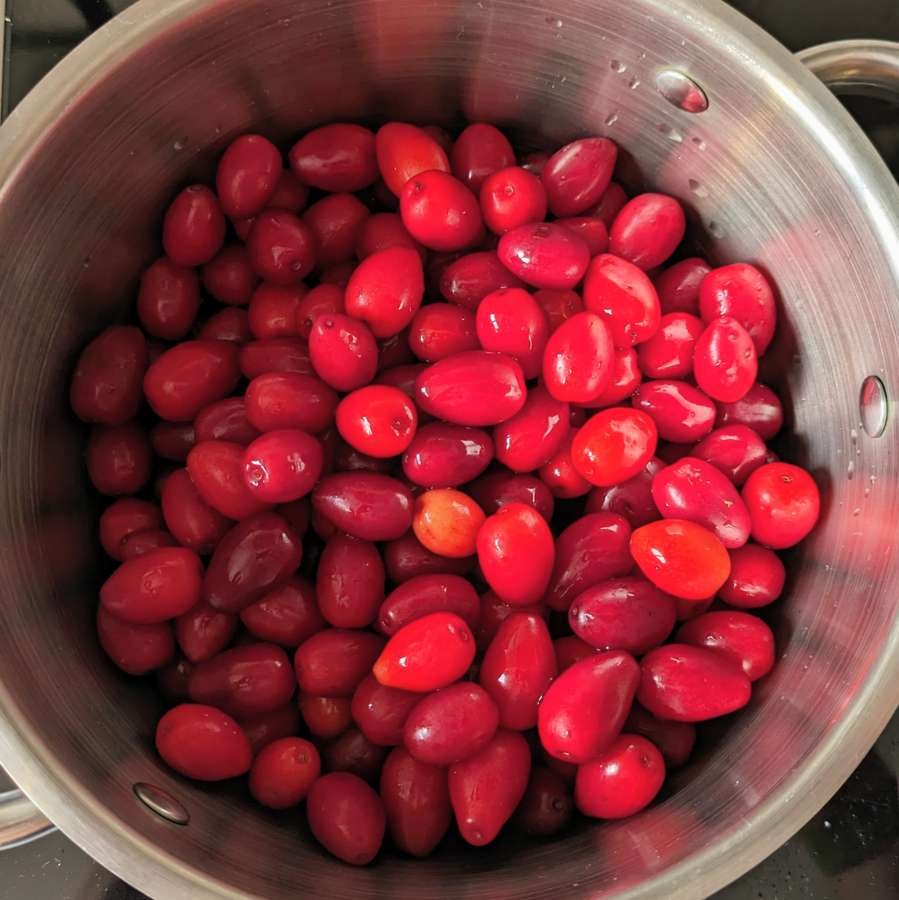
Wash the Cornelian cherries and remove any stalks, leaves or damaged fruit. Add them whole to a large, heavy-bottomed saucepan with the water and cook over low heat.
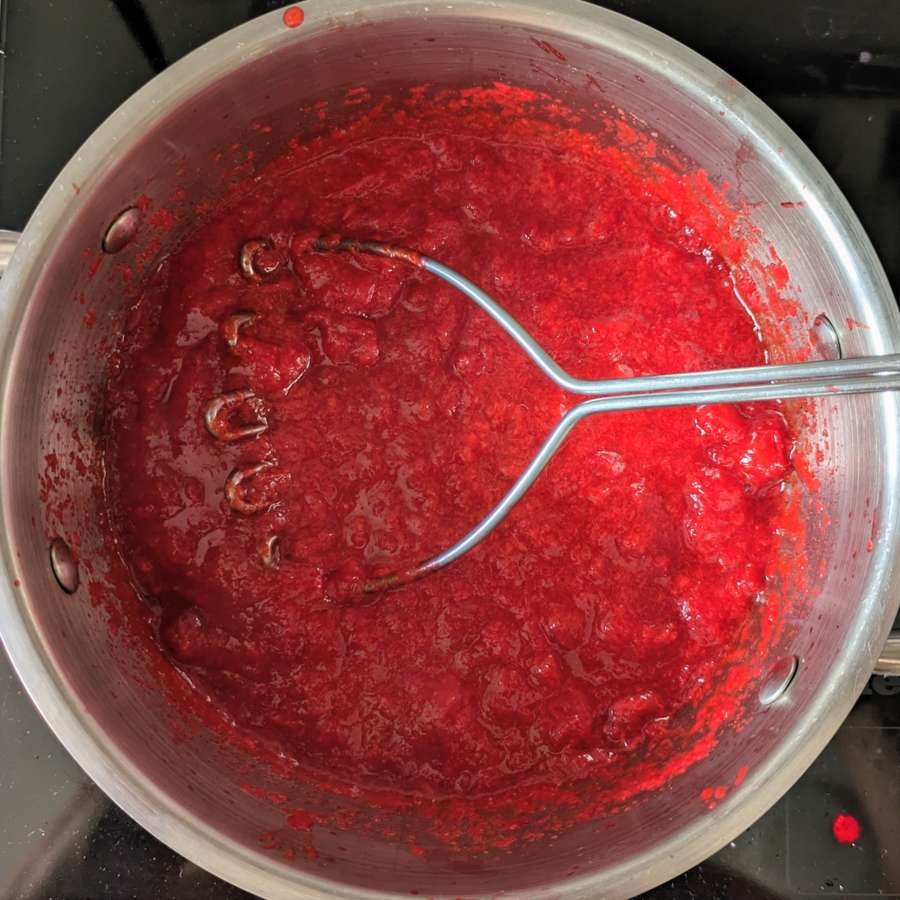
Mash the cherries with a potato masher every few minutes as they soften; they will quickly break down and turn into a thick pulp. Continue cooking for around 15–20 minutes, stirring occasionally to make sure the fruit doesn’t catch on the bottom of the pan.
Remove the Stones
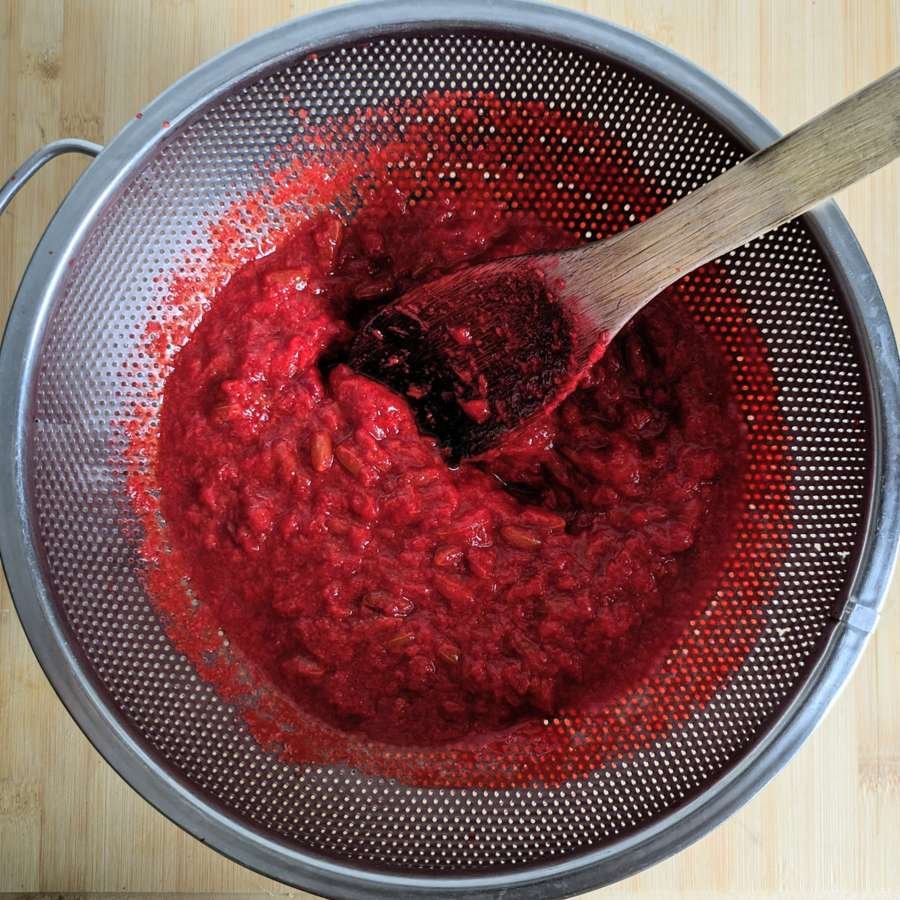
Set a colander over a large bowl and spoon in the cooked cherries along with any liquid remaining in the pan. Use the back of a wooden spoon or sturdy spatula to press the softened fruit through the holes.
Keep working the mixture until most of the flesh has passed through and you are left mainly with the stones and tougher pieces of skin. Scrape any thick pulp from the underside of the colander into the bowl.
Weigh the Cornelian Cherry Pulp
Weigh the pulp before continuing, then add 70 g of sugar for every 100 g of Cornelian cherry pulp. For example, if you have 700 g of pulp, use 490 g of sugar. Weighing the pulp after removing the stones keeps the sugar-to-fruit ratio consistent, regardless of the size of the cherries or their stones.
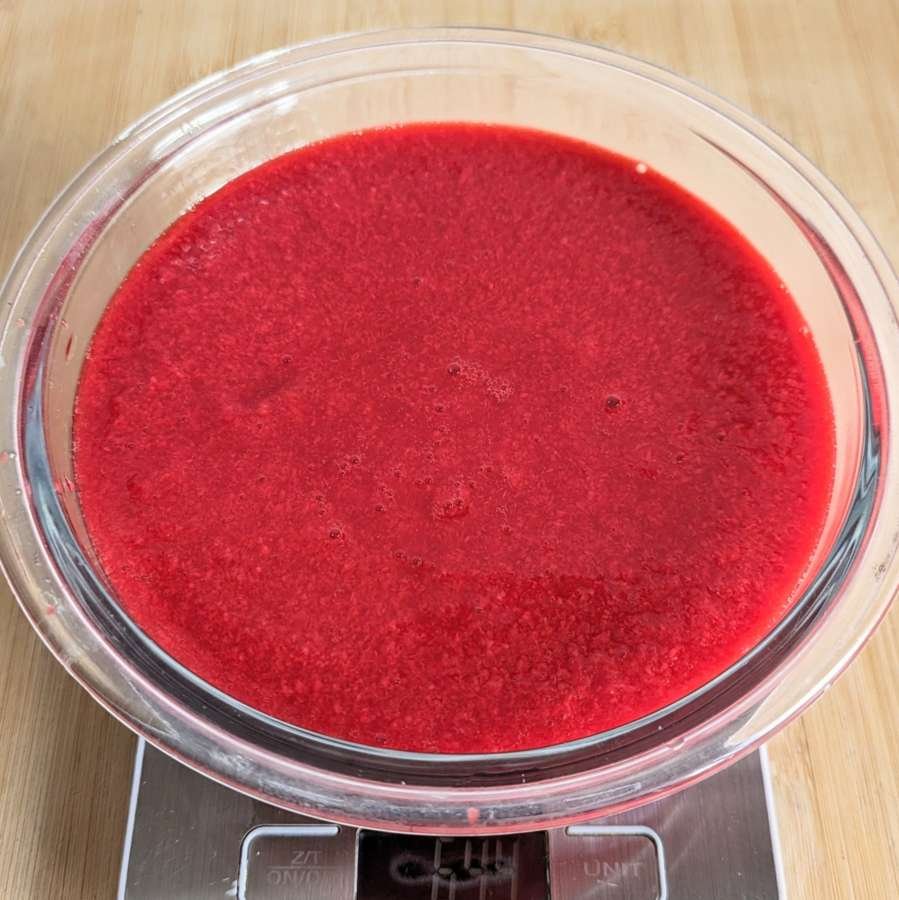
Add the Sugar and Lemon
Return the Cornelian cherry pulp to the cleaned saucepan and add the sugar and lemon juice. Heat gently, stirring regularly, until the sugar has completely dissolved. Avoid bringing the mixture to a full boil until you can no longer feel any sugar crystals when you run the spoon across the bottom of the pan.
Pop a small plate in the freezer (we will use this later for testing the set)
Boil the Jam
Increase the heat and bring the mixture to a steady rolling boil. Cook uncovered, stirring frequently to prevent the fruit from catching on the bottom. Start checking the jam after about 7–8 minutes; the mixture should become darker, glossier and noticeably thicker.
Use a ladle or a tablespoon to remove any white foam as it rises to the top.
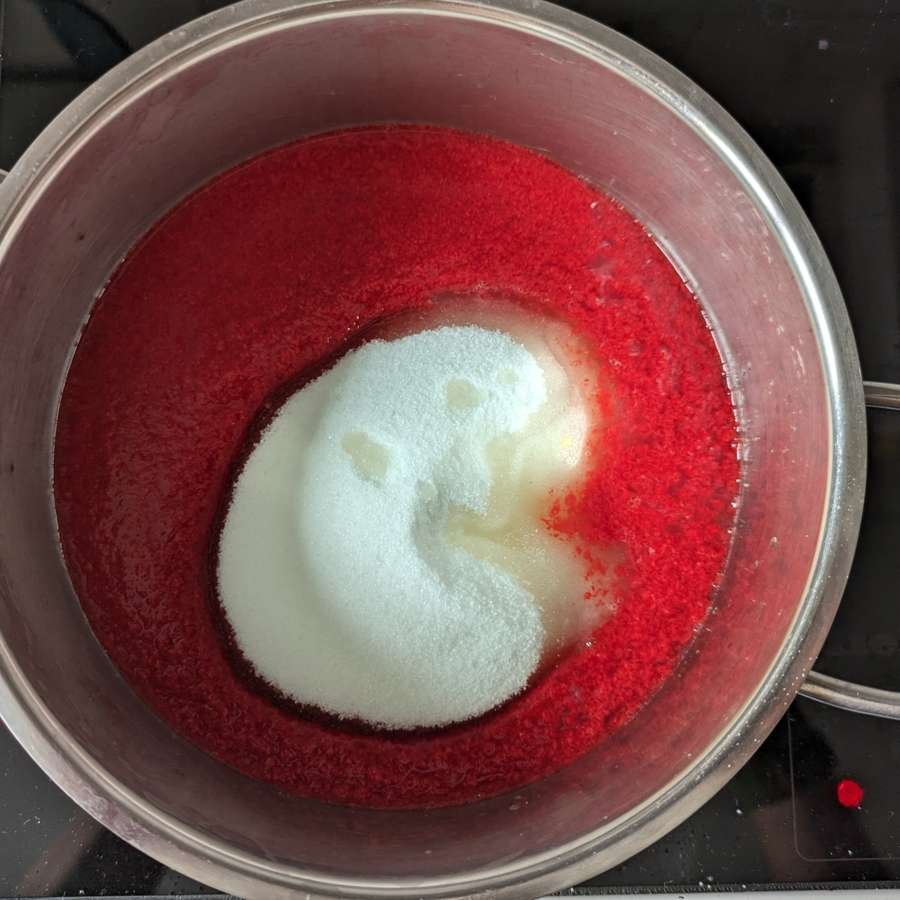
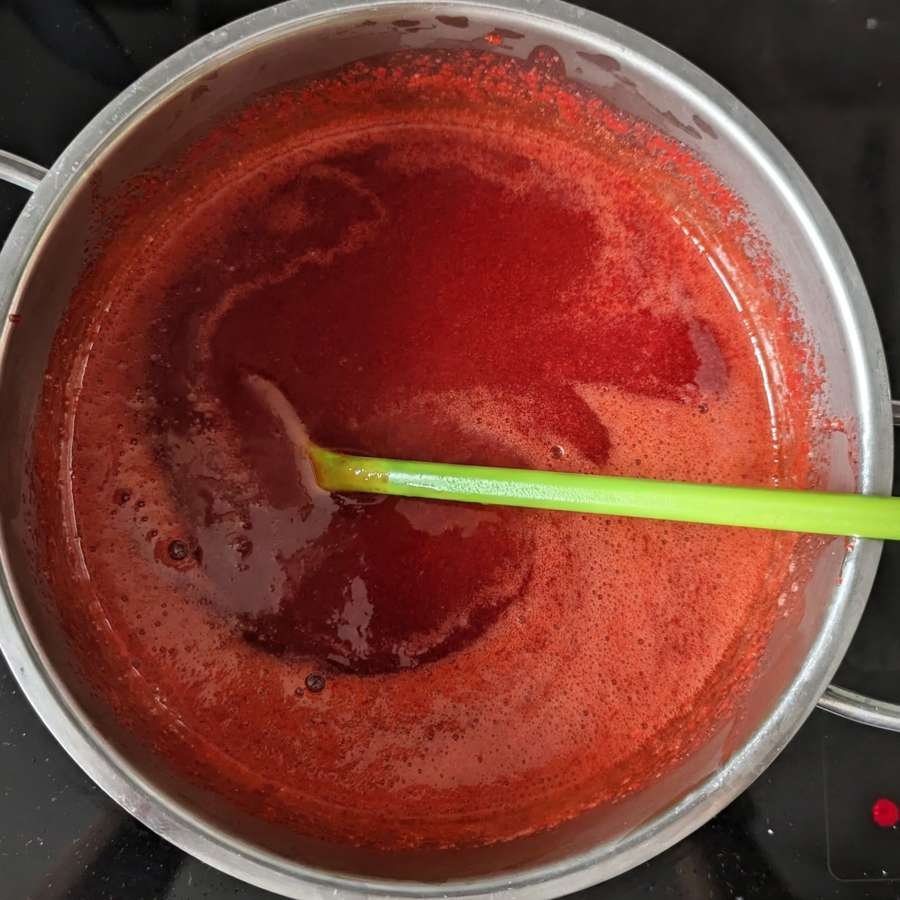
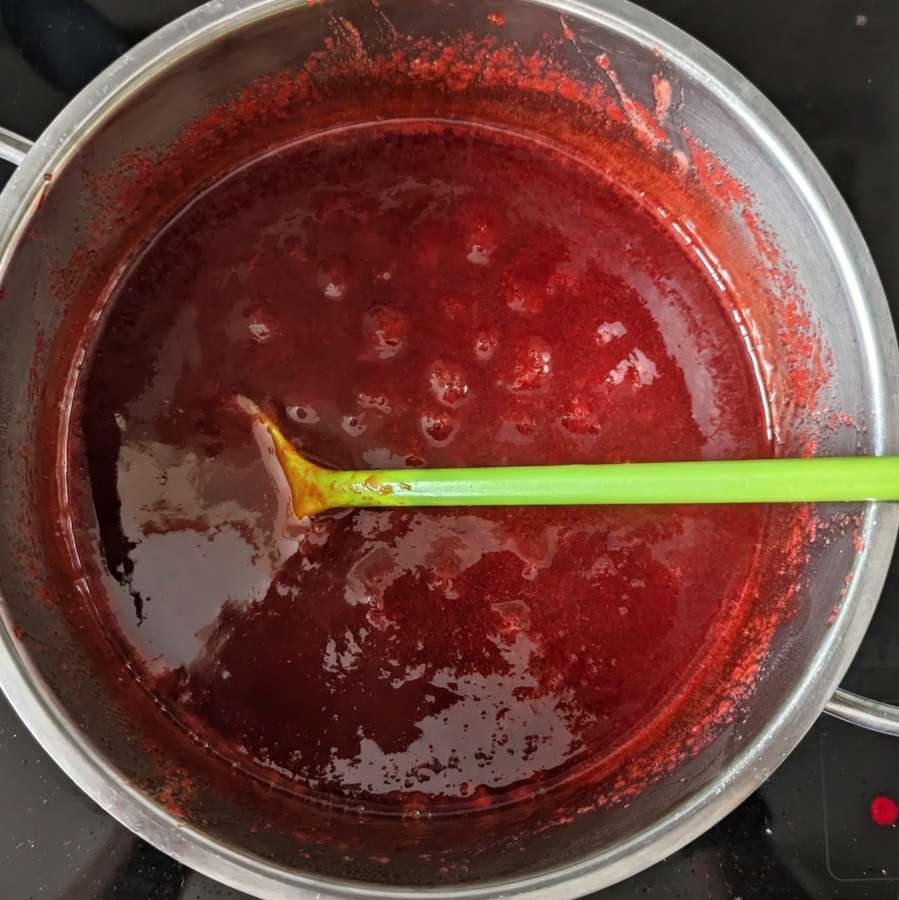
Check the Jam Has Set
There are two simple ways to check whether the jam is ready:
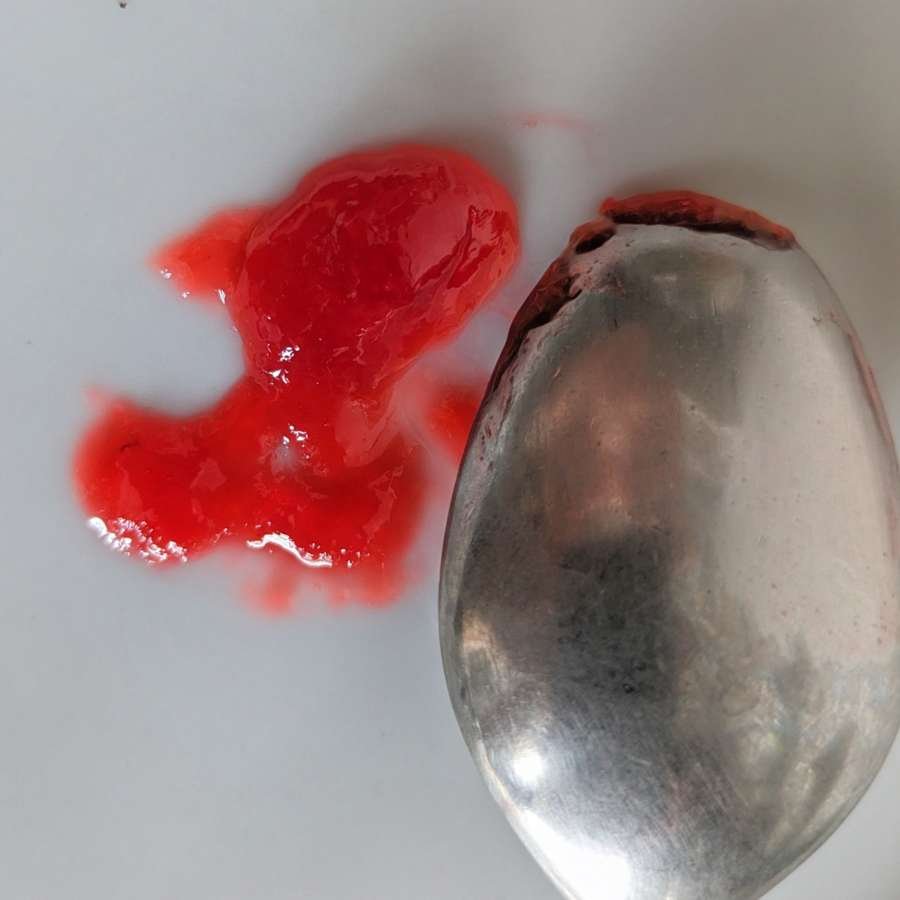
Wrinkle test: Spoon a small amount onto a plate that has been chilled in the freezer. Leave it for about 30 seconds, then push the jam gently with your finger. If the surface wrinkles and the jam doesn’t immediately flow back together, it has reached setting point.
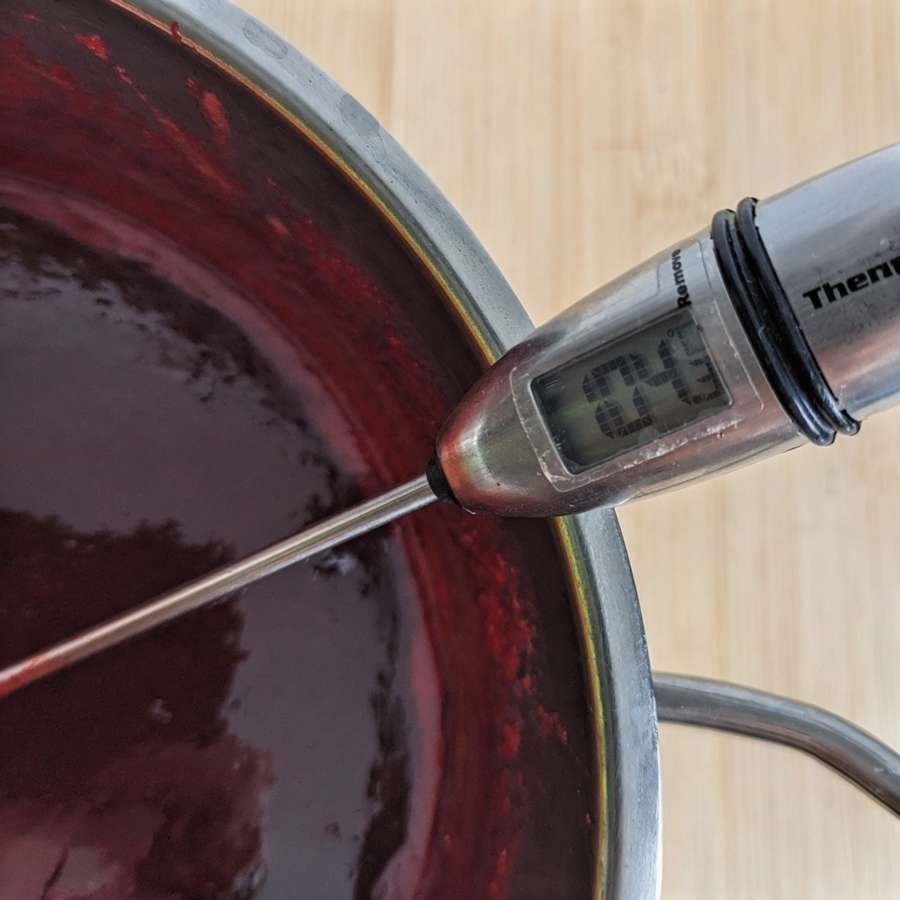
Temperature test: Use a kitchen thermometer to check the temperature. The jam should reach around 104–105°C (219–221°F).
Aim for a soft, spreadable set rather than a firm jelly. The jam will continue to thicken as it cools, so avoid cooking it until it looks completely set in the saucepan.
Fill the Jars
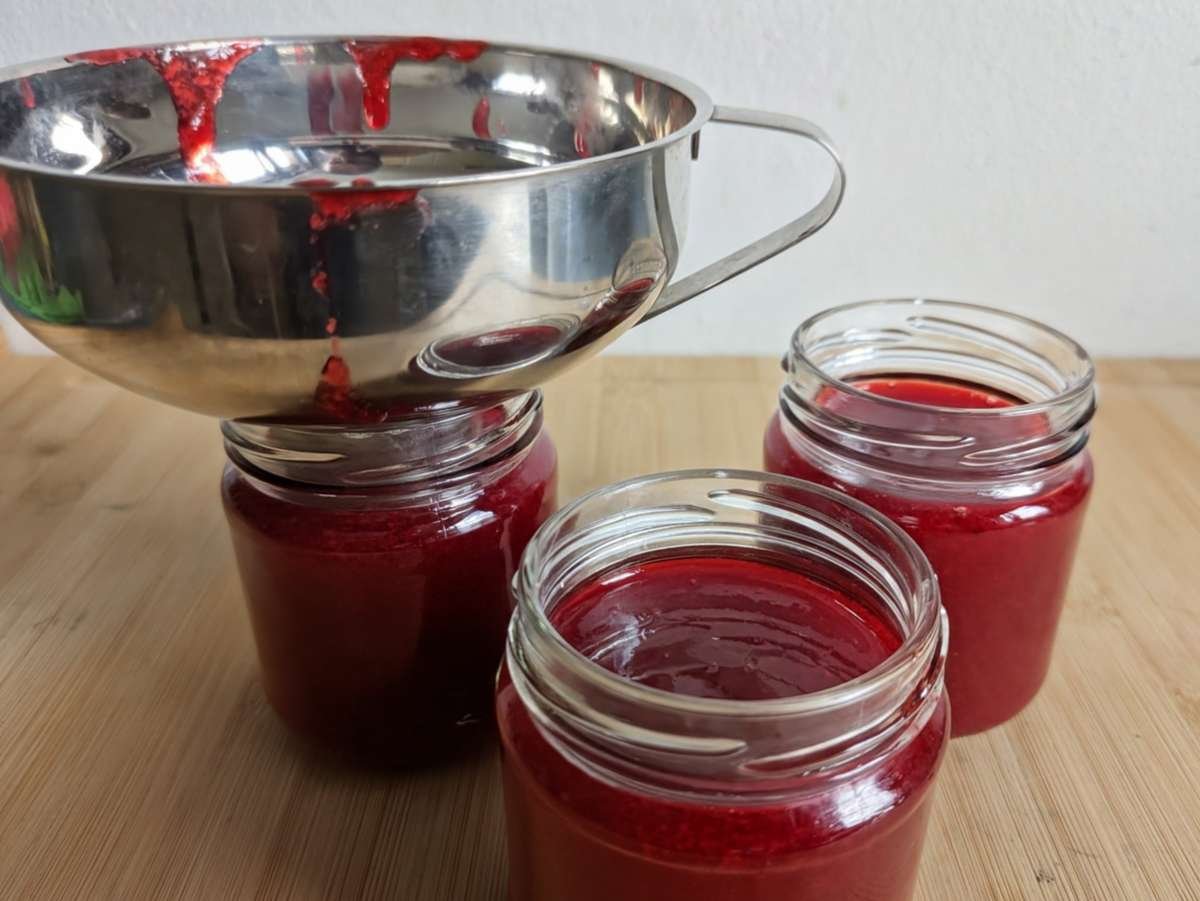
Remove the pan from the heat and leave the jam for a minute before carefully spooning it into clean, hot jars. Wipe the rims and seal with clean lids, then leave to cool completely.
Unless you process the jam using a tested canning method, keep it refrigerated and use within a few weeks. It can also be frozen for longer storage.
How to Store and Preserve Cornelian Cherry Jam
For shelf-stable jam, fill clean, hot canning jars with hot jam, leaving around ¼ inch (6 mm) headspace. Wipe the rims, add the lids and process the jars upright in a boiling-water canner, with at least 1 inch (2.5 cm) of water covering them. Processing times vary depending on the tested recipe and your altitude. Once processed, allow the jars to cool undisturbed for 12–24 hours before checking the seals.
For full instructions on safely water-bath canning jam, see the National Center for Home Food Preservation’s canning guide.
Note: This Cornelian cherry jam recipe hasn’t been independently tested for shelf-stable canning, so I recommend refrigerating or freezing it unless you’re following an appropriate tested canning method.
Other Late Summer Jams and Jellies
- Lingonberry Apple Jam Recipe
- Elderberry Jelly Recipe
- Cornelian Cherry Jelly Recipe
- Spiced Plum Butter Recipe
Cornelian Cherry Jam
Ingredients
- 1 kg Cornelian cherries a mix of very ripe and bright red, less ripe
- 100 ml water
- Granulated sugar 70 g for every 100 g prepared Cornelian cherry pulp
- 30 ml fresh lemon juice
Instructions
- Wash the Cornelian cherries and remove any stalks, leaves or damaged fruit. Add the whole cherries and water to a large, heavy-bottomed saucepan.
- Cook over low heat for 15–20 minutes, mashing with a potato masher every few minutes. The cherries should quickly soften and break down into a thick pulp.
- Place a colander over a large bowl. Add the cooked cherries and press firmly with the back of a wooden spoon or spatula until most of the fruit pulp has passed through and the stones remain behind.
- Weigh the resulting pulp. Measure 70 g granulated sugar for every 100 g of Cornelian cherry pulp. For example, 700 g of pulp requires 490 g of sugar.
- Return the pulp to the cleaned saucepan and add the measured sugar and lemon juice. Heat gently, stirring regularly, until the sugar has completely dissolved.
- Increase the heat and bring to a rolling boil. Cook uncovered, stirring frequently, and begin checking the set after 7–8 minutes.
- Check the set using a chilled plate: spoon a little jam onto the plate, leave for 30 seconds and gently push it with your finger. The surface should wrinkle and not immediately flow back together. Alternatively, check with a kitchen thermometer; setting point is around 104–105°C (219–221°F).
- If the jam is still runny, boil for another 1–2 minutes before testing again. Remove from the heat once it reaches a soft set, as it will thicken further as it cools.
- Spoon the hot jam into clean, hot jars, seal and allow to cool completely. Refrigerate unless using an independently tested canning method suitable for the recipe.
Notes
Cornelian Cherry Jam FAQs
Yes, and this is a good option if you want a chunkier jam with more pieces of fruit. Cornelian cherry flesh grips the stones quite firmly, though, so an olive or cherry pitter makes the job much easier.
Give the jam time to cool completely before deciding it is too runny, as it thickens considerably as it cools. If it is still too loose, return it to the pan, boil for another 1–2 minutes and repeat the wrinkle test.
If you only used very ripe fruit, there may not be enough natural pectin to fully set the jam. This is why I like a mix of very ripe and less ripe fruit, as cornelian cherries contain quite a bit more pectin when they are not fully ripe.
No added pectin is needed for this recipe. I like to include some slightly less ripe, bright-red Cornelian cherries alongside the fully ripe fruit, as the less ripe cherries contain more natural pectin and help with setting.
Reducing the sugar can affect both the set and storage life of the jam, so I wouldn’t simply cut it substantially without adjusting the recipe. The 70:100 sugar-to-fruit-pulp ratio gives a good balance between the naturally tart cherries and a reliable jam texture.
Use it anywhere you’d normally use a tart berry or cherry jam, including toast, porridge, yoghurt and pancakes. Its sharp fruit flavour also works particularly well with cheese or as part of a cheeseboard.