Cornelian Cherry Jam
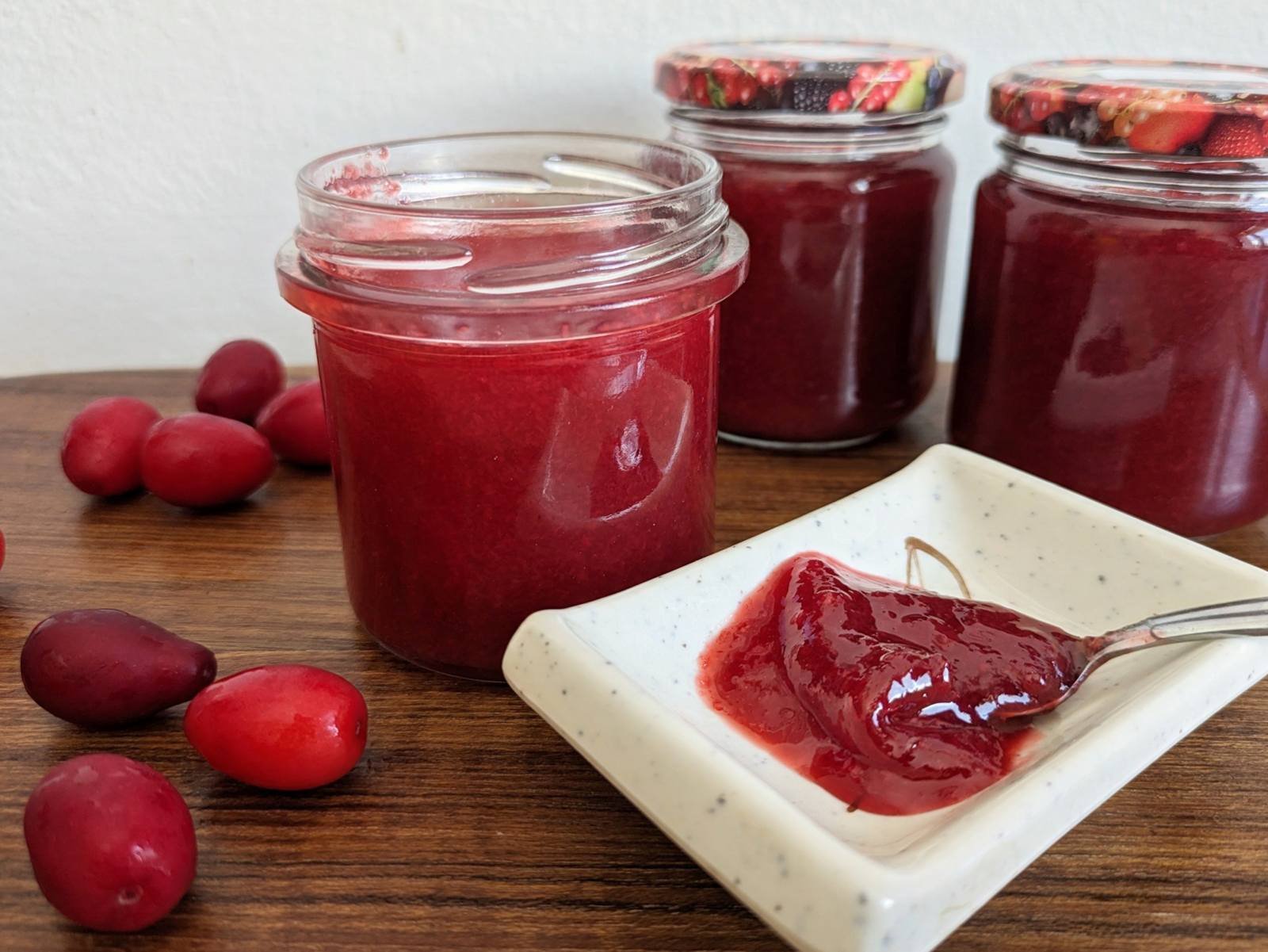
A tart, fruit-forward Cornelian cherry jam made with fresh fruit, sugar and lemon juice. The cherries are cooked whole and pressed through a colander to remove the stones, making this an easy jam to prepare without added pectin.
Ingredients
- 1 kg Cornelian cherries a mix of very ripe and bright red, less ripe
- 100 ml water
- Granulated sugar 70 g for every 100 g prepared Cornelian cherry pulp
- 30 ml fresh lemon juice
Instructions
- Wash the Cornelian cherries and remove any stalks, leaves or damaged fruit. Add the whole cherries and water to a large, heavy-bottomed saucepan.
- Cook over low heat for 15–20 minutes, mashing with a potato masher every few minutes. The cherries should quickly soften and break down into a thick pulp.
- Place a colander over a large bowl. Add the cooked cherries and press firmly with the back of a wooden spoon or spatula until most of the fruit pulp has passed through and the stones remain behind.
- Weigh the resulting pulp. Measure 70 g granulated sugar for every 100 g of Cornelian cherry pulp. For example, 700 g of pulp requires 490 g of sugar.
- Return the pulp to the cleaned saucepan and add the measured sugar and lemon juice. Heat gently, stirring regularly, until the sugar has completely dissolved.
- Increase the heat and bring to a rolling boil. Cook uncovered, stirring frequently, and begin checking the set after 7–8 minutes.
- Check the set using a chilled plate: spoon a little jam onto the plate, leave for 30 seconds and gently push it with your finger. The surface should wrinkle and not immediately flow back together. Alternatively, check with a kitchen thermometer; setting point is around 104–105°C (219–221°F).
- If the jam is still runny, boil for another 1–2 minutes before testing again. Remove from the heat once it reaches a soft set, as it will thicken further as it cools.
- Spoon the hot jam into clean, hot jars, seal and allow to cool completely. Refrigerate unless using an independently tested canning method suitable for the recipe.
Notes
This Cornelian cherry jam is naturally vegan, dairy-free and gluten-free.
Add warming spice: Add a small cinnamon stick while the jam cooks, removing it before filling the jars. Keep the amount restrained so the tart cherry flavour remains prominent.
Add vanilla: Stir in ½ teaspoon vanilla extract after removing the jam from the heat for a softer, slightly sweeter flavour without adding more sugar.
Mix with apple: Replace part of the Cornelian cherry pulp with cooked apple purée. Apple makes the flavour milder and also contributes additional natural pectin.
Adjusting the sugar: The recipe uses 70 g sugar for every 100 g of prepared fruit pulp. Reducing the sugar substantially can produce a softer set and will affect how well the jam keeps, so I don't recommend simply cutting the quantity in half.
No fresh lemon: Bottled lemon juice can be used if fresh lemon isn't available. It provides the acidity needed to balance the sweet, tart flavour of the jam.