Elderberry Jelly Recipe – Easy No Added Pectin
A simple elderberry jelly made with fresh elderberries, apple and lemon, using the natural pectin in the fruit for a firm set without added pectin.
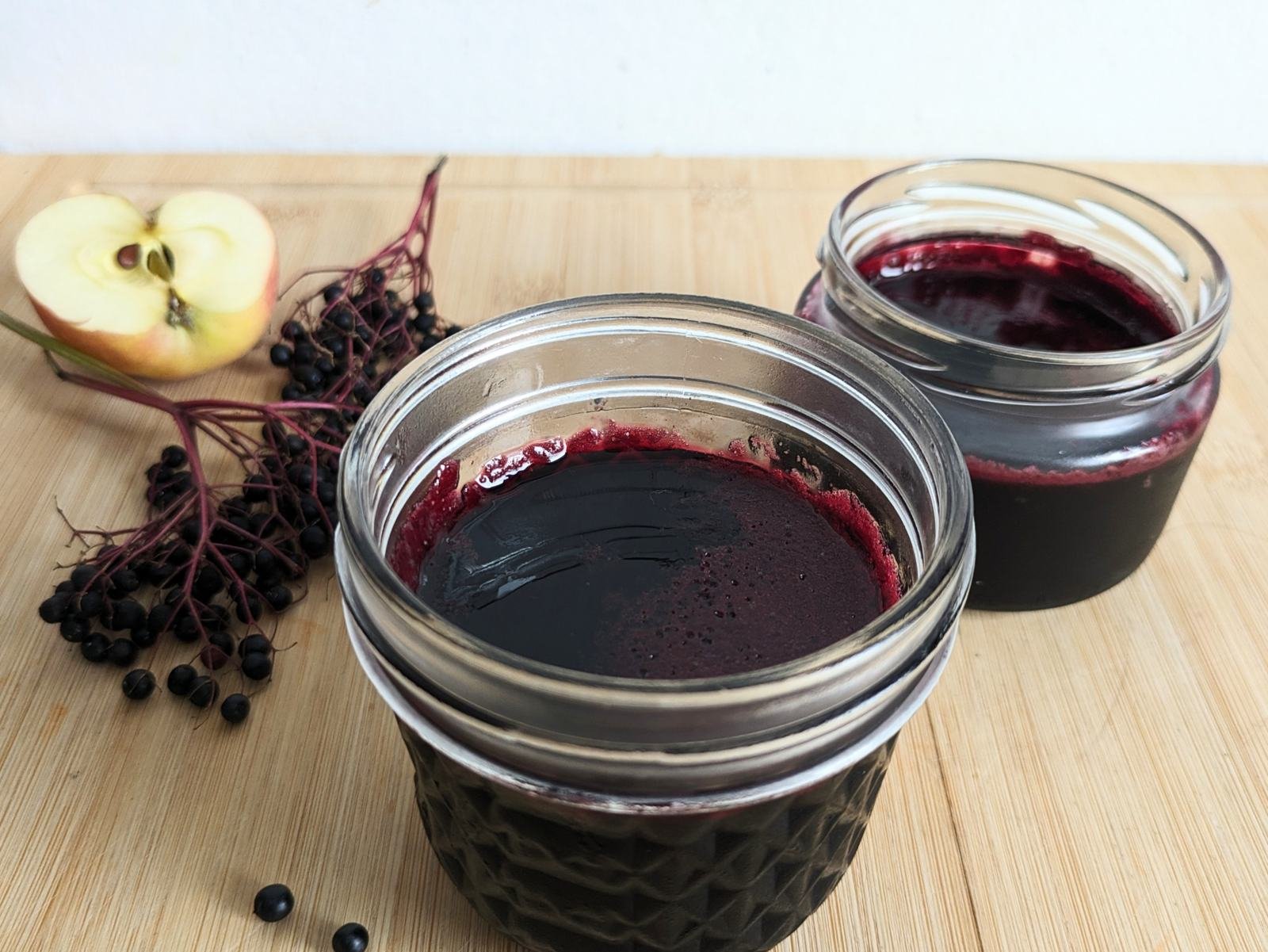
This elderberry jelly recipe turns fresh elderberries into a rich, dark preserve with a deep berry flavour and a pleasantly tart finish. A little apple provides natural pectin, while lemon juice adds brightness, making it a simple way to preserve a fresh elderberry harvest.
Elder is one of my favourite trees to forage from because it gives us two completely different ingredients at opposite ends of summer. First come the intensely floral elderflowers in spring, then towards the end of summer the same trees are covered in dark elderberries. I love returning to the same trees later in the year and finding them transformed, with clusters of dark berries where the elderflowers had been just a few months earlier.
What Are Elderberries?
Elderberries are the small, dark purple-black fruits of the elder tree. They develop in clusters after the elderflowers have finished and typically ripen towards the end of summer and into early autumn.
The berries have a tart, slightly earthy flavour when cooked, somewhat like a combination of blackcurrants and a more earthy blackberry. They work particularly well in preserves and can be used to make elderberry jelly, syrup, cordial and other cooked recipes, often with sugar to balance their natural sharpness.
Can You Eat Elderberries Raw?
Raw or inadequately cooked elderberries can cause nausea, vomiting and other digestive symptoms. This is because the berries contain cyanogenic glycosides, compounds that can release cyanide when consumed; cooking significantly reduces these compounds. The stems, leaves and other green parts of the plant should also not be consumed.
Elderberries should not be eaten raw. Do not eat the raw berries or drink juice from uncooked berries!
Elderberry Jelly Ingredients
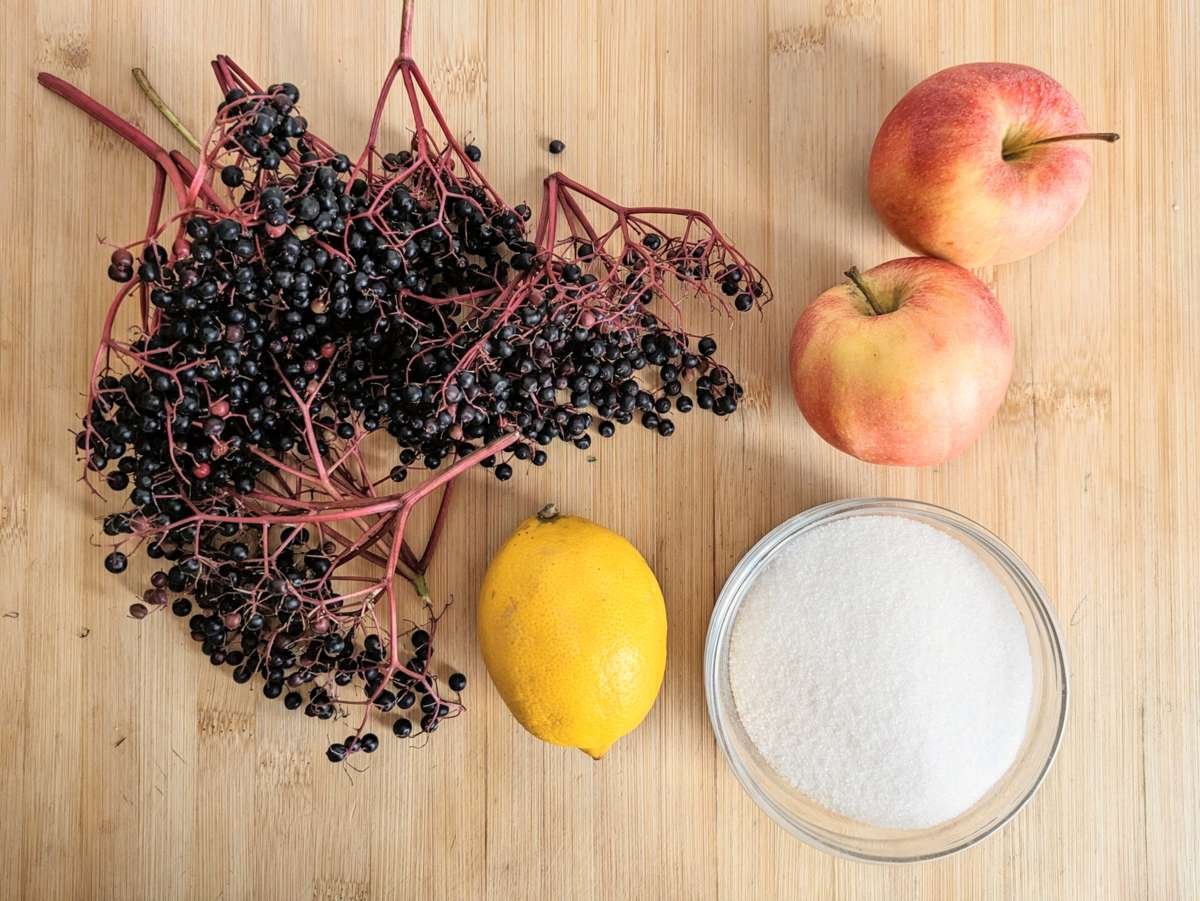
Elderberries – Fresh, ripe elderberries give the jelly its deep colour and tart, slightly earthy flavour; remove the stems and any unripe berries before cooking.
Apple – A small amount of apple provides natural pectin to help the jelly set without added commercial pectin; leave the skin and core intact as these contain the most pectin.
Sour apples like granny smith are best as they contain far more pectin than sweet varieties, but might not always be available where you are. If you can only find sweet apples (like me this summer) then increase the apple by around 50%
Lemon juice – Adds acidity, which helps the natural pectin form a reliable set while balancing the sweetness of the jelly.
Granulated sugar – Sweetens the tart elderberries and works with the pectin and acid to create the jelly’s final texture; the amount is calculated according to the volume of strained juice.
How to Make Elderberry Jelly Without Pectin
Remove the Elderberries from the Stems
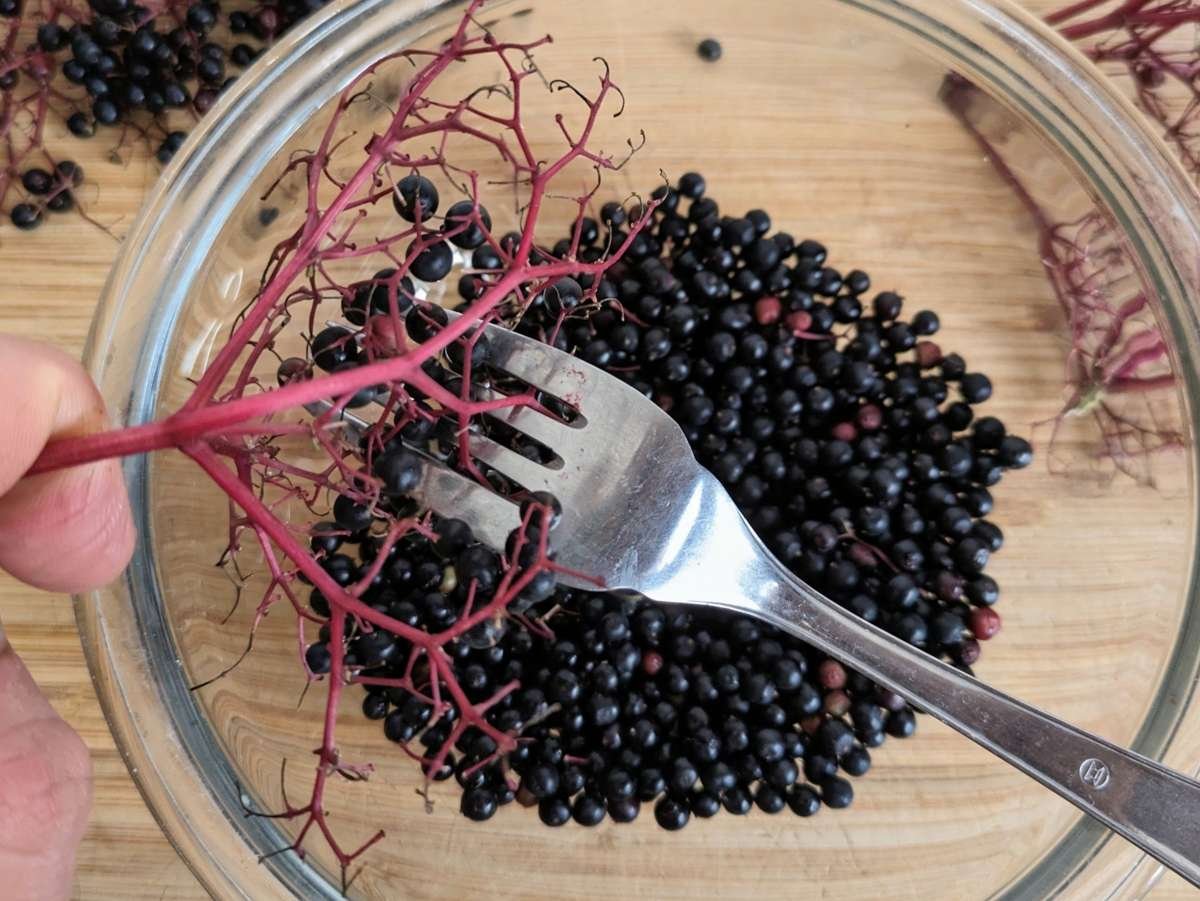
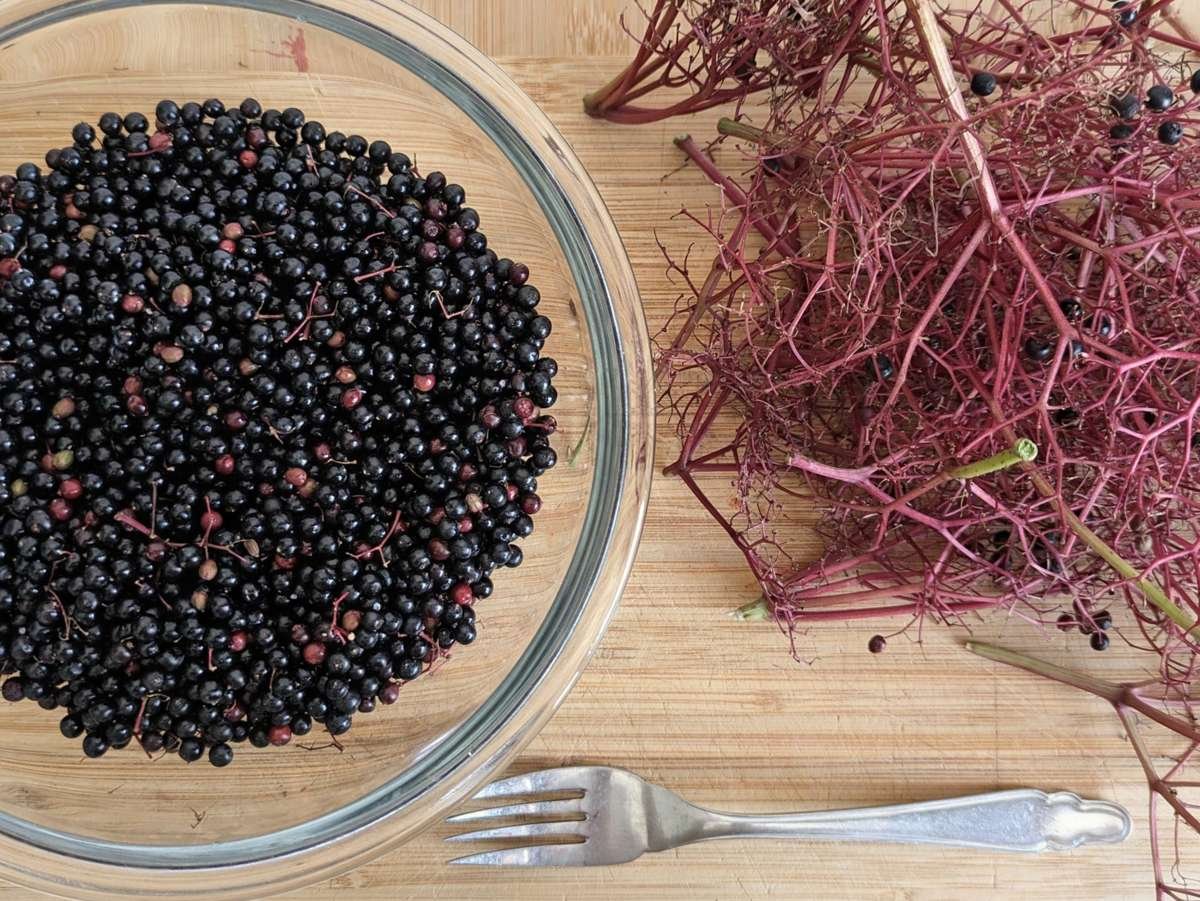
Hold each elderberry cluster over a large bowl and run a fork through the smaller stems to remove the berries. Pick out the main stems, leaves and any unripe green or red berries, then rinse the elderberries under cold water. A few tiny pieces of stem aren’t a problem as the cooked fruit will later be strained.
Cook the Elderberries and Apple
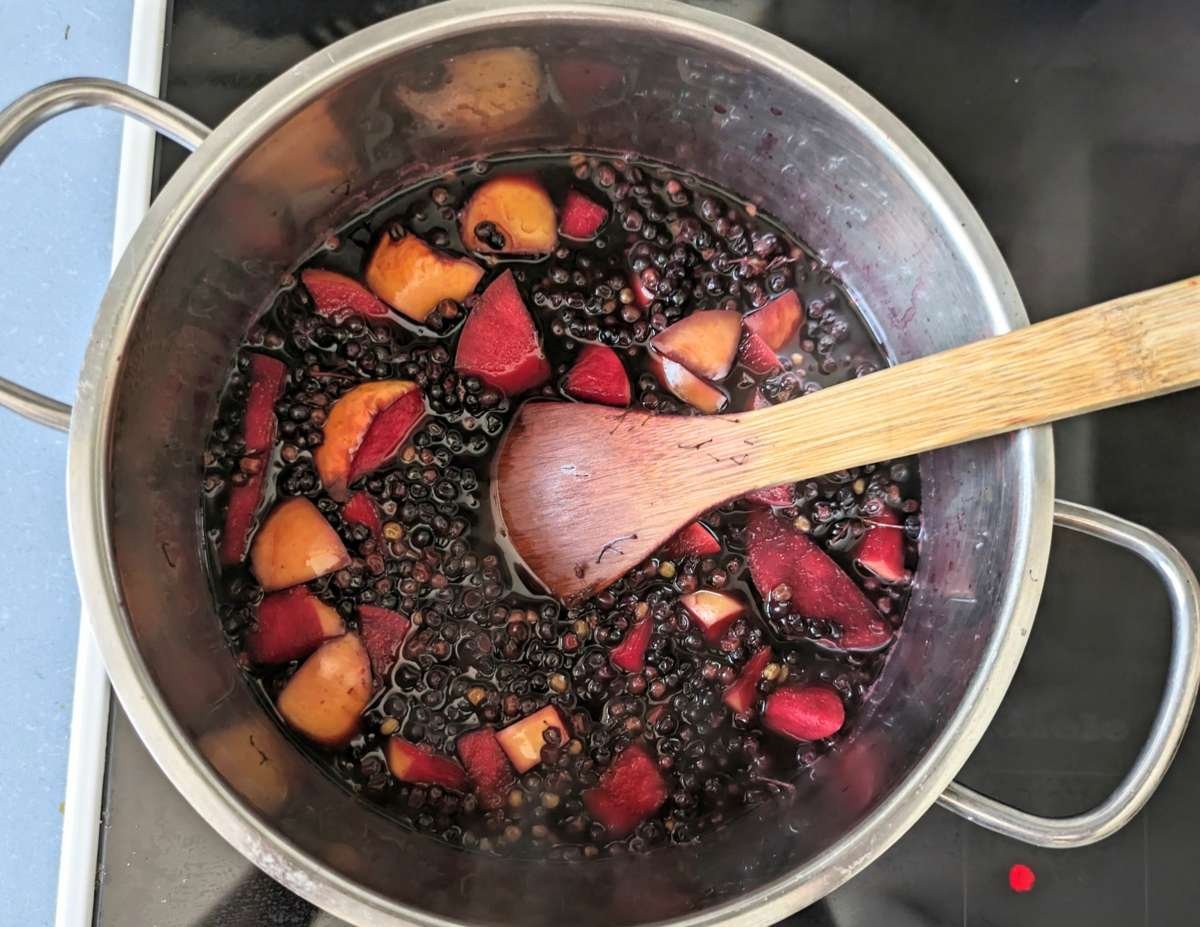
Add elderberries, the roughly chopped apple and water to a medium saucepan. Leave the skin and core on the apple as these contain useful natural pectin.
Bring to the boil, then reduce to a gentle simmer and cook uncovered for 25–30 minutes, stirring occasionally. Mash the fruit several times as it softens. By the end, the apples should be very soft and the elderberries completely broken down.
Strain the Elderberry Juice
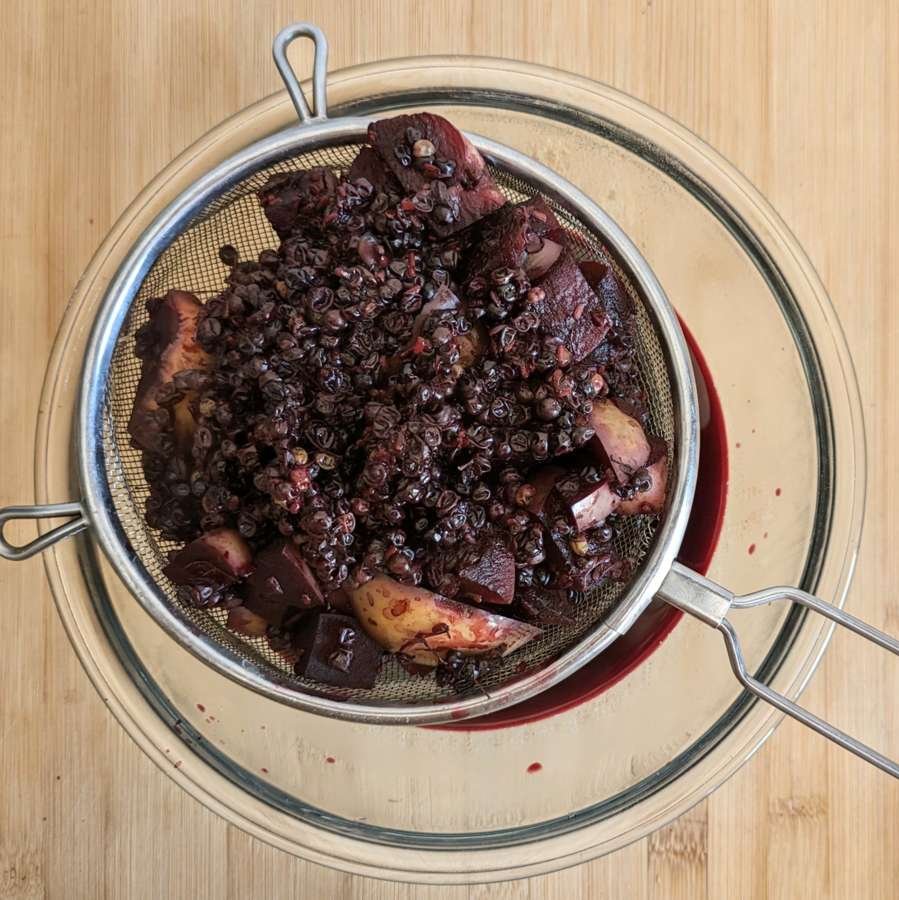
Pour the cooked fruit through a regular sieve set over a large bowl. Use the back of a spoon to press the softened fruit against the sieve, extracting as much juice as possible.
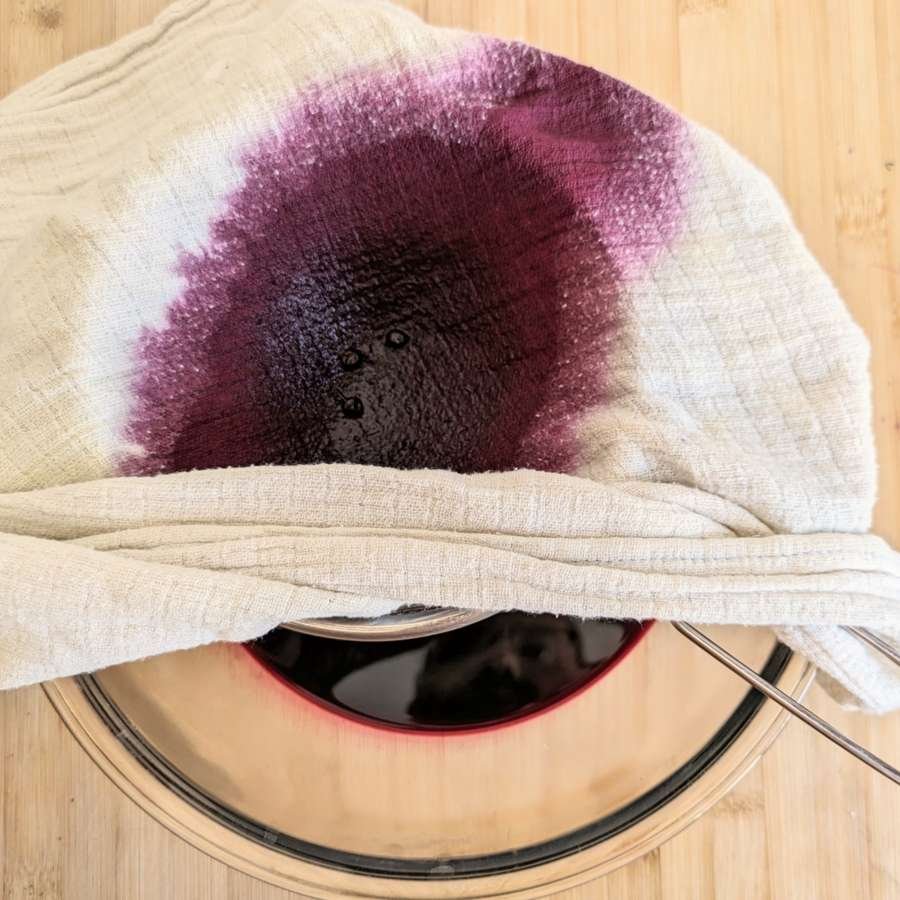
Pass this juice through a clean tea towel or muslin into a second bowl to remove the remaining fine pulp and sediment. Leave it to drip through naturally rather than squeezing the cloth if you want a clearer finished jelly.
Measure the Elderberry Juice
Measure the fully strained elderberry juice, then pour it back into a clean, wide saucepan. The amount of juice determines how much sugar you need.
Use 450 g granulated sugar for every 600 ml of juice.
Dissolve the Sugar
Pour the measured juice into a clean, wide saucepan and add the calculated sugar and 2 tablespoons lemon juice.
Heat gently, stirring until every grain of sugar has dissolved. Don’t bring it to a full boil until the sugar has dissolved completely.
Boil Until the Jelly Sets
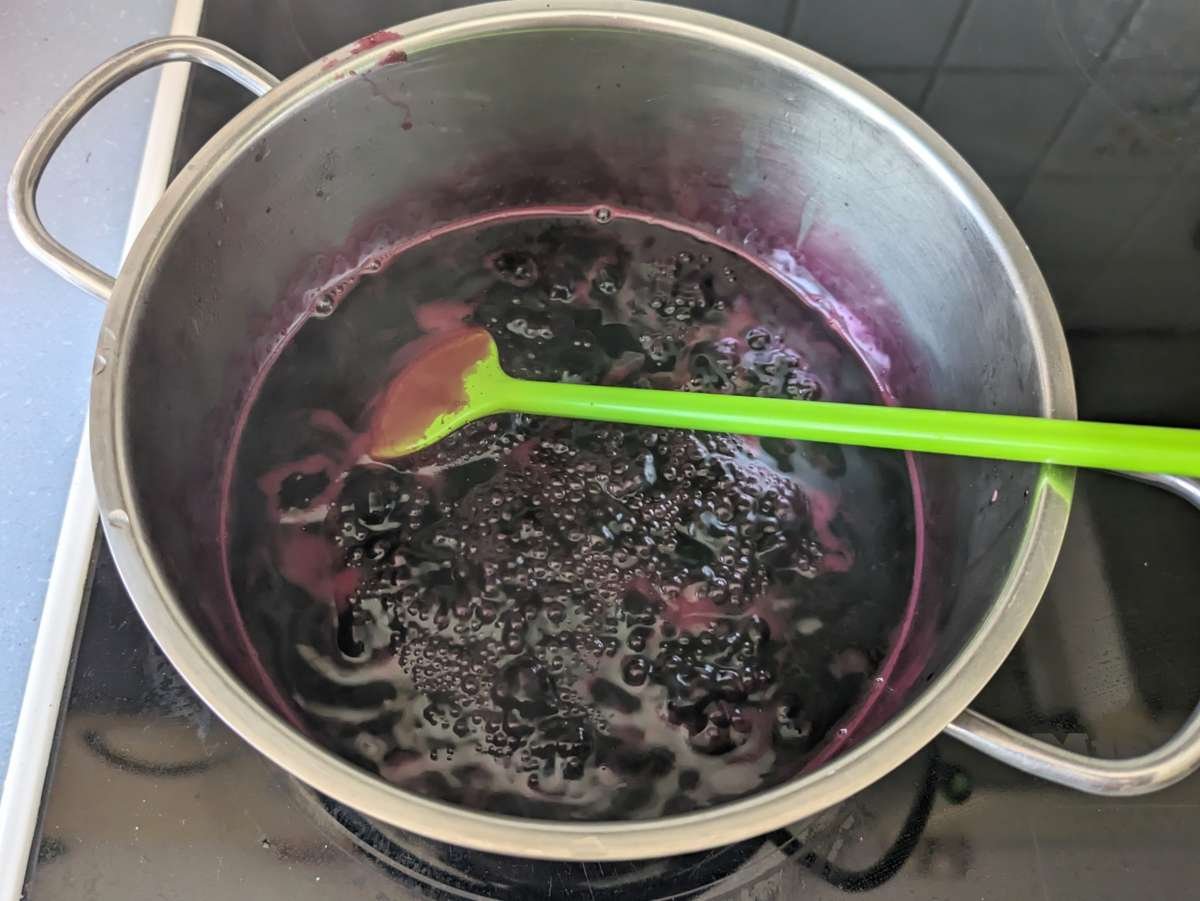
Increase the heat and bring the mixture to a strong rolling boil. Boil for around 5 minutes before beginning to test, stirring only when necessary to prevent sticking.
The jelly should reach approximately 104–105°C, but use the wrinkle test as the final check. Place a small spoonful on a chilled plate, wait 30–60 seconds, then push it gently with your finger. If the surface wrinkles and the jelly doesn’t immediately flow back together, it has reached setting point.
If it’s still runny, boil for another 1–2 minutes and test again. Avoid continuing to boil once it has set, as a small batch can quickly become too firm.
Fill the Jars and Cool
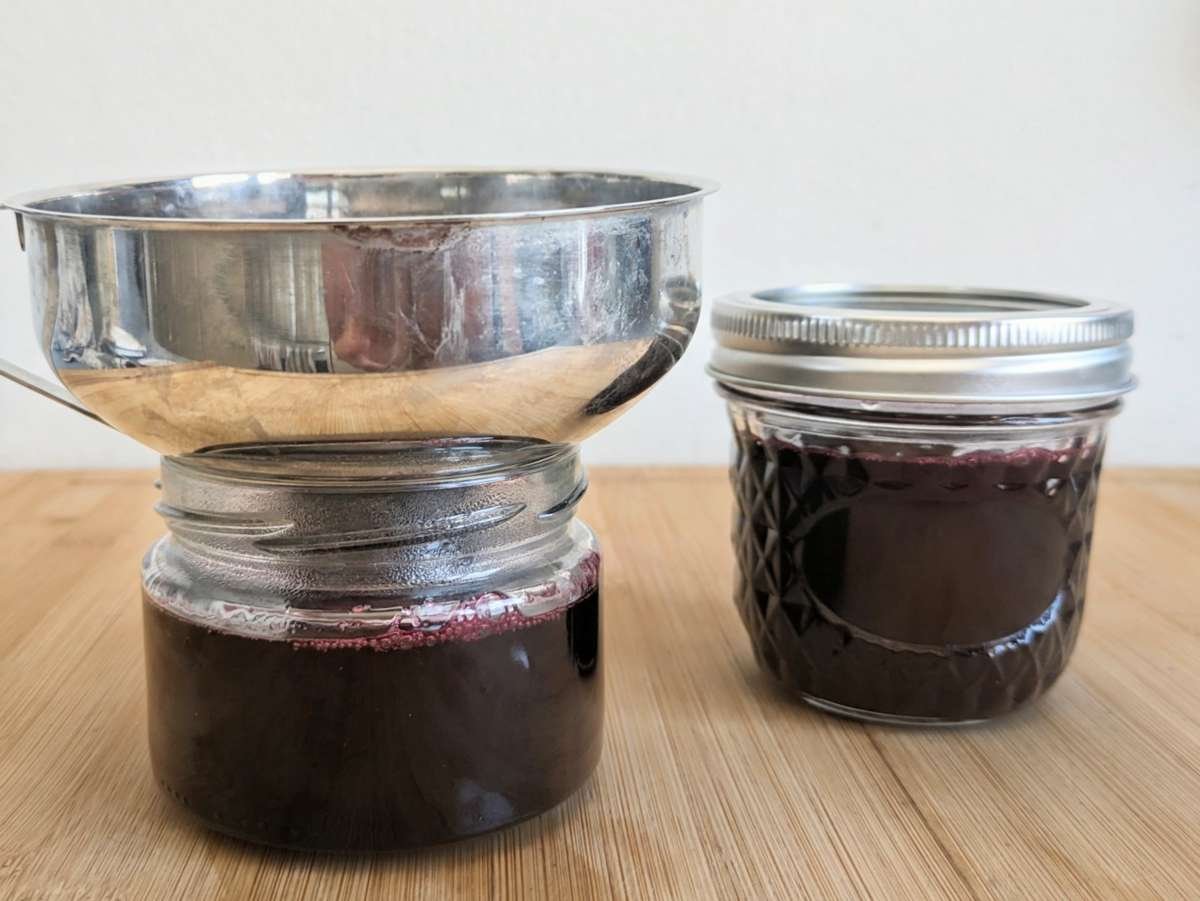
Remove the jelly from the heat and skim away any foam from the surface. Carefully pour into clean, hot jars, leaving a little space at the top, then seal.
Leave the jars undisturbed until completely cool. The jelly will continue to firm as it cools, so don’t judge the final texture while it’s still hot.
How to Store Elderberry Jelly
Once completely cool, store the elderberry jelly in the fridge for up to 3–4 weeks. Keep the jar tightly sealed and always use a clean spoon when serving.
Can I Store Elderberry Jelly at Room Temperature?
Simply pouring hot jelly into sterilised jars and sealing them does not automatically make it safe for long-term room-temperature storage. Elderberries can be relatively low in acid, so shelf-stable preserves need a tested canning method. Penn State Extension has a tested elderberry jelly canning method with specific ingredient ratios and processing times.
Personally, I have kept sealed jars of homemade jelly in the cupboard for several months without any problems. However, that is my own experience rather than a tested preservation method, so I can’t recommend a specific room-temperature shelf life for this recipe.
More Late-Summer Preserves
Elderberry Jelly (No Added Pectin)
Ingredients
- 400 g fresh elderberries destemmed
- 200 g sour apple, roughly chopped with skin and core included Oo 300g if apples are sweet.
- 400 ml water
- granulated sugar see recipe for exact amount
- 30 ml lemon juice 2 tbsp
Instructions
- Remove the elderberries from their stems with a fork. Discard the main stems, leaves and any unripe berries, then rinse well.
- Add the elderberries, chopped apple and water to a medium saucepan. Bring to the boil, reduce to a gentle simmer and cook uncovered for 25–30 minutes, stirring occasionally and mashing the fruit as it softens.
- Pour the cooked fruit through a sieve set over a bowl. Press the fruit firmly with the back of a spoon to extract as much liquid as possible.
- Pass the extracted liquid through a clean tea towel or muslin into a second bowl. Allow it to drip through without squeezing for a clearer jelly.
- Measure the strained juice and return it to a clean, wide saucepan. Calculate the sugar at 450 g for every 600 ml juice. For 400 ml juice, use 300 g sugar.
- Add the calculated sugar and lemon juice. Heat gently, stirring until the sugar has completely dissolved.
- Bring to a strong rolling boil. After about 10 minutes, begin testing for a set. The jelly should reach approximately 104–105°C and wrinkle when a small amount is cooled on a chilled plate and pushed with a finger. If necessary, continue boiling and test at 1–2 minute intervals.
- Remove from the heat, skim away any foam and carefully pour into clean, hot jars. Seal and leave undisturbed until completely cool.
Notes
The jelly may not have reached its setting point, or the fruit may have contained less natural pectin than expected. Return it to the pan, bring it back to a rolling boil and test again every 1–2 minutes using a chilled plate.
Yes. This recipe uses a small amount of apple as a natural source of pectin, while lemon juice provides the acidity needed to help it set. Keeping the apple skin and core during cooking provides more pectin without adding too much apple flavour.
Cloudiness usually comes from fine fruit pulp getting into the strained juice. Passing the juice through a clean tea towel or muslin and allowing it to drip without squeezing will produce a clearer jelly.
This version can be stored in a sealed jar in the refrigerator for around 3–4 weeks.
It works simply spread on toast, crumpets or scones, but its tart berry flavour also goes well with cheese. You can also spoon a little into porridge or yoghurt, or use it as a filling for cakes and pastries.
Yes. Frozen elderberries work well and don’t need to be thawed before cooking. Freezing whole clusters can also make the berries easier to remove from their stems before making the jelly.