Honey Mustard Roasted Root Vegetables
Roasted root vegetables glazed with honey and mustard, finished in the oven until tender, glossy, and lightly caramelised.

Honey mustard roasted root vegetables bring together sweet carrots, earthy beetroot, and parsnips with a gentle balance of honey, mustard, and heat from the oven. As the vegetables roast, the honey mustard glaze mixes with the juices from the beetroot and becomes sticky and slightly caramelised. It’s a super easy side dish that you can prepare in just a few minutes and let the oven do the rest.
Ingredients Breakdown

Root vegetables (carrots, parsnips, beetroot)
These provide the structure of the dish, roasting into soft centres with caramelised edges and a natural sweetness that balances the mustard. As the beetroot cooks, it releases sweet juices that contribute to a sticky, deeply coloured glaze that coats the vegetables.
Honey
Honey adds controlled sweetness and helps the glaze reduce and cling to the vegetables as they roast.
Dijon mustard
Dijon brings acidity and sharpness, keeping the sweetness in check and giving the glaze definition. It can be swapped with whole grain mustard if desired (see notes section).
Mustard seeds
Mustard seeds contribute mild heat and subtle texture, softening slightly in the oven while staying distinct. It can be swapped with whole grain mustard if desired (see notes section).
Olive oil
Olive oil distributes the glaze evenly and supports browning without masking the flavour of the vegetables.
Cider vinegar
Cider vinegar sharpens the glaze and prevents the finished dish from tasting heavy or overly sweet.
Step-by-Step Instructions
Heat the oven
Preheat the oven to 200°C (180°C fan). Use a large, heavy roasting tray so the vegetables can sit with minimal overlapping – overcrowding will cause steaming rather than proper browning.
Prepare the vegetables
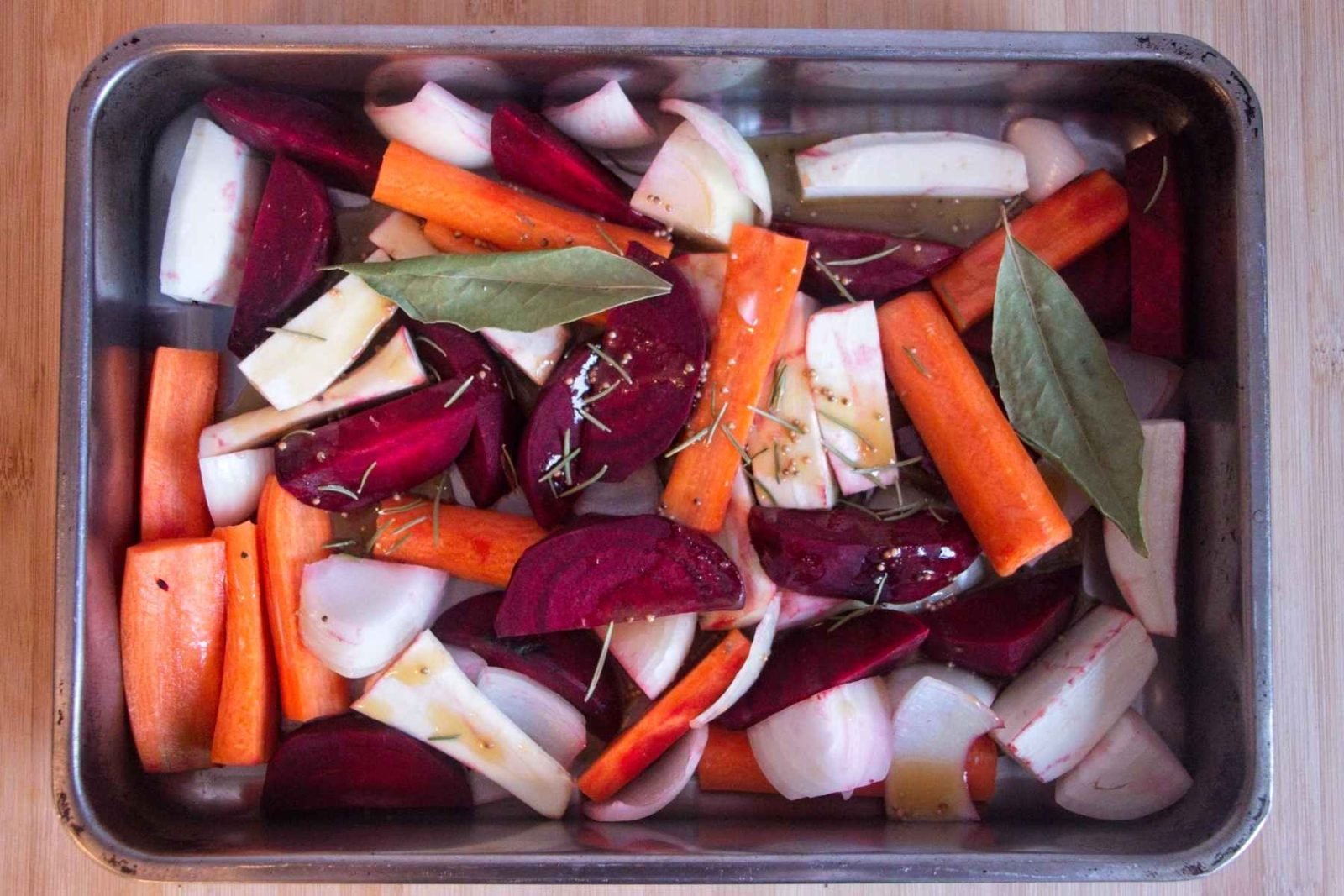
Peel the carrots, parsnips, and beetroot, then cut them into evenly sized batons or wedges so they cook at the same rate. Cut the onion into thick wedges, keeping the root end intact so the layers hold together as they roast.
Roughly chop the rosemary leaves so they’re small and evenly distributed.
Make sure you don’t cut the vegetables too thinly, or they will burn instead of caramelising. This is especially important with parsnips, as they often get very skinny towards the tip.
Season with oil
Add the vegetables to the tray, drizzle with olive oil, season generously with salt and black pepper, and toss to coat. Spread them out evenly, with some space between pieces. Tuck the bay leaf into the tray so it’s in contact with the vegetables.


Toast the mustard seeds
Toast the mustard seeds in a small dry pan over medium heat for 1–2 minutes, until fragrant and just starting to pop. Remove from the heat straight away to prevent bitterness.
Mix the glaze
Whisk the honey, Dijon mustard, cider vinegar, and toasted mustard seeds in a small bowl until smooth. If the glaze feels thick, loosen it with 1–2 teaspoons of water.
Glaze the vegetables
Pour the glaze over the vegetables and toss until evenly coated, scraping any glaze from the bowl onto the tray. Scatter the chopped rosemary leaves evenly over the tray. If your oven runs hot, add the rosemary after the first 10 minutes of roasting instead.
Roast
Roast uncovered for 35–45 minutes, turning once or twice. Halfway through, scrape the tray to lift any sticky glaze back onto the vegetables.
Check doneness
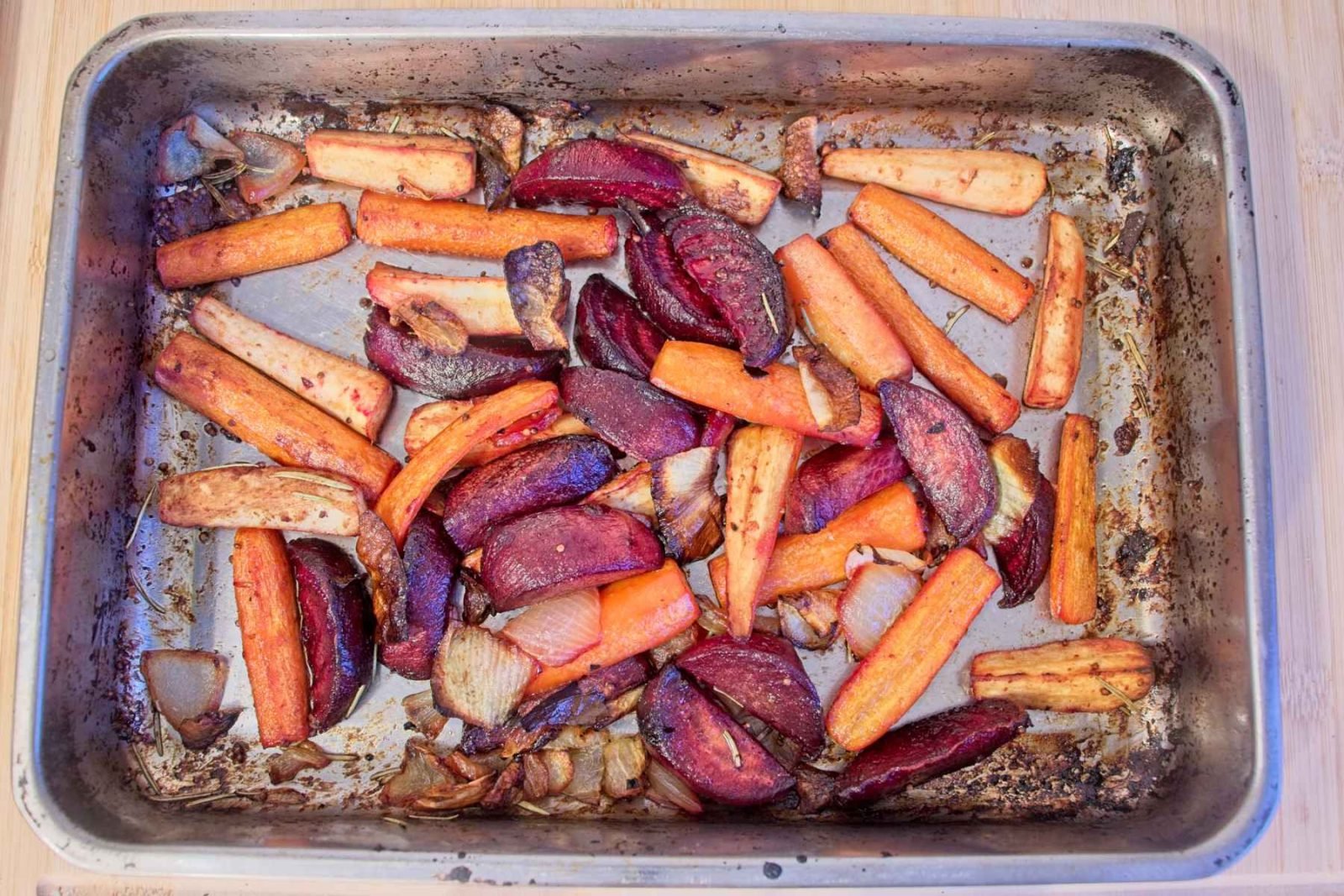
The vegetables are ready when a knife slides easily into the thickest pieces, the edges are well caramelised, and the glaze looks glossy rather than wet. Beetroot juices should have reduced into a sticky coating, not a pool on the tray.
You will probably have a few patches on the tray where the glaze has completely reduced and burnt. – don’t worry about it. just don’t scrape the burnt patches to avoid the vegetables tasting bitter.
Adjust if needed
If the tray looks dry, add a small splash of water and return it to the oven for a few minutes. For deeper colour, move the tray higher in the oven for the final 3–5 minutes, watching closely.
Finish and serve
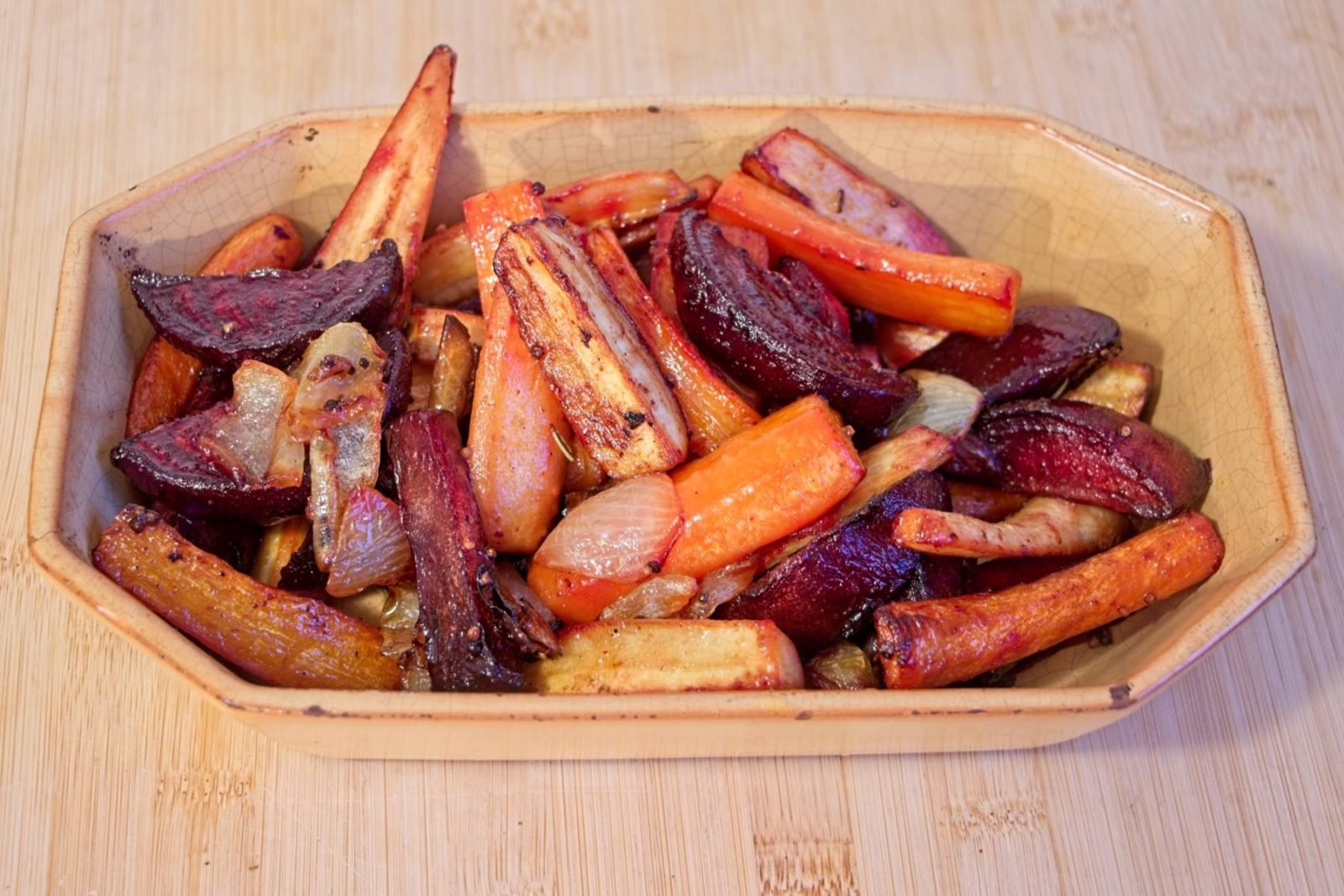
Remove and discard the bay leaf before serving. Taste and adjust seasoning, then serve hot, spooning any glaze from the tray over the vegetables.
Storage & Reheating
Store any leftovers in an airtight container in the fridge for up to 3 days. When reheating, spread the vegetables out on a tray and warm them uncovered in a hot oven (200°C) for 10–15 minutes, which helps restore some surface texture and prevents the glaze from turning soggy.
Freezing isn’t ideal, as the vegetables soften and lose definition once thawed. If you do freeze them, thaw overnight in the fridge, then reheat in the oven rather than the microwave for the best possible result.
Honey Mustard Roasted Root Vegetables
Ingredients
- 350 g carrots peeled, cut into chunky batons
- 300 g parsnips peeled, cut into chunky batons
- 400 g beetroot peeled, cut into 2–3 cm wedges
- 150 g white onion cut into thick wedges (about 1 medium)
- 30 ml olive oil 2 tbsp
- 30 g runny honey 1½ tbsp
- 15 g Dijon mustard 1 tbsp
- 3 –4 g mustard seeds 1–1½ tsp
- 15 ml cider vinegar 1 tbsp
- 1 bay leaf
- 2 tsp rosemary leaves finely chopped (about 2 g)
- 1 tsp fine salt adjust to taste
- ½ tsp black pepper
Instructions
- Preheat the oven to 200°C (180°C fan) and place the vegetables on a large roasting tray in a single layer.
- Add the olive oil, salt, and black pepper, then toss well. Tuck the bay leaf into the tray.
- Toast the mustard seeds in a dry pan over medium heat for 1–2 minutes until fragrant and starting to pop, then remove from the heat.
- Whisk the honey, Dijon mustard, cider vinegar, and toasted mustard seeds in a small bowl.
- Pour the glaze over the vegetables and toss to coat evenly. Scatter over the chopped rosemary leaves.
- Roast for 35–45 minutes, turning once or twice, until the vegetables are tender and caramelised at the edges and the glaze looks glossy rather than wet.
- Remove and discard the bay leaf. Taste and adjust seasoning, then serve with any tray glaze spooned over the top.
Notes
If you want, you can swap the Dijon mustard and the mustard seeds for the equivalent amount of whole grain mustard. I chose to use seeds instead because they crisp up a little better and make satisfying little mustard pops in the final dish. For a sharper finish, increase the cider vinegar to 1½ tbsp or add a squeeze of lemon right at the end. For a warmer spice profile, add ½ tsp smoked paprika or ¼ tsp ground cumin to the glaze. For a darker, more savoury sweetness, swap the honey for maple syrup (same quantity), which also makes the dish vegan. Storage: Keep leftovers in an airtight container in the fridge for up to 3 days. Reheat uncovered in a hot oven (200°C) for 10–15 minutes to bring back some surface texture. Freezing isn’t ideal as the vegetables soften; if you do freeze, thaw in the fridge overnight and reheat in the oven rather than the microwave.
Yes. Replace the honey with maple syrup or agave; both reduce well in the oven and keep the glaze balanced. You may want a slightly larger splash of vinegar to compensate for the softer sweetness.
This usually means the tray was overcrowded or the oven wasn’t hot enough. Use a wide tray, keep the vegetables from too much overlapping, and make sure the oven is fully preheated.
You can peel and cut the vegetables up to a day ahead and store them submerged in cold water in the fridge. Drain and dry them thoroughly before roasting so the glaze can cling and reduce properly.
Honey darkens quickly, especially near the end of roasting. Turn the vegetables regularly, scrape any sticky glaze back onto them, and add a small splash of water if the tray looks dry.
Swede, celeriac, and sweet potato all roast well in this glaze. Keep pieces similar in size and be aware that sweeter vegetables may caramelise faster.
Store leftovers in an airtight container in the fridge for up to 3 days. Reheat uncovered in a hot oven rather than the microwave to restore some surface texture.