Slow Cooker Caramelised Onions – Mostly Hands-Off Method
Slow cooker caramelised onions made mostly hands-off, then finished briefly over high heat for proper browning, depth, and a jammy texture.
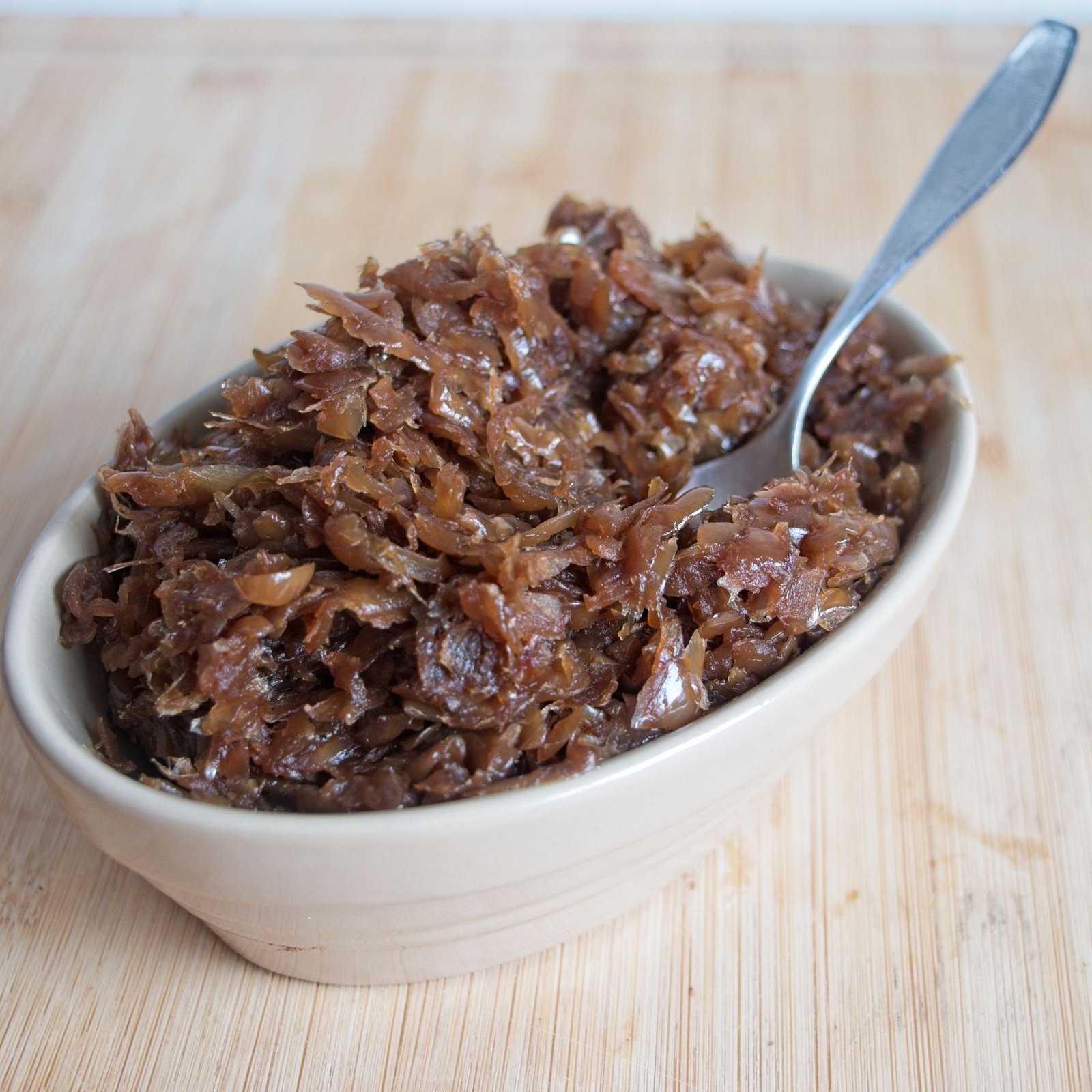
I love caramelised onions, especially in a burger, but they’re not a quick job. You can get them on the hob in about an hour with constant stirring, yet that deeper sweetness usually takes closer to two. Slow cooker caramelised onions hand over the long softening stage to the slow cooker, so it can happen while you’re at work or asleep. A quick blast of higher heat at the end is enough to bring out that rich, jammy finish. Reducing the time you need to babysit them from a couple of hours to just a few minutes.
Can You Really Make Caramelised Onions in Just a Slow Cooker?
You can make most of the process for caramelised onions in a slow cooker, but not all of it
Although many people across social media claim you can make caramalised onions solely in a slow cooker, there is some basic science behind the process that says “No, you can’t”. Understanding what’s happening helps explain why the method works — and why it still needs a short finish on higher heat.
Caramelised onions develop in stages. At first, the onions soften and release a large amount of water. This happens at relatively low temperatures and depends on time rather than heat. A slow cooker is well suited to this stage, gently breaking down the onion’s structure while concentrating its natural sugars, with almost no risk of burning.
As the onions cook, enzymes convert complex carbohydrates into simpler sugars, increasing sweetness even before any browning occurs. This is why onions cooked slowly taste sweeter, even if they haven’t changed colour yet.
Why Temperature Matters
The key reactions that give caramelised onions their colour and depth only happen once certain temperatures are reached.
- Below 100°C, onions soften and collapse as water slowly evaporates. This is the temperature range a slow cooker operates in, allowing sugars to concentrate but preventing any real browning.
- The Maillard reaction, where sugars react with amino acids to create savoury, roasted flavours, begins around 140–165°C. A slow cooker never reaches this close to this temperature.
- Caramelisation is temperature-dependent, and different sugars begin to caramelise at different temperatures. Fructose starts to caramelise at relatively low temperatures (around 105°C), while glucose and sucrose require much higher heat, typically 150–170°C.
Because onions contain a mixture of these sugars, proper caramelisation only occurs once the cooking surface reaches the higher end of this range.
This is why onions cooked only in a slow cooker are soft and sweet but pale — and why, on their own, they often taste oddly unpleasant, just like boiled onions. The sweetness is there, but without browning reactions there’s no bitterness, savoury depth, or complexity to balance it. If stopping at this stage, the onions just taste weird.
So while a slow cooker can’t complete the entire caramelisation process on its own, it does the longest and most time-consuming part. A short finish over higher heat is what transforms those softened onions into something rich, savoury, and properly caramelised, with far less effort overall.
Things You’ll Need
Ingredients
- Onions – Provide sweetness, body, and structure; yellow or white onions break down evenly and give the most balanced result.
- Fat (butter, olive oil, or a mix) – Helps conduct heat, prevents sticking, and carries flavour through the finished onions.
- Salt – Draws out moisture early on, helping the onions soften and concentrate more efficiently.
- Sugar (optional) – Speeds up browning during the final high-heat stage, though it isn’t necessary if you cook the onions long enough.
- Vinegar (optional, added at the end) – Adds a small amount of acidity to balance sweetness and sharpen the overall flavour.
Equipment
I made my slow cooker caramelised onions in an Instant Pot, which allows you to switch straight from slow cook to sauté without moving the onions. If your slow cooker doesn’t have this function, you’ll need a large frying pan to finish the caramelisation over higher heat.
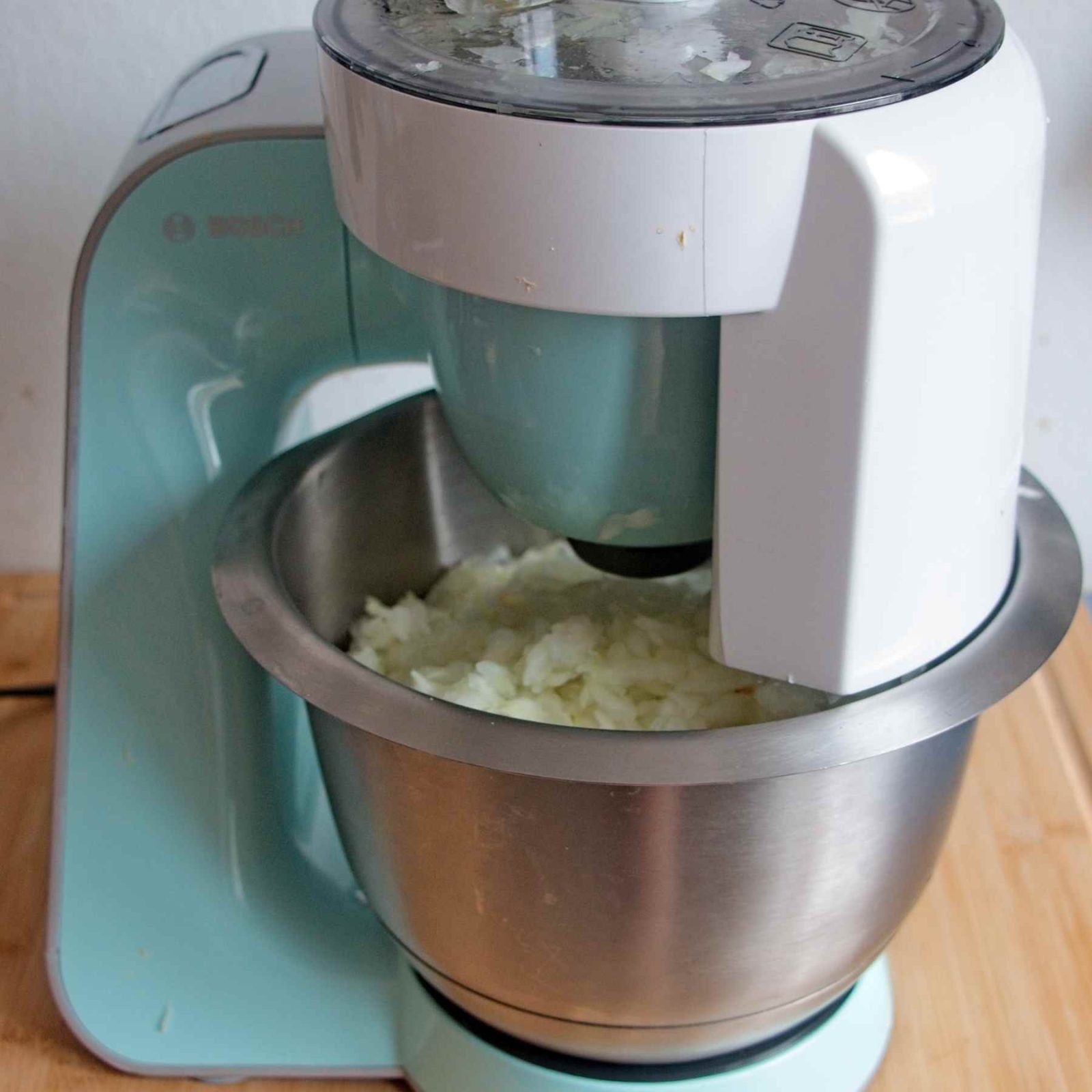
While it isn’t strictly necessary, some way of quickly chopping a large quantity of onions is a real advantage. I made 1.6 kg here, though my Instant Pot could comfortably take closer to 3 kg, which is a lot to cut by hand. Most food processors or modern kitchen machines have simple attachments that can chop onions in minutes, with far less time and fewer tears. These machines don’t produce the neatest slices , but I would argue that for caramalised onions, it doesn’t matter. Once the onions have fully softened and cooked down, minor inconsistencies disappear and have no real effect on the final texture or flavour.
Step-by-Step Instructions: Slow Cooker Caramelised Onions
Prepare the onions
Peel and slice the onions evenly, about 3–5 mm thick. Perfect uniformity isn’t critical, but similar thickness helps them soften at the same rate. If you have a machine that can do this job for you, it can save yourself a lot of time.
Load the slow cooker
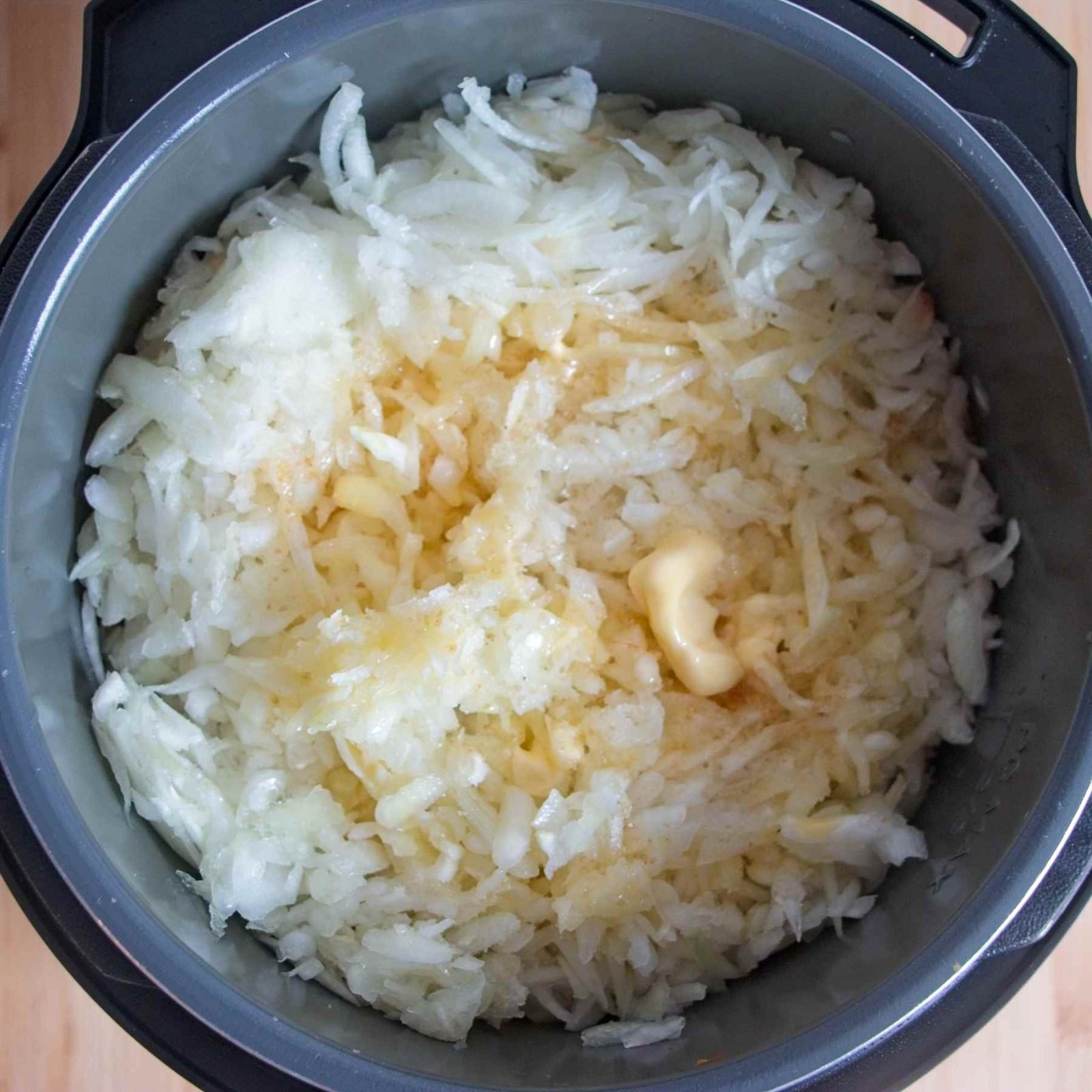
Add the onions to the slow cooker (or Instant Pot on slow cook mode). Add the fat and salt, and brown sugar if using, then toss thoroughly so everything is lightly coated.
Slow cook to soften
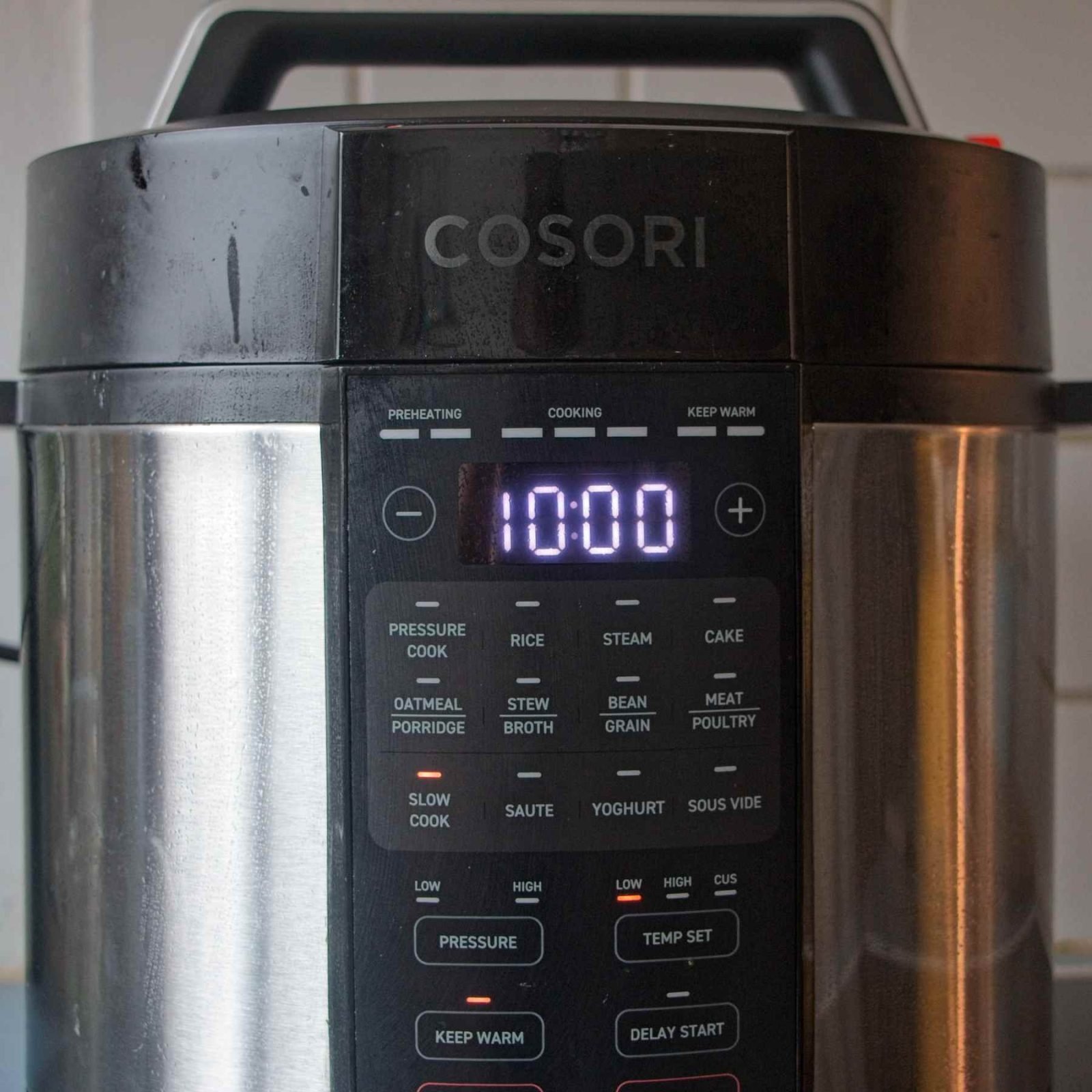
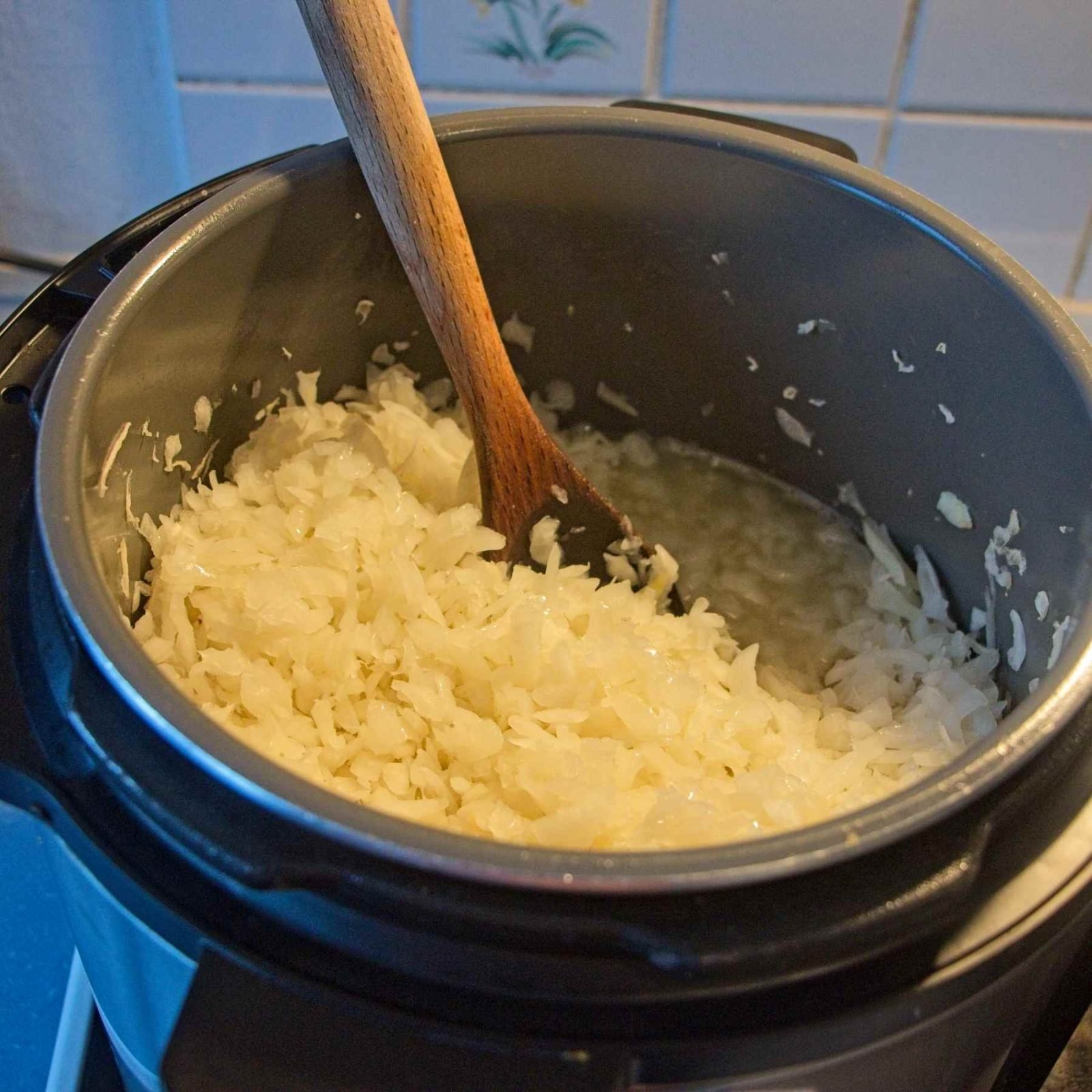
Cover and cook on LOW for 8–10 hours. Stir once or twice if convenient, but it isn’t essential. The onions should fully collapse, release their liquid, and turn pale golden and very soft. Keep the lid slightly ajar to allow the onion liquid to evaporate. If using an Instant Pot, make sure the valve is set to open for the same reason.
Check texture before finishing
At this stage, the onions should be tender and sweet but still wet and loose. If there’s a lot of liquid, uncover and cook on HIGH for another 30–60 minutes to reduce it. You can also discard some or all of the liquid and skip this step entirely, which helps the onions brown more quickly in the final stage.
Just note that if you do throw the liquid away, you will need to re-add the fat for the final step!
Switch to high heat
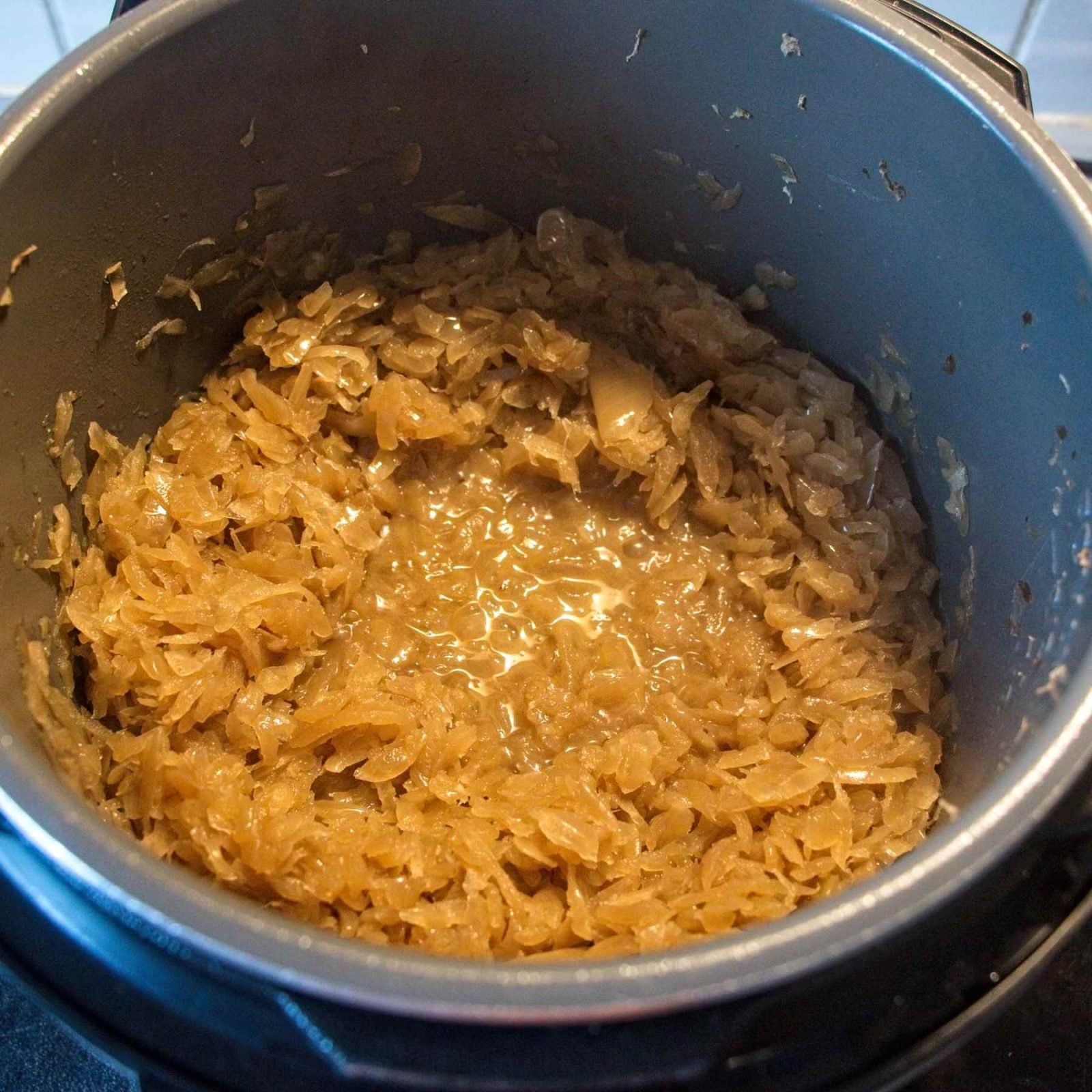
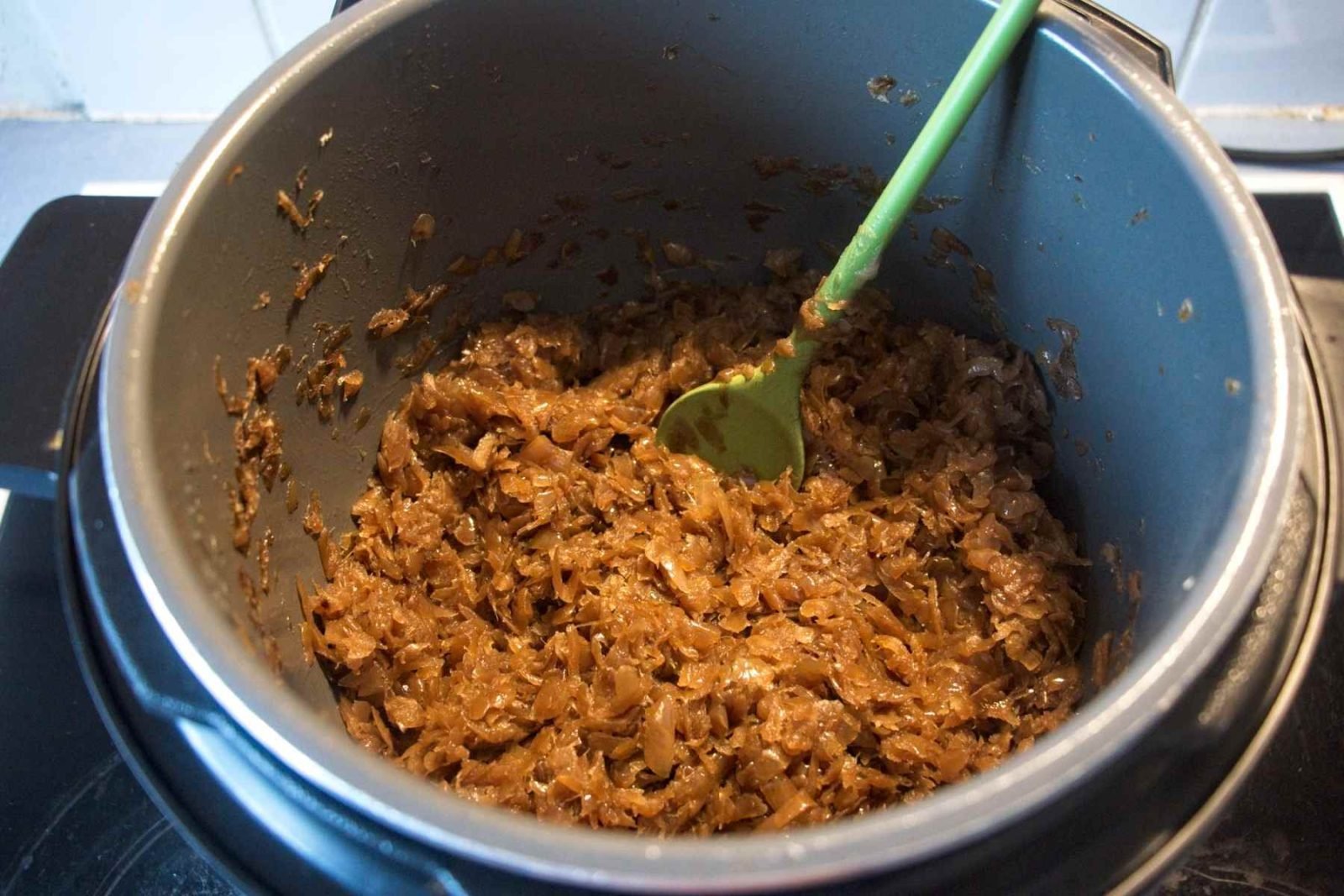
If using an Instant Pot, switch to sauté mode (high). Otherwise, transfer the onions to a wide, heavy based, frying pan over medium–high heat. Spread them out to maximise contact with the surface.
Cook for 10-15 minutes, stirring frequently. Look for deeper colour, a glossy sheen, and a thick, jam-like texture. Reduce the heat if the onions begin to catch.
Adjust and balance
Taste the onions, adjust the seasoning if needed, and stir in the vinegar right at the end (if using)
Storage
Allow the caramelised onions to cool completely before storing. Keep them in an airtight container in the fridge for up to 5 days.
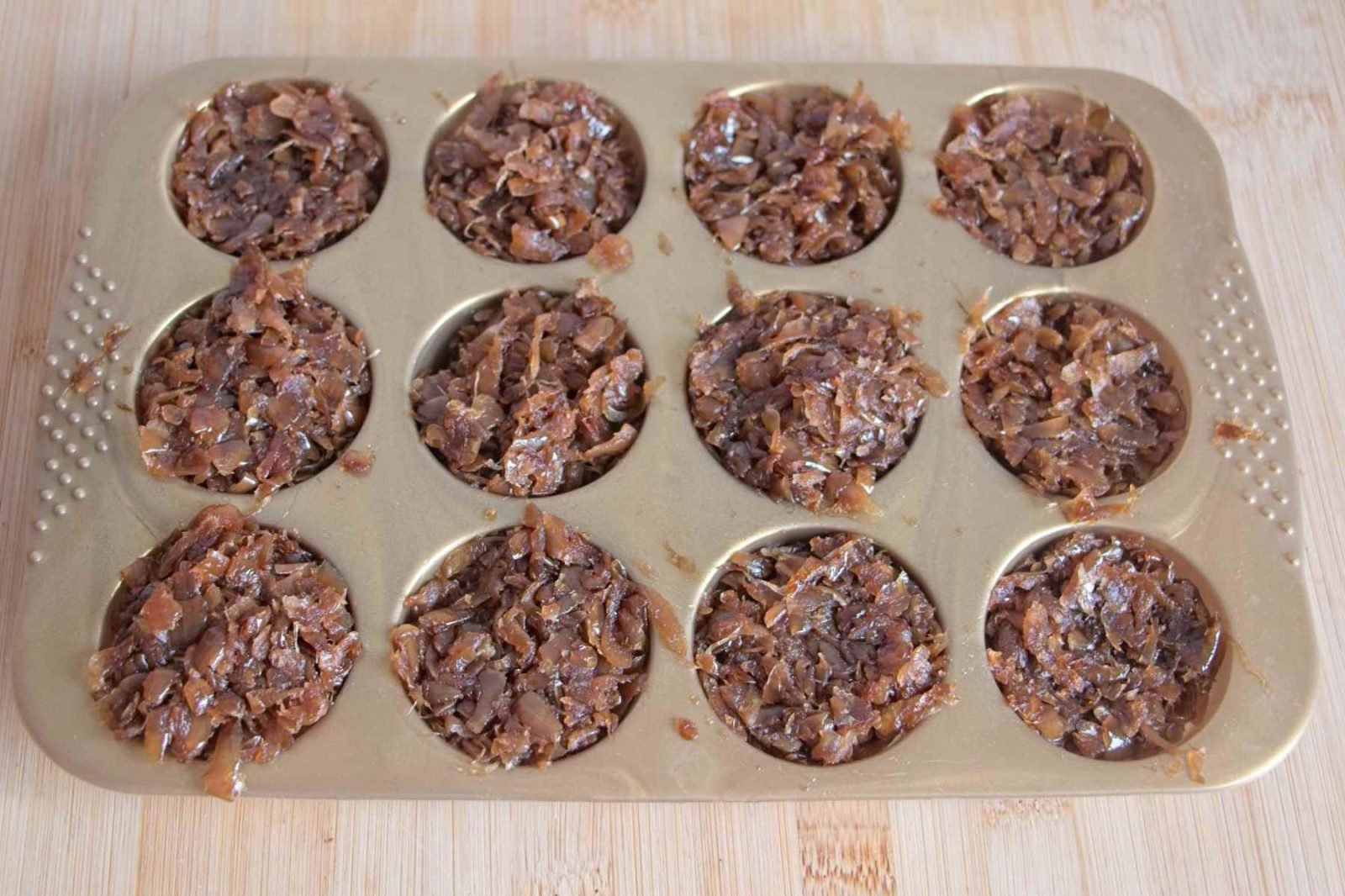
The reason I like making caramelised onions this way is that it allows you to cook a large batch with very little effort. Unless I’m hosting a summer barbecue, I won’t use them all quickly, but slow cooker caramelised onions freeze exceptionally well, which makes bulk cooking worthwhile.
Silicone muffin tins or ice cube trays work well for freezing. Fill the tray, freeze until solid, then transfer the portions to a container or freezer bag. This makes it easy to defrost only what you need. The onions will keep well in the freezer for up to 3 months.
Slow Cooker Caramelised Onions
Equipment
- Slow Cooker
- Wide Frying Pan
- Instant Pot optional
- Kitchen Machine optional
Ingredients
- 1.6 kg onions yellow or white, thinly sliced
- 30 g unsalted butter or 30 ml olive oil, or a mix
- 1.5 tsp fine salt
- 10 g brown sugar about 2 tsp (optional)
- 15 ml balsamic vinegar or cider vinegar optional, added at the end
Instructions
- Add the sliced onions to the slow cooker (or Instant Pot on slow cook mode). Add the butter (or oil), salt, and sugar if using, then toss well to coat.
- Cover and cook on LOW for 10 hours, until the onions are fully softened, collapsed, and very pale golden. Stir once or twice if convenient.
- If there is a lot of liquid, uncover and cook on HIGH for 30–60 minutes to reduce, or carefully pour off some of the liquid to speed up the finish.
- Finish over higher heat: switch the Instant Pot to sauté (high), or transfer the onions to a wide frying pan over medium–high heat.
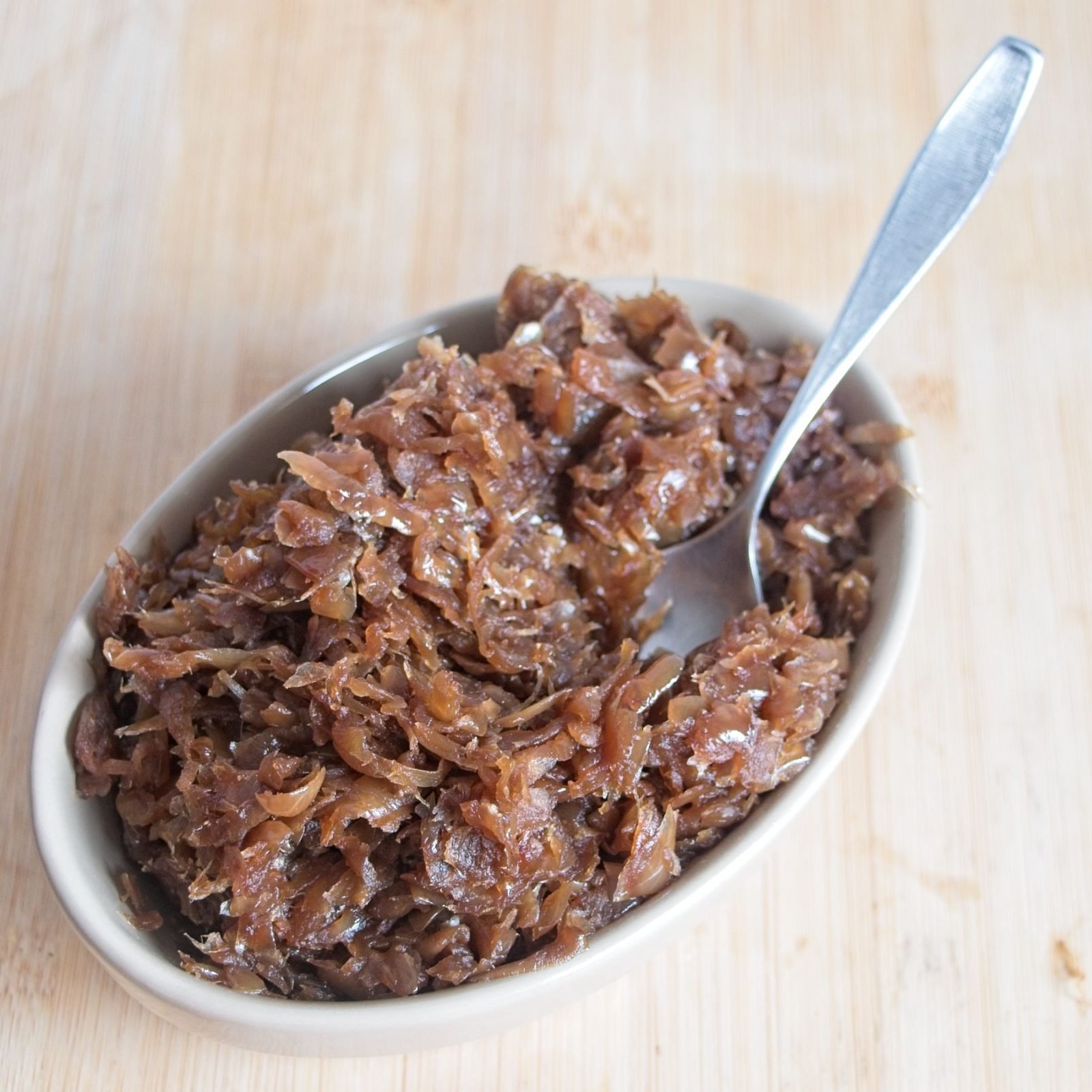
- Cook for 10-15 minutes, stirring frequently, until darker, glossy, and thick enough to mound on a spoon. Reduce heat if they begin to catch.
- Taste, adjust seasoning if needed, then stir in the vinegar right at the end (if using). Cool before storing.
Notes
- Fat choice: Butter gives a rounder flavour; olive oil tastes cleaner; a 50/50 mix is a good middle ground.
- Herb variation: Add 2–3 sprigs thyme or 1 bay leaf during the slow cook, then remove before the final high-heat stage.
- Deeper, darker finish: Stir in 1–2 tsp balsamic vinegar at the end, or add 1 tsp soy sauce during the final 2–3 minutes for extra savoury depth.
- No sugar: It’s optional—onions will still caramelise with time. If you prefer a less sweet result, leave it out and rely on the vinegar at the end for balance.
No. A slow cooker handles the long softening and sweetness-building stage, but it can’t reach the temperatures needed for proper browning. A short finish over higher heat is what gives the onions their colour and depth.
Without browning, you get sweetness but very little savoury complexity. Finishing the onions over high heat and adding a small amount of acidity at the end fixes this.
No. Onions contain enough natural sugars if cooked long enough. A small amount can help if you want a sweeter result, but it isn’t essential.
Cool them completely, then freeze in small portions using silicone muffin tins or ice cube trays. They’ll keep well for up to three months and can be reheated straight from frozen.
They work well in burgers, tarts, sandwiches, grain bowls, soups, and stirred through pasta or lentils. A small amount adds depth without overwhelming a dish.