Wild Garlic Hummus (Easy, Fresh & Creamy)
Fresh, light wild garlic hummus with lemon, tahini, and chickpeas. A simple homemade recipe with a greener flavour and smoother texture than traditional hummus.
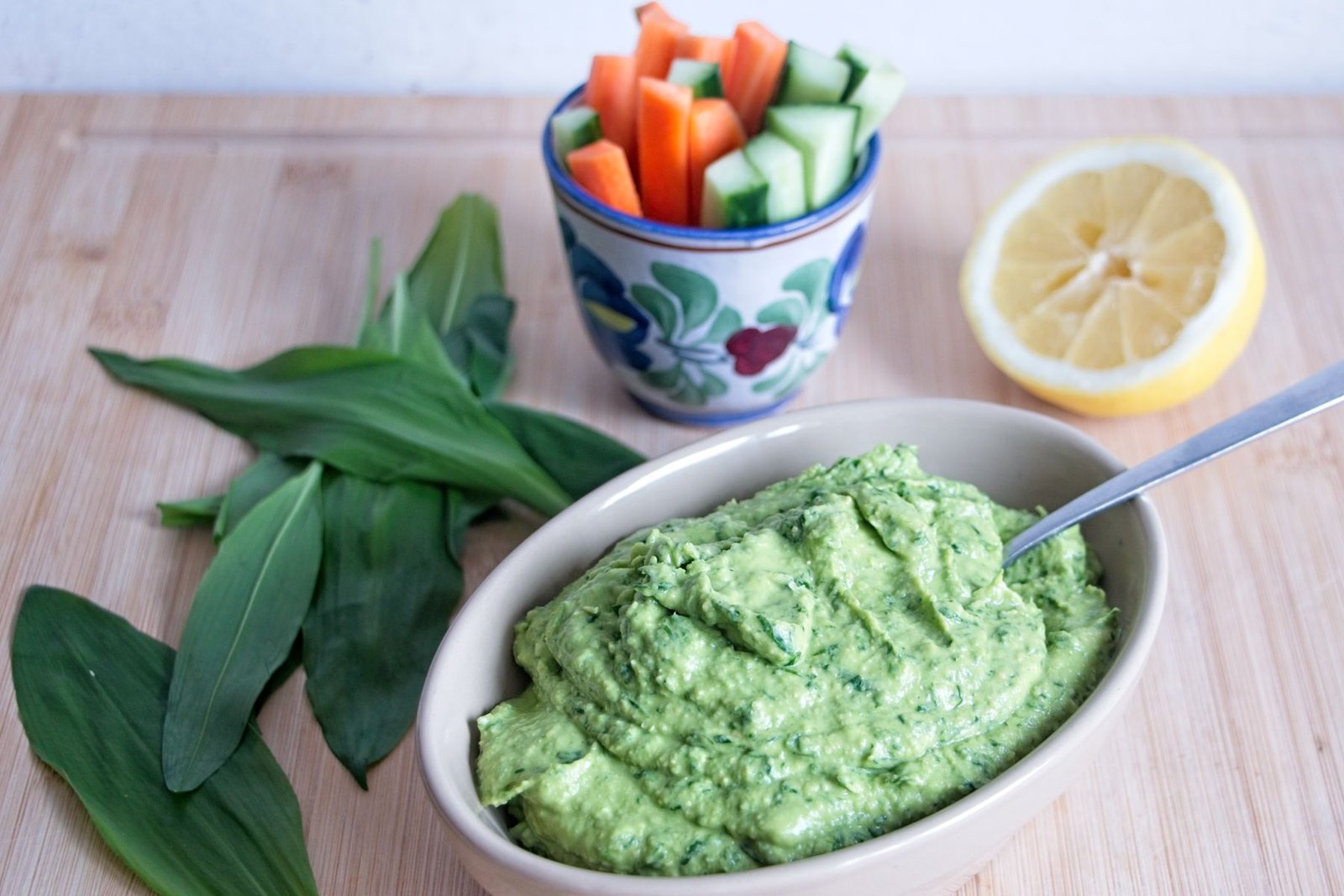
Most hummus goes heavy — thick, oily, and a bit flat. This wild garlic hummus goes the other way: lighter, greener, and with the gentle heat that comes from fresh wild garlic.
If you’ve just picked a bunch and aren’t sure what to do with it beyond making a delicious spring pesto, this wild garlic hummus is a simple way to use it well. Blended with chickpeas, tahini, and lemon, it adds a sharper, fresher edge to one of the world’s most familiar dips.
As always with foraged ingredients, be 100% certain that you have the correct food before using it. I have written a few paragraphs about how to identify wild garlic here, or here is a more comprehensive guide.
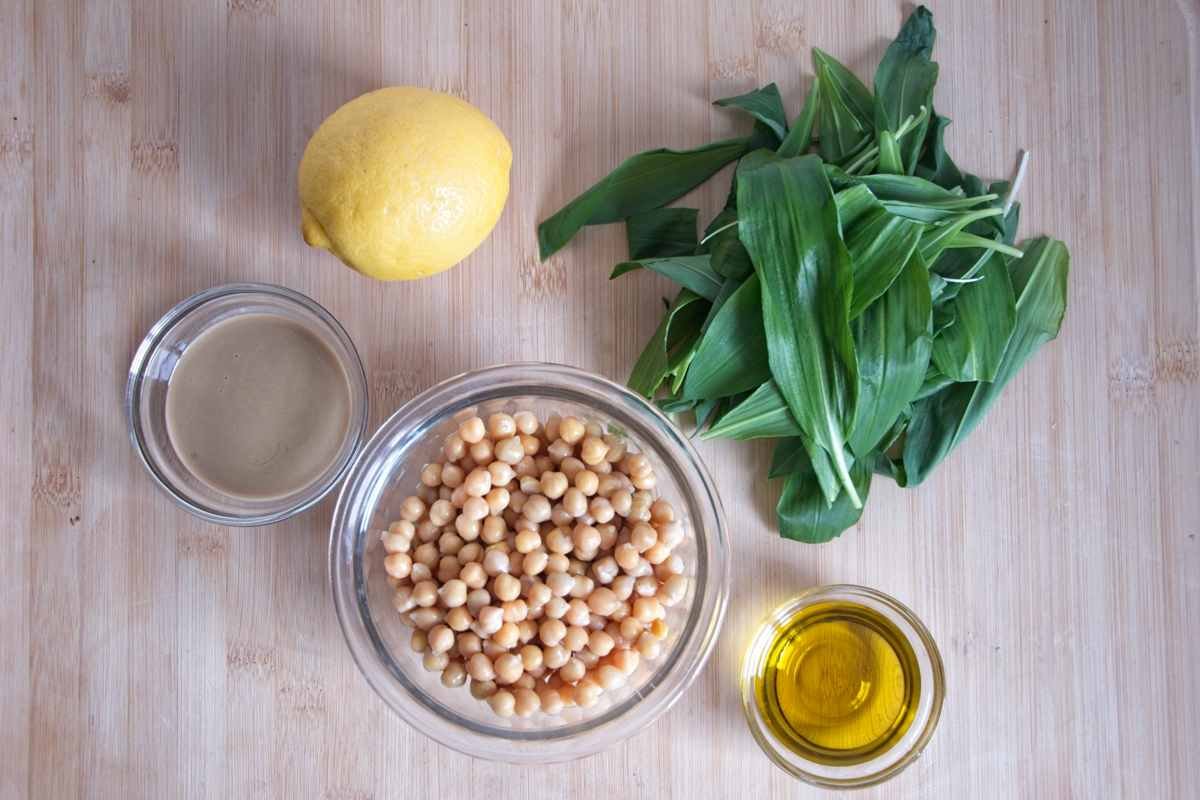
Ingredients You’ll Need
- Chickpeas – tinned or cooked; reserve the liquid for adding later
- Wild garlic – fresh leaves for that green, garlicky heat. Use both the leaves and the stems
- Tahini – adds creaminess and depth
- Lemon – keeps it bright and fresh
- Olive oil – brings everything together smoothly
- Salt – to sharpen and balance the flavour
How to Make Wild Garlic Hummus
Prepare the ingredients.
Drain the chickpeas and reserve a few tablespoons of the liquid from the tin. Roughly chop the wild garlic if the leaves are large or stringy, as this helps it blend more evenly and stops it wrapping around the blade.
Blend the base.
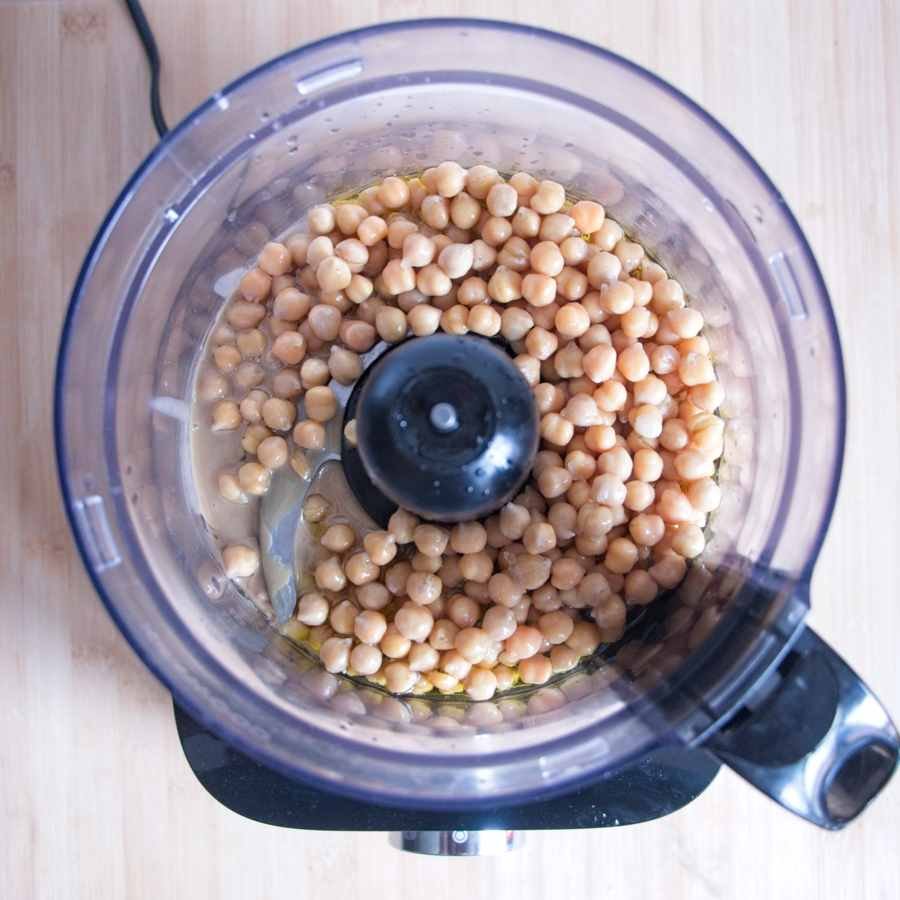
Add the chickpeas, tahini, lemon juice, olive oil, and salt to a food processor or blender. Blend for 30–60 seconds, stopping once or twice to scrape down the sides, until the mixture looks thick and fairly smooth but still a little dense.
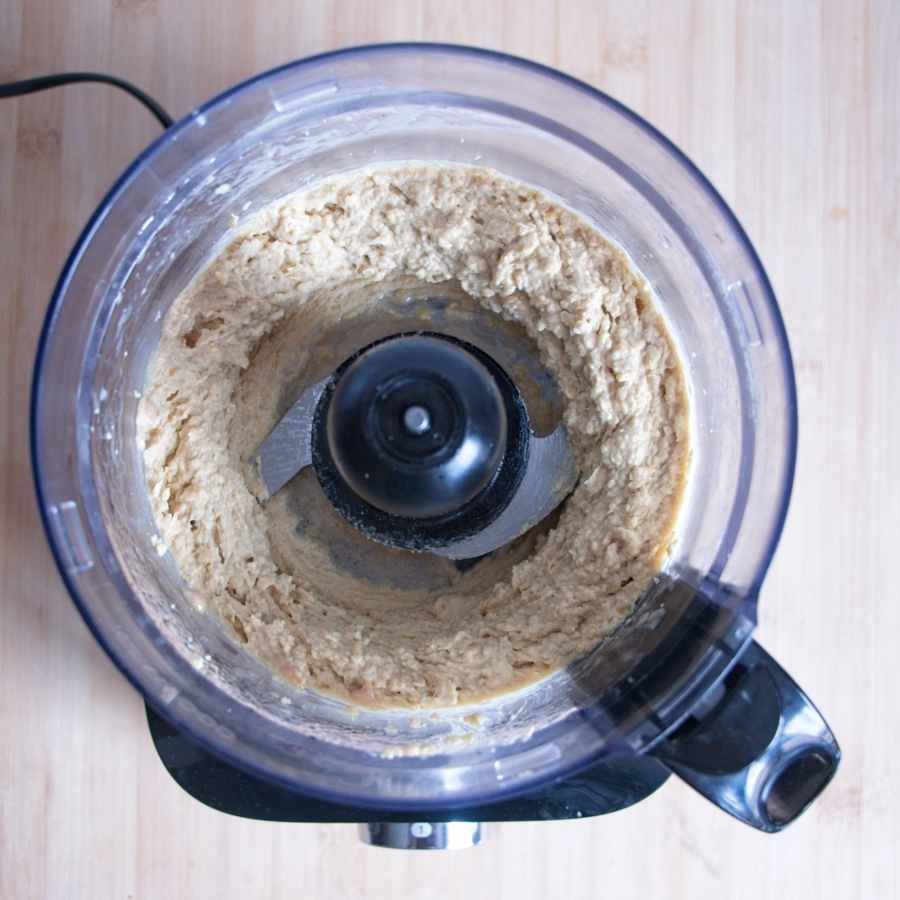
Add the wild garlic.
Add the wild garlic leaves and 1 tablespoon of the reserved chickpea liquid. Blend again until the hummus turns evenly green and the leaves are fully broken down.
If the mixture is too stiff to move properly, add another tablespoon of liquid.
Adjust the texture.
Continue blending, adding more chickpea liquid a little at a time until the hummus is as soft or as thick as you want. For a thicker spread, use less liquid. For a looser dip, add a bit more.
Mix the hummus for at least 5 minutes to get it as smooth as possible. Unless you have an industrial food processor, you won’t be able to make the wild garlic completely smooth.
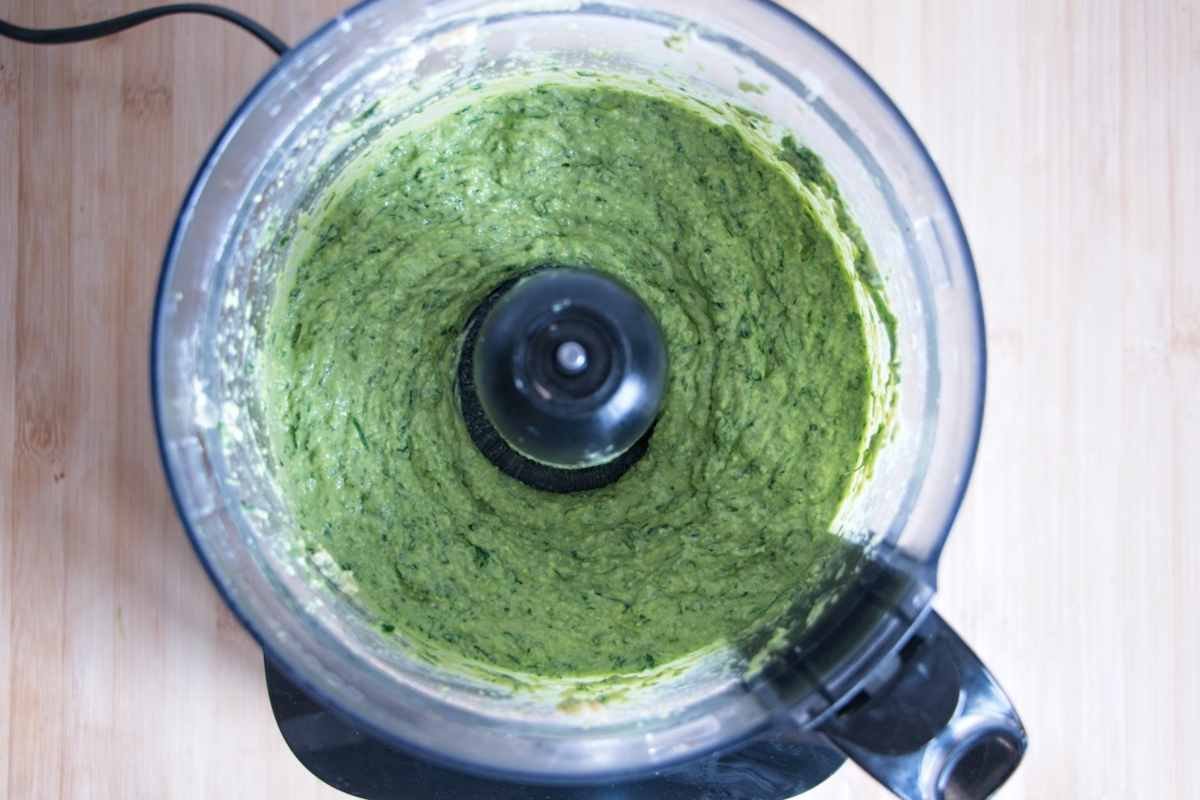
Taste and correct.
Taste the hummus and adjust as needed. If it doesn’t taste super wild garlicy, add a little more oil and salt. Wild garlic really benefits from both of these things to unlock its full flavour potential.
Texture Tips
Getting the texture right is what separates a good hummus from a heavy one. A few small adjustments make a noticeable difference.
- Use aquafaba (chickpea water) for a lighter result: The liquid from the chickpeas helps loosen the mix without diluting the flavour. It also gives a slightly softer, more whipped texture than plain water.
- Blend longer than you think: Most hummus is under-blended. Let it run for an extra 30–60 seconds after it looks “done” to smooth it out properly.
- Add liquid gradually: Start with a small amount, then add more as needed. It’s easier to loosen the hummus than to fix it if it becomes too thin.
Should I Peel the Chickpeas?
When I make classic hummus, I always peel the chickpeas. It gives a noticeably smoother, almost silky texture that’s hard to get otherwise.
For wild garlic hummus, I don’t bother. No matter how long you blend it, the wild garlic leaves won’t fully break down to a completely smooth finish. Because of that, peeling the chickpeas doesn’t make the same difference — the final texture will still have a slight texture from the leaves, so it’s not worth the extra step.
What to Serve It With
Wild garlic hummus is versatile and works across simple snacks and full meals.
- Flatbread: Scoop it up with warm flatbread, pitta, or wraps.
- Veg sticks: Carrots, cucumber, peppers, and celery all work well for a lighter option.
- Sandwich spread: Use it in wraps or sandwiches instead of mayo for more flavour and texture.
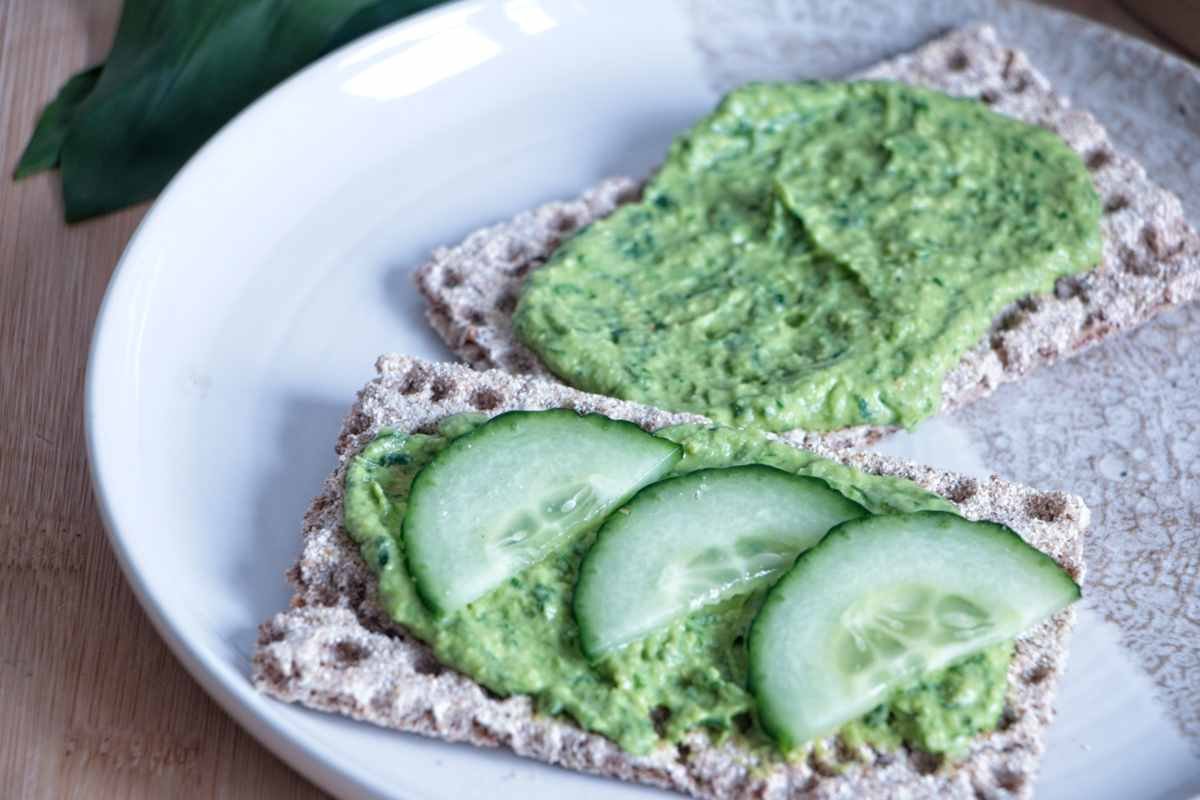
- Rye crackers: For a quick healthy snack, slap some on rye crackers with some cucumber or tomato on top.
Storage & Meal Prep
- Fridge (3–5 days): Store in an airtight container. Smooth the top and, if you like, add a thin layer of olive oil to stop it drying out.
- Freezer (up to 2–3 months): Freeze in small portions so you can take out what you need. Defrost slowly in the fridge.
- Before serving: Give it a good stir. If it’s thickened, loosen it with a splash of water, lemon juice, or a little chickpea liquid until it’s smooth again.
Wild Garlic Hummus
Ingredients
- 250 g chickpeas drained (reserve 3–5 tbsp of the liquid)
- 60 g wild garlic leaves washed
- 3 tbsp tahini
- Juice of 1 lemon
- 3 tbsp olive oil
- 1/2 tsp fine salt
Instructions
- Drain the chickpeas and reserve a few tablespoons of the liquid from the tin. Wash the wild garlic well and roughly chop it if the leaves are large.
- Add the chickpeas, tahini, lemon juice, olive oil, and salt to a food processor or blender. Blend until thick and mostly smooth, stopping to scrape down the sides if needed.
- Add the wild garlic and 1 tablespoon of the reserved chickpea liquid. Blend again until the hummus is green and evenly mixed.
- Add more chickpea liquid, 1 tablespoon at a time, until the hummus reaches your preferred consistency. Keep mixing for at least 5 minutes to get a smooth hummus.
- Taste and adjust with extra lemon juice or salt if needed.
- Spoon into a bowl and serve immediately, or chill until needed.
Notes
Peeling chickpeas can give a smoother, more refined texture, and it’s worth doing for classic hummus. For wild garlic hummus, it’s less important. The leaves won’t blend completely smooth anyway, so the difference is minimal — you can skip it and save the time.
Yes, wild garlic hummus freezes well. Store it in an airtight container in small portions for up to 2–3 months. Defrost in the fridge overnight and stir before serving.
It will keep in the fridge for 3–5 days in a sealed container. If it thickens over time, stir in a little water or lemon juice to loosen it.
You can, but the texture and flavour will change. Tahini adds creaminess and depth, so without it the hummus will be lighter and slightly less rich. You can replace it with a small amount of olive oil or leave it out entirely.
Sure, but then you are just making regular hummus and not wild garlic hummus. If you don’t have wild garlic, use 1–2 cloves of regular garlic instead.