
How to Cook Lion’s Mane Mushrooms: A Vegan Steak Recipe
Learn how to cook lion’s mane mushrooms so they’re golden, crisp, and never chewy. This guide covers preparation, pan-frying methods, common mistakes, and simple ways to use them as a meaty main.
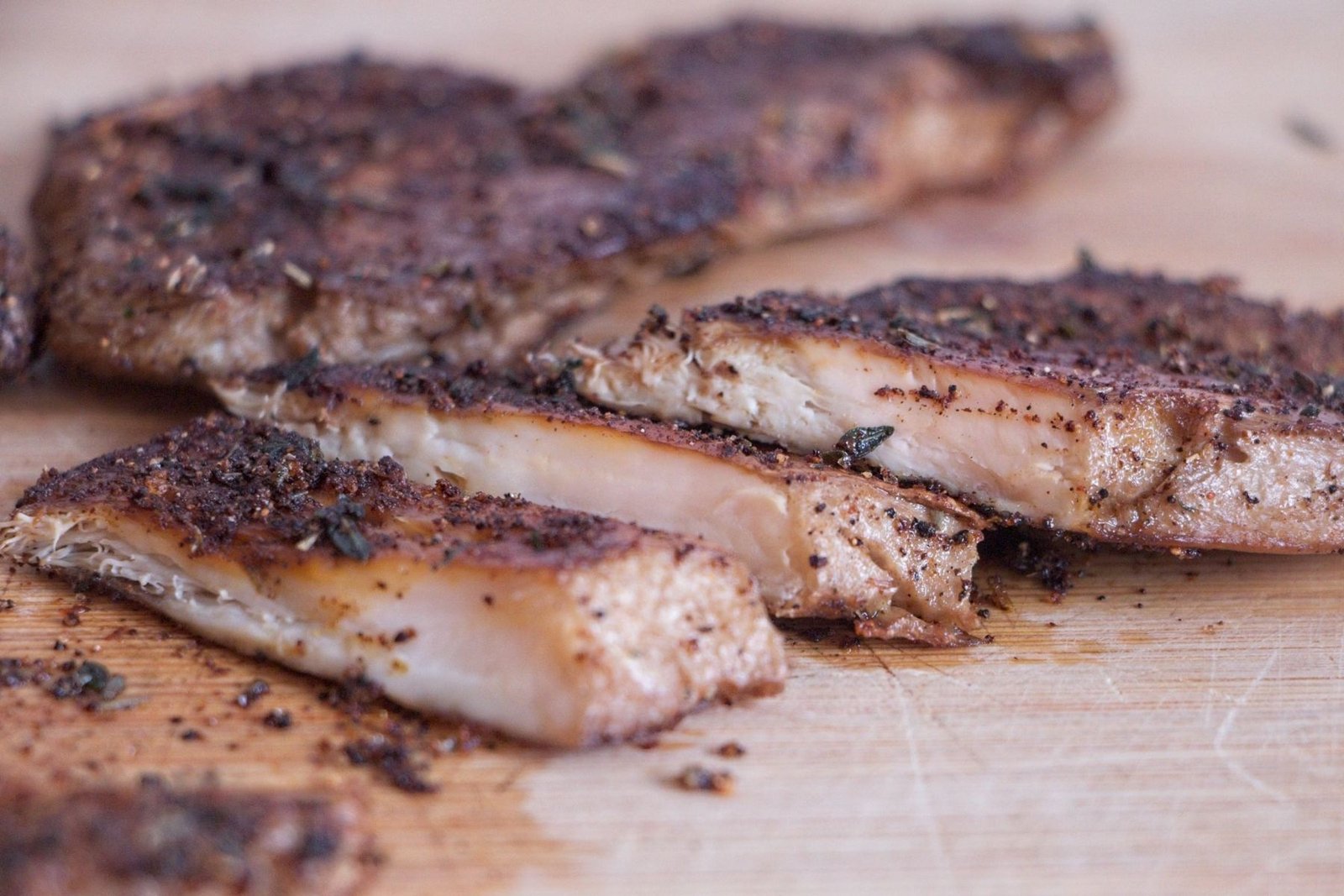
You have probably heard of lion’s mane mushrooms. Also known as yamabushitake, they are currently being touted as a super mushroom, and with good reason – they offer a plethora of health benefits that are being backed by science. From protection against degenerative brain disorders to nerve regrowth, we could all do with some extra lion’s mane in our diet. Still, lion’s mane doesn’t look like anything you’d normally find at the market, which leaves many people wondering how to cook lion’s mane mushrooms in a way that does them justice.
What are Lion’s Mane Mushrooms?
Forming pom pom like growths, lions mane (Hericium erinaceus) is a mushroom that grows and feeds on dying trees or dead wood. There are several other species very similar to lion’s mane within the Hericium genus, all of which are edible. They can be found in the wild from late summer and through autumn, often until early winter in milder climates. Just be aware of local laws when harvesting as they are a protected species in some countries. Luckily, they are very easy to grow at home, so you can have a year round supply of this delicious and beneficial mushroom.
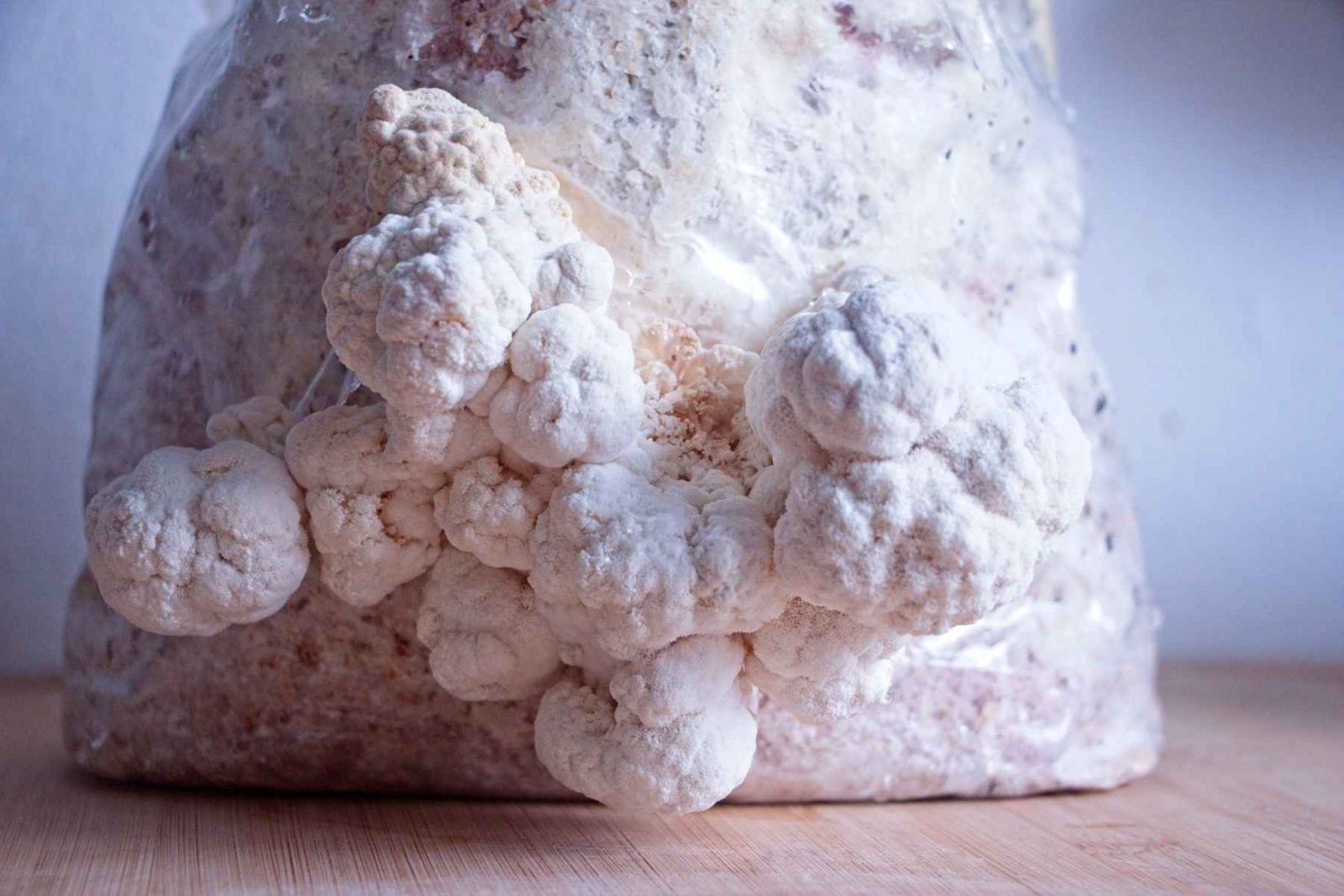
Often prized for their meaty, fibrous texture and a subtle sweetness with a mild seafood taste (this becomes very apparent when dried), lion’s mane mushrooms work exceptionally well as a meat substitute. They don’t taste like meat, but they have a similar bite and avoid the strong, earthy flavour many people associate with mushrooms.
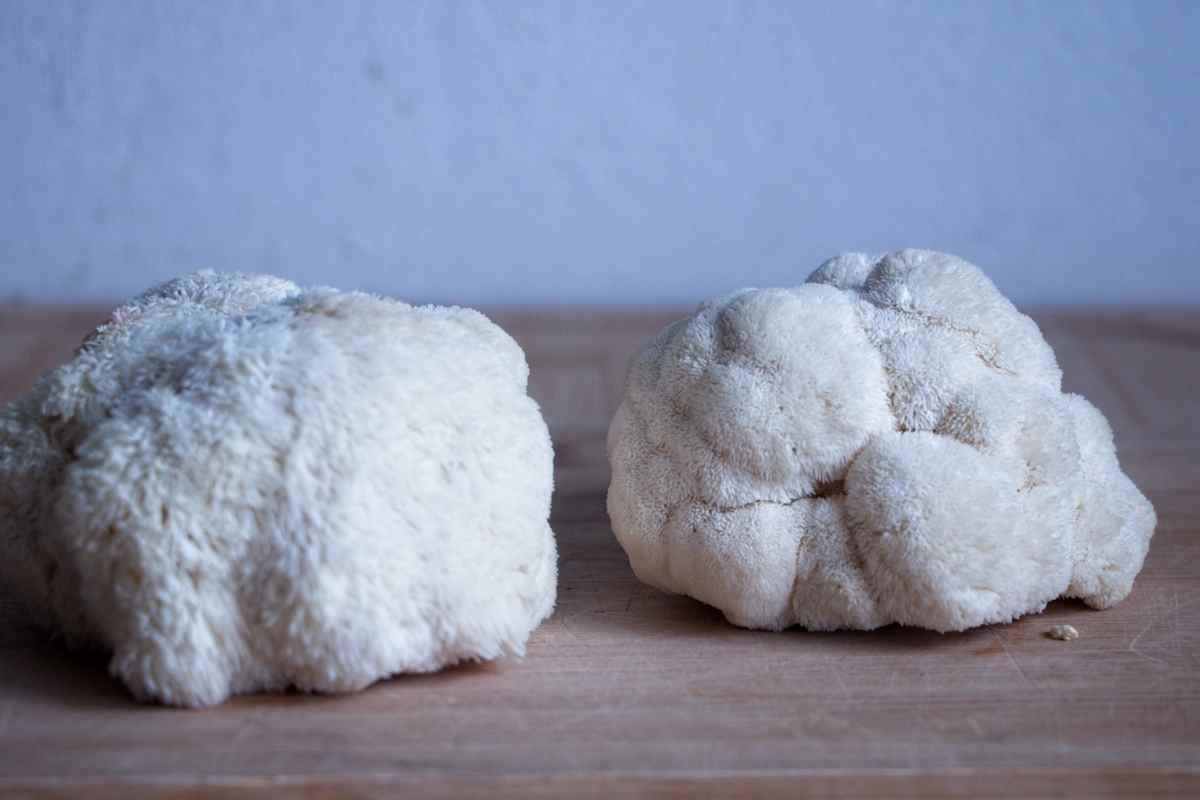
For this reason, lion’s mane is often used to make vegetarian crab cakes or shredded in a similar way to pulled pork. When I find or grow large, tightly formed mushrooms, though, I prefer to cut them into steaks to really show off their meaty texture.
Lion’s Mane Steak Ingredients
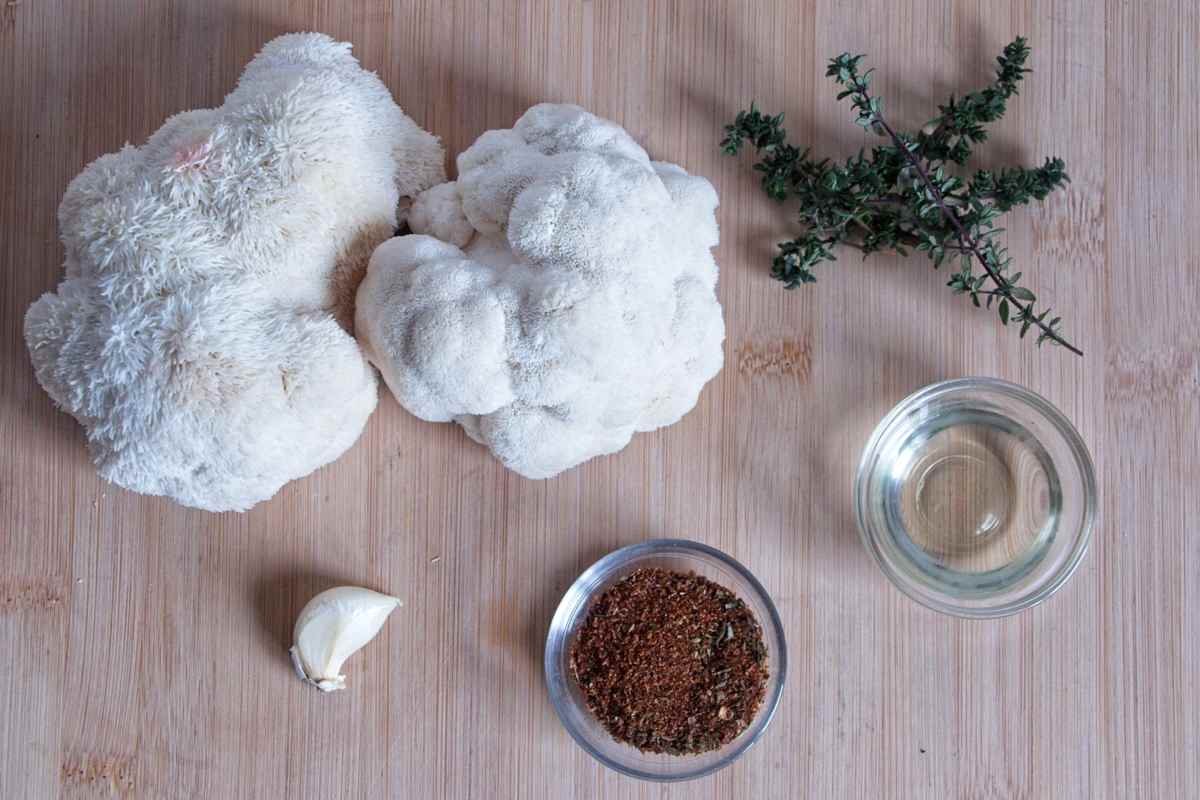
Lion’s mane mushrooms
The fibrous structure gives a firm, steak-like texture when pressed and seared; use fresh, tightly formed clusters for the best results. If you have lots of smaller growths, I would recommend using them for crab cakes instead.
Neutral oil
Provides an even cooking medium for high-heat searing without burning; avoid strongly flavoured oils that can mask the mushroom.
Butter
Adds richness and helps carry flavour during basting; vegan butter works well if it has a similar fat content.
Garlic and Thyme
These two always pair well with mushrooms.
Steak seasoning or blackening rub
Creates a dark, savoury crust and adds spice-driven complexity; apply lightly after pressing to prevent bitterness. Don’t worry about buying one. Make your own with the following ingredients.
- 2 tsp smoked paprika
- 1 tsp sweet paprika
- 1 tsp garlic powder
- 1 tsp onion powder
½ tsp dried thyme or oregano - ½ tsp freshly ground black pepper
- ¼ tsp cayenne pepper (optional)
- ¾ tsp fine sea salt
This makes enough for 4 lion’s mane steaks when applied lightly. I would recommend scaling it up and making a whole jar so it’s always on hand.
How to Cook Lion’s Mane Mushroom Steaks
Prepare the mushrooms
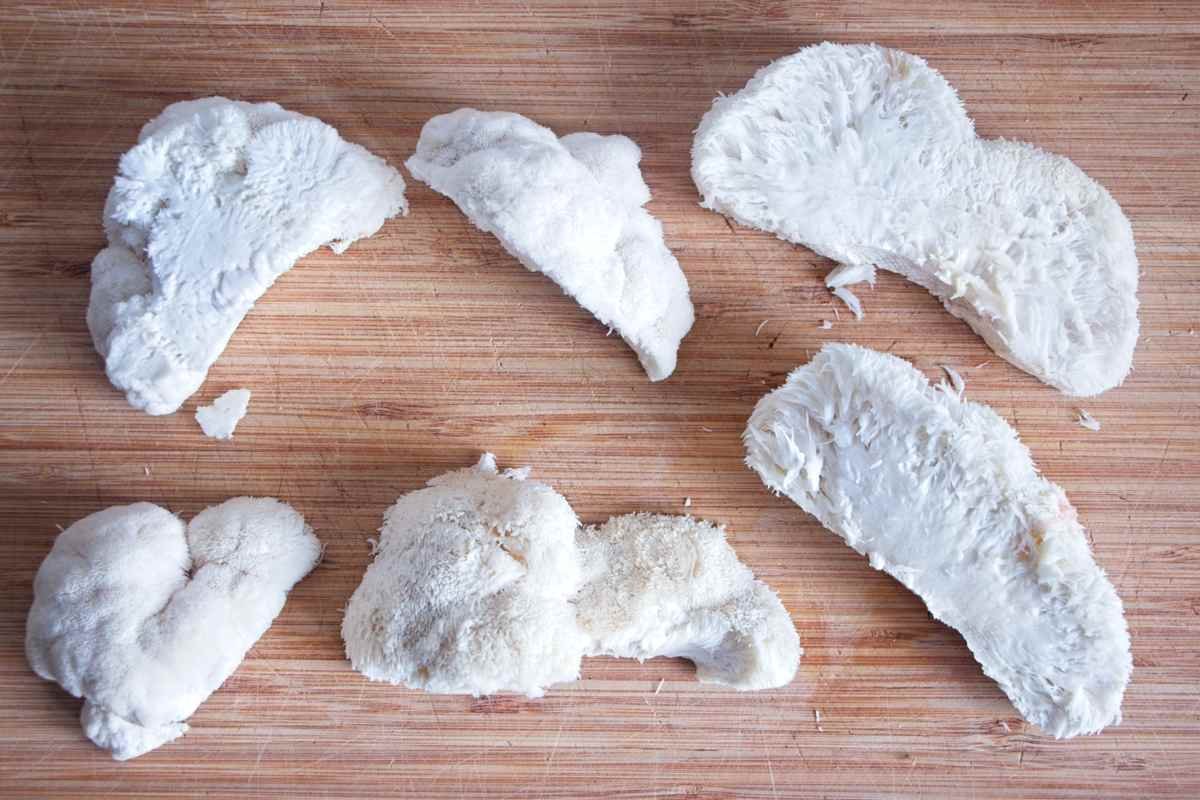
Trim away any dirty or woody base, then cut the lion’s mane top to bottom into thick slabs about 3–3.5 cm thick. Top to bottom is important or the fibres will fall apart when being cooked and pressed.
Tip: Don’t wash lion’s mane with water. It will absorb it like a sponge. Just wipe clean and trim any parts away that are particularly dirty.
Prepare the garlic and thyme
Lightly crush the garlic clove with the side of a knife to release its flavour without breaking it down completely. Strip the thyme leaves from the stems and give them a rough chop.
Press out excess moisture
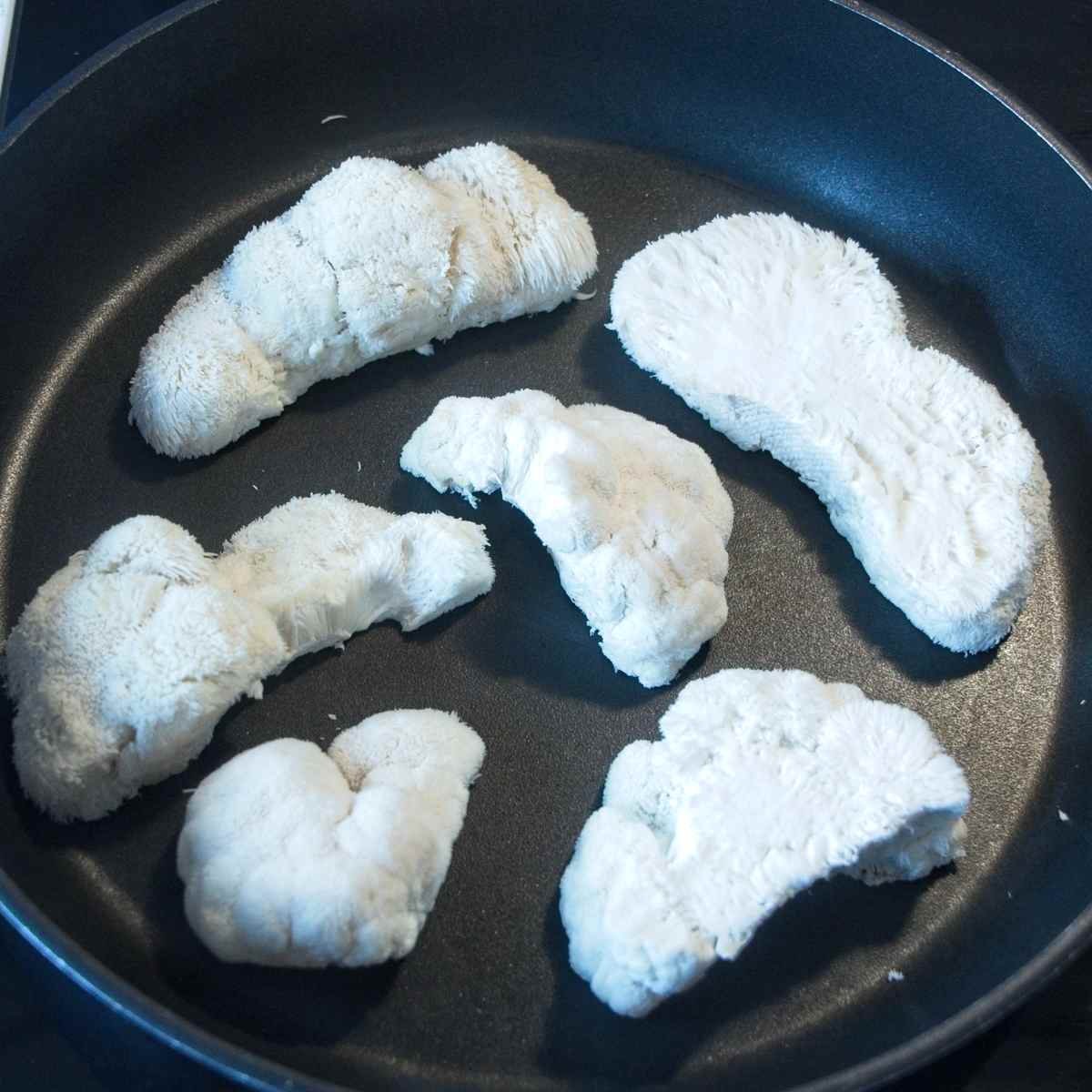
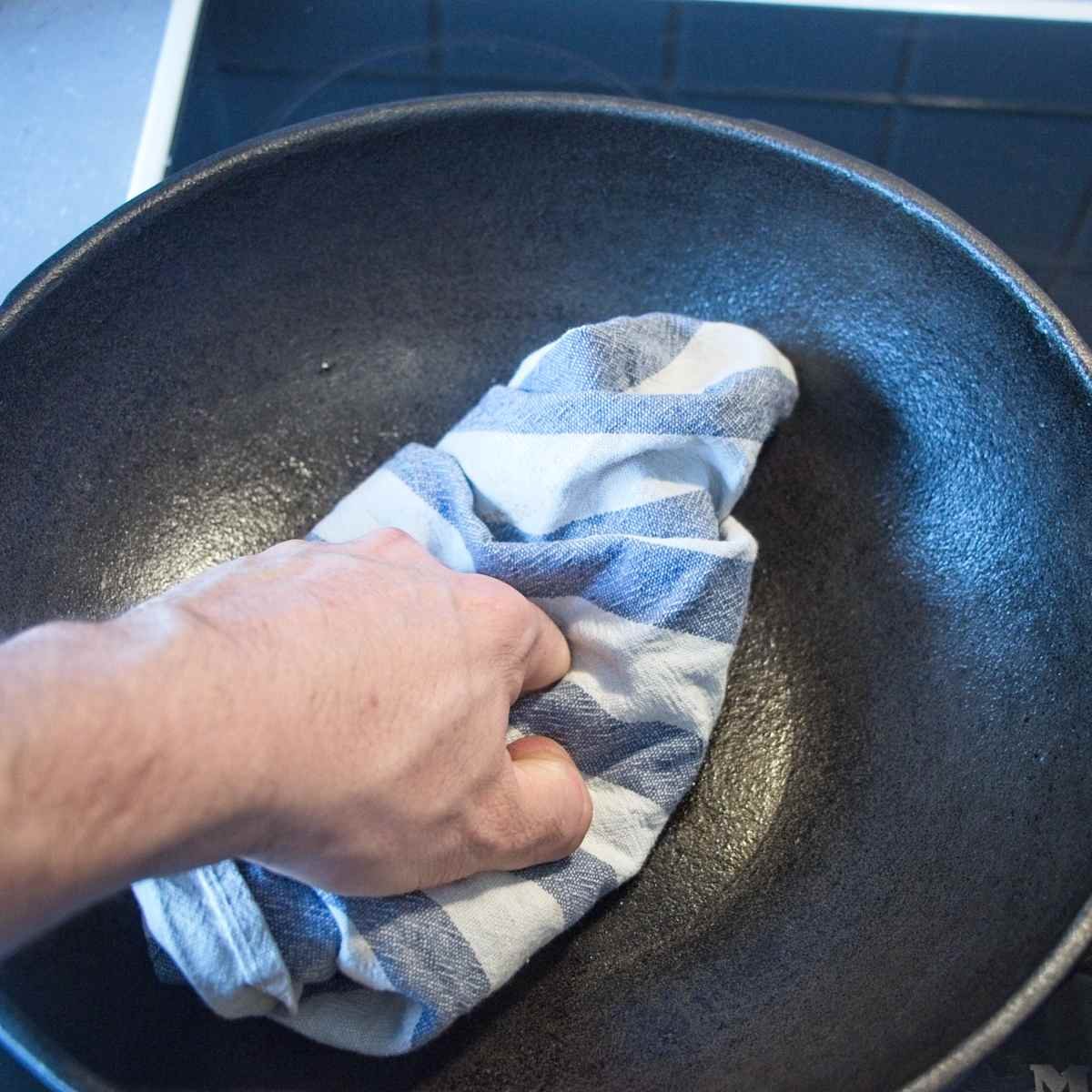
Place the steaks in a dry, cold frying pan (large enough to hold them in a single layer) over medium heat. Set a second heavy pan (cast iron is best) directly on top to apply even pressure. Cook for 3–4 minutes per side, lifting occasionally to check progress.
You’ll see steam at first; once this subsides and the surface looks dry and matte, the moisture has been driven off. If they are literally swimming in liquid, remove from the pan and discard the water and repress. They are ready when very little water comes out of them when pressed hard with a spoon.
Tip: If you don’t have a cast iron or heavy pan to press them with, use a lighter one and add a couple of tins from the cupboard. Just make sure the base of the pan is big enough to press all the mushrooms at the same time.
Sear the steaks
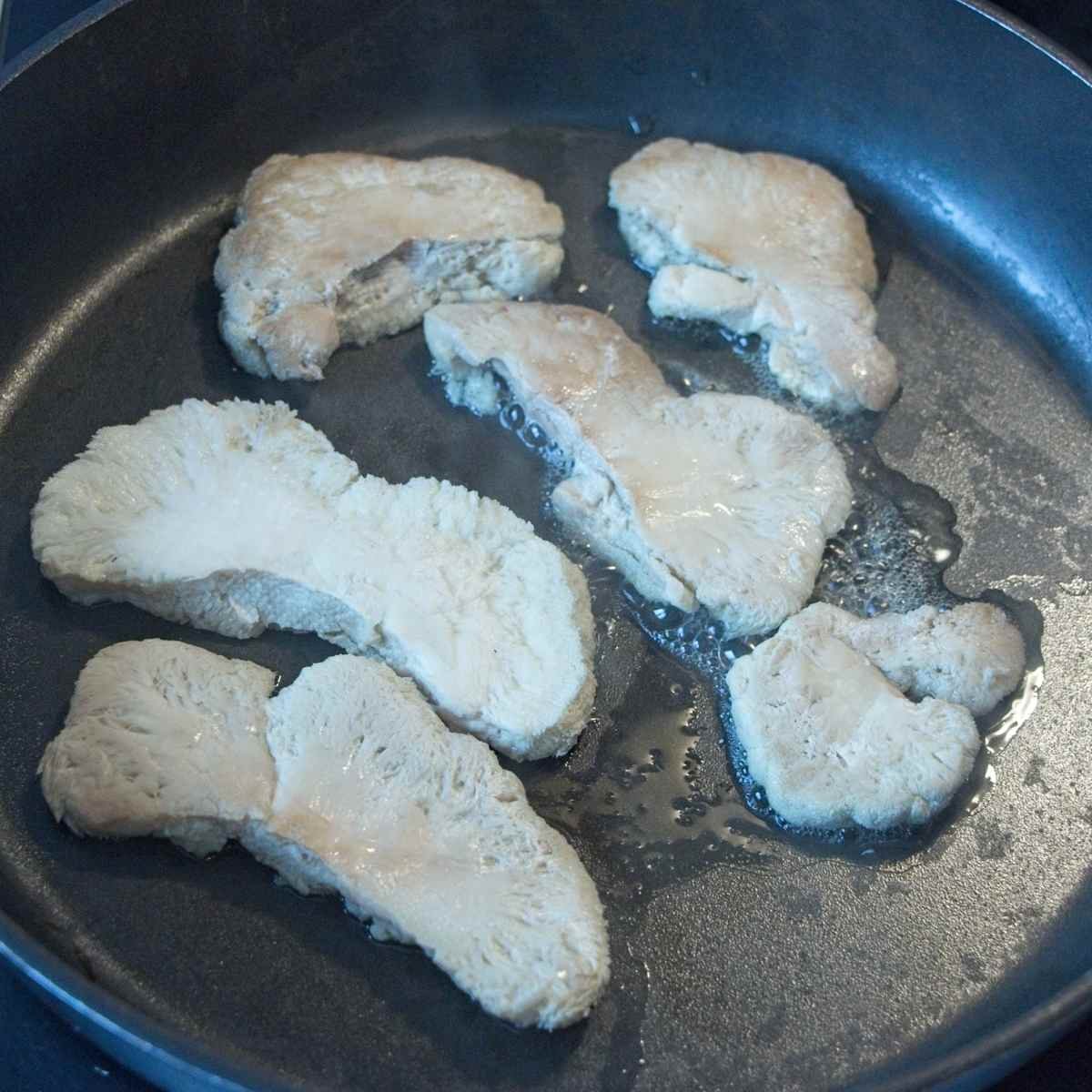
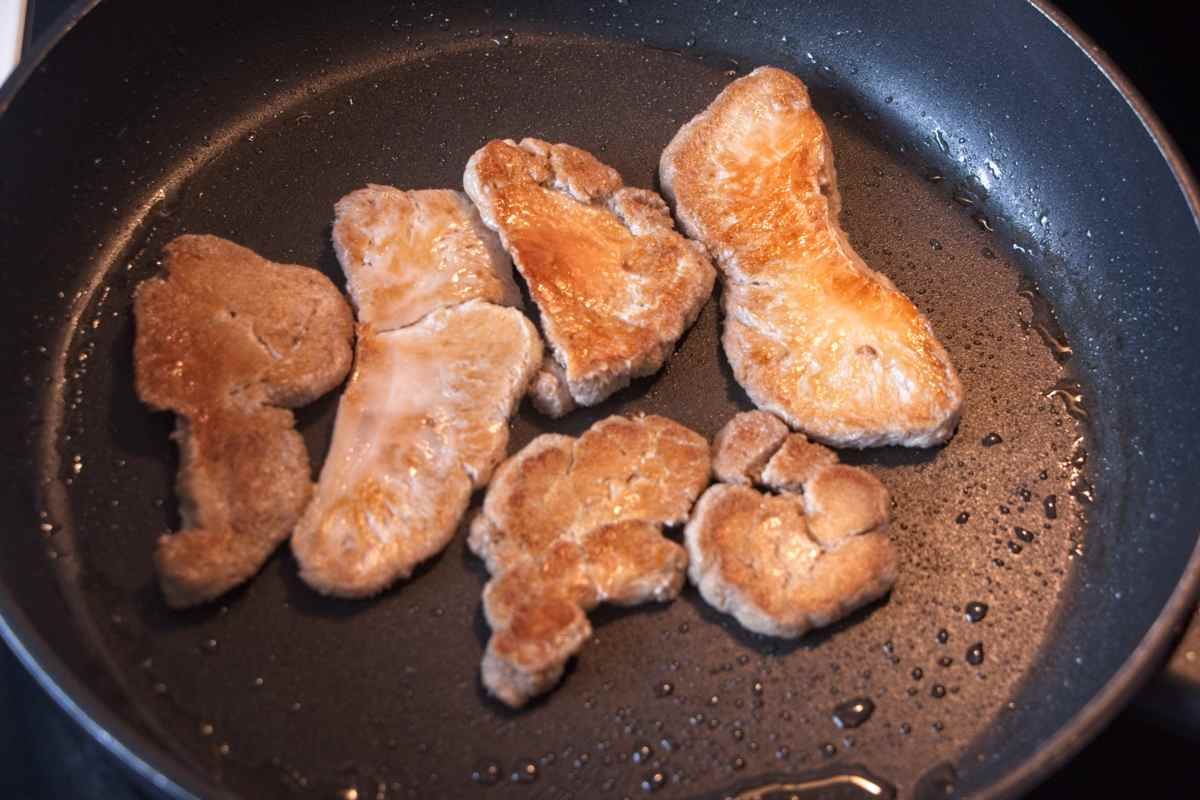
Once the mushrooms have stopped releasing water, remove them from the pan and set aside. Increase the heat to high and add the oil. When the oil is hot and shimmering, return the mushroom steaks to the pan and sear for 4–5 minutes, until the underside is deeply golden. Flip and repeat on the second side.
Add the seasoning
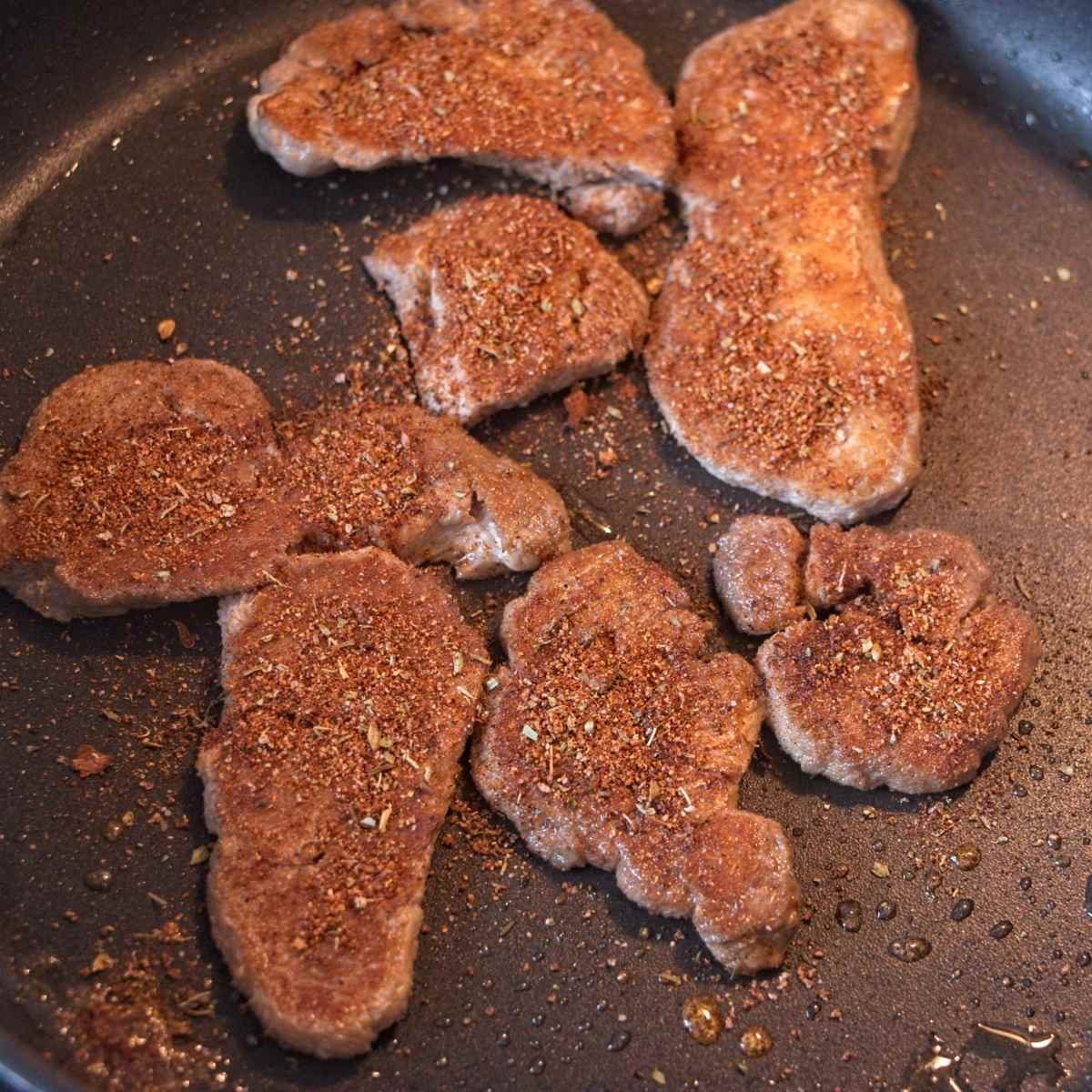
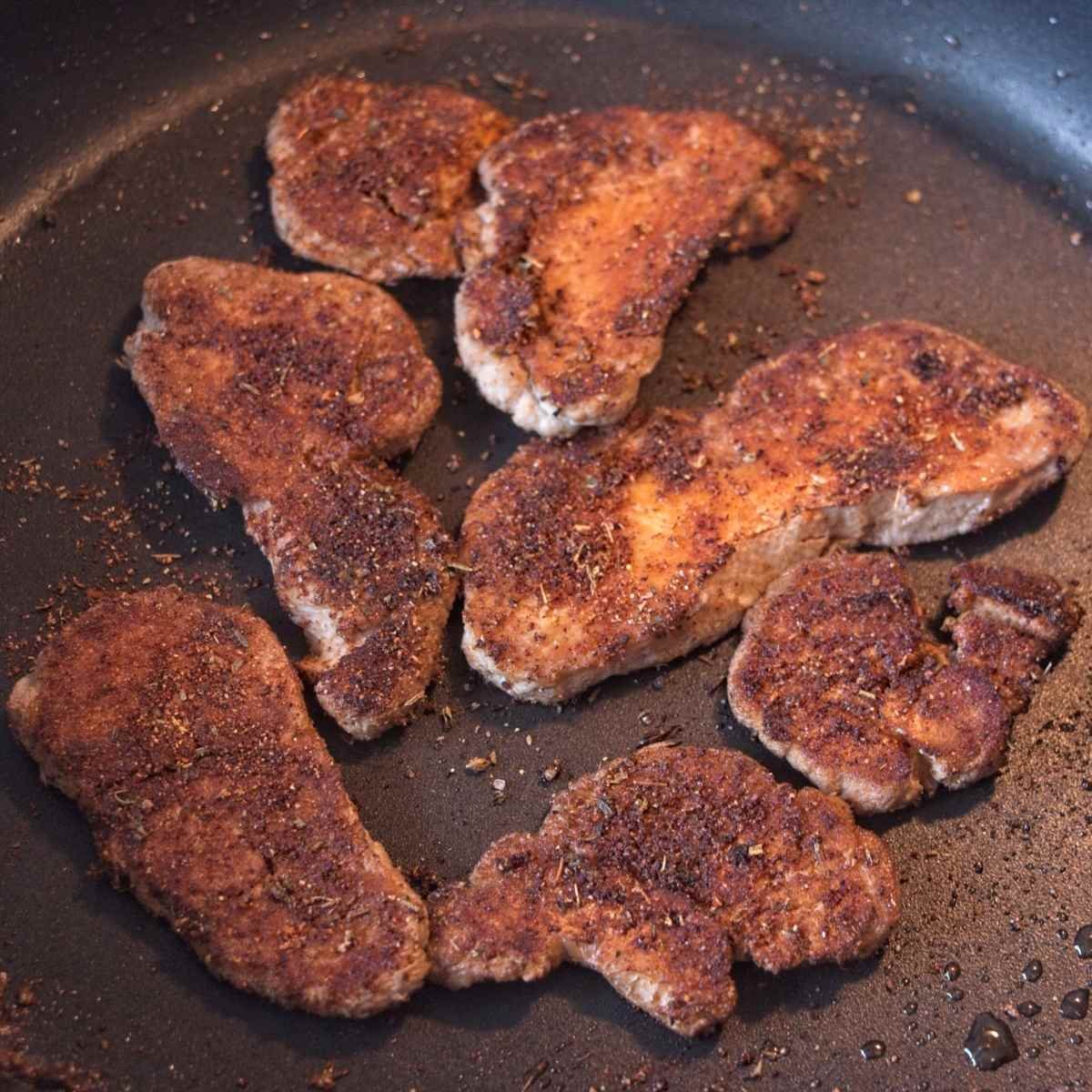
Sprinkle a light, even layer of seasoning over the steaks — enough to form a crust, but not a thick coating. Flip and sear for about 1 minute, then season the second side, flip again, and sear for a further 1 minute until the spices are toasted and aromatic.
Butter baste
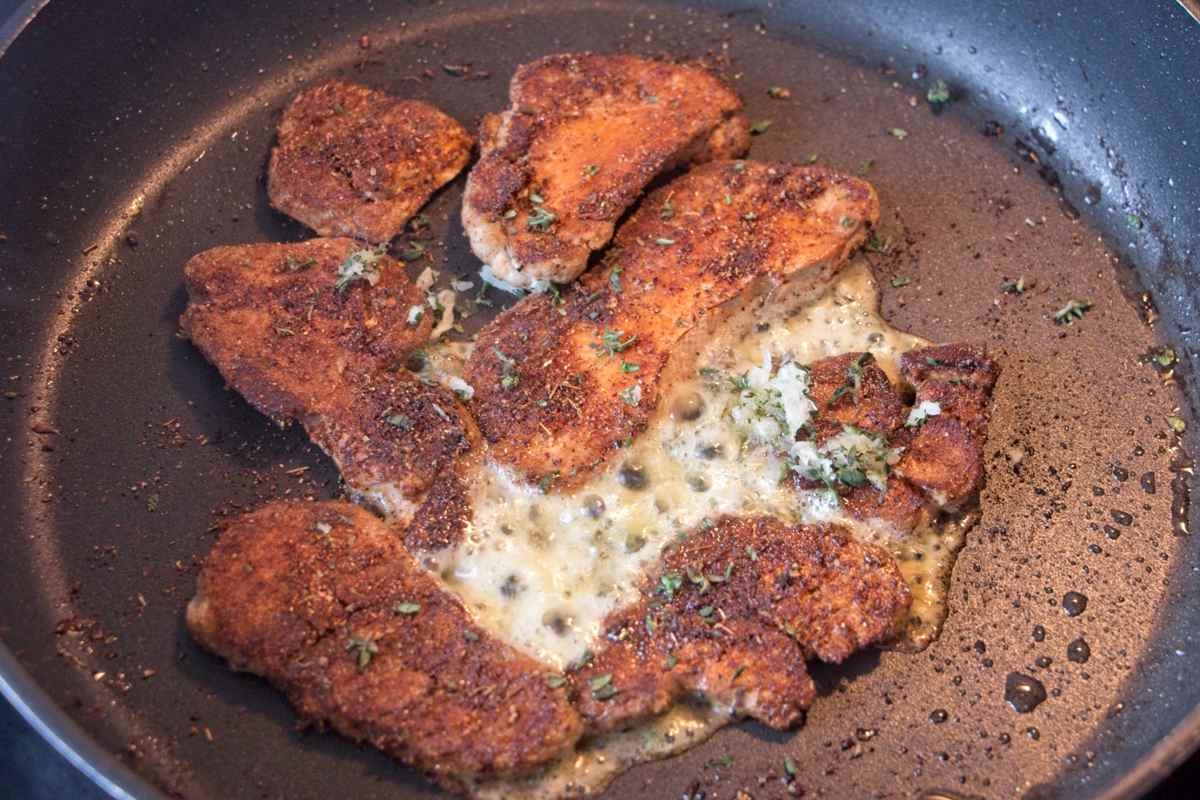
Lower the heat to medium. Add the butter, garlic, and thyme to the pan. Once the butter melts and foams, tilt the pan and spoon it over the steaks for 30–60 seconds. This adds richness and carries the flavour into the mushroom.
Rest and finish
Remove the steaks from the pan and let them rest for about 1 minute. This allows the fibres to relax and the surface to settle.
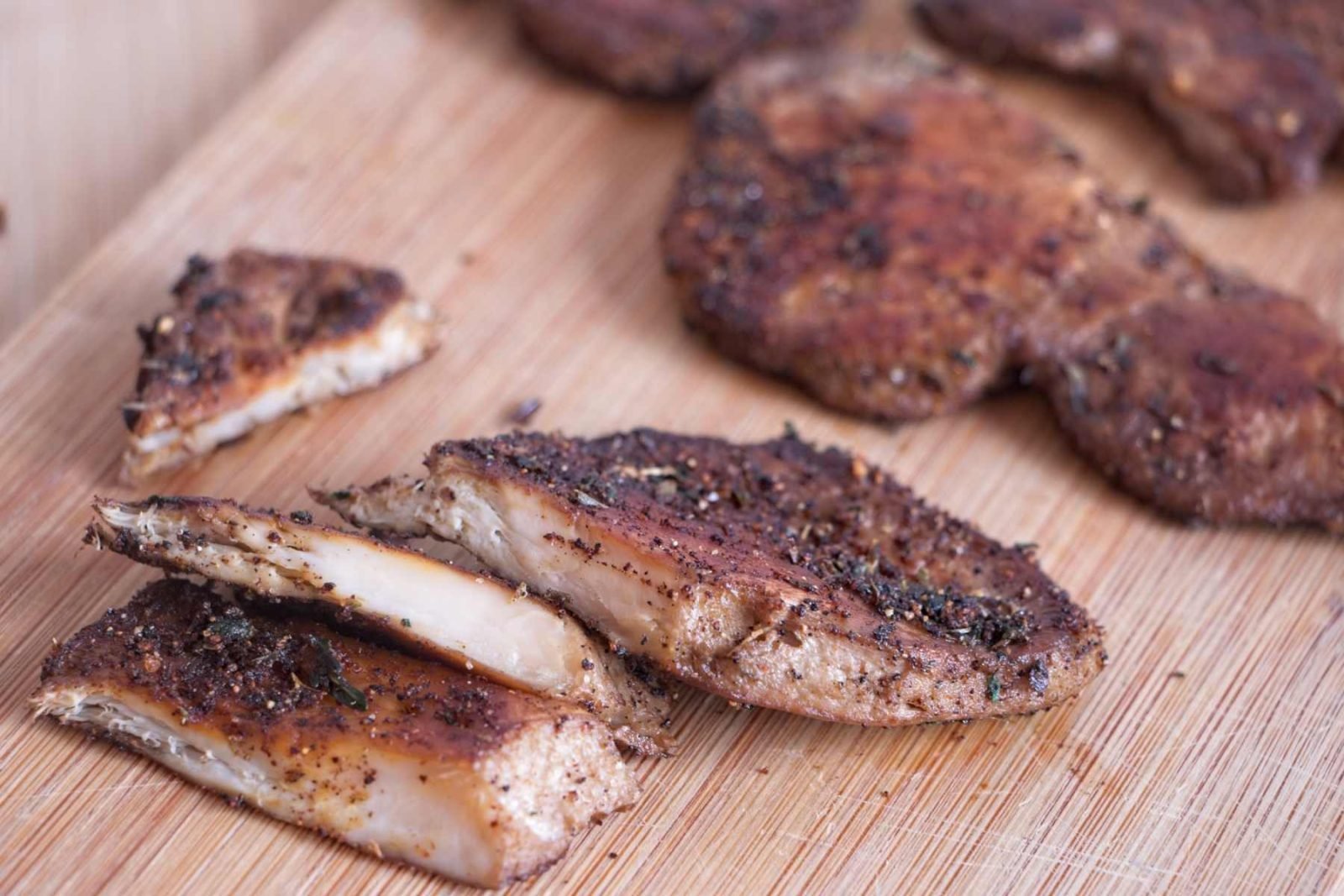
Serve the lion’s mane steaks with mashed potatoes or white beans and a side of sautéed greens. Finish with a spoon of the pan juices or a simple herb sauce if desired. Lion’s mane also works well in a steak sandwich, sliced thick and served in a crusty roll with mustard, pickles, or a simple herb sauce.
Lion’s Mane Steak
Ingredients
- 350 g lion’s mane mushrooms
- 1 tbsp neutral oil such as sunflower, rapeseed, or vegetable, plus a little extra if needed
- 20 g butter or vegan butter
- 1 garlic clove lightly crushed
- 2 –3 sprigs fresh thyme leaves stripped and roughly chopped (optional)
Blackening Rub
- 2 tsp smoked paprika
- 1 tsp sweet paprika
- 1 tsp garlic powder
- 1 tsp onion powder
- ½ tsp dried thyme or oregano
- ½ tsp freshly ground black pepper
- ¼ tsp cayenne pepper optional
- ¾ tsp fine sea salt
Instructions
- Trim away any dirty or woody base, then cut the lion’s mane top to bottom into 3–3.5 cm thick slabs.
- Place the steaks in a dry, cold pan over medium heat. Press with a second pan and cook 3–4 minutes per side until steam subsides and the surface looks dry and matte. Drain excess water if they are especially waterlogged.
- Remove the mushrooms from the pan. Increase heat to high, add the oil, and heat until shimmering.
- Return the steaks to the pan and sear 4–5 minutes on the first side until golden. Flip and sear 4–5 minutes on the second side.
- Reduce the heat slightly. Sprinkle a light, even layer of the blackening rub over the top. Flip and sear 1 minute, then season the second side, flip again, and sear for a further 1 minute until the spices are toasted and aromatic.
- Lower the heat to medium. Add the butter, garlic, and thyme (if using). Baste the steaks with the melted butter for 30–60 seconds.
- Rest for 1 minute before serving.
Notes
-
Less spicy: Omit the cayenne for a milder, steakhouse-style crust.
-
Smokier: Add a pinch of chipotle powder or ground cumin to the rub.
-
Herb-forward: Increase thyme or oregano and finish with lemon zest after cooking.
Lion’s mane holds a lot of water and will steam if that moisture isn’t removed first. Always press it in a dry pan over medium heat until the surface looks dry and the steam subsides before adding oil.
You can, but the texture will be softer and less steak-like. Pressing tightens the fibres and allows the surface to brown properly rather than staying pale and wet.
Pair it with something soft and neutral, like mashed potatoes or beans, and add a simple green or sharp dressing for contrast. Keeping the sides restrained lets the texture do the work.
Keeping the sides restrained lets the texture do the work. Lion’s mane also works well in a steak sandwich, sliced thick and served in a crusty roll with mustard, pickles, or a simple herb sauce.
It’s best not to wash lion’s mane with water, as it absorbs moisture very easily and becomes harder to brown. Instead, brush off dirt with a dry cloth or soft brush, and trim away any dirty base before cooking.


So juicy and tender! I made a peppercorn sauce to pour over it. They went together perfectly.
I’m happy you enjoyed it. Steak and peppercorn sauce is a match made in heaven!