
Homemade Brown Sauce Recipe (HP-Style, Rich & Tangy)
A homemade brown sauce recipe with a rich, tangy flavour, inspired by classic HP-style sauce and made from simple ingredients.
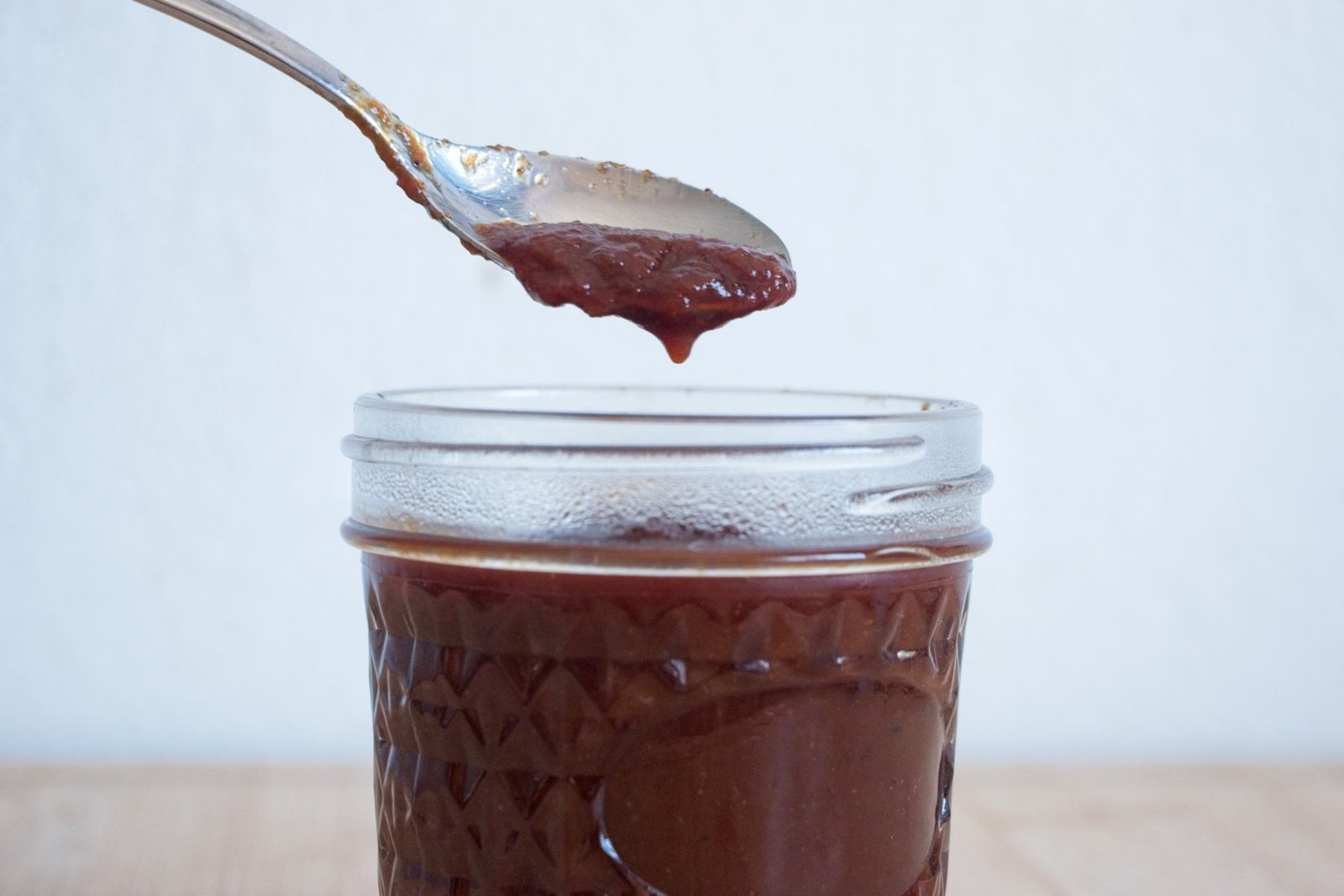
This homemade brown sauce recipe is built in the style of classic HP Sauce, with a balance of sharp vinegar, gentle sweetness, and warm spice. The real challenge with a homemade version is capturing that deep tang — something sharper than vinegar alone.
As it cooks down, the tomatoes, apple, and spices come together into a rich, tangy sauce with loads of depth. Making it yourself lets you control that balance so you can make it to your own taste.
What Is Brown Sauce?
Brown sauce is a classic British and Irish condiment, best known for its association with HP Sauce and the traditional full English breakfast. The flavour is hard to describe. The only description I can think of is “brown sauce”. It’s made from a base of fruit and vegetables—typically tomatoes, apples, and onions—combined with vinegar, sweeteners, and a blend of warm spices.
The flavour sits somewhere between sweet, tangy, and savoury, with a gentle fruitiness and a spiced depth that builds as it lingers. It’s sharper than ketchup, less sweet, and more complex overall.
You’ll usually see it served with bacon, sausages, and eggs, but it also works just as well in sandwiches, on chips, or brushed over grilled meats for extra flavour.
Why Make Your Own Brown Sauce
If I was having a cooked breakfast, I would always reach for the brown sauce over ketchup. But as far as I’m aware, it’s also a very British and Irish thing — you don’t really see it much outside of these islands (I hope I don’t offend anyone if it is in fact also a popular sauce in your country…)
Living in Vienna, it’s almost impossible to find unless you go to specialist import shops, and even then it’s usually overpriced. Making it yourself ends up being the simplest way to get something close to that classic HP Sauce flavour without hunting it down.
Making your own also means using simple, recognisable ingredients without the added sugars, preservatives, or stabilisers often found in shop-bought sauces.
What Is Brown Sauce Made From?
Brown sauce isn’t about one dominant flavour, but a balance of elements working together. The tang comes from the vinegar and tamarind, the sweetness from the apple and syrup, and the depth from Worcestershire sauce and the spices. When it’s right, none of these stand out on their own — it just tastes full, sharp, and well-rounded.
Core ingredients
- Tomatoes – form the base and give body
- Apple – adds natural sweetness and thickness
- Onion – brings savoury depth
- Malt vinegar – the backbone of that sharp, tangy flavour. Malt is a must for the traditional taste
Flavour builders
- Sweetener (treacle or coconut syrup) – rounds out the sharpness and adds depth. Black treacle gives you that bitter note, but I love using coconut syrup for a slight hint of caramel
- Tamarind – key for that deeper, more complex tang (stronger than vinegar alone)
- Worcestershire sauce – adds umami and background savoury notes
- Soy sauce (optional) – a small amount can boost depth further
Spices
- Ginger – warmth and slight heat
- Allspice – that classic brown sauce note
- Cloves – subtle bitterness and depth
- Mustard – a light sharpness in the background
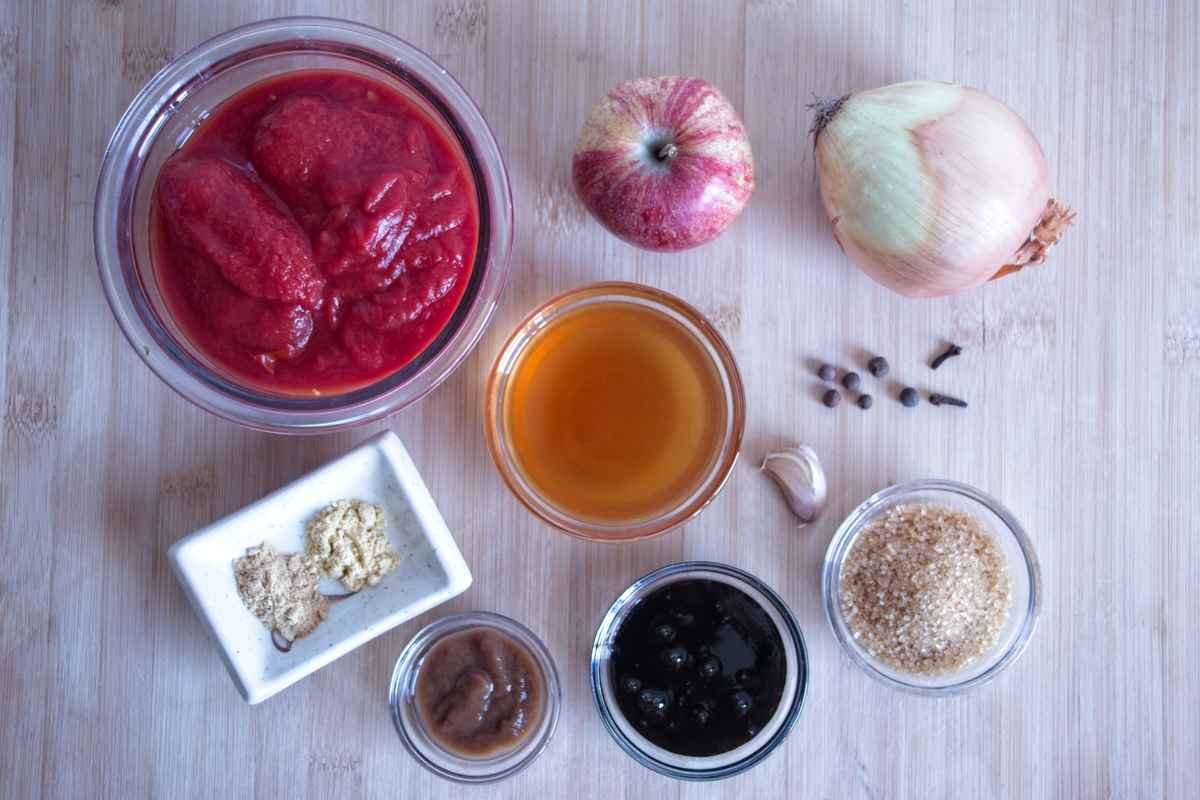
Ingredient Notes & Substitutions
A few small choices here can noticeably change the final flavour and texture, so it’s worth understanding what each one does.
Tinned vs Fresh Tomatoes
Tinned tomatoes work perfectly and are usually more consistent, especially outside peak season. Fresh tomatoes can be used, but they need peeling and tend to give a slightly lighter flavour. For ease and reliability, tinned is the better option.
Apple Types (Tart vs Sweet)
A tart apple gives a sharper, more traditional result, while a sweeter apple will soften the sauce slightly and make it rounder. Both work — just adjust the vinegar at the end if needed to rebalance.
Coconut Syrup vs Treacle
Treacle gives that classic deep, slightly bitter sweetness associated with HP Sauce. Coconut syrup is a good alternative, but it’s lighter and less bitter, so the sauce may feel a bit softer unless balanced with enough acid and spice.
Tamarind (Why It Matters)
Tamarind is key if you want that deeper, layered tang. Vinegar alone gives sharpness, but tamarind adds complexity — a slightly fruity, almost sour note that’s hard to replicate with anything else.
Homemade Brown Sauce Step-by-Step Instructions
Cook the base
Peel and core the apples, and roughly chop the onions.
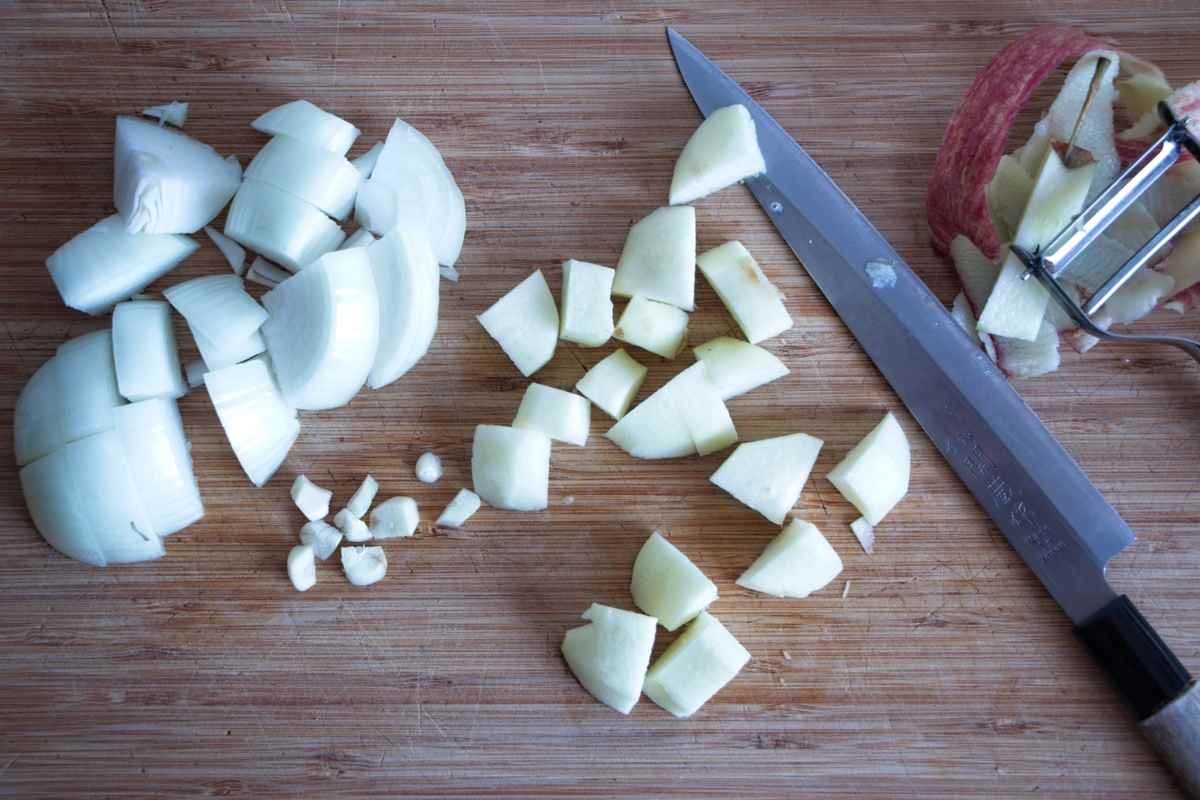
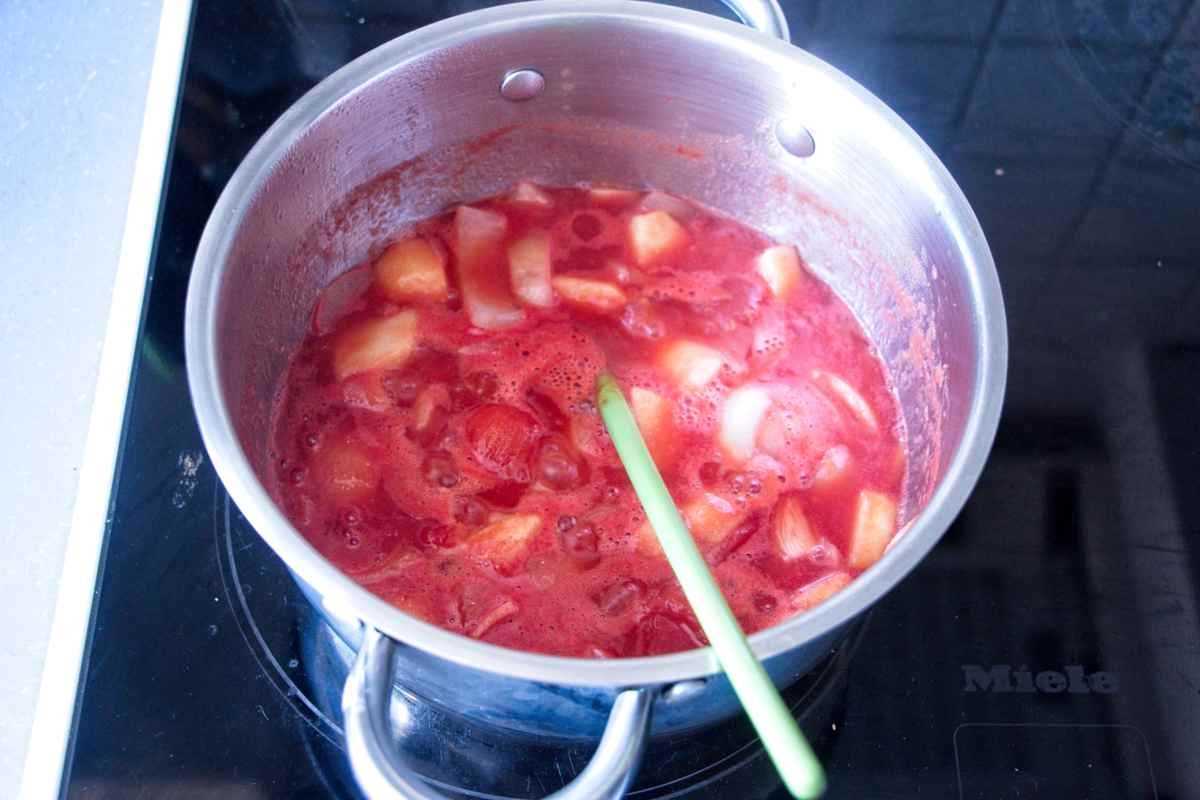
Add the tomatoes, chopped apple, onion, garlic, and about 250ml water to a medium saucepan (around 2–3 litre capacity). Bring to a gentle simmer over medium heat, then reduce to low and cook uncovered for 15–20 minutes.
Stir occasionally to prevent sticking. The mixture is ready when the apple is soft enough to break apart with a spoon and everything looks collapsed and slightly thickened.
Blend until smooth
Remove from the heat and blend until completely smooth using a stick blender or countertop blender. The mixture should be thick but pourable, with no visible chunks.
Add the flavour ingredients
If you are using whole spices, crush them in a mortar and pestle.
Return the blended mixture to the pan and add the vinegar, sweetener, tamarind, Worcestershire sauce, spices, and soy sauce (if using). Stir well over low heat until fully combined.
Reduce slowly
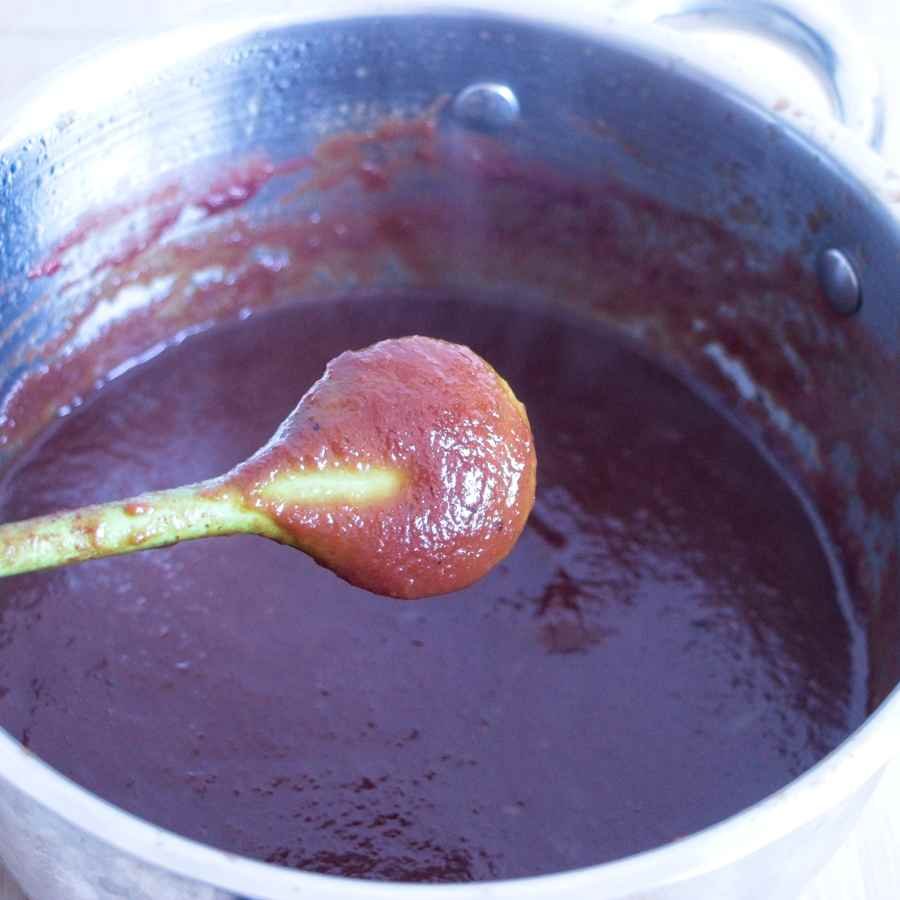
Simmer gently with the lid off for 25–40 minutes, stirring every few minutes. Keep the heat low enough that it bubbles lightly but doesn’t spit.
The sauce is ready when:
- it has darkened in colour
- it looks glossy
- it coats the back of a spoon and holds a line when you run your finger through it
Tip: Scrape the sides of the pan occasionally where the sauce thickens fastest.

Adjust the flavour
Let a spoonful cool slightly, then taste and adjust:
- Too sharp → add a small amount of sweetener
- Too sweet → add a splash of vinegar or an extra spoon of tamarind
- Too intense → add 1–2 tablespoons water and simmer briefly
- Too thin → continue reducing
- Too thick → loosen with a little water or vinegar
Cool and store
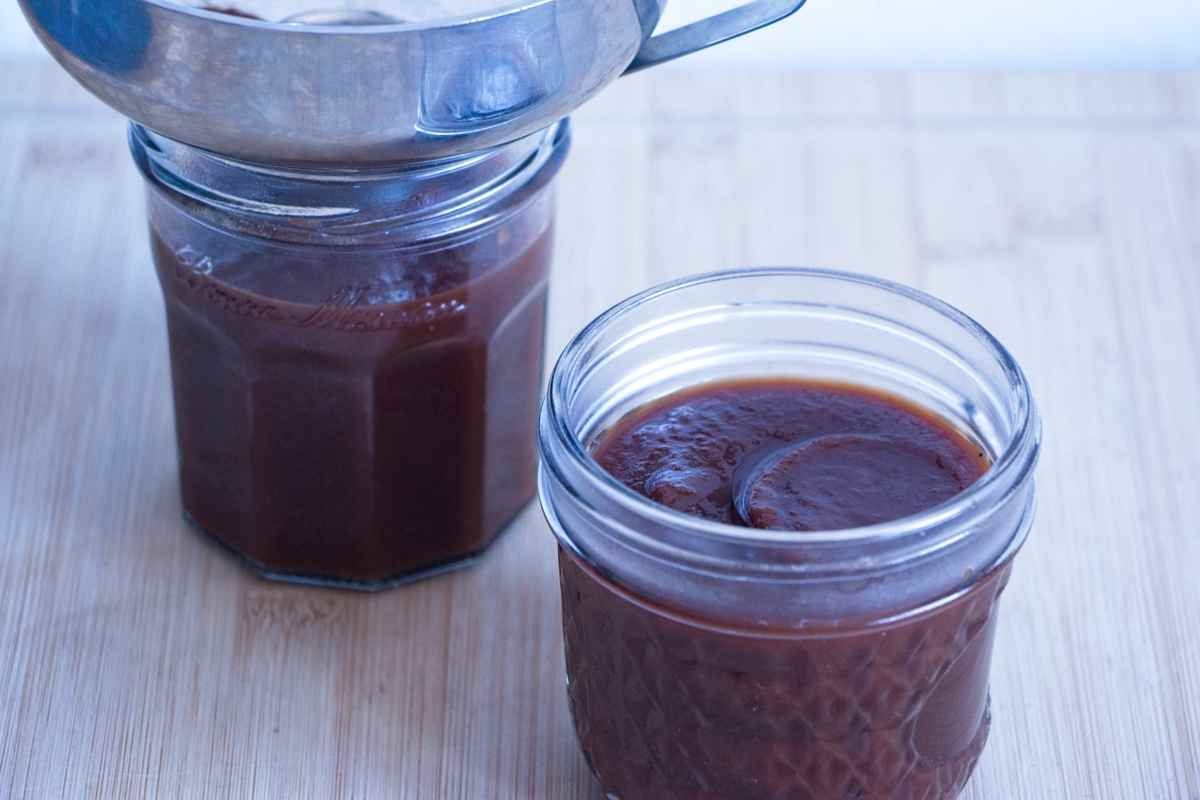
Let the sauce cool completely — it will thicken further as it cools. Transfer to a clean jar or bottle and refrigerate.
- Fridge life: 2–3 weeks
- Flavour improves after 24 hours
For longer storage, pour hot sauce into sterilised jars and process in a boiling water bath for 15 minutes, then cool and store in a dark place
Getting the Right Consistency
Getting the texture right is just as important as the flavour. A proper brown sauce should be thick, glossy, and pourable — not watery, but not stiff either.
As a guide, reduce the sauce by about ⅓ to ½ of its original volume. It will start off quite loose and gradually thicken as water evaporates and the sugars concentrate.
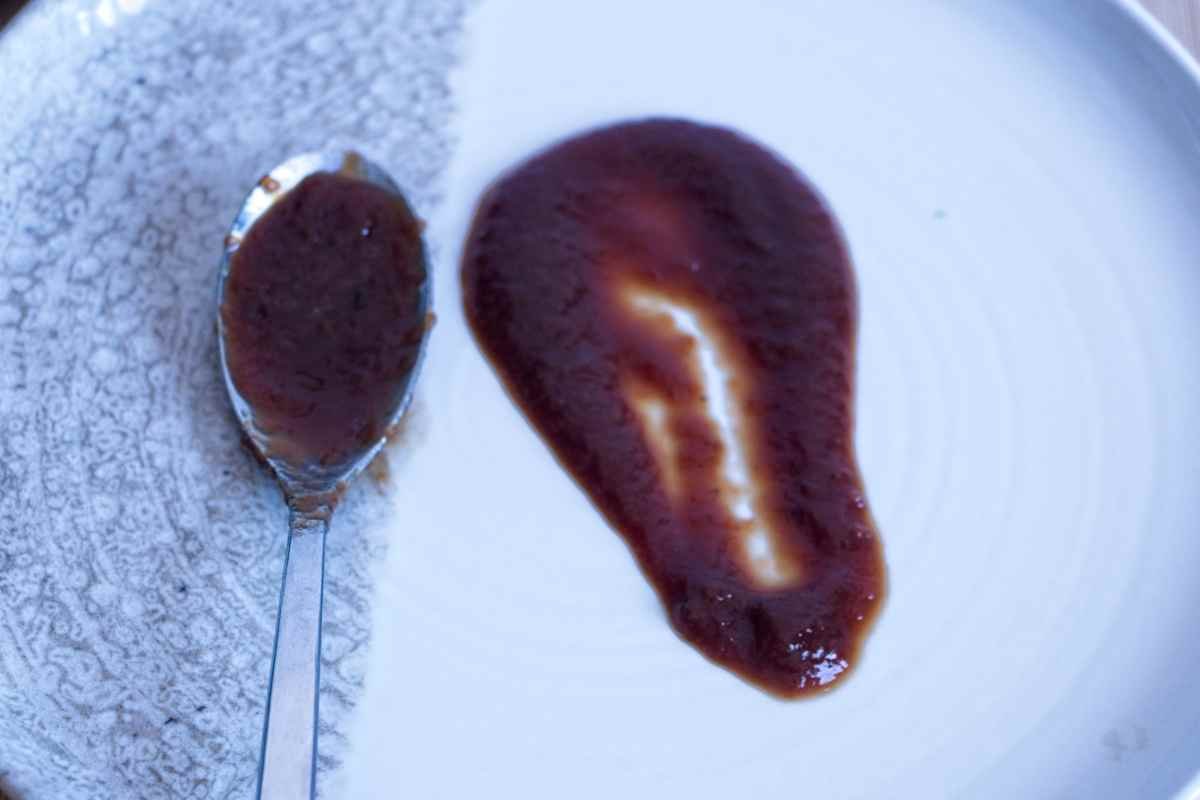
Use the spoon test
Dip a spoon into the sauce and run your finger through the back.
- If the line holds cleanly, it’s ready
- If it runs back together quickly, it needs more time
This is more reliable than timing.
It thickens when cooled
The sauce will continue to thicken as it cools, so stop reducing slightly earlier than you think. What looks just a little loose in the pan often sets to the right consistency once cold.
Tips for Best Homemade Brown Sauce
Don’t rush the reduction. The sauce needs time for the water to cook off and the flavour to concentrate, so keep it at a gentle simmer rather than boiling it hard.
Taste near the end, not at the start. Early on, the sauce can seem flat, sharp, or unbalanced, but it changes a lot once reduced and slightly cooled.
Use whole spices if you have them. Whole cloves and allspice berries give a cleaner flavour, but remove them before blending or straining.
Strain the sauce for the smoothest finish. It is optional, but it gives a more classic bottled texture and removes any small pieces of skin, spice, or fibre.
A small amount of espresso at the end can help recreate the slightly bitter edge you get in traditional brown sauce. Around half a shot is enough — just be careful not to add too much, or it will start to taste like coffee rather than adding depth.
Other Homemade Condiments You Will Love
- Wild Garlic Ketchup
- Apple & Quince Ketchup
- Slow Cooker Cornelian Cherry BBQ Sauce
- Homemade Tomato Ketchup
Homemade Brown Sauce
Ingredients
- 1 400g tin chopped tomatoes or peeled tomatoes in sauce
- 1 apple peeled, cored and chopped
- 1 medium onion roughly chopped
- 1 garlic clove chopped
- 250 ml water
- 150 ml malt vinegar plus extra to taste
- 3 tbsp black treacle or coconut blossom syrup
- 2 tbsp tamarind paste
- 2 tbsp Worcestershire sauce
- 2 tbsp soy sauce
- ½ tsp ground ginger
- ½ tsp ground allspice or 4–6 allspice berries
- 2-3 whole cloves or ¼ tsp ground cloves
- ½ tsp mustard powder
- ½ shot espresso optional
- Salt and black pepper to taste
Instructions
- Add the tomatoes, apple, onion, garlic and water to a medium saucepan. Bring to a gentle simmer over medium heat, then cook uncovered for 15–20 minutes, stirring occasionally, until the apple and onion are soft.
- Remove from the heat and blend until smooth using a stick blender or countertop blender. If using whole spices later, they will need removing before the final blend or strain.
- Return the sauce to the pan. Stir in the malt vinegar, treacle or syrup, tamarind paste, Worcestershire sauce, soy sauce, ginger, allspice, cloves and mustard powder.
- Simmer gently, uncovered, for 25–40 minutes, stirring regularly, until the sauce darkens, thickens and coats the back of a spoon.
- Let a spoonful cool slightly before tasting. Add more vinegar for sharpness, a little more sweetener if too sharp, or a splash of water if the flavour is too intense. Stir in the espresso at the end if using, then simmer for 2–3 minutes.
- Remove any whole spices. For a smoother finish, pass through a fine sieve. Cool completely, then transfer to a clean jar or bottle and refrigerate.
Notes
Homemade Brown Sauce Recipe FAQs
Yes — tinned tomatoes work very well and are usually more consistent than fresh. They save time and still give a full, rich base, especially once reduced.
It’s recommended if you want a smoother sauce. The skins don’t fully break down and can affect the texture, even after blending. If you plan to strain the sauce, it matters less.
You can, but the flavour won’t be quite the same. For this homemade brown sauce recipe. tamarind adds a deeper, more complex tang that vinegar alone doesn’t provide. Without it, the sauce will be sharper but less rounded.
It hasn’t reduced enough. Keep simmering gently with the lid off until it thickens and coats a spoon. Remember it will also thicken further as it cools.
Yes. You can store it in the fridge for 2–3 weeks, or preserve it in sterilised jars using a boiling water bath (around 15 minutes). The flavour will continue to develop over time.




Amazing. I’ve tried a few recipes before, but this is the first one that I have use tamarind with. That was 100% what was missing before
Hi Sara, I’m glad you like it! Tamarind is awesome for whenever anything needs an extra hit of tartness. I use it quite a bit in curries when trying to balance with coconut milk.