
Low Carb Cottage Cheese Muffins with Feta & Dill
Low carb cottage cheese muffins with feta, dill and lemon, baked until just set and lightly cakey. A simple, make-ahead option for high-protein breakfasts or savoury snacks.
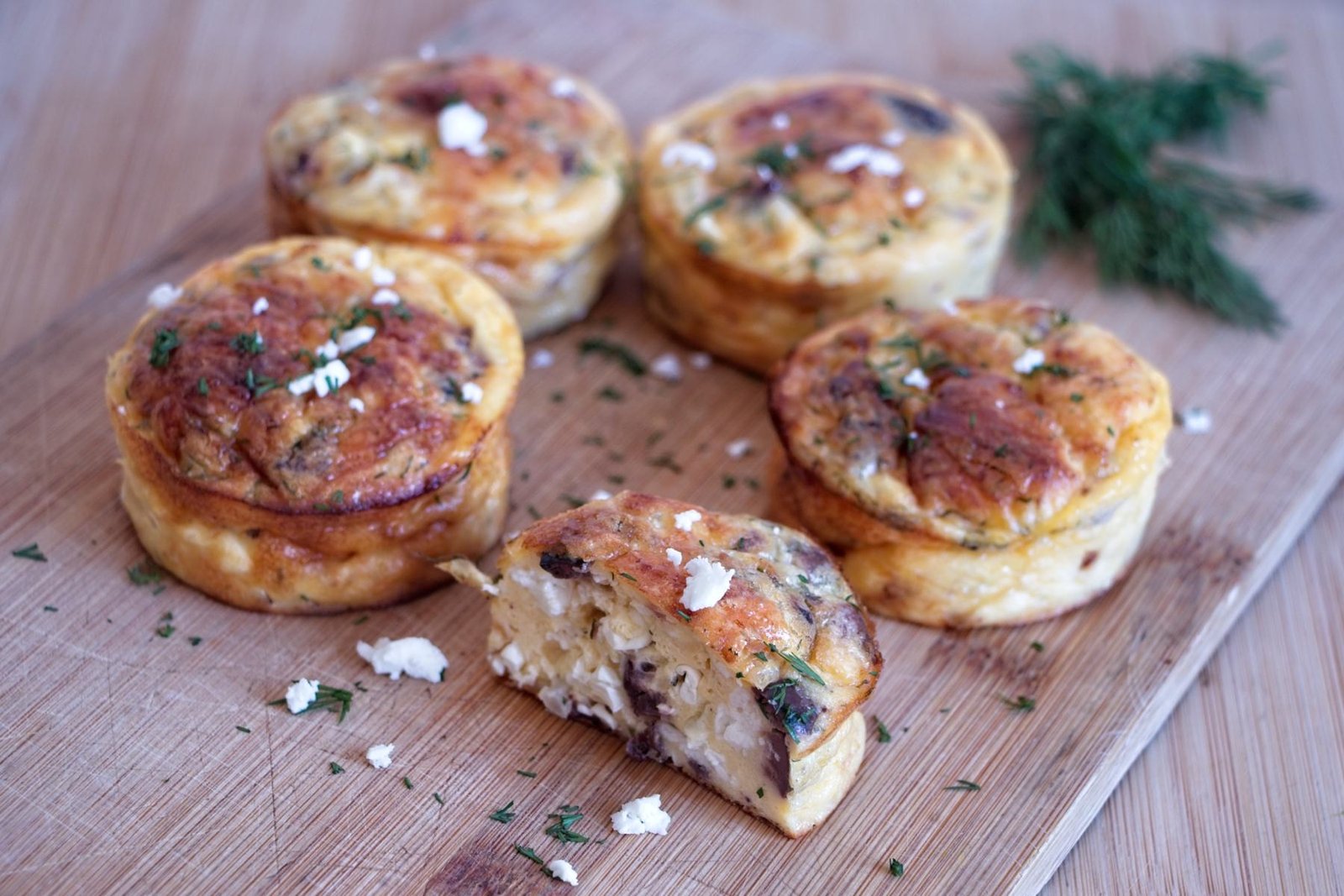
If you’re looking to get more protein in while cutting down on carbs this January, these low carb cottage cheese muffins are a solid place to start. With a soft-set centre, salty feta, fresh dill and a lift of lemon zest, they’re a light way to begin the day at just 170 calories, while still packing over ten grams of protein per muffin. Made with coconut flour, they’re also keto-compatible, and quick to prepare in bulk so you can keep a batch in the fridge for easy, no-effort snack whenever you’re feeling peckish.
Despite the name, they’re closer in texture to a small crustless quiche than a traditional muffin, with the coconut flour giving them a slightly cakier, more structured finish than a regular quiche.
Ingredients Breakdown
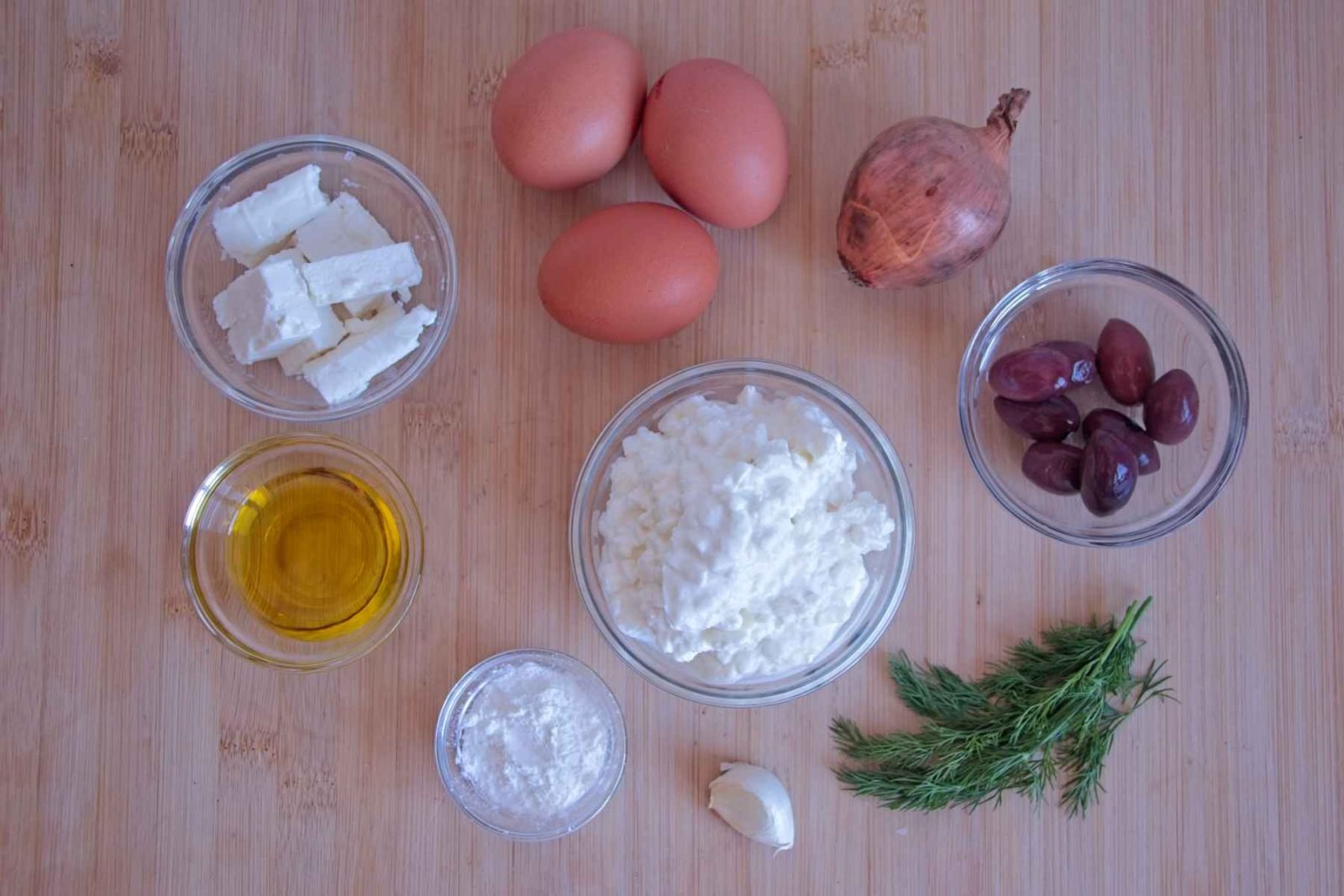
Cottage cheese
Forms the soft-set base of the muffins, adding moisture and protein without heaviness. Use full fat cottage cheese as the low fat ones tend to be a bit wetter, plus regular cottage cheese is already low in calories.
Eggs
Provide the primary structure, setting the muffins as they bake and giving them a clean, sliceable texture once cooled.
Feta
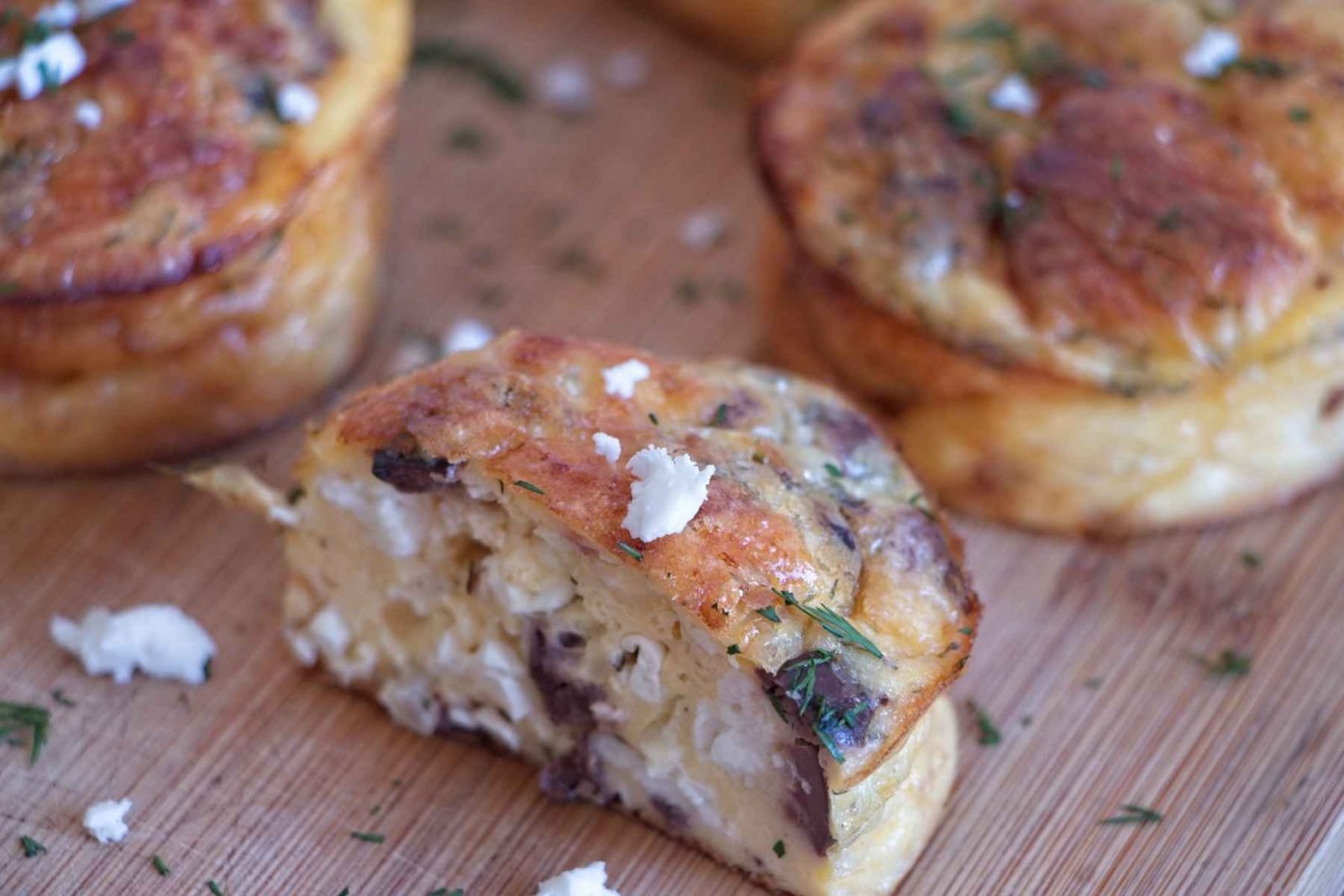
Adds a nice salty flavour to the muffins. Just crumble it into biggish pieces, as they will create little pockets of salty deliciousness in the centre.
Coconut flour
Absorbs excess moisture and tightens the crumb while keeping the carb count low; use sparingly, as it thickens quickly. You can also use corn flour here if you are not trying to keep the carb count as low as possible. Almond flour will also work, but it isn’t as absorbent as coconut flour, so you will need to use more and the final muffin won’t be as cakey.
Fresh dill
Brings a fresh, anise flavour that cuts works really well with feta.
Lemon zest
Lifts the overall flavour without making the muffins taste acidic; add finely grated zest only, not juice.
Onion
Provides background sweetness and depth once softened; dice finely and cook gently to avoid harshness.
Olive oil
Carries flavour and prevents the muffins from setting too dry; a neutral oil can be used, but olive oil suits the savoury profile, plus it’s rich in healthy, monounsaturated fats, and beneficial for many other reasons.
Olives (optional, but recommended)
Add extra salt and savoury depth. Drain well and thoroughly dry with a kitchen towel to avoid adding any extra moisture into the batter.
Low Carb Cottage Cheese Muffins Instructions
Prepare the tin and oven
Heat the oven to 180°C fan (350 Fahrenheit). Lightly oil a 6-cup muffin tin or line with paper cases and grease them well to prevent sticking once the muffins have set.
Preparing the Ingredients
Finely dice the onion so it softens evenly without leaving raw pieces, then crush or finely grate the garlic to help it disperse through the mixture.
Finely chop the olives and pat them dry to avoid adding excess moisture, and finely chop the dill, removing any thicker stems. Roughly crumble the feta by hand, keeping the pieces fairly large so they form little salty pockets once baked.

Soften the onion
Heat 2 tbsp olive oil in a small frying pan over medium heat. Add the finely diced onion with a small pinch of salt and cook for 5–6 minutes, stirring occasionally, until soft and translucent but not coloured. Add the garlic for 30 seconds, then remove from the heat and leave to cool slightly.
Mix the base
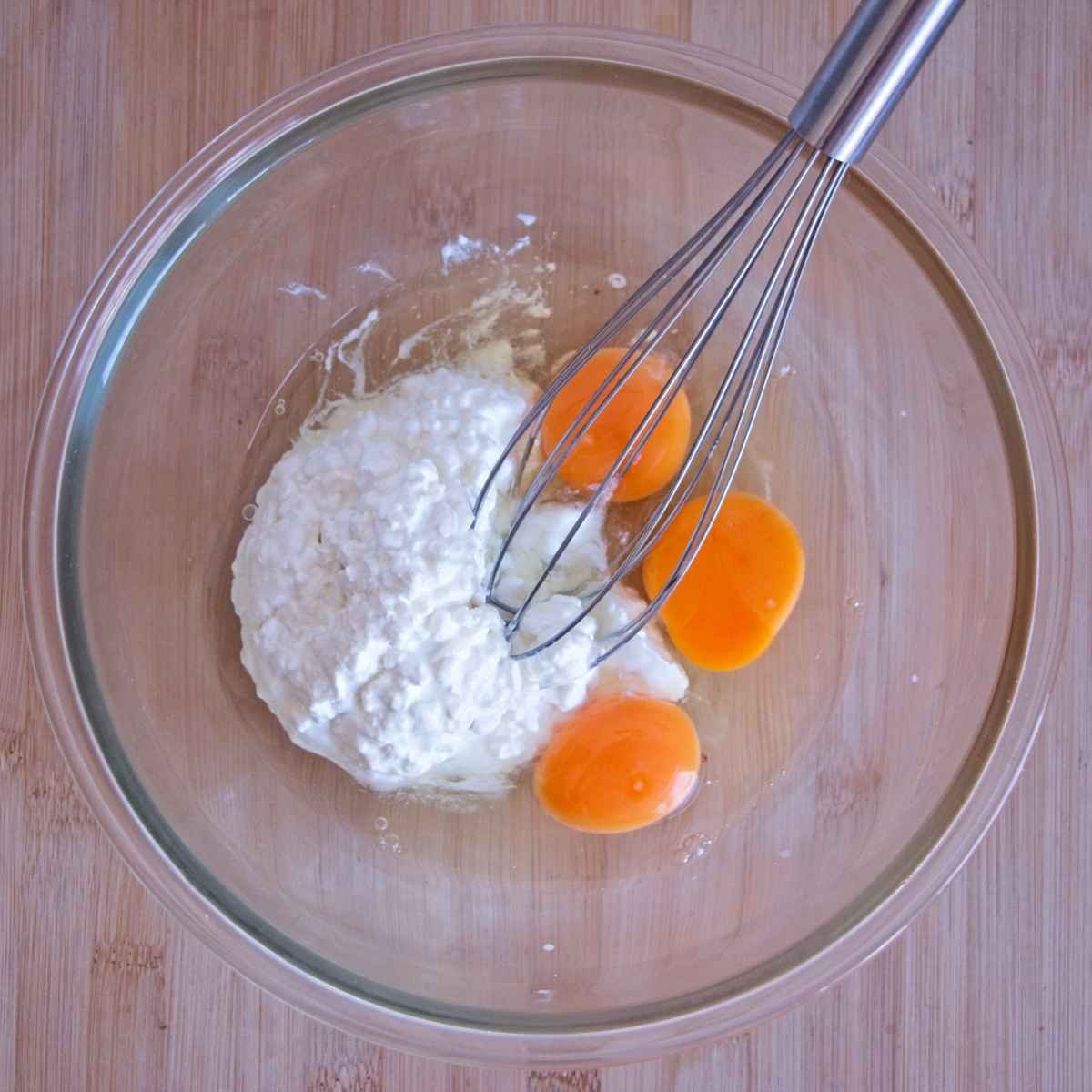
In a large bowl, whisk the eggs and cottage cheese together until just combined. The mixture should be fluid but still have the cottage cheese lumps still visible,

Incorporate structure and flavour
Stir in the cooled onion mixture, lemon zest, fresh dill, black pepper, and coconut flour. Mix thoroughly, then let the batter rest for 2–3 minutes so the coconut flour can absorb moisture. The mixture should thicken slightly and fall slowly from a spoon.
Fold in the feta (and olives, if using)
Gently fold in the crumbled feta, keeping the pieces fairly large so they remain distinct once baked. If using olives, add them now, making sure they’re well drained to avoid loosening the batter.

Fill the muffin tin
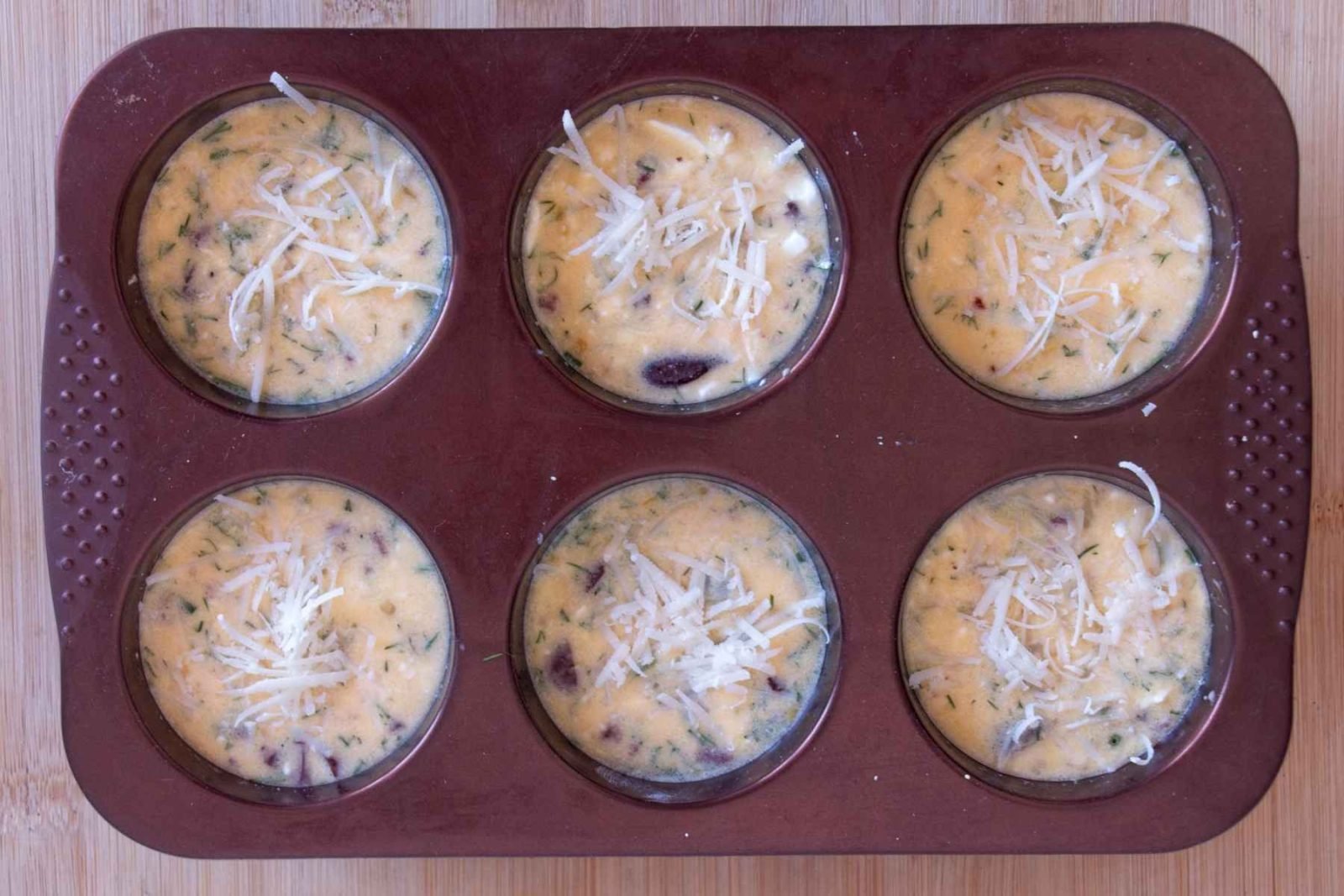
Divide the mixture evenly between the prepared forms, filling them almost to the top. For a little extra colour and crispness, grate a small amount of Parmesan over the surface before baking.
Bake until set
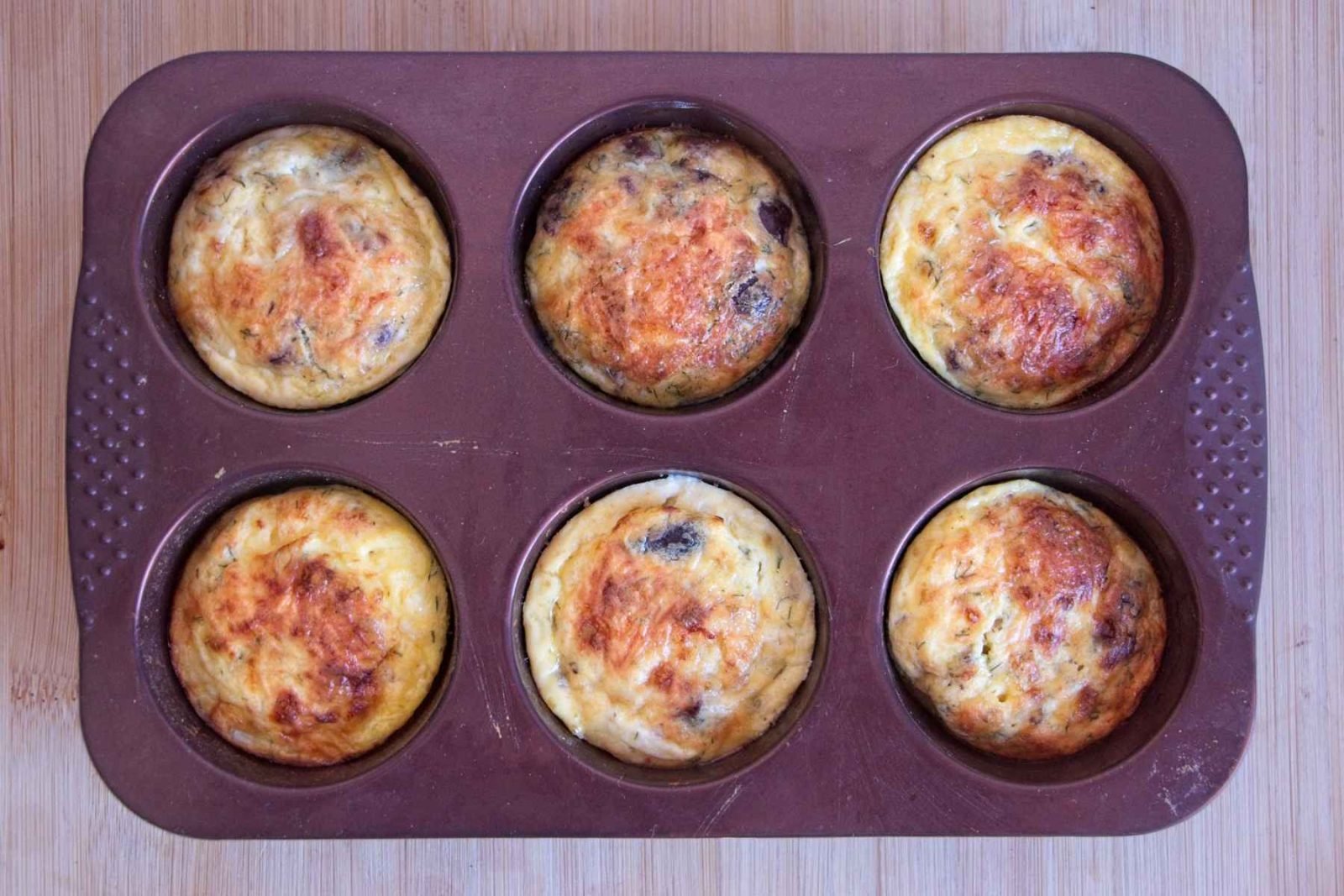
Bake for 24–28 minutes. The muffins are ready when lightly coloured around the edges, gently domed, and just set in the centre. A knife inserted should come out mostly clean, with no liquid egg.
Cool and release
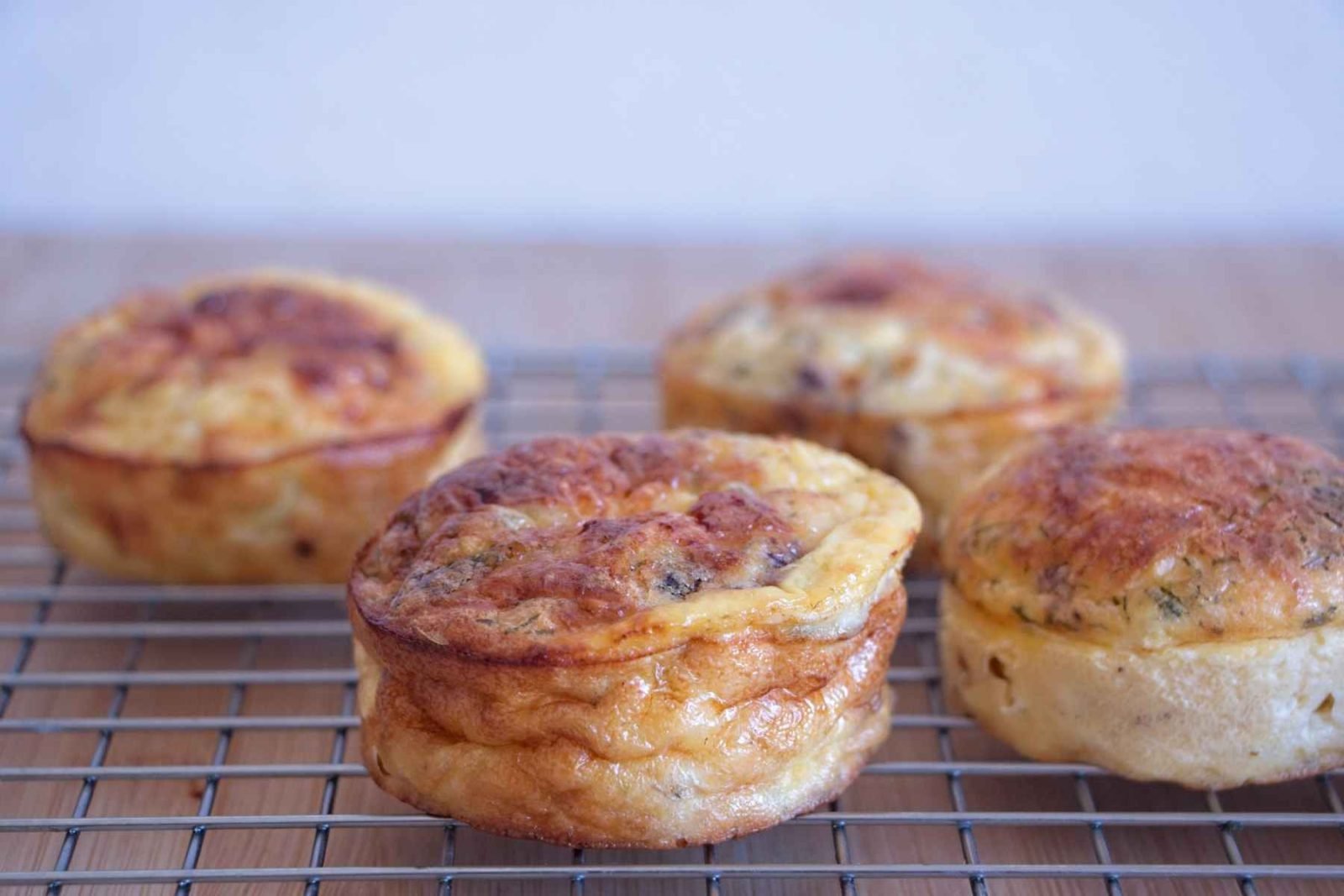
Leave the muffins in the tin for 10 minutes, then transfer them to a rack. They firm up as they cool and release more cleanly once warm rather than hot.
Don’t worry if they lose most of their height after coming out of the oven — this is normal. There’s no chemical raising agent in the mixture, so the initial lift comes from steam and trapped air in the eggs, which naturally collapses as the muffins cool.
Storage
Store the muffins in an airtight container in the fridge for up to 4 days. They hold their shape well once fully cooled and are best eaten cold or gently reheated.
For longer storage, freeze the cooled muffins individually, then transfer to a sealed container or freezer bag. They keep well for up to 2 months; defrost overnight in the fridge before eating or reheating.
Low Carb Cottage Cheese Muffins
Ingredients
- 3 large eggs
- 220 g full-fat cottage cheese
- 60 g feta roughly crumbled
- 1 small onion finely diced
- 1 garlic clove finely grated or crushed
- 30 ml olive oil 2 tbsp
- Zest of ½ lemon
- 2 tbsp fresh dill finely chopped
- 2 tbsp coconut flour about 14 g
- ¼ tsp fine salt
- ½ tsp black pepper or to taste
Optional
- 30 g olives finely chopped and well drained (about 2 tbsp)
- 15 Parmesan finely grated (for topping)
Instructions
- Heat the oven to 180°C fan. Lightly oil a 6-cup muffin tin, or line with paper cases and grease them well.
- Warm the olive oil in a small frying pan over medium heat. Add the onion with a small pinch of salt and cook for 5–6 minutes until soft and translucent. Add the garlic and cook for 30–45 seconds until fragrant, then remove from the heat and allow to cool slightly.
- In a large bowl, whisk the eggs until just combined. Add the cottage cheese and whisk briefly to loosen — the mixture should be fluid but still lightly textured.
- Stir in the cooled onion mixture, lemon zest, dill, coconut flour, salt, and black pepper. Mix thoroughly, then let the batter rest for 3–5 minutes so the coconut flour can hydrate and thicken.
- Fold in the feta (and olives, if using). Divide the mixture evenly between the muffin cups, filling them almost to the top. If using Parmesan, grate a small amount over the surface.
- Bake for 25-30 minutes, until set in the centre and lightly coloured at the edges. A knife inserted should come out clean, with no wet egg mixture.
- Leave the muffins in the tin for 10 minutes, then transfer to a rack to cool.
Notes
Variations and Substitutions
- Spice shift: Add ½ tsp smoked paprika or a pinch of chilli flakes for warmth without changing the base texture.
- Add-ins: Stir in finely chopped roasted red peppers (well drained) or a small handful of wilted spinach squeezed dry for extra savoury depth.
Substitutions
- Coconut flour: Almond flour can be used, but it is less absorbent; use more and expect a softer, less cakey result. Cornflour also works if you are not keeping carbs low.
- Feta: Use goat’s cheese or a sharp hard cheese if feta isn’t available; keep pieces chunky to preserve pockets of flavour.
They’re keto-compatible, but not an aggressive high-fat keto recipe. Made with coconut flour and full-fat dairy, each muffin is low in net carbs, but they’re still protein-forward rather than fat-heavy. They fit comfortably into a keto diet as a light meal or snack, especially when paired with something higher in fat.
This is normal. The mixture doesn’t contain a chemical raising agent, so the lift comes from steam and air in the eggs, which collapses as they cool. What matters is that they set firmly once cold, not that they stay domed.
Yes — they’re actually better made ahead. The texture firms up after a few hours in the fridge, making them easier to handle and more evenly set. Day two is usually the sweet spot.
You can use cornflour if you’re not keeping things low carb, or almond flour if that’s what you have. Almond flour is less absorbent, so you’ll need more of it and the result will be softer and less cakey.
Cottage cheese varies a lot in moisture. Let the batter rest for a few minutes so the coconut flour can hydrate — it thickens noticeably. If it still pours like milk, add a small extra pinch of coconut flour and rest again.



Really great. I’ve made these a few times for breakfast and my family loves them. I use regular flour instead of coconut flour and they work just fine.
I’m glad you like them!