
Cheddar and Onion Soda Bread (Easy, No-Yeast Recipe)
A simple cheddar onion soda bread with a crisp crust and soft, savoury crumb. Made without yeast, it comes together quickly and bakes straight away.

This cheddar onion soda bread has a crisp, well-browned crust and a soft, savoury crumb, with sweetness from gently cooked onion and richness from mature cheddar. Made without yeast, there’s no proving time, so you can have a freshly baked loaf on the table in under 50 minutes.
What Is Soda Bread?
Soda bread is a quick bread that uses bicarbonate of soda instead of yeast to rise. It has a long association with Ireland, but different versions of it have long been made and eaten by cultures across the globe.
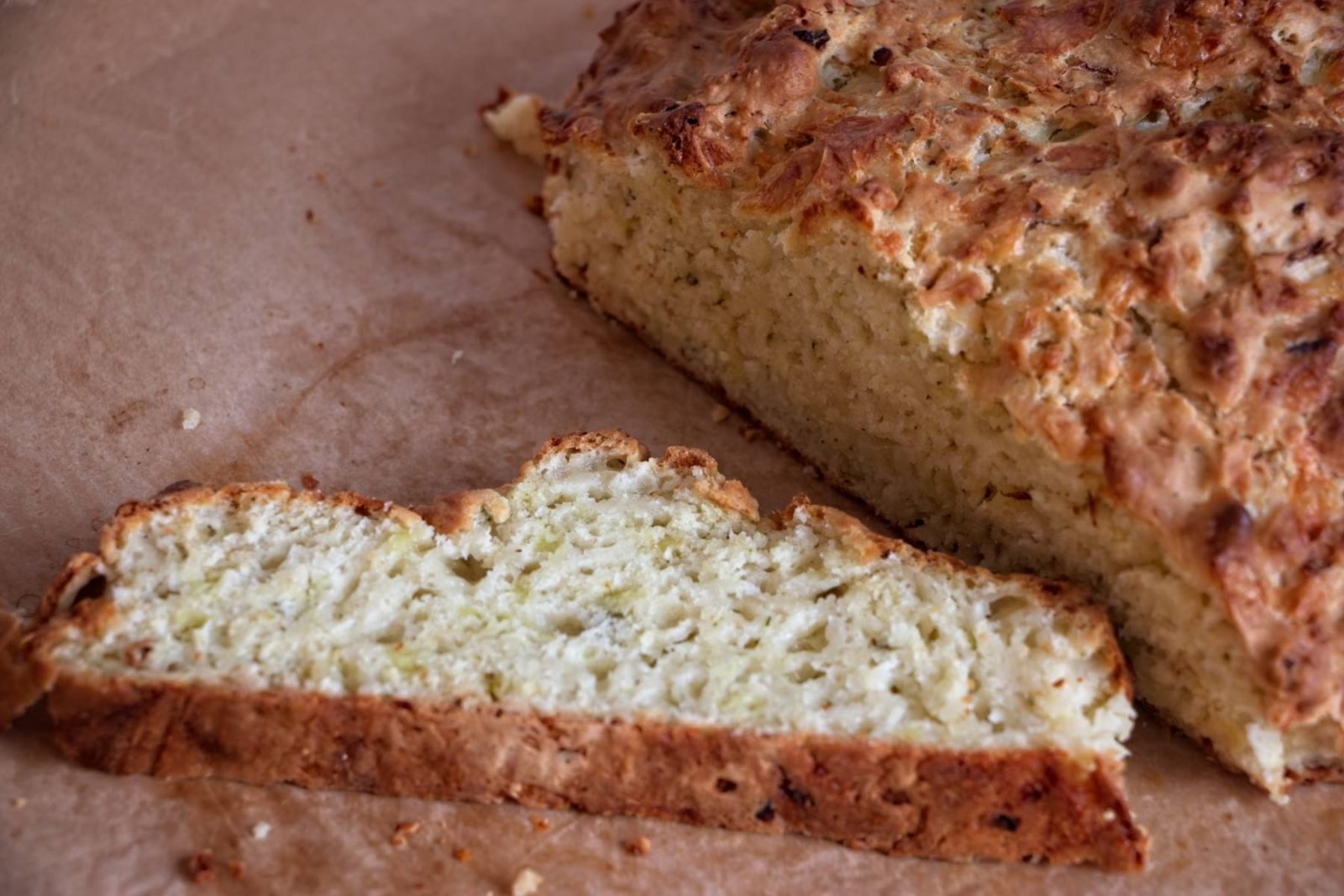
It’s made from simple ingredients — usually flour, salt, bicarbonate of soda, and buttermilk — and relies on a chemical reaction between the soda and the acid in the milk rather than proving or kneading. The result is a rustic looking loaf with a golden, thick crust, and a very soft, slightly tangy crumb.
Ingredients Breakdown
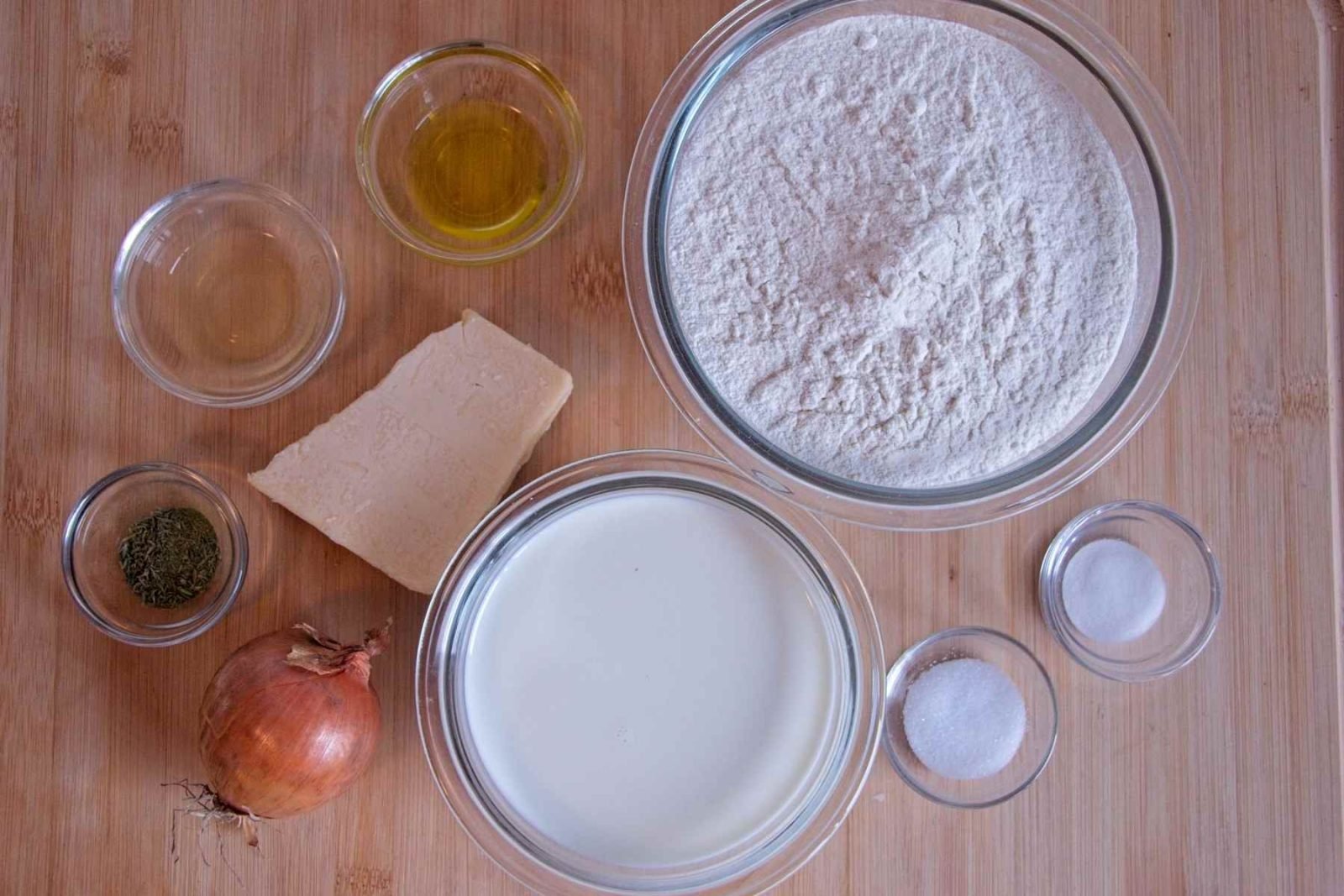
Plain flour
Provides the structure of the loaf, giving soda bread its characteristic close, tender crumb.
Bicarbonate of soda
Acts as the leavening agent, reacting with the acidic liquid to lift the bread without yeast or proving time.
Buttermilk
Supplies the acidity needed to activate the bicarbonate of soda and keeps the crumb soft and lightly tangy; if you don’t have buttermilk, you can easily sour milk with a little vinegar or lemon juice – I used milk and apple cider vinegar here.
Mature cheddar
Adds richness and savoury depth, melting into the dough and seasoning the bread from within.
Onion
Contributes gentle sweetness and moisture, balancing the sharpness of the cheese and improving the crumb texture.
Thyme
This is optional, but I love the combination of mature cheddar, onion, and thyme. I like to use dried thyme for this kind of baking because I can crush it into a fine powder so it evenly distributes throughout the dough.
Salt
Sharpens flavour and helps regulate the leavening reaction for an even rise.
How to Make Cheddar and Onion Soda Bread
Heat the oven
Preheat the oven to 200°C fan / 220°C conventional and line a baking tray with baking paper. Soda bread requires immediate oven heat to work properly, so do this before mixing, or even before gathering the rest of the ingredients.
Cook the onion and prepare the cheese
Finley dice the onion, and then heat 1 tablespoon olive oil or butter in a small frying pan over low–medium heat.
Add the diced onion with a pinch of salt and cook for 8–10 minutes, stirring occasionally, until soft and lightly golden but not browned. Set aside to cool slightly; adding it hot can weaken the rise.
While the onion cools, grate the cheddar using the coarse side of the grater. Larger shreds melt more slowly, creating small pockets of cheese through the crumb.
Prepare the buttermilk (if not using real buttermilk)
If using milk, stir 1 tablespoon vinegar or lemon juice into 320 ml milk and leave for 2–3 minutes. The mixture should look slightly thickened or curdled, which provides the acidity needed to activate the bicarbonate of soda.
Mix the dry ingredients
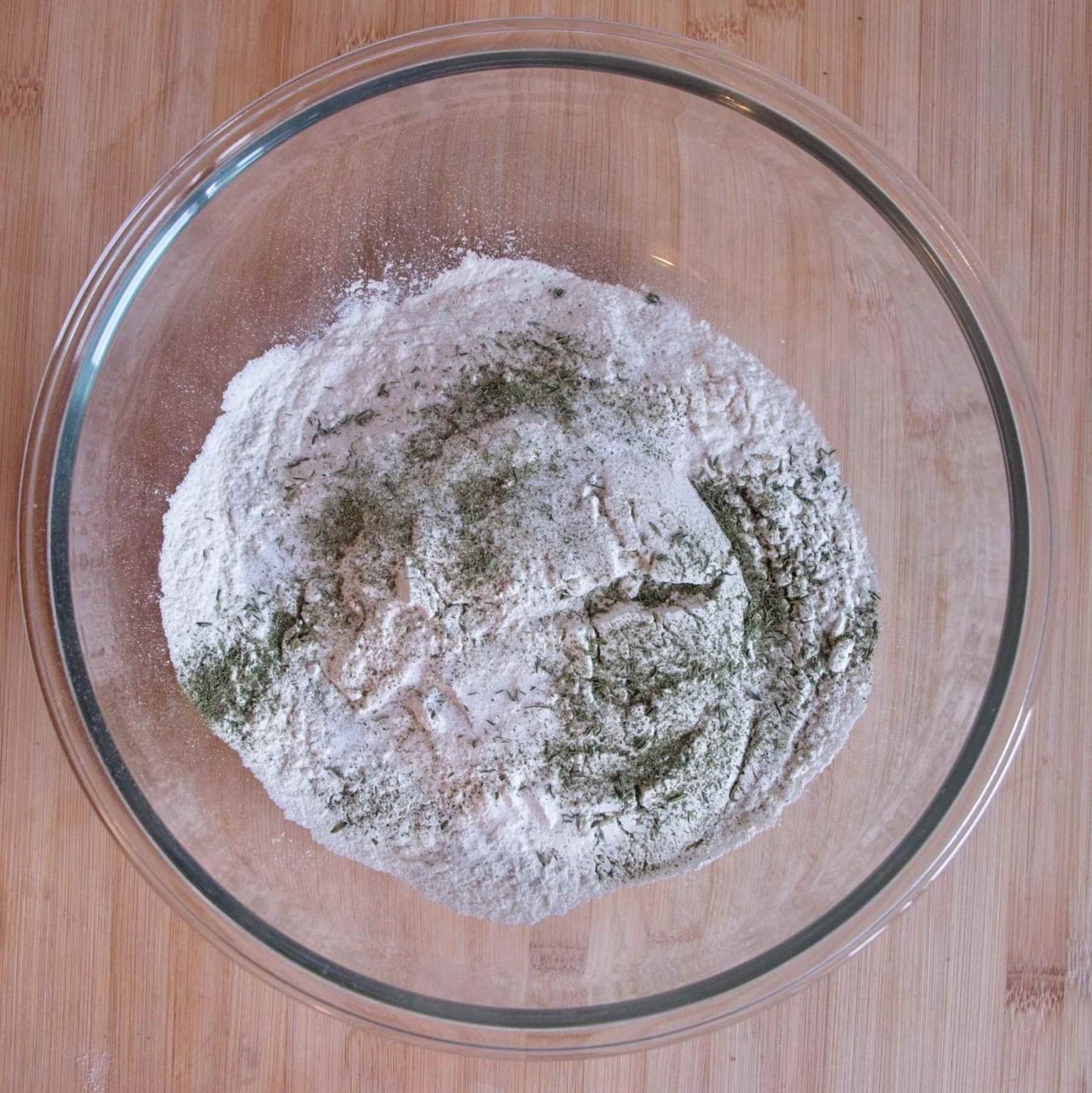
In a large bowl, whisk together the flour, salt, bicarbonate of soda, and thyme to ensure the leavening is evenly distributed and to avoid bitter pockets.
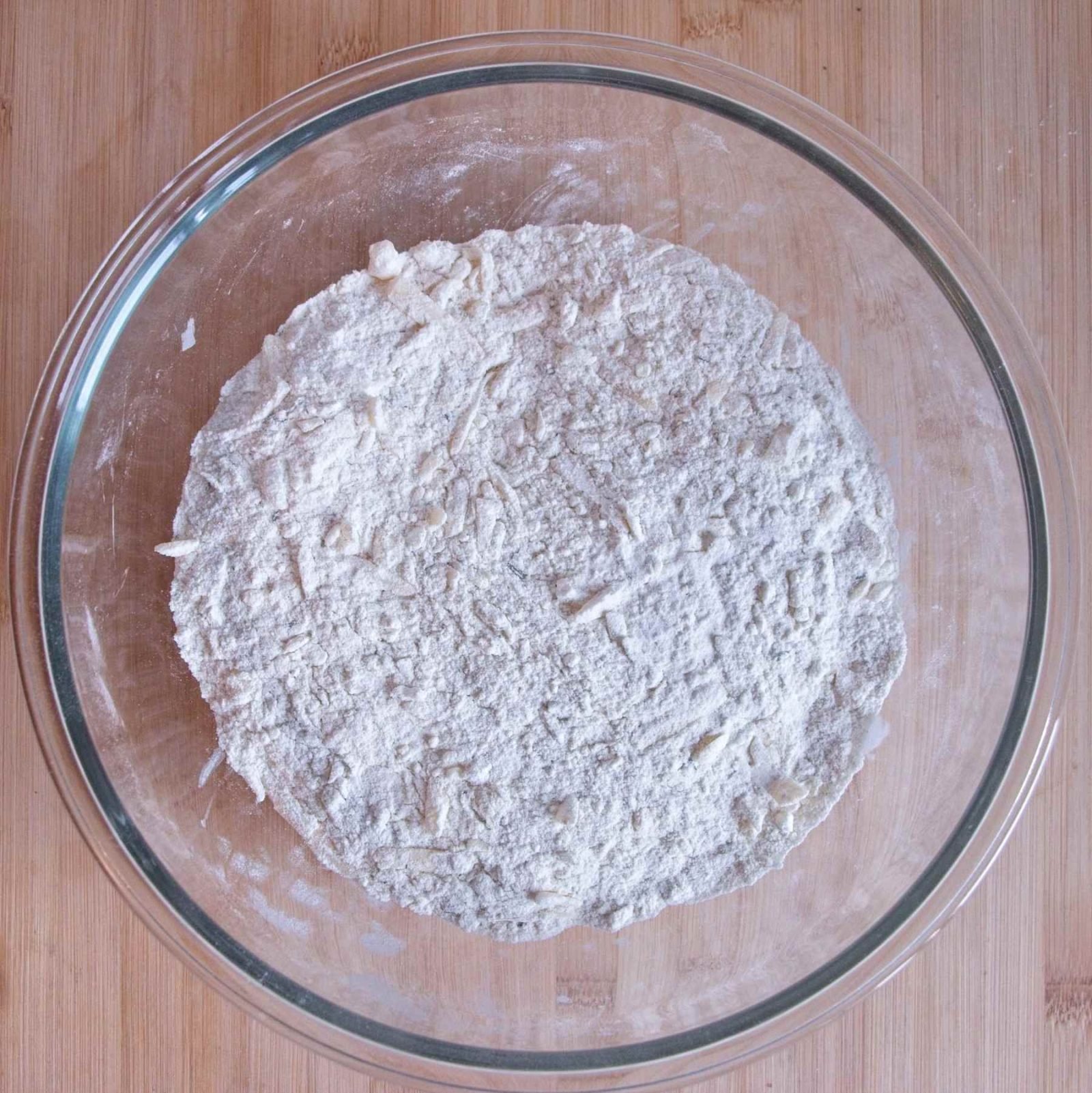
Stir in the grated cheddar and cooled onion until evenly dispersed through the flour. Mixing them in now helps prevent clumping once the liquid is added.
Add the liquid
Make a well in the centre and pour in all the buttermilk at once. Bring the dough together gently with a fork or your hand, stopping as soon as there is no dry flour.
Adding all the liquid at once might seem counter-intuitive, but it’s important. Pouring it in one go ensures the bicarbonate of soda reacts evenly with the acid, giving a consistent rise throughout the loaf. Adding the liquid gradually can start the reaction too early in parts of the dough, leading to uneven texture and a weaker overall lift.
The dough will seem extremely sticky, which is normal for soda bread and helps create a tender crumb. Avoid the temptation to add more flour to make it feel more like a regular bread dough!
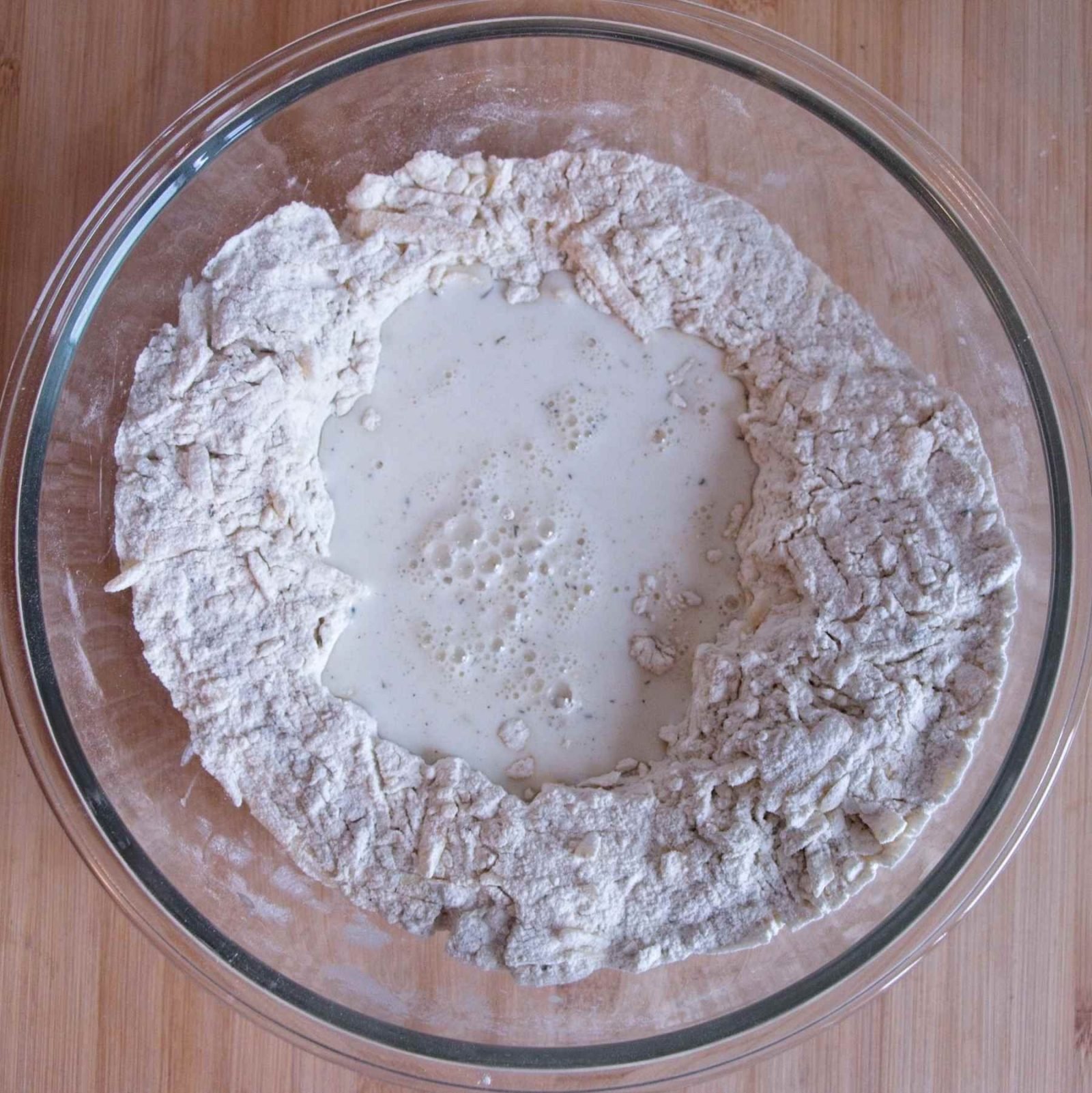
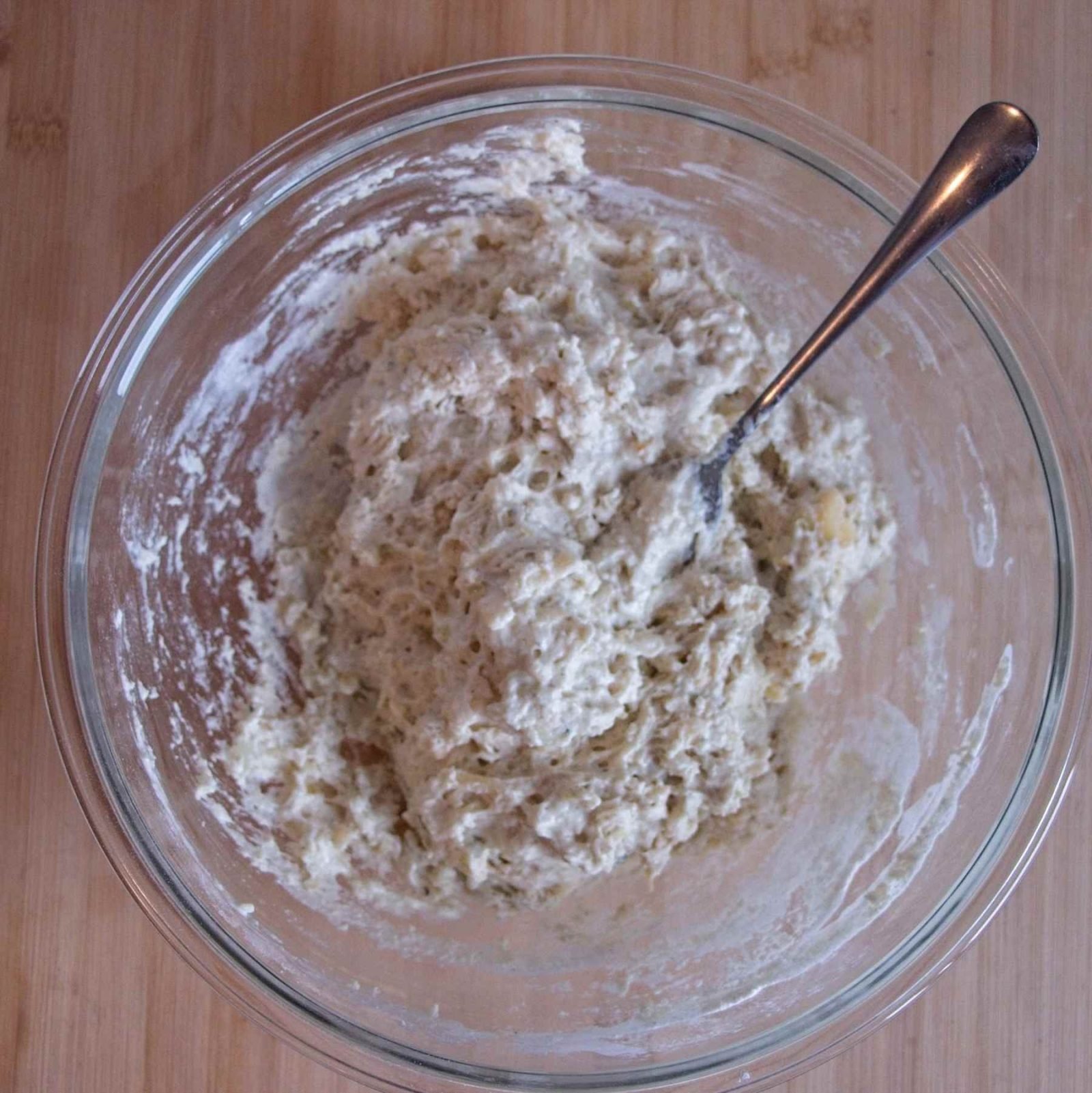
Shape the loaf
With lightly wet or oiled hands, gather the dough into a rough round and place it directly onto the prepared tray. Do not knead or smooth the surface; a loose shape encourages a better rise.
Score the top
Use a sharp knife to cut a deep cross, about 2 cm deep, across the top of the loaf. This helps the centre cook evenly and controls how the bread opens in the oven.
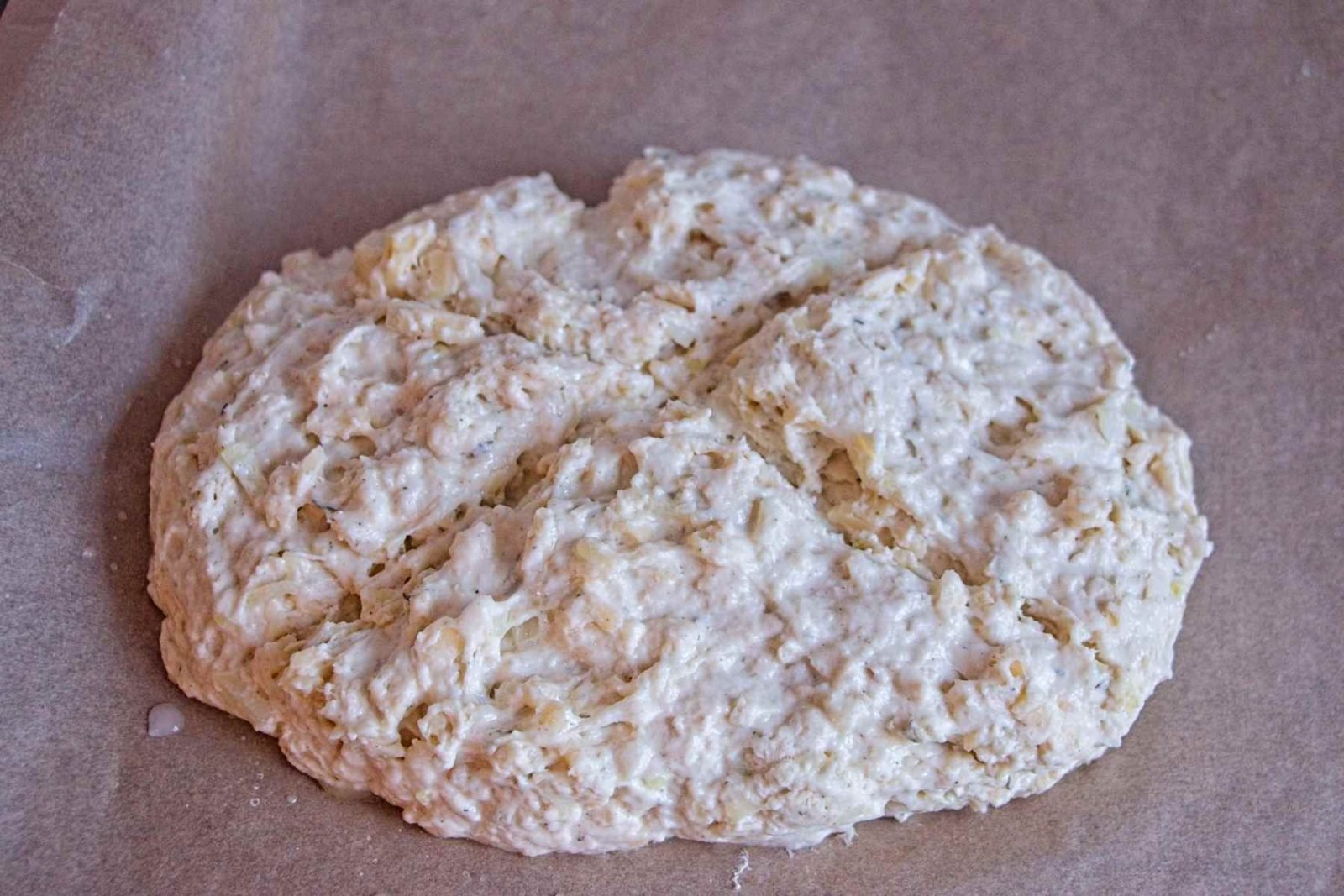
Bake immediately
Place the tray in the oven and bake for 35–40 minutes. The loaf should be well risen, deeply golden, and sound hollow when tapped underneath.
Most of the rise will occur in the first 15 minutes. Because the dough is very soft and loose, it’s normal for the loaf to spread outward slightly as it bakes as well as rising.
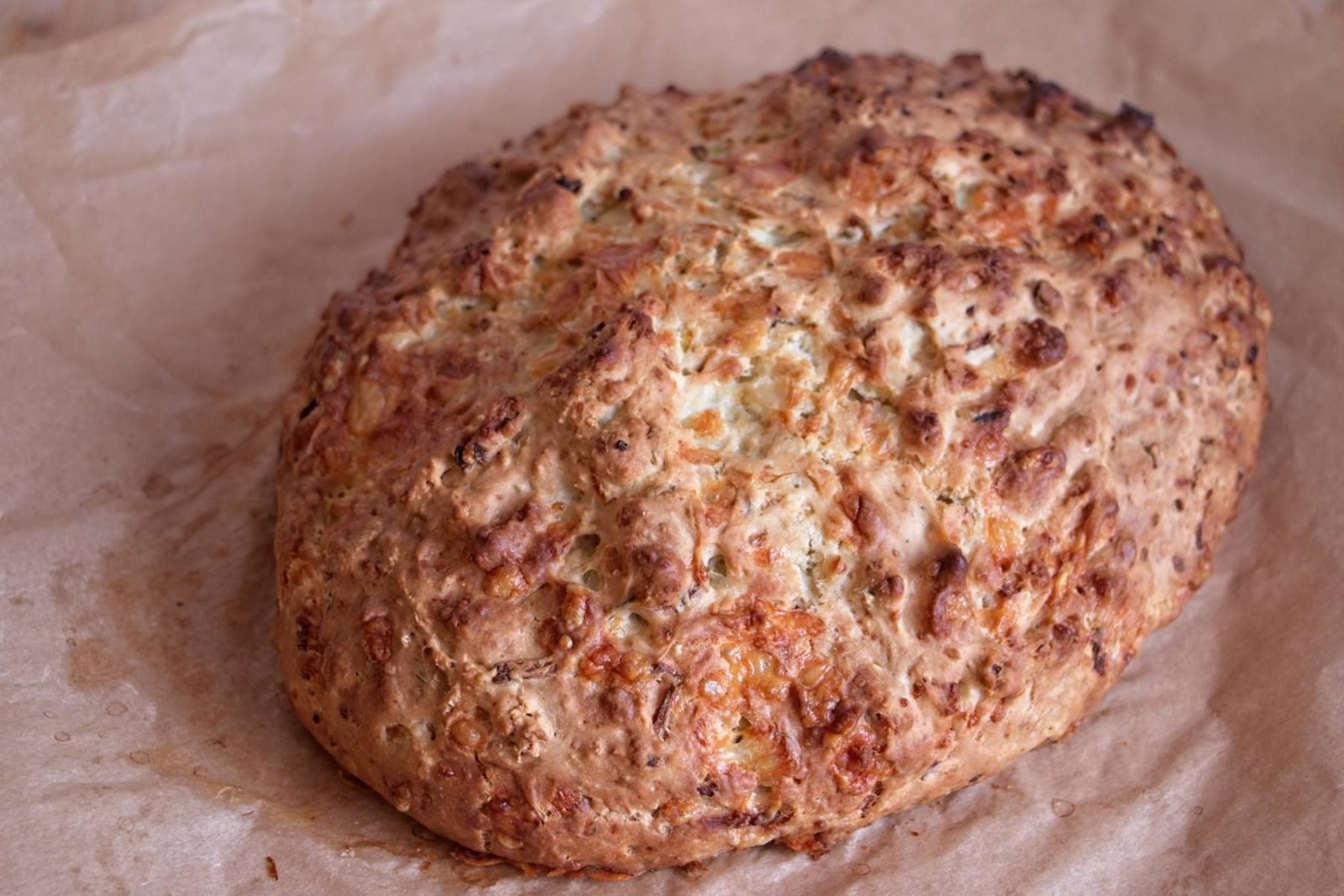
Cool before slicing
Transfer the loaf to a rack and leave to cool for at least 15 minutes. Cutting too soon can compress the crumb; the crust will soften slightly as it rests.
If you want the crust to be even softer, loosely cover the loaf with a tea towel as it cools. This traps a little moisture and softens the crust further.

How Long does Soda Bread Stay Fresh?
Soda bread doesn’t last long. It’s best eaten on the day it’s baked, when the crumb is super soft and the crusty is, well, crusty. Over the course of the day, the crust softens and the crumb firms up. It can be kept wrapped at room temperature for up to 24 hours, though it’s at its best within the first few hours after baking.
Freezing works very well for soda bread. Once completely cool, slice the loaf and freeze it in an airtight container or well wrapped for up to 2 months. Slices can be toasted straight from frozen, which helps restore some of the crumb’s softness and gives the crust a little structure again.
Cheddar and Onion Soda Bread
Ingredients
- 420 g plain flour
- 1 tsp salt
- 1 tsp bicarbonate of soda
- 1 tbsp fresh thyme leaves or 1 tsp dried
- 120 g mature cheddar coarsely grated
- 1 medium onion finely diced
- 1 tbsp olive oil or butter
- 320 ml buttermilk Or: 320 ml milk + 1 tbsp apple cider vinegar
Instructions
- Preheat the oven to 200°C fan / 220°C conventional. Line a baking tray with baking paper.
- Heat the olive oil or butter in a small frying pan over low–medium heat. Add the onion with a pinch of salt and cook for 8–10 minutes, stirring occasionally, until soft and lightly golden. Cool slightly.
- If using milk and vinegar instead of buttermilk, mix them now and set aside for 2–3 minutes.
- In a large bowl, whisk together the flour, salt, bicarbonate of soda, and thyme.
- Stir in the grated cheddar and cooled onion until evenly distributed.
- Make a well in the centre and pour in the buttermilk all at once. Bring the dough together gently with a fork or your hand until no dry flour remains; do not overmix.
- With lightly wet or oiled hands, shape into a rough round and place on the tray.
- Score a deep cross over the top (about 2 cm deep).
- Bake immediately for 35–40 minutes, until deeply golden and hollow-sounding when tapped underneath.
- Cool on a rack for at least 15 minutes before slicing.
Notes
- Swap the herbs: Rosemary or sage work well in place of thyme; use a light hand so the loaf stays savoury rather than perfumed.
- Add heat: Stir in ½–1 tsp chilli flakes or a pinch of cayenne with the dry ingredients for a warmer finish.
- Change the cheese: A mix of cheddar and smoked cheese adds depth; keep the total cheese weight the same so the dough isn’t overloaded.
- No buttermilk: Use milk + vinegar or lemon juice (as listed) to provide the acidity needed for the rise.
Yes. You can sour regular milk by stirring 1 tablespoon of vinegar or lemon juice into 320 ml milk and letting it stand for a few minutes. This provides the acidity needed to activate the bicarbonate of soda.
A very soft, sticky dough is normal for soda bread and helps create a tender crumb. Adding extra flour will make the loaf dense, so it’s better to shape it with lightly wet or oiled hands instead.
Because the dough is soft and high in moisture, some outward spread is expected as it bakes. As long as the loaf rises and sets with a good crust, this isn’t a problem.
Soda bread is best baked and eaten on the same day. If you need to plan ahead, bake it earlier in the day or freeze it once cool, then toast slices as needed.
Wrap the bread and keep it at room temperature for up to 24 hours. For longer storage, slice and freeze it, then toast straight from frozen to refresh the texture.
It works well alongside soups and stews, with butter and onion chutney, or lightly toasted the next day with cheese or eggs.


Another super recipe. and so quick and easy! I make bread in various ways but this beats them all! I made it this morning and we had slices for lunch topped with butter and home grown tomatoes. Delicious!
I only had spelt flour, comté cheese, a red onion which gives interesting flecks, milk with cider vinegar (thanks for that tip) and added a couple of leaves of sage as I didn’t have much thyme, otherwise I’m sure it turned out exactly as it was meant to. I’ve learnt my lesson in the past and frozen it with the slices separated with baking parchment. Looking forward to it for breakfast 🙂 Thank you for this!
Hi Gill! Thanks for the lovely comment! I’m glad you enjoyed it 🙂