Violet Syrup Recipe (Easy Wild Violet Method)
A simple violet syrup recipe made with fresh petals, creating a delicate floral flavour and a natural blue-to-pink colour change.

Growing up, one of my favourite sweets was (and still is, I guess) Parma Violets. The floral candy is highly divisive, even coming top in a The Guardian survey of the least popular childhood sweets. Still, there are people out there who love them, and I am one of them.If you are too, this violet syrup recipe will be right up your alley — it has that same unmistakable floral note, just softer and more natural.
If you want to start using violets in your cooking, syrup is the best place to begin. The flavour is subtle, so infusing the petals into a syrup allows you to capture it properly before using it in drinks or desserts.
Violet syrup is made by steeping violet petals in hot water, then straining and dissolving sugar into the infused liquid. Lemon juice is often added to shift the colour from blue to purple or pink.
How to Identify Wild Violets
Wild violets are easy to recognise once you know what to look for, but it’s worth taking a moment to be sure before using them in your cooking.
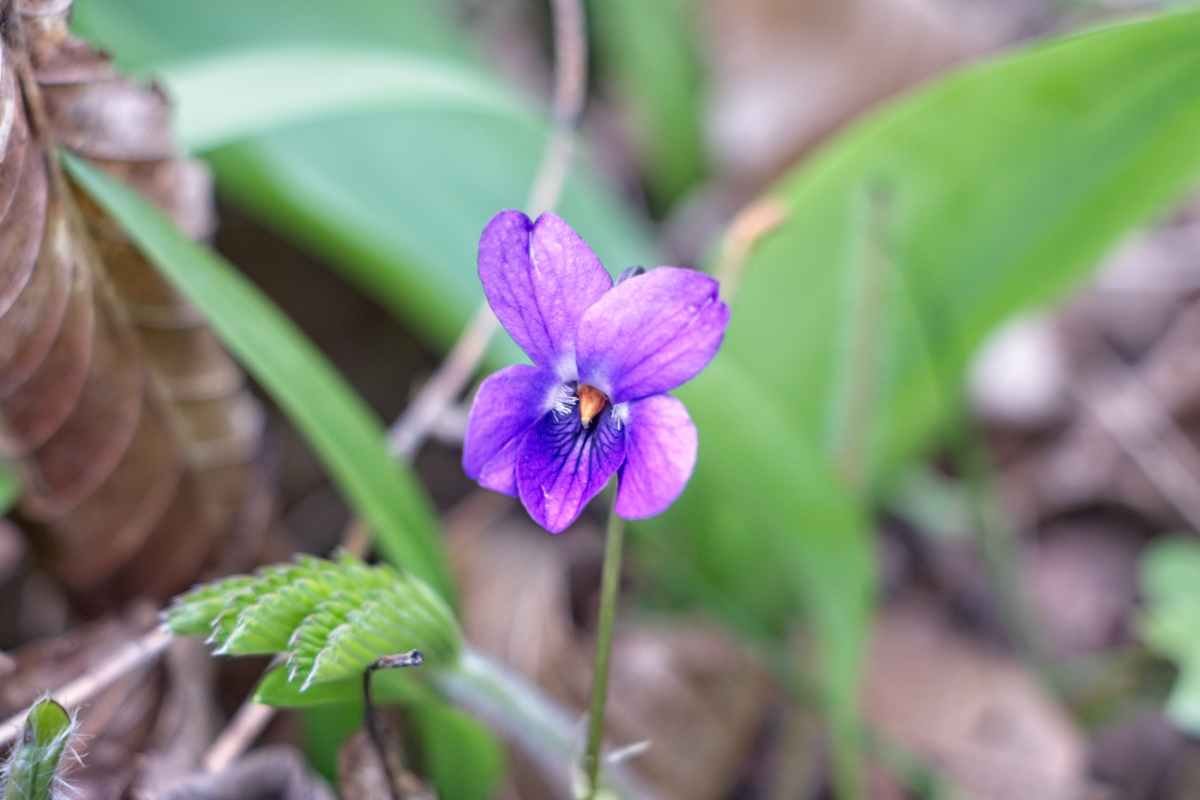
Look for small, low-growing plants with five-petalled flowers, usually in shades of purple or blue. The petals have a slightly irregular shape, with two at the top and three below, often with darker veins leading towards the centre. The leaves grow close to the ground and are typically heart-shaped with smooth edges.
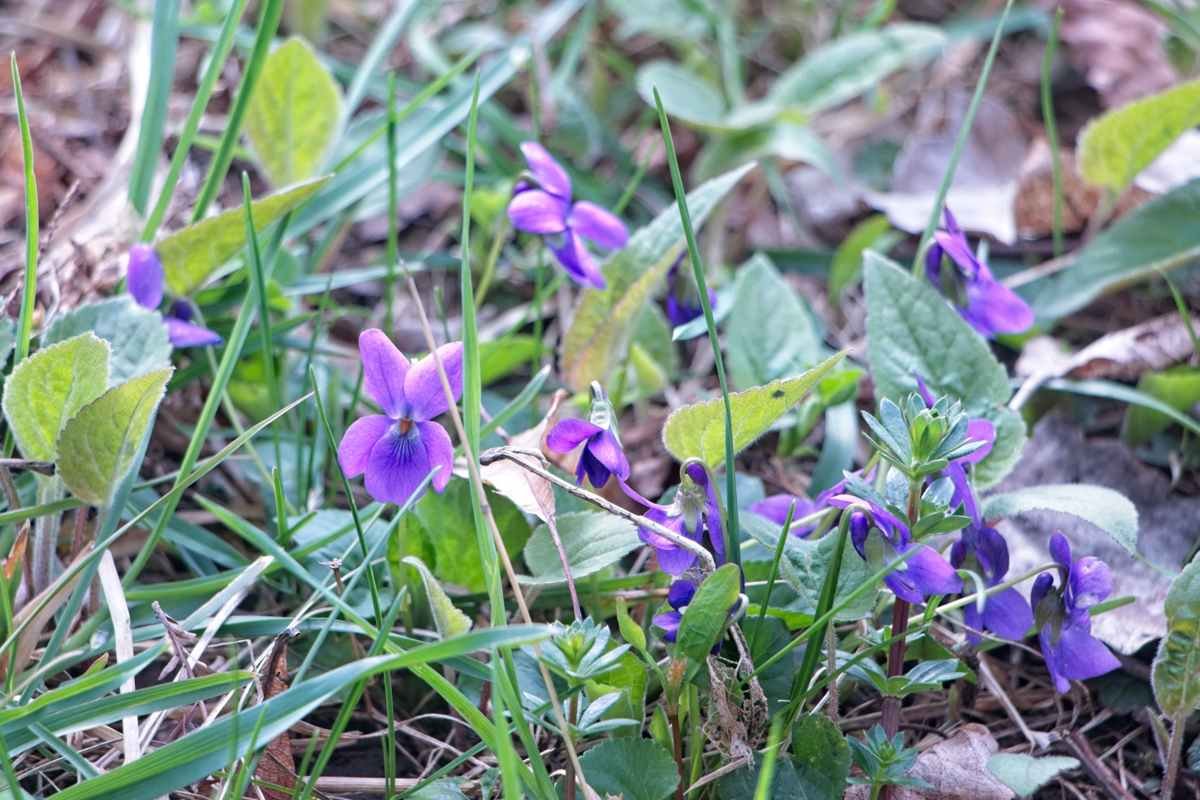
You’ll usually find wild violets in lawns, woodland edges, and shaded grassy areas, especially in early spring when they are one of the first flowers to appear.
As a general rule, only use violets from the Viola genus, and avoid any plants that have been sprayed or are growing near roads. It’s also important not to confuse them with African violets, which are common houseplants and not edible.
If you’re unsure, take the time to double-check — but once you’ve spotted them a few times, they become very easy to recognise.
Why Violet Syrup Changes Colour
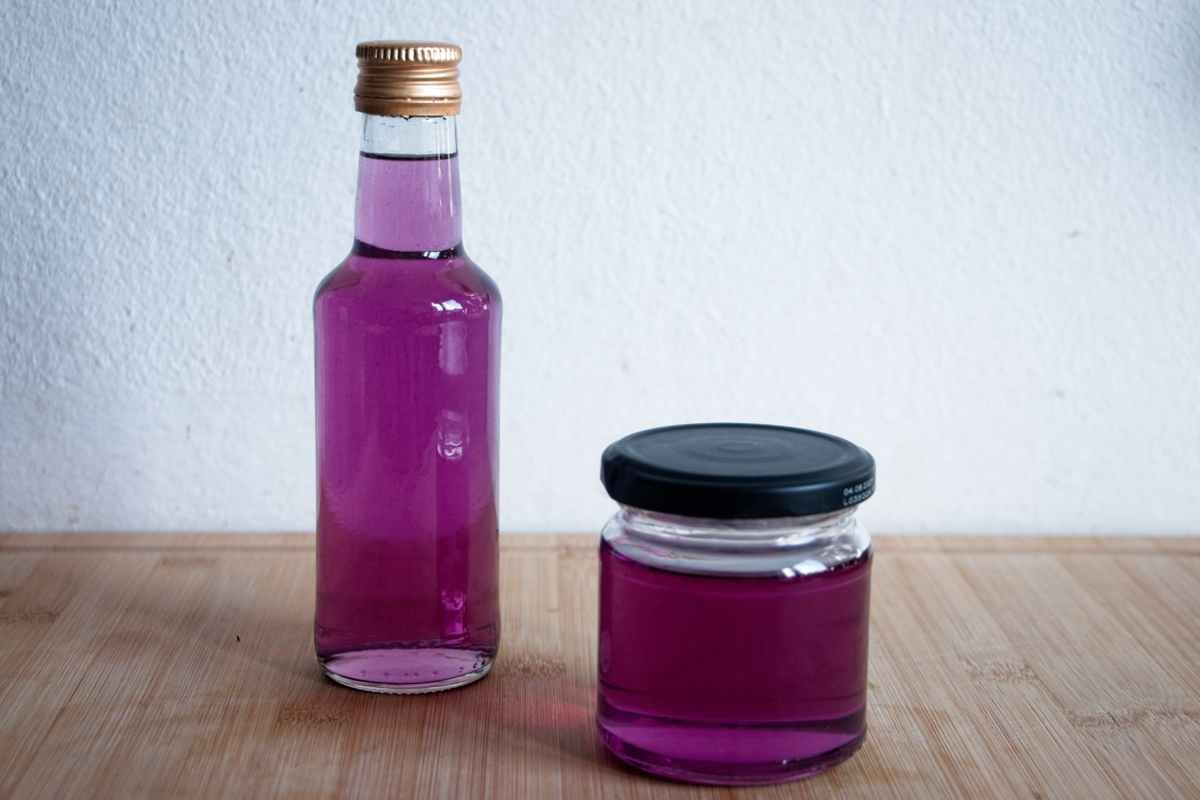
One of the most interesting things about violet syrup is how it changes colour. After steeping, the liquid is usually a deep blue or blue-purple. When lemon juice is added, it shifts to a brighter purple or even pink.
This happens because violet pigments contain anthocyanins, the same natural compounds found in red cabbage. These pigments are pH-sensitive, meaning they change colour depending on acidity. In neutral or slightly alkaline water, they appear blue, but when you add something acidic like lemon juice, the pH drops and the colour shifts.
The more lemon juice you add, the more the colour moves towards pink. This is why violet syrup can look different from batch to batch — small changes in acidity make a visible difference.
I like to make my syrup a glorious pink, but many people keep theirs a deep blue, and add it to cocktails with a hint of lemon to wow guests with a colour changing drink.
Ingredients for Violet Syrup
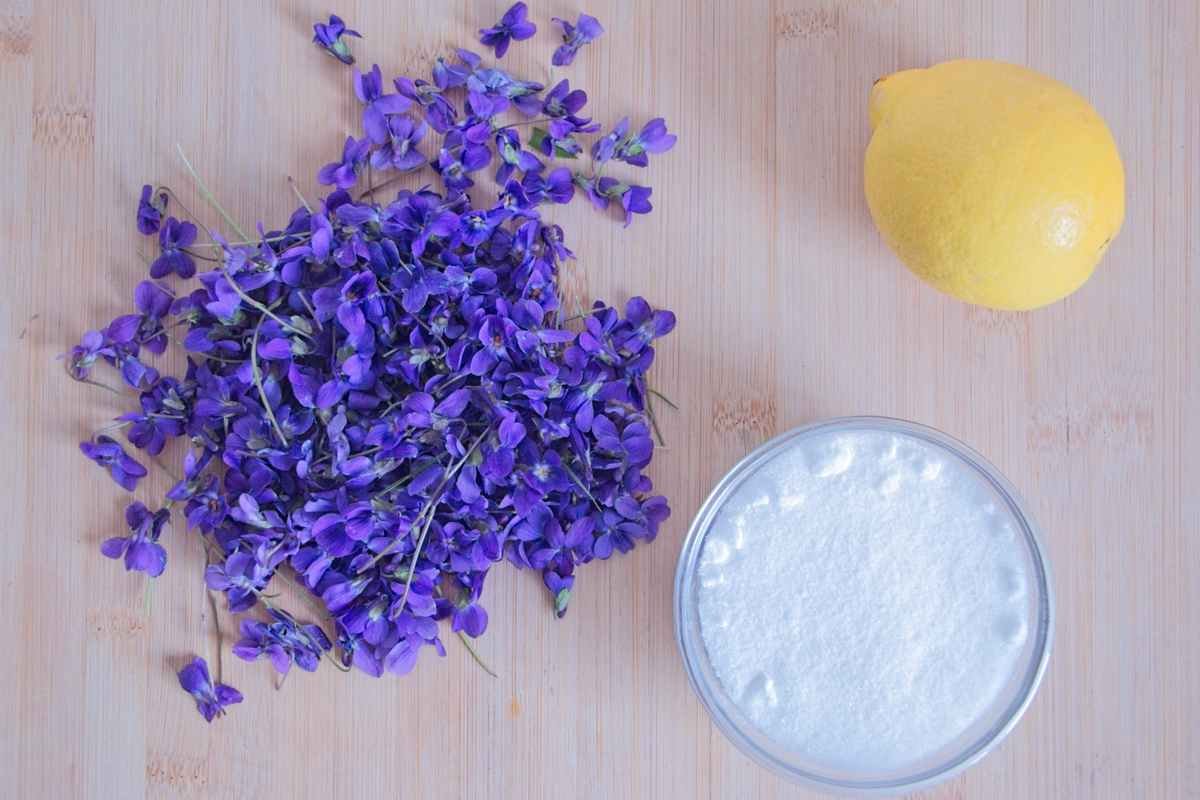
This simple violet syrup recipe just needs four ingredients to make a small batch at home. Using fresh, foraged flowers will give you the best colour and flavour.
- 1 cup violet petals (green parts removed)
- 1 cup (240 ml) water (distilled or filtered recommended)
- 1 cup (200 g) white sugar
- 1–2 teaspoons lemon juice (optional)
How Many Violets are Needed?
It’s important to use only the petals of the violet. If too many of the green parts are included, the extraction won’t be a clear deep blue, but more like the dull, murky colour of water that broccoli has been cooked in.
For this batch featured here, I used around 500 violets, which filled around two and a half cups. After removing the petals, I was left with a little over a cup worth of petals. To gather this many violets took around 35 minutes and somewhat achy knees from crouching for so long. Totally worth it though.
Ingredient Notes
For any wild violet syrup recipe, the quality of your water can make a difference. Violets contain natural pigments that react to pH, so using distilled or filtered water helps avoid interference from minerals found in tap water. This gives you a cleaner colour and more consistent results.
White sugar is best here, as darker sugars or honey can affect the final colour and make the syrup appear muddy rather than bright purple or pink.
How to Make Violet Syrup
Prepare the violet petals
Pick through the violets and remove all green parts, keeping only the petals. It’s important to use only the petals of the violet. Too many green parts will turn the infusion from a clear deep blue to a dull, murky colour.
Heat the water
Bring the water to a boil, then remove it from the heat and let it cool for a few minutes. It should be hot, but not actively boiling when poured over the petals.
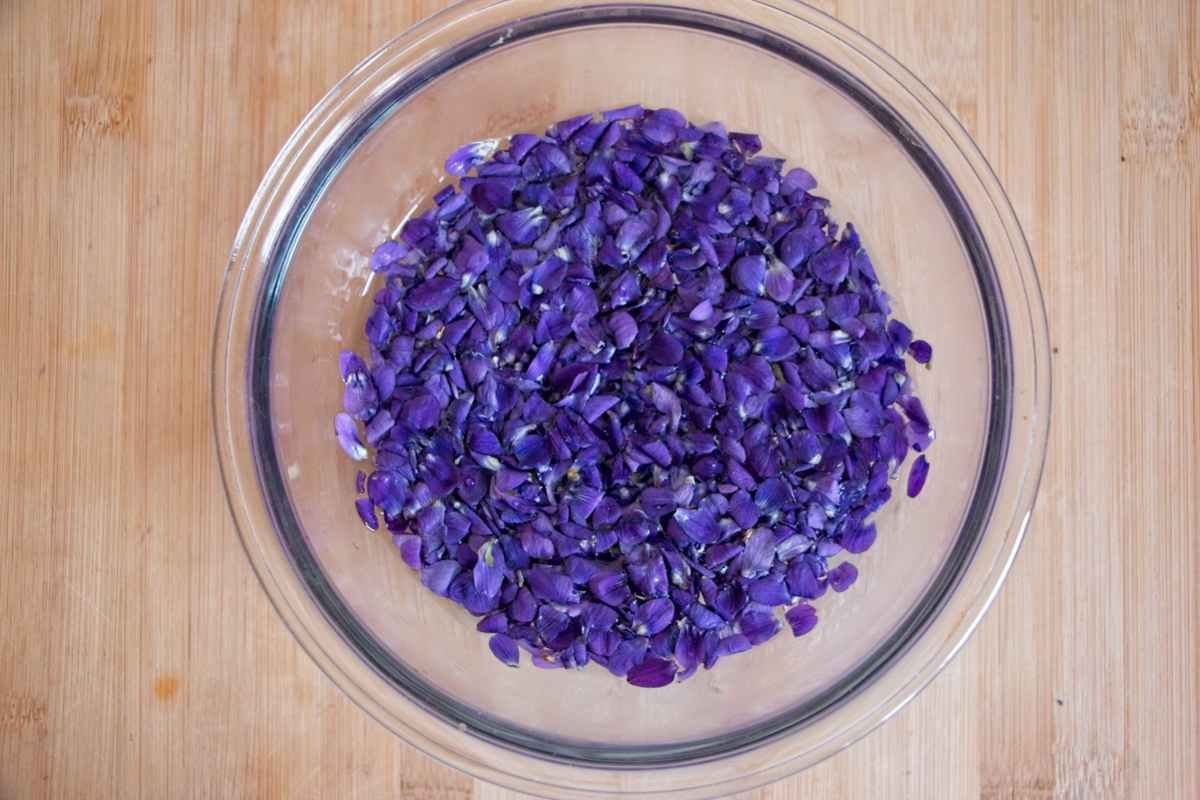
Infuse the petals
Place the petals in a heatproof jar or bowl and pour over the hot water. Cover and leave to steep for 12 to 24 hours, until the water has taken on a deep blue or blue-purple colour.
Strain the infusion
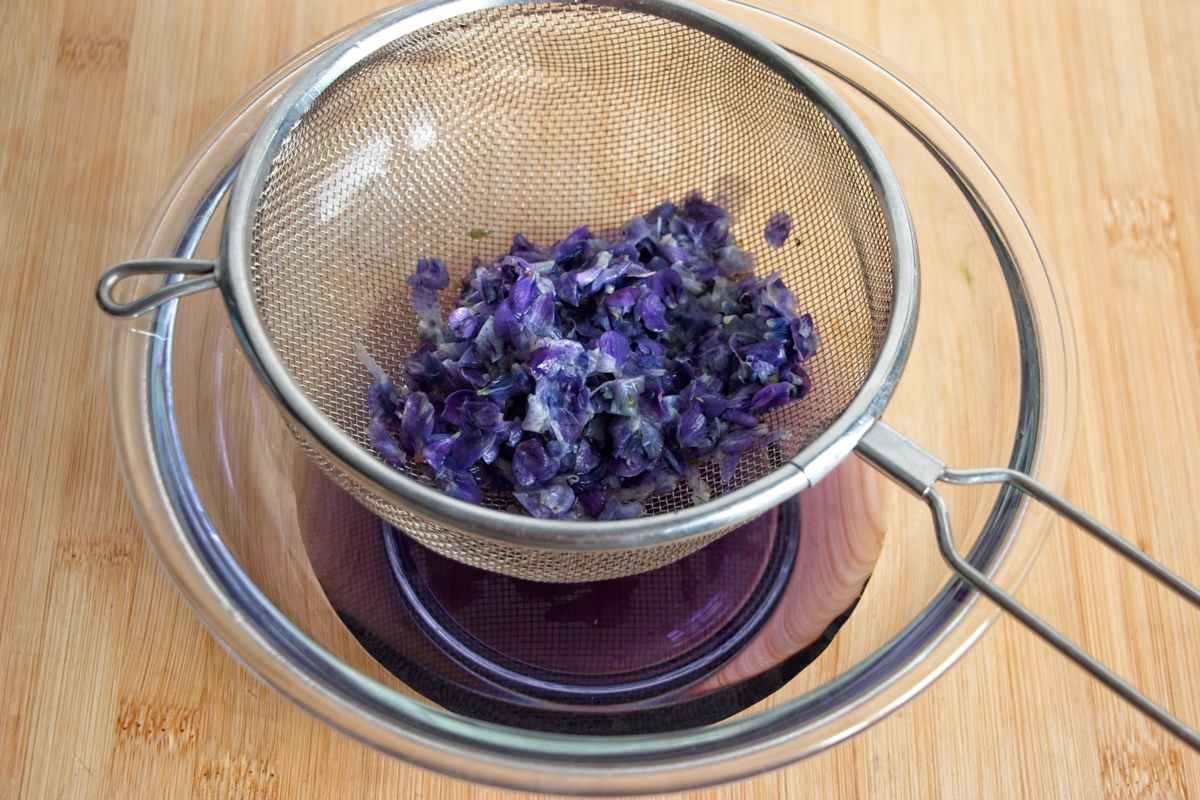
Strain the liquid into another heatproof bowl, discarding the petals. Try not to press too hard, as this can affect the clarity of the syrup.
Add the sugar gently
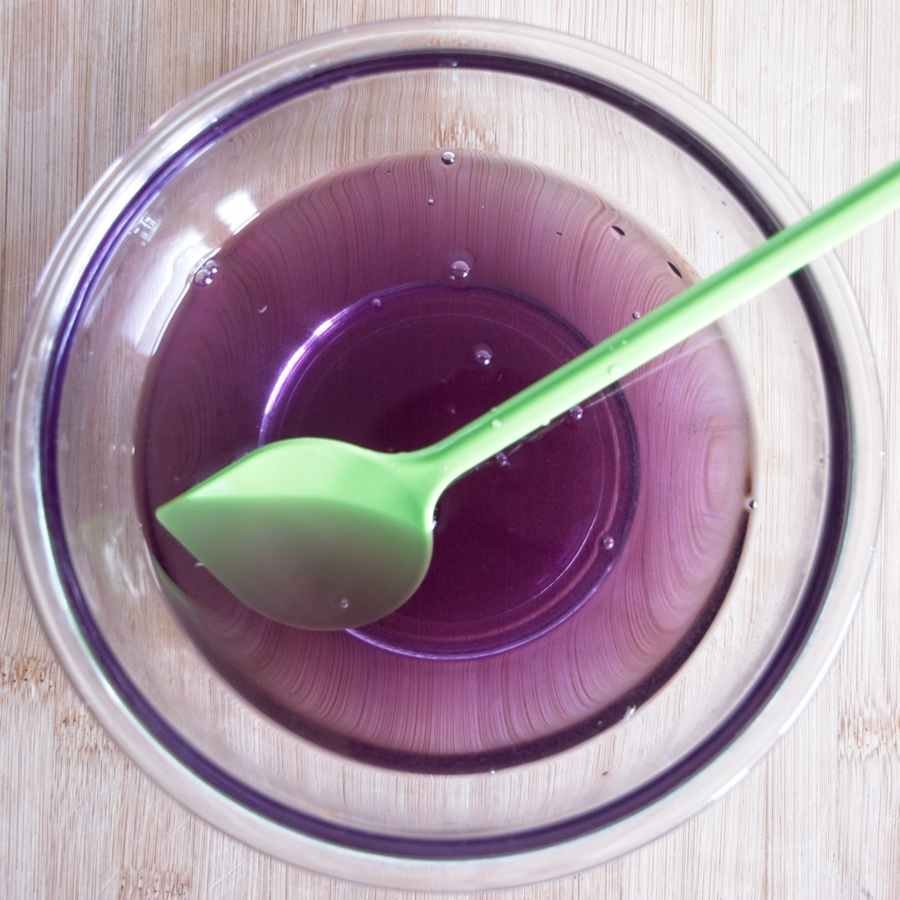
Place the bowl over a saucepan of gently simmering water. Add the sugar and stir until fully dissolved. This gentle heat helps prevent the syrup from boiling and preserves the delicate floral flavour.

Adjust the colour
Add the lemon juice a little at a time, stirring as you go. The syrup will shift from blue to purple, then pink depending on how much acidity you add.

Bottle and store
Pour the finished syrup into a clean, sterilised jar or bottle and leave it to cool. Store in the fridge and use within 2 to 3 weeks.
Key Tips for the Best Violet Syrup
These small details make a big difference to the final result, especially with such a delicate ingredient.
- Use petals only
Remove all green parts before infusing. Too much greenery will dull the colour and add a slightly bitter, vegetal taste. - Don’t boil the petals
Always pour hot water over the petals rather than cooking them directly. Boiling can damage both the colour and the delicate floral flavour. - Let it steep properly
Give the petals at least 12 hours, ideally up to 24 hours, to fully extract their colour and flavour. - Strain before adding sugar
Always remove the petals before heating. This keeps the syrup clear and prevents over-extraction. - Use gentle heat to dissolve sugar
Avoid boiling the syrup. A gentle heat (or bain-marie) helps preserve the aroma. - Use white sugar for best colour
Dark sugars or honey can muddy the final colour and reduce that bright purple or pink tone. - Add lemon gradually
The colour shift happens quickly. Add lemon juice slowly so you can control whether you end up with blue, purple, or pink. - Use filtered or distilled water if possible
Minerals in tap water can affect the pH slightly, which may change the colour of your syrup.
How to Use Violet Syrup
Violet syrup is subtle, so it works best in simple uses where the flavour and colour can come through clearly.
Drinks
Mix a small amount with still or sparkling water for a light floral drink, or add it to lemonade to create a colour-changing effect when the lemon is stirred in.
Desserts
Use it in lighter desserts where the colour won’t be masked. It works well in sorbet, jelly, or as a glaze, and can be drizzled over yoghurt or simple cakes.
Everyday uses
Stir a little into tea, pour it over pancakes, or use it to sweeten fruit. Because the flavour is delicate, it’s best paired with neutral or lightly flavoured foods.
Storage
Store violet syrup in a clean, sealed bottle or jar in the fridge. It will keep for around 2 to 3 weeks.
If the syrup becomes cloudy or develops an off smell, it’s best to discard it.
Violet Syrup
Ingredients
- 1 cup violet petals green parts removed
- 240 ml water preferably filtered or distilled
- 200 g white sugar
- 1 tsp lemon juice optional, for colour
Instructions
- Place the violet petals in a heatproof bowl or jar.
- Bring the water to a boil, then remove from heat and let cool for a few minutes.
- Pour the hot water over the petals, cover, and leave to steep for 12–24 hours.
- Strain the liquid into a heatproof bowl, discarding the petals. Do not press too firmly.
- Place the bowl over a saucepan of gently simmering water. Add the sugar and stir until fully dissolved.
- Remove from heat and add lemon juice gradually, stirring to adjust colour from blue to purple or pink.
- Transfer to a clean bottle or jar and allow to cool before refrigerating.
Notes
Variations and Substitutions
A basic violet syrup is simple, but a few small changes can shift the flavour or how you use it.- Lemon-forward syrup
Add a little extra lemon juice for a brighter, sharper flavour and a more vivid pink colour. - Floral blend
Combine violets with a small amount of elderflower or lavender for a more layered floral profile. Keep additions light so the violet isn’t lost.
Substitutions
- If you don’t have distilled water, filtered water is usually fine. Tap water can work, but minerals may slightly affect the colour.
Violet Syrup FAQs
You can, but the flavour will be less clean and the colour will turn dull. The green parts add a mild bitterness, so petals-only will always give a better result.
Stored in a clean bottle in the fridge, it will keep for around 2–3 weeks. If it starts to look cloudy or develops any off smell, it’s best to discard it.
This usually comes down to too much water or not enough steeping time. Letting the petals infuse for a full 24 hours makes a noticeable difference.
Yes, but it will change both the flavour and colour slightly. Honey can add a warmer tone and may make the syrup look more amber than purple.
Yes, it’s actually better made in advance so the flavour has time to settle. Just keep it chilled and use within a couple of weeks.