Homemade Quince Pectin for Jams and Jellies
Turn small quinces into homemade liquid pectin for jams and jellies, with no peeling or coring.
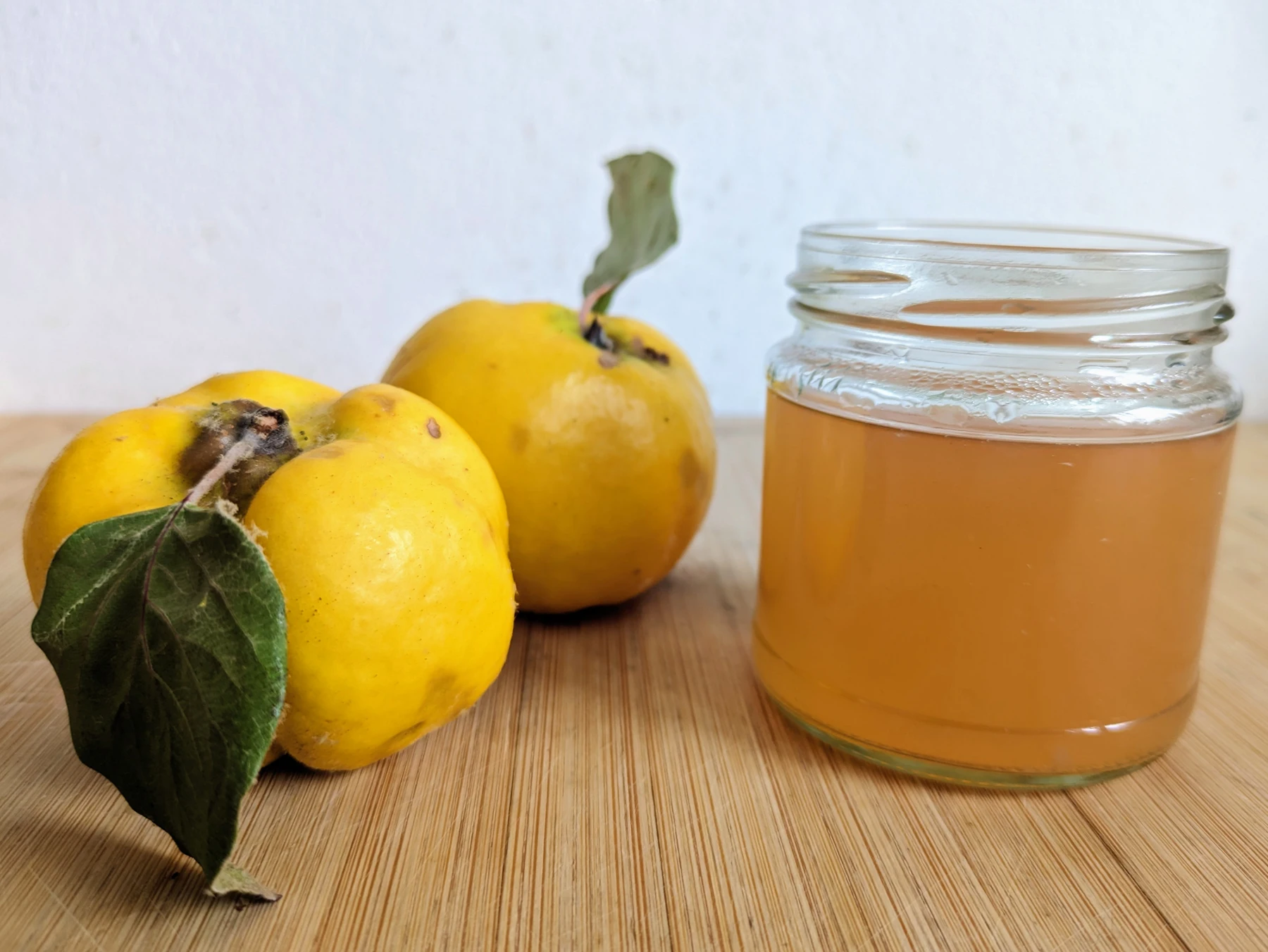
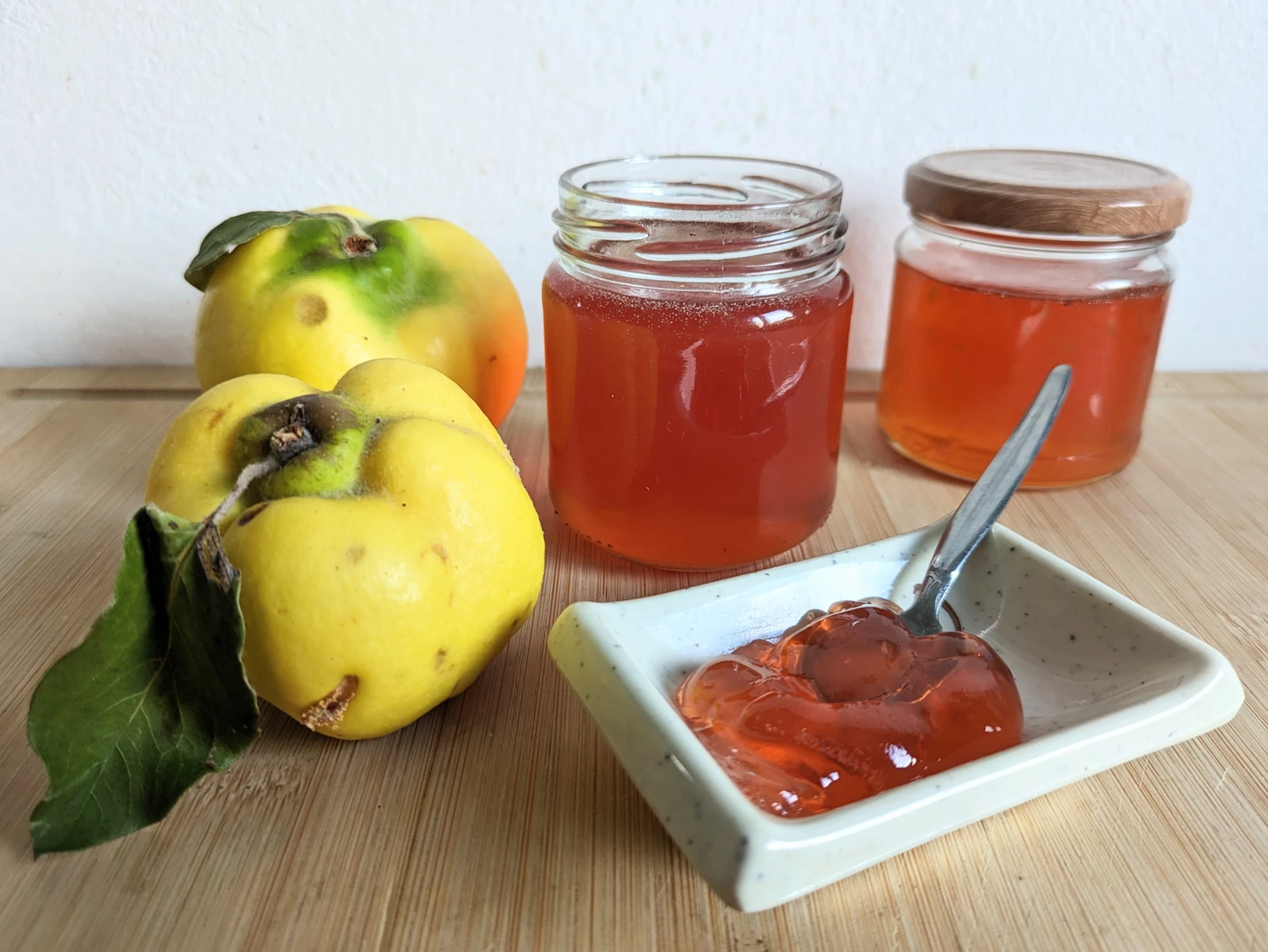
Homemade quince pectin is a useful way to turn small, awkward quinces into something you can keep for future batches of jam and jelly. There is no need to peel or carefully core each fruit: the quinces are cooked in water, then strained to collect a pectin-rich liquid.
Quinces are extremely high in pectin, making them a particularly good fruit for this job. If you have a basket of tiny ones that would lose too much flesh during coring, making pectin stock puts them to use with very little preparation.
Why use quinces to make pectin?
Pectin is a substance naturally present in fruit that helps jams and jellies set. With the right balance of sugar and acidity, it forms a network that holds the liquid together.
Quinces are especially rich in pectin. Rather than adding sugar to make quince jelly, you can collect an unsweetened extract and save it to help other fruit preserves set.
This is particularly useful for small quinces. By the time you have peeled and cored them for poaching or quince paste, there may be little flesh left. Here, the skins and cores stay in during cooking and are strained out afterwards.
The result is a liquid pectin stock containing quince juice as well as pectin. Expect some quince flavour, rather than a completely neutral ingredient.
Which quinces should you use?
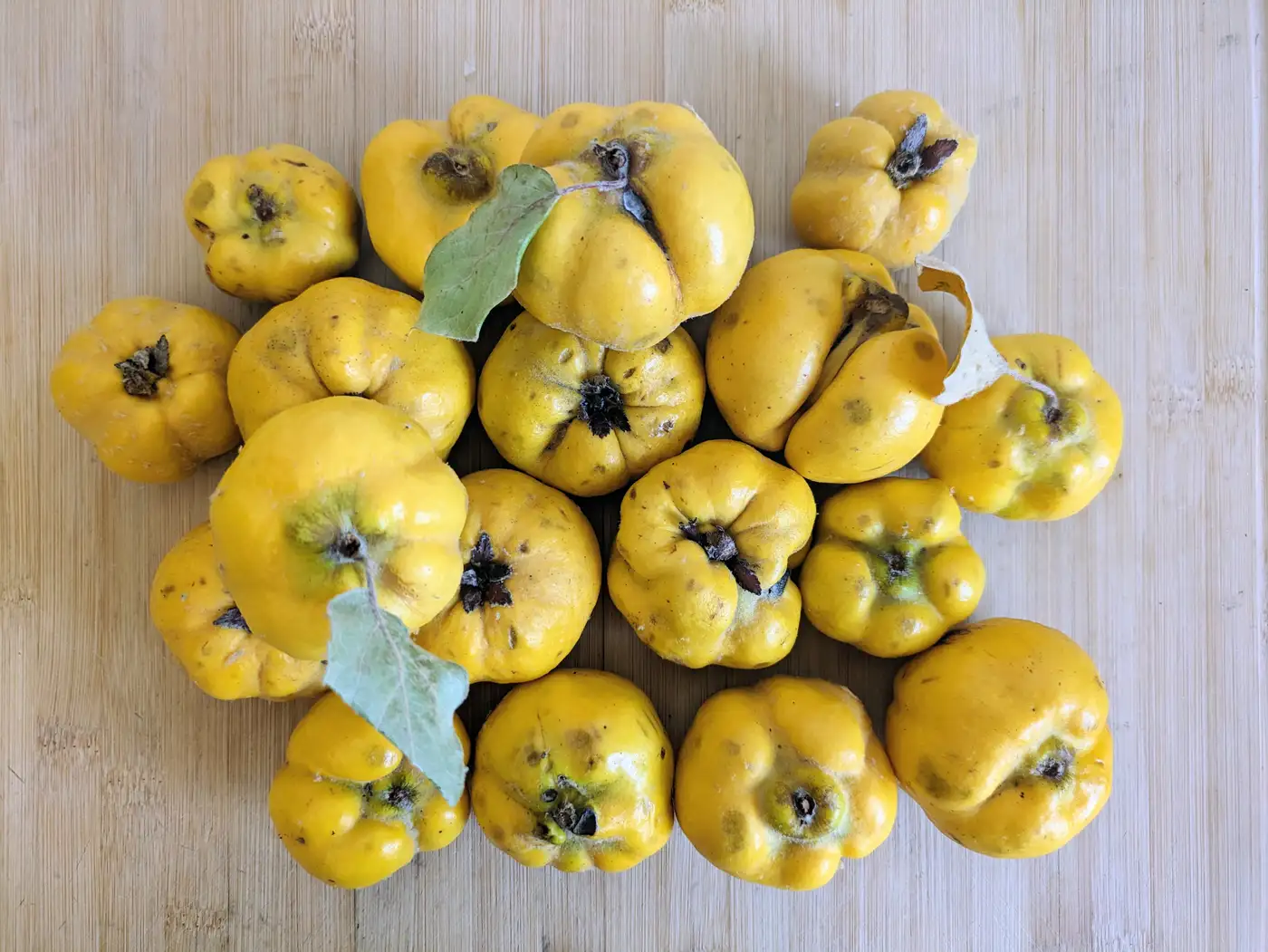
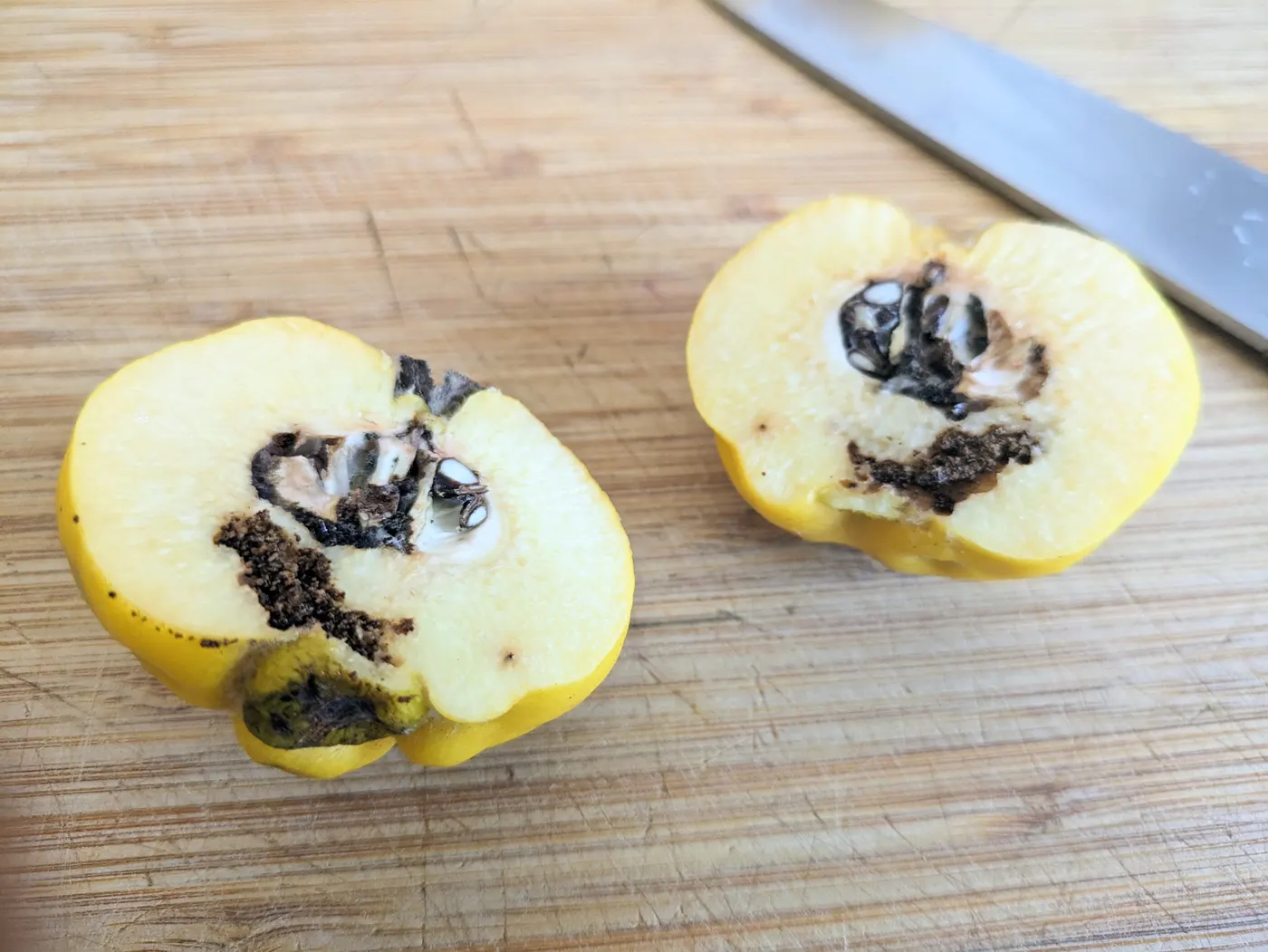
Choose sound, firm fruit. Small size and an uneven shape are no problem, but discard mouldy fruit and cut away damaged or insect-affected areas.
Fruit ripeness affects the strength of natural pectin, so avoid relying on very overripe, deteriorating fruit. Record what you use if you want to compare batches.
Ingredients
- 1 kg small quinces: weighed before trimming. Leave the skins and cores in place.
- Water: start with approximately 1 litre, adjusting to the pan and the size of the pieces.
You do not add sugar at this stage. Sugar and any additional acid are considered when making the eventual jam or jelly.
What is the fuzz on quinces?
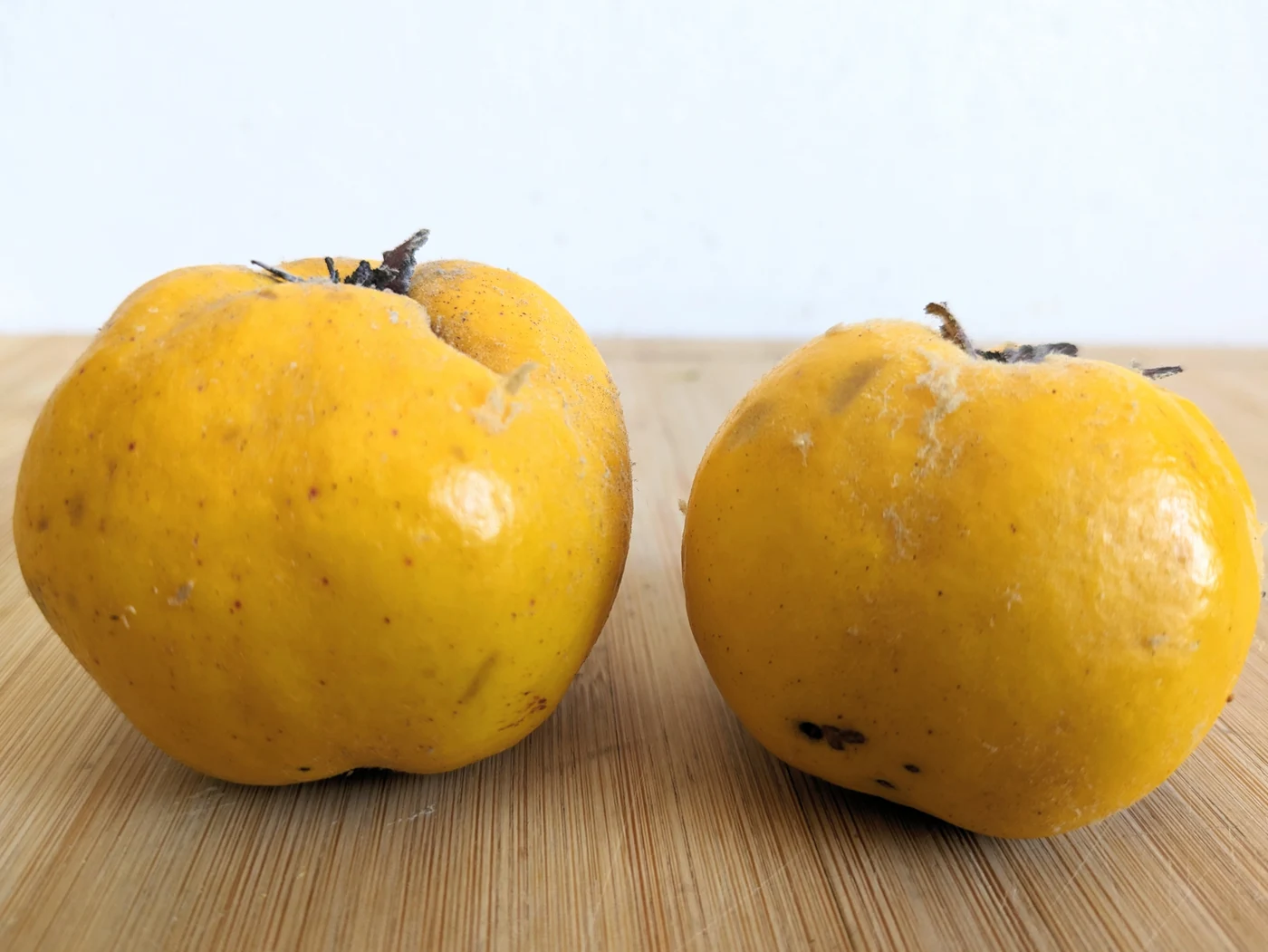
Quinces often have a fine, soft coating of down on their skin, particularly when freshly picked. This is a natural covering of tiny plant hairs, rather than mould. Rub it off with a clean cloth or wash it away under running water before preparing the fruit.
How to make quince pectin
Wash and cut the fruit
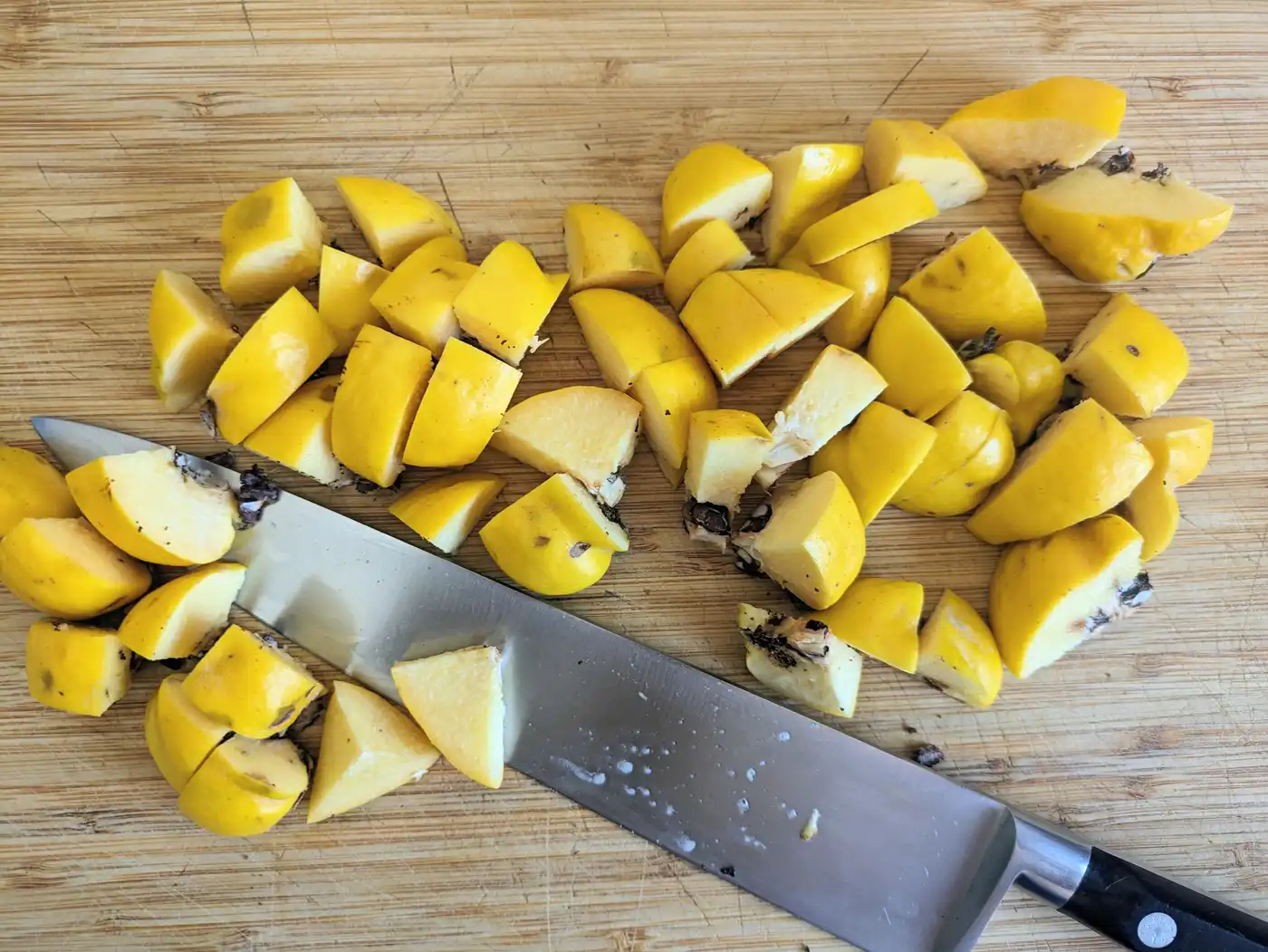
Rub off any surface fuzz and wash the quinces thoroughly. Remove stalks and damaged areas, then cut the fruit into roughly 2–3 cm pieces.
Leave the skins and cores in place. Avoid cutting through or crushing seeds where practical, and discard any loose seeds you can easily pick out. Do not blend the fruit.
Add the water
Put the chopped quinces in a heavy saucepan that holds them fairly snugly. Add water until it reaches just below the top of the fruit.
The amount needed will vary. Too much water creates extra work later because the extract will need more reduction.
Cook until soft
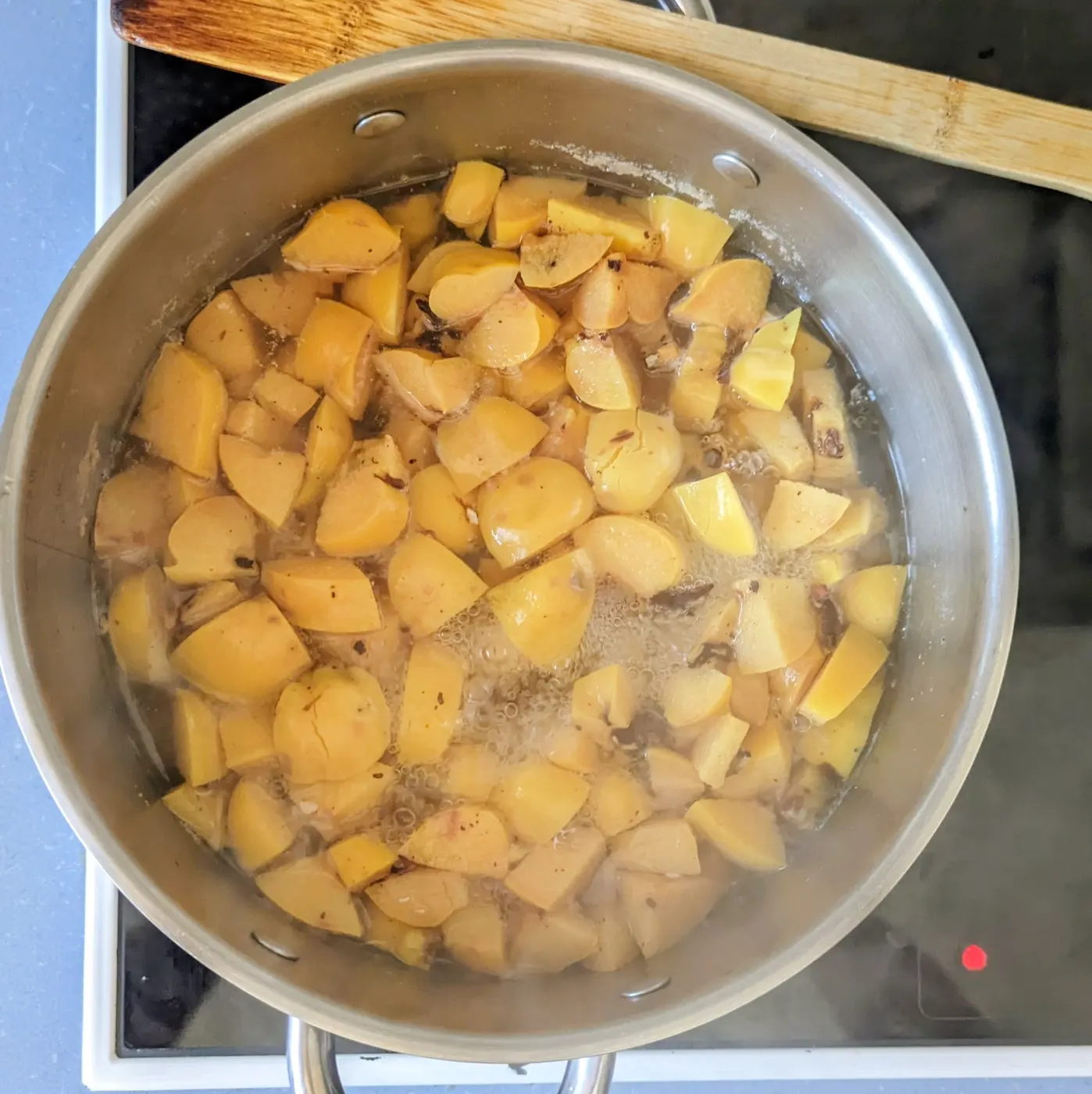
Bring to a gentle boil, then reduce the heat and partially cover. Simmer until the quince pieces are thoroughly soft and beginning to break down.
For an initial trial, begin checking after 40 minutes; hard fruit or larger pieces may take longer. Stir gently occasionally to prevent sticking and add a little water if the pan becomes dry.
Use the softness of the fruit as your guide rather than cooking for a fixed two hours. This batch took just oven an hour to reach a stage where I could easily crush the quinces.
Strain the liquid
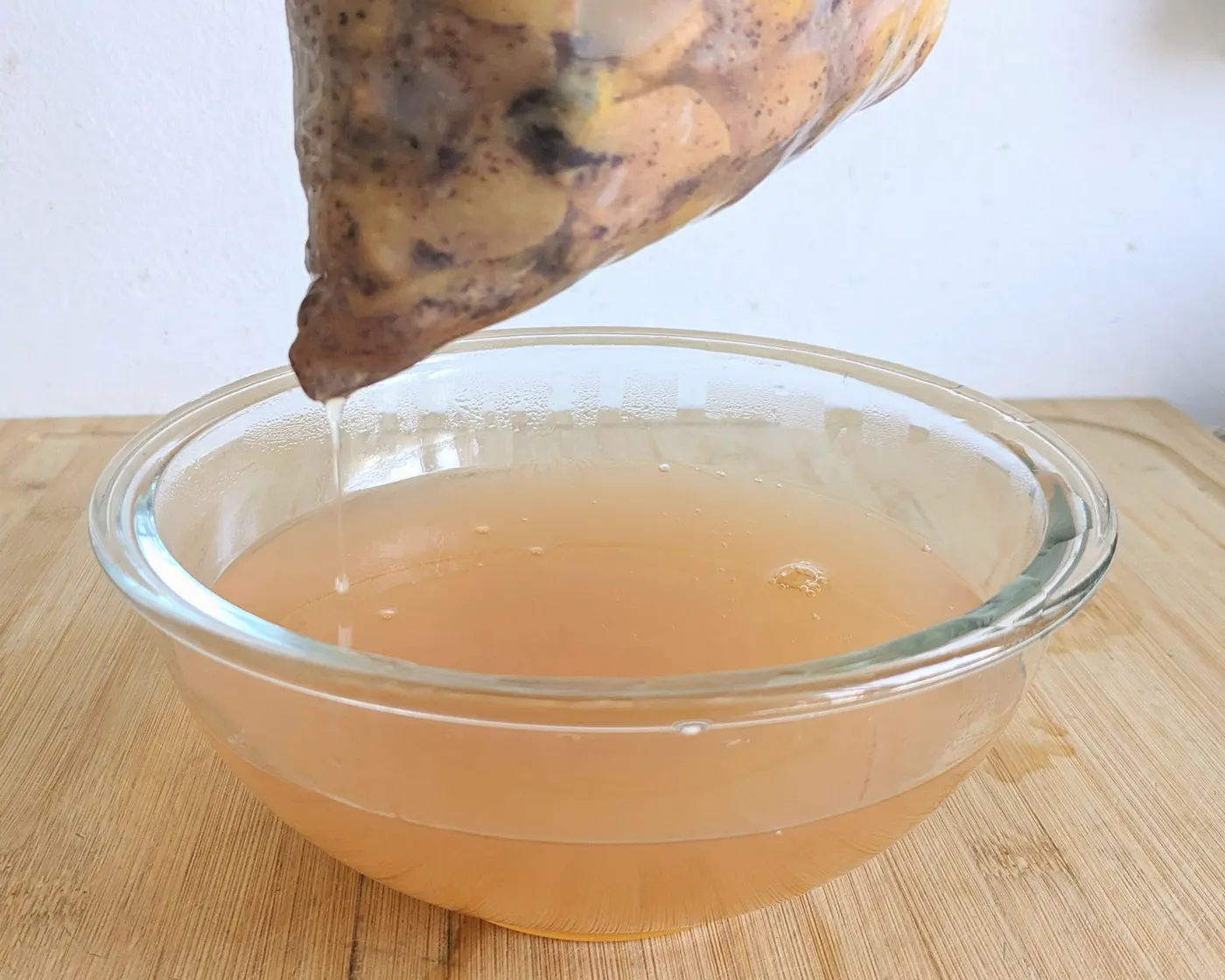
Set a damp jelly bag or a fine sieve lined with several layers of suitable straining cloth over a bowl. Ladle in the cooked fruit and liquid.
Allow the liquid to drain without squeezing if you want a clearer stock. For an overnight drain, refrigerate the straining setup once it has cooled sufficiently. Keep the cloth and fruit clear of the collected liquid.
Concentrate if necessary
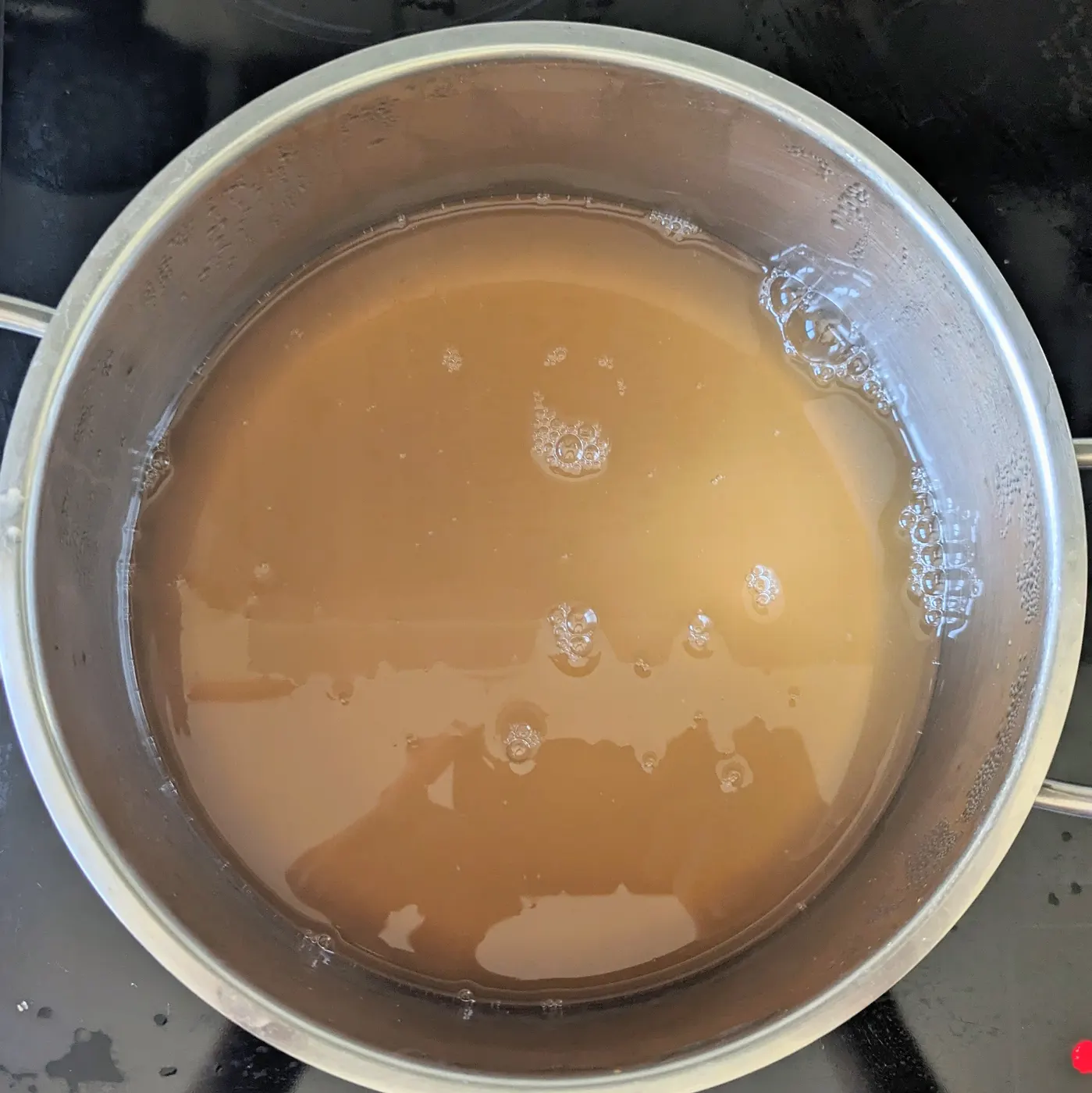
Measure the strained liquid and return it to a clean saucepan. If it tests weak, simmer uncovered to concentrate it, checking small cooled samples as it reduces.
How to test homemade pectin
An alcohol test gives a rough indication of pectin strength. It does not tell you exactly how much stock a particular jam will need.
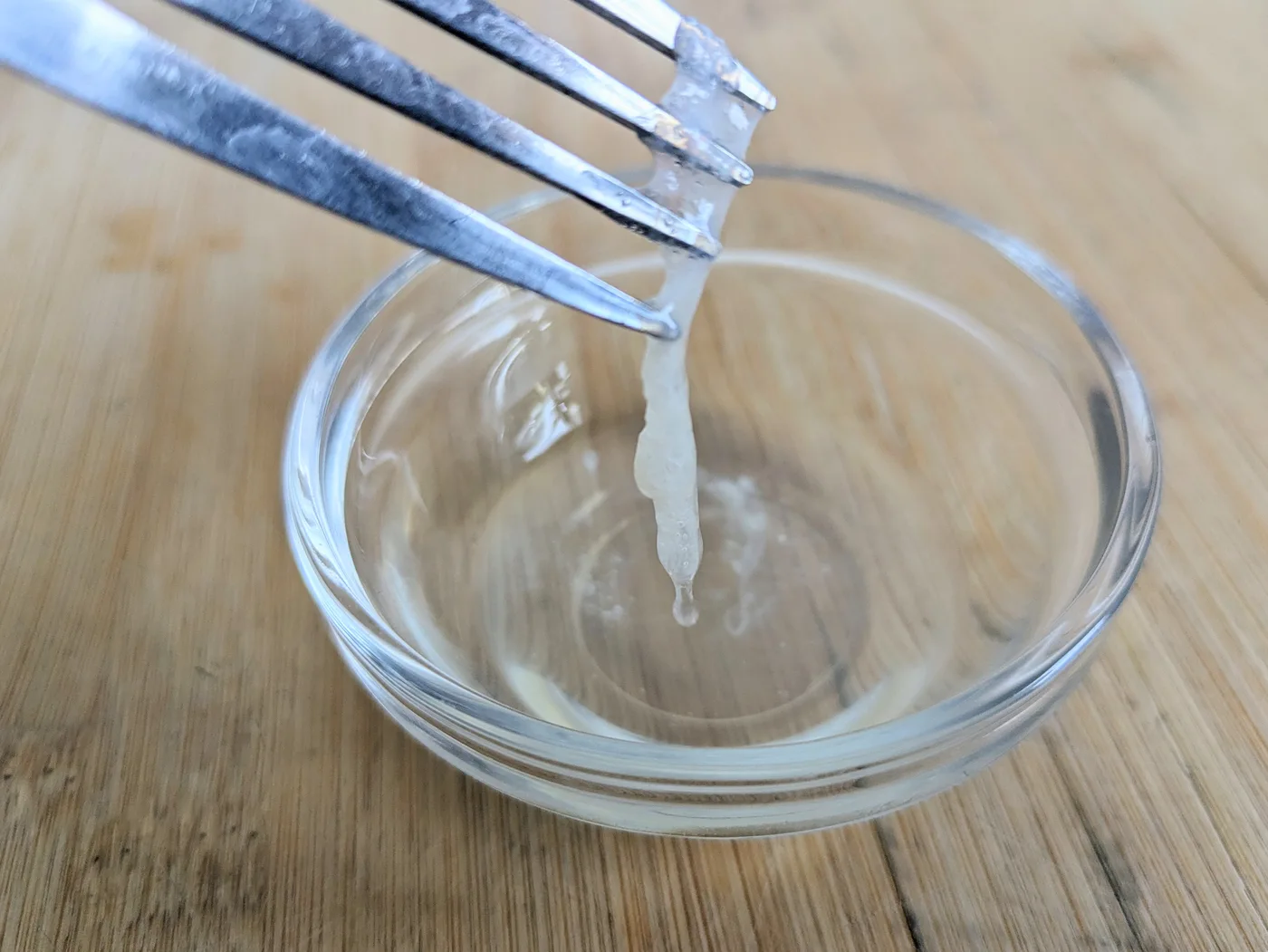
Put 1 teaspoon of cooled extract in a separate small dish and add 1 tablespoon of 70% isopropyl rubbing alcohol. Stir gently and leave briefly.
- A cohesive jelly-like mass that can be lifted with a fork suggests a pectin-rich extract.
- Small scattered clumps or a mixture that stays mostly liquid suggests a weaker extract.
If the result is weak, reduce the remaining food-safe stock a little further, cool another sample and test again.
How to use quince pectin in jam
Homemade pectin varies in strength, so there is no dependable universal conversion from quince stock to a packet of commercial pectin.
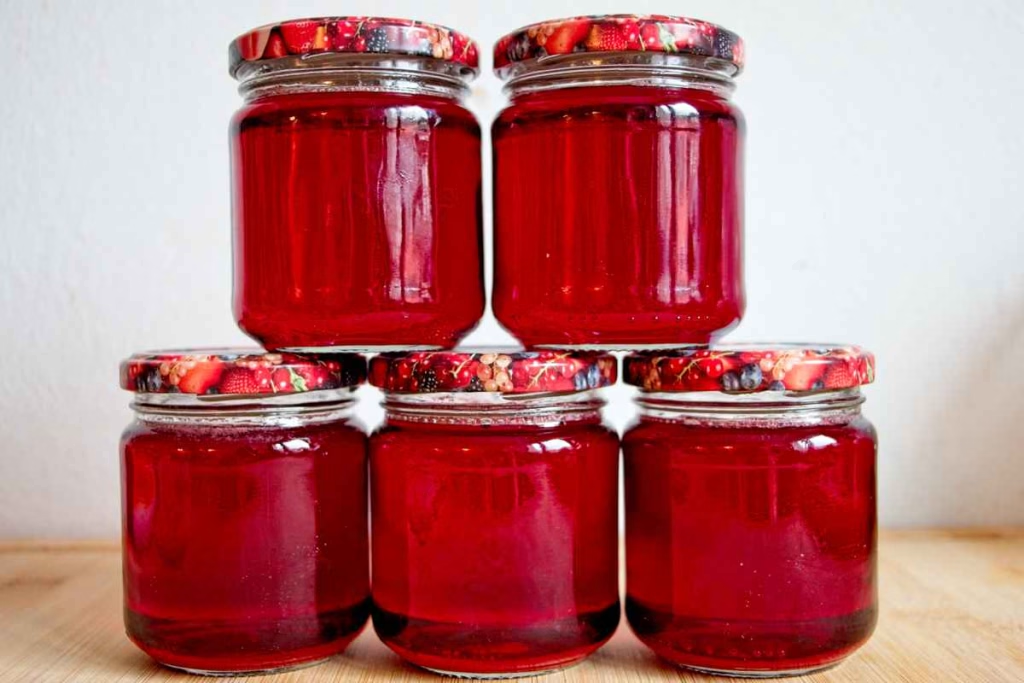
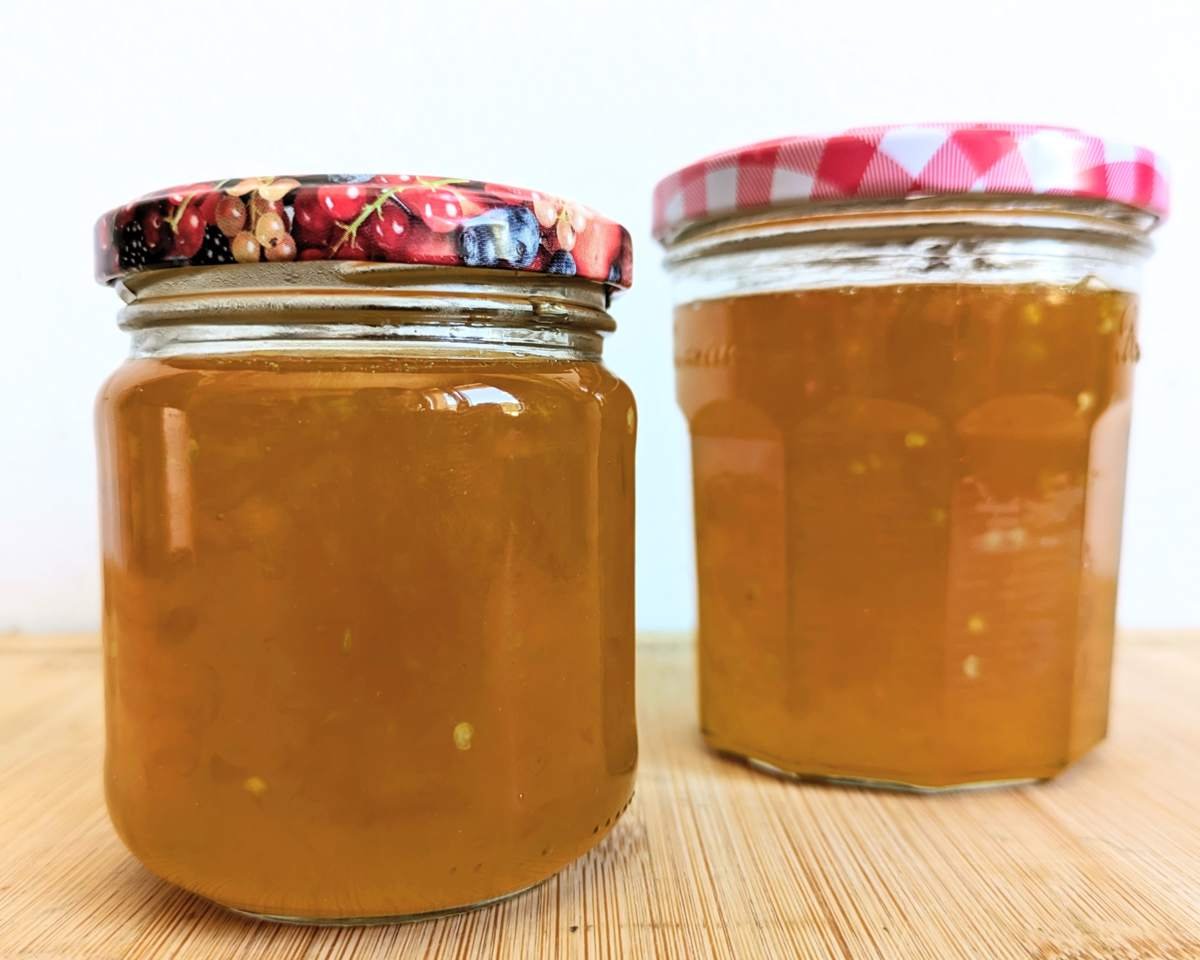
As an initial trial, use approximately 50 ml of pectin stock per 200 ml of prepared fruit for jam, or 50 ml per 200 ml of fruit juice for jelly.
For jelly, measure the combined juice and pectin stock, then add an equal volume of granulated sugar.
These proportions are a starting point for testing, rather than a confirmed dosage for quince pectin. Make a small batch intended for refrigeration or freezing first, record the quantities used and assess the set once completely cool. For cupboard storage, follow a tested canning recipe rather than relying on this ratio alone.
Storage and freezing
For keeping the stock beyond immediate use, freeze it in small, measured portions. Leave expansion space in freezer-safe containers and label each with the date, volume and batch details.
Portions of 50 or 100 ml make later testing easier. I like to fill into silicone molds and and pop into the freezer. Then when they are frozen I remove them and put them all in a freezer bag.
Thaw in the fridge and stir before measuring.
To can the quince pectin, heat the strained liquid to boiling point, the pour into clean canning jars, leaving 1 cm of room at the top. Wipe the rims and fit the lids on. Process in a boiling-water bath for 10 minutes, increasing the processing time as required for your altitude.
Homemade Pectin FAQs
No. Keeping the skins and cores in during extraction is what makes this a useful option for very small fruit. Strain them out afterwards and avoid crushing the seeds.
No. The stock is an unsweetened extract saved as an ingredient. Quince jelly is a finished preserve made with juice and sugar.
Pectin stock does not need to set like finished jelly. Its appearance alone does not show whether it will work: use a strength test, then confirm the result in a small batch of jam.
Not directly. Powdered pectin and homemade liquid stock differ in concentration, added ingredients and how they are used.
The cooked solids contain cores and seeds. Do not blend them into food. Much of their flavour has also passed into the stock, so composting the strained solids is the best option.
More Quince Recipes
Homemade Quince Pectin
Ingredients
- 1 kg quinces
- Approximately 1 litre water or enough to barely cover
Instructions
- Rub off any fuzz and wash the quinces thoroughly. Remove stalks and cut away damaged or insect-affected areas. Discard mouldy or rotten fruit. Chop into roughly 2–3 cm pieces, leaving the skins and cores intact. Avoid crushing the seeds and remove loose seeds where practical.
- Place the fruit in a heavy saucepan and add just enough water to barely cover.
- Bring to the boil, then reduce the heat and partially cover. Simmer until thoroughly soft and beginning to break down, checking from 40 minutes. Stir occasionally to prevent sticking and add a little water if necessary.
- Pour into a damp jelly bag or muslin-lined sieve set over a bowl. Leave to drain for 4–8 hours without squeezing. For overnight straining, cool promptly and refrigerate the setup.
- Measure the strained liquid and return it to a clean saucepan. Simmer uncovered to concentrate. Reducing by approximately half is an initial guide; use the following test to check its strength.
- Cool a small sample. In a separate dish, mix 1 teaspoon of cooled extract with 1 tablespoon of 70% isopropyl rubbing alcohol. Stir gently and leave for a few minutes. A cohesive jelly-like clump that can be lifted with a fork indicates a pectin-rich extract. This test mixture is poisonous: never taste it or return it to the saucepan. Discard it and wash the utensils thoroughly.
- If the sample stays liquid or forms only small fragments, reduce the stock further and repeat the test with a fresh, cooled sample.
- Cool the finished stock promptly and freeze in measured 50–100 ml portions, or can in a water bath.