Homemade Quince Pectin
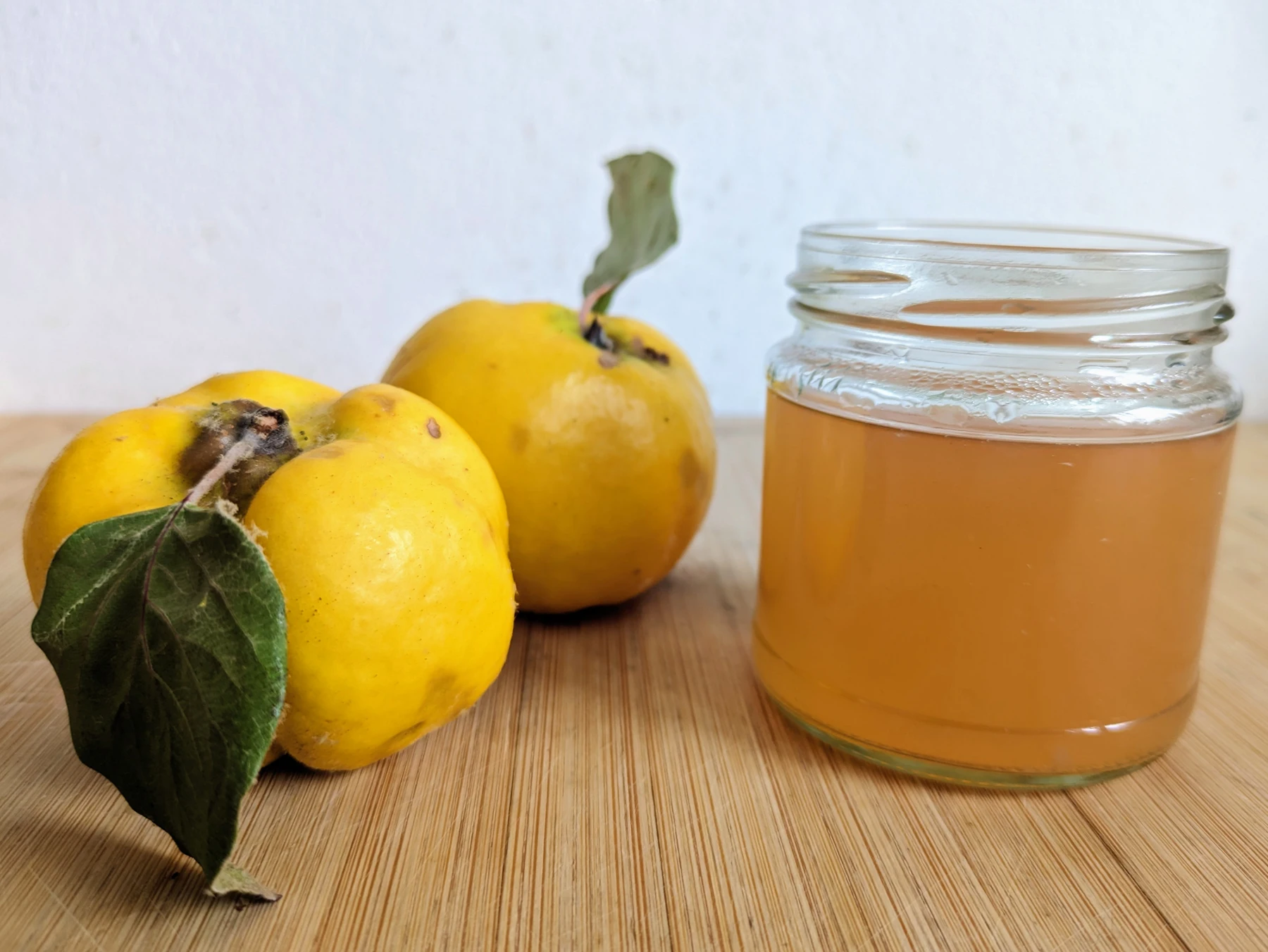
Make homemade liquid pectin from small quinces without peeling or coring. This unsweetened extract can help jams and jellies set and freezes well in measured portions.
Ingredients
- 1 kg quinces
- Approximately 1 litre water or enough to barely cover
Instructions
- Rub off any fuzz and wash the quinces thoroughly. Remove stalks and cut away damaged or insect-affected areas. Discard mouldy or rotten fruit. Chop into roughly 2–3 cm pieces, leaving the skins and cores intact. Avoid crushing the seeds and remove loose seeds where practical.
- Place the fruit in a heavy saucepan and add just enough water to barely cover.
- Bring to the boil, then reduce the heat and partially cover. Simmer until thoroughly soft and beginning to break down, checking from 40 minutes. Stir occasionally to prevent sticking and add a little water if necessary.
- Pour into a damp jelly bag or muslin-lined sieve set over a bowl. Leave to drain for 4–8 hours without squeezing. For overnight straining, cool promptly and refrigerate the setup.
- Measure the strained liquid and return it to a clean saucepan. Simmer uncovered to concentrate. Reducing by approximately half is an initial guide; use the following test to check its strength.
- Cool a small sample. In a separate dish, mix 1 teaspoon of cooled extract with 1 tablespoon of 70% isopropyl rubbing alcohol. Stir gently and leave for a few minutes. A cohesive jelly-like clump that can be lifted with a fork indicates a pectin-rich extract. This test mixture is poisonous: never taste it or return it to the saucepan. Discard it and wash the utensils thoroughly.
- If the sample stays liquid or forms only small fragments, reduce the stock further and repeat the test with a fresh, cooled sample.
- Cool the finished stock promptly and freeze in measured 50–100 ml portions, or can in a water bath.
Notes
Testing the strength: In a separate dish, gently mix 1 teaspoon of cooled extract with 1 tablespoon of 70% isopropyl rubbing alcohol. A cohesive jelly-like clump suggests a pectin-rich extract. If only small fragments form, reduce the stock further and retest.
The alcohol mixture is poisonous: never taste it or return it to the stock. Discard after testing.
Using the pectin: Strength varies between batches. Test in a small batch of fridge or freezer jam before establishing a dosage. Do not substitute directly for commercial pectin in a tested canning recipe.
Storage: Quince pectin freezes well. I like to fill silicone ice molds. That way it's easy to take exactly what I need later.