Tromboncino Squash and Halloumi Fritters
Grated tromboncino squash and halloumi fritters with spring onions, fresh herbs and lemon zest.
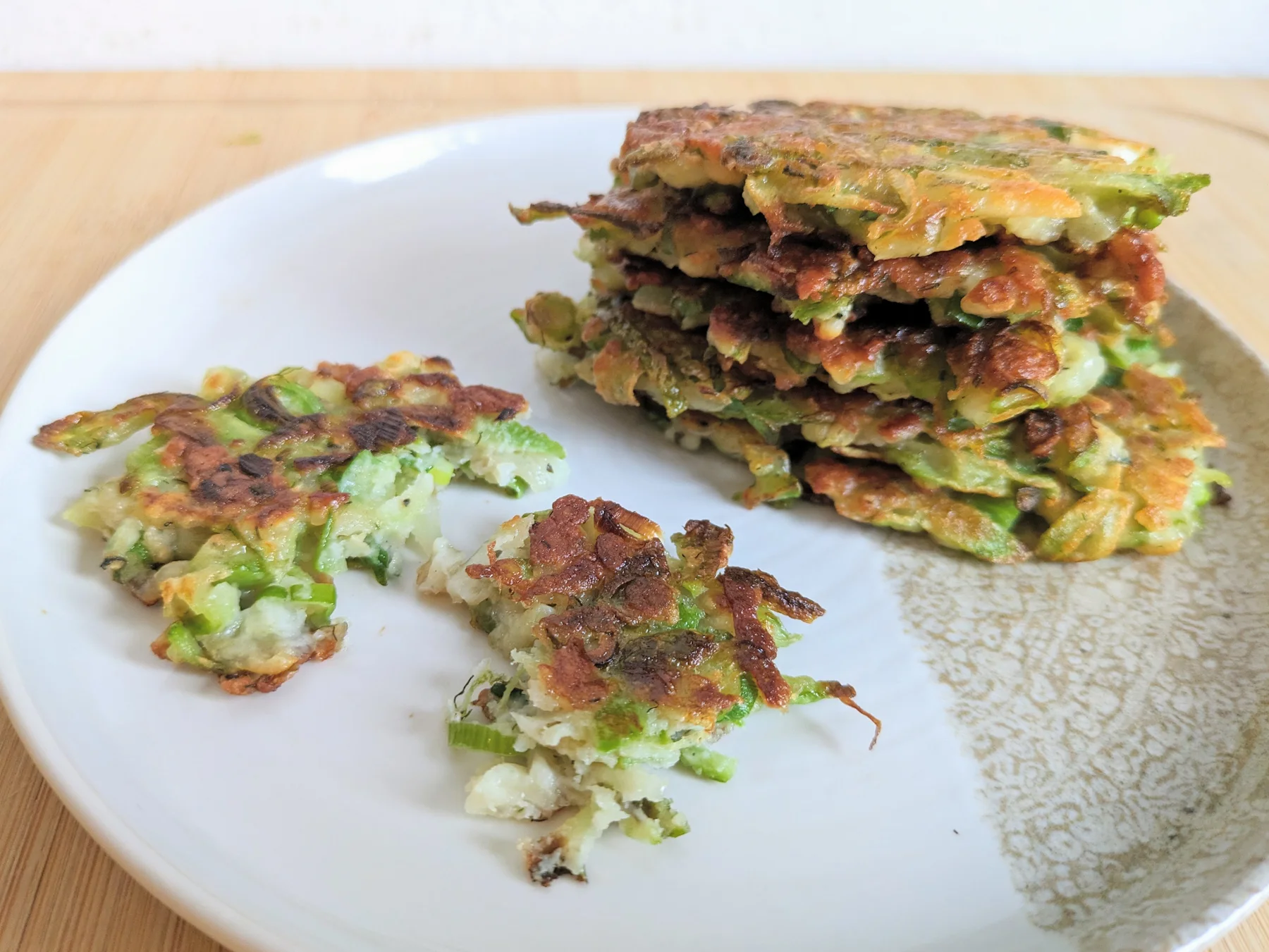
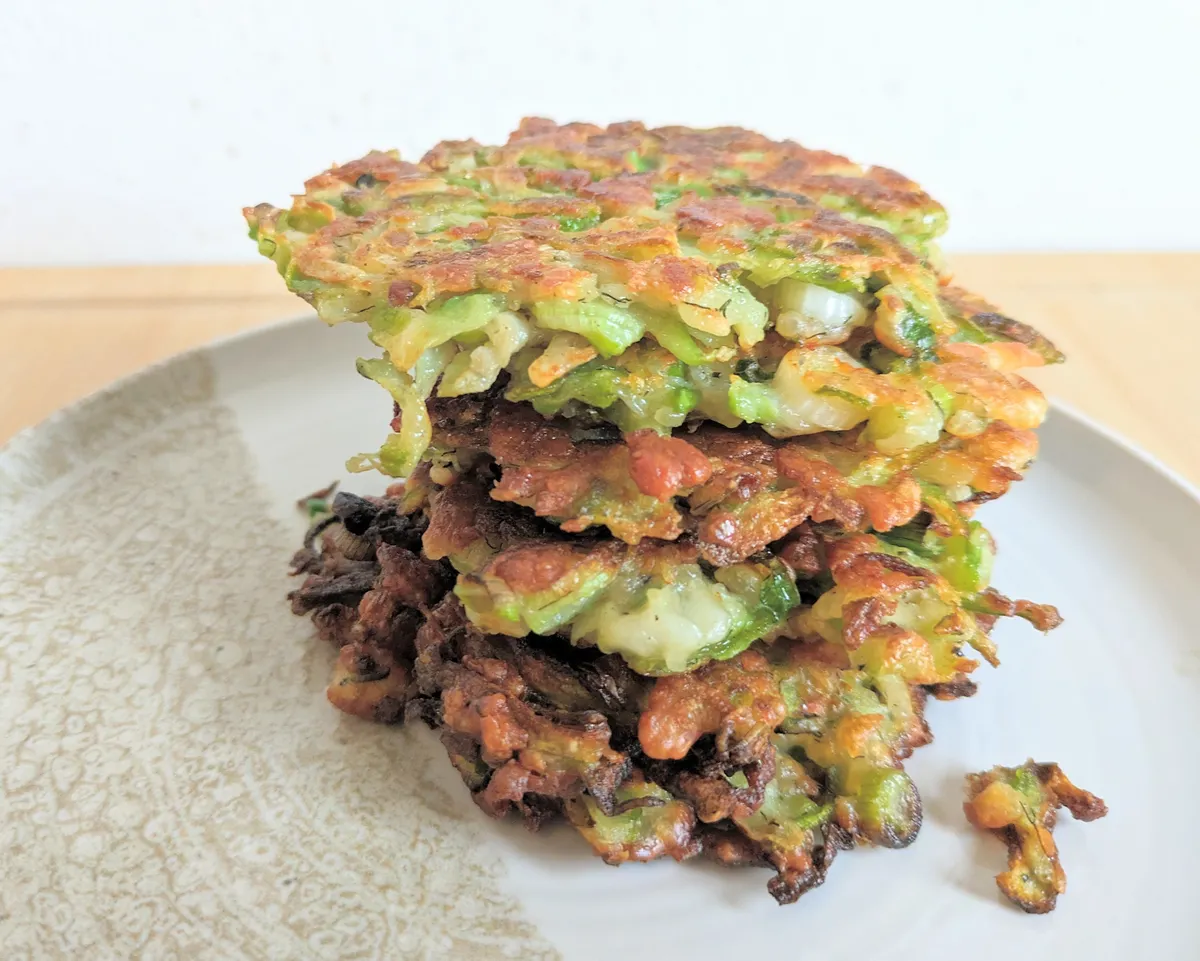
These crispy tromboncino fritters combine fresh, grated squash with salty halloumi, spring onions, fragrant herbs, and bright lemon zest. Shallow-fried until beautifully golden, they make a simple vegetarian lunch alongside a fresh salad and a spoonful of lemon yoghurt. If you are looking for a creative, delicious tromboncino recipe to use up your garden harvest, this is it!
This recipe uses young, green tromboncino squash, but you can also make it with courgette—or zucchini, as it’s known in the US. The most important step when cooking tromboncino squash this way is squeezing the grated flesh thoroughly before mixing; you want plenty of vegetables and cheese with just enough batter to hold everything together.
What is tromboncino squash?
Tromboncino, also known as zucchetta, is a unique Italian heirloom squash with a long, sometimes curved neck and a rounded bulbous end. It belongs to the butternut family but can be harvested young and green for use as a summer squash, or left to mature into a hard-skinned winter squash.
Young tromboncino has a mild, slightly sweet flavour and a firmer, less watery flesh than a standard courgette. Because its seeds are concentrated entirely in the rounded end, the long neck is completely solid, making it particularly convenient for slicing or grating.
For these fritters, choose green tromboncino with tender skin. There is no need to peel it, although you should remove any developed seeds or spongy flesh from the bulbous end if yours is starting to grow larger. Mature squash with hard skin requires a completely different preparation method and isn’t the version used here.
Ingredients for tromboncino fritters
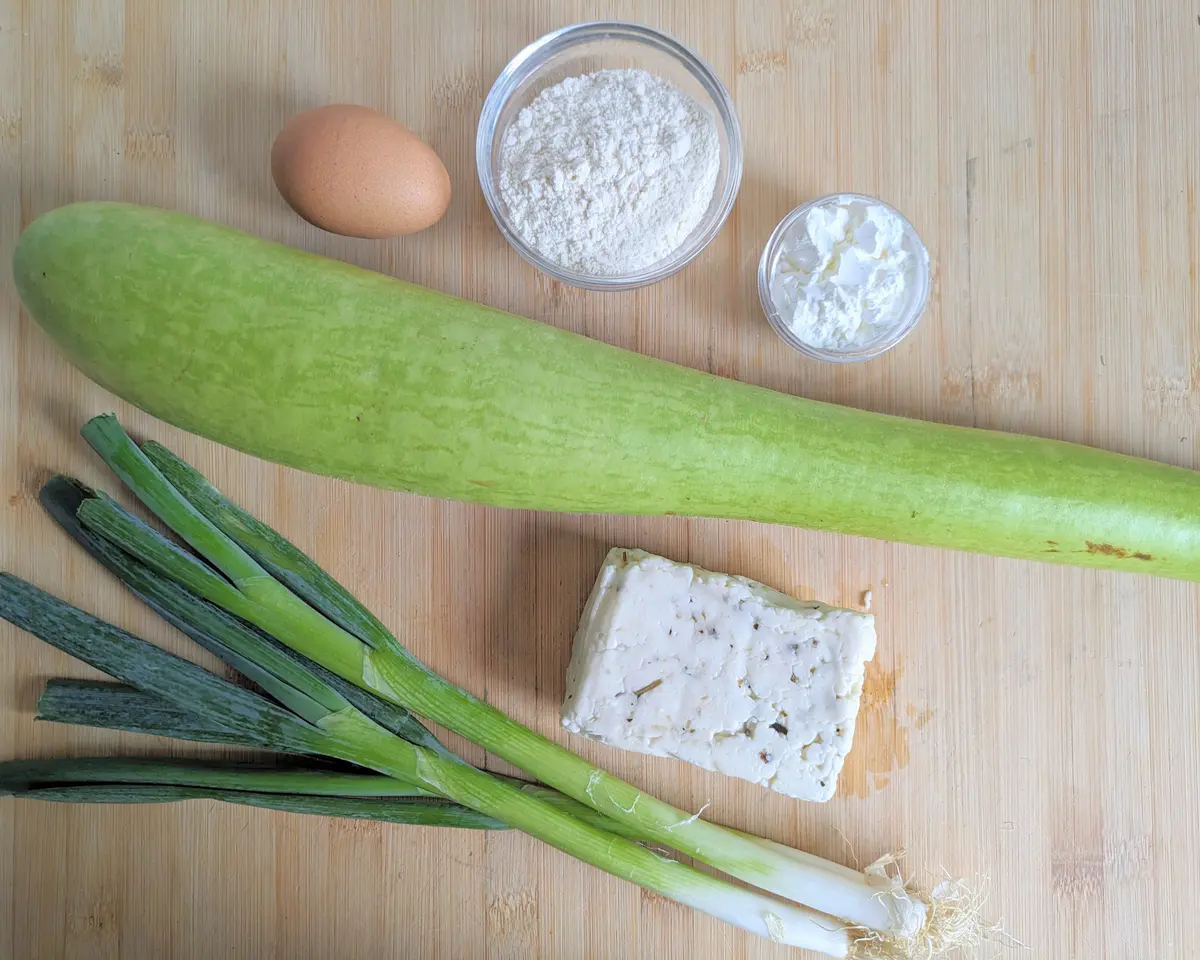
- Tromboncino squash: Start with 400 g, weighed before salting and squeezing. In my batch, this left 250 g of squeezed squash. Treat that as a useful guide rather than an exact target, as moisture content varies.
- Halloumi: Use 200 g, drained, patted dry and coarsely grated. This distributes the cheese throughout the fritters while leaving small pieces that brown against the pan.
- Spring onions: Three finely sliced spring onions add a mild onion flavour. Use both the white and green parts.
- Egg: One large egg binds the grated ingredients.
- Plain flour and cornflour: Use 45 g plain flour and 15 g cornflour. The flour provides structure, while the cornflour helps keep the exterior crisp. For US readers, these are all-purpose flour and cornstarch.
- Fresh herbs: Two tablespoons of chopped dill or parsley complement the squash and cheese.
- Lemon zest: One teaspoon adds lemon flavour without introducing extra liquid.
- Salt and black pepper: Use ¼ teaspoon fine salt to draw moisture from the squash, then black pepper in the mixture. Halloumi supplies much of the seasoning.
- Olive oil: Use enough to coat the frying pan generously, adding more between batches as needed.
How to make tromboncino squash and halloumi fritters
Grate and salt the squash
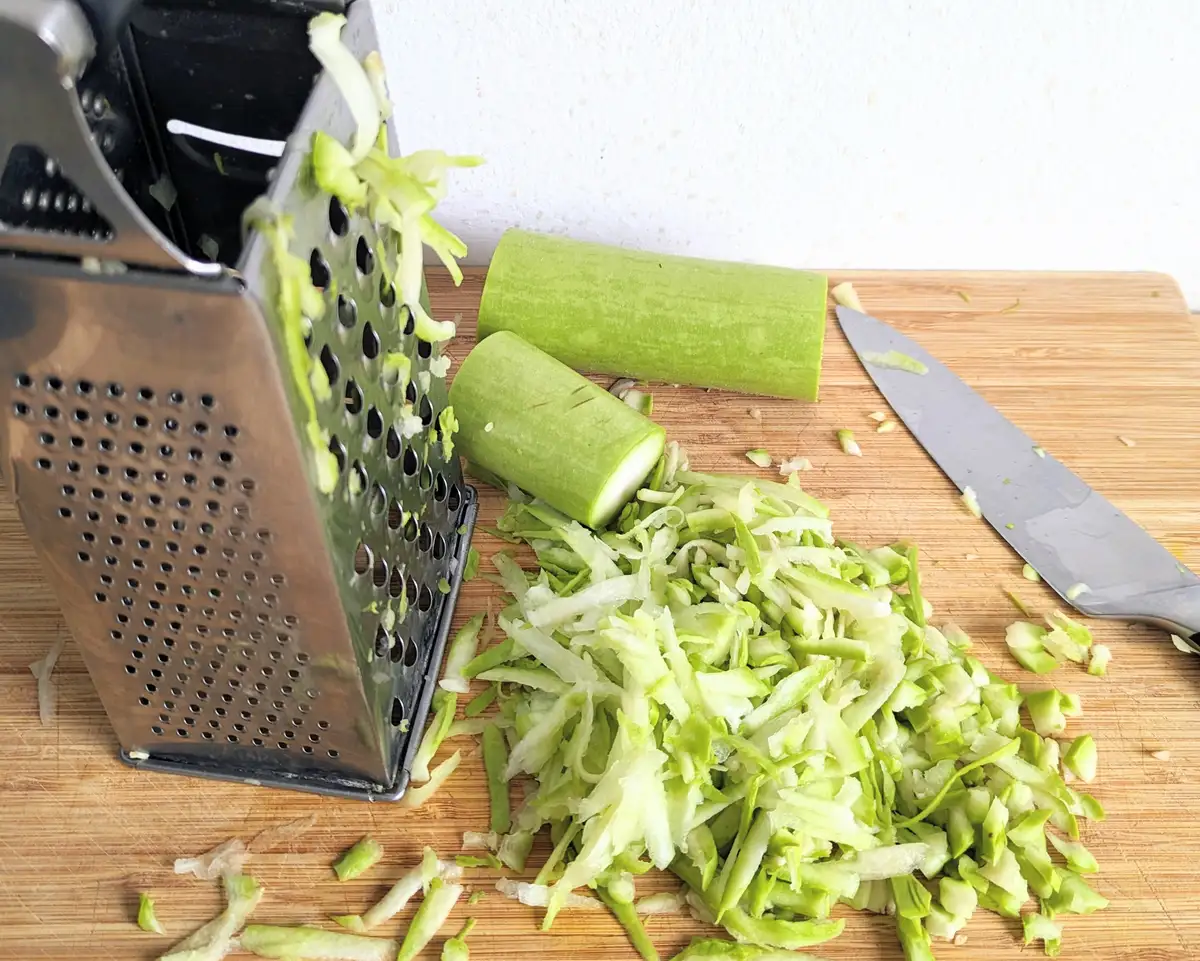
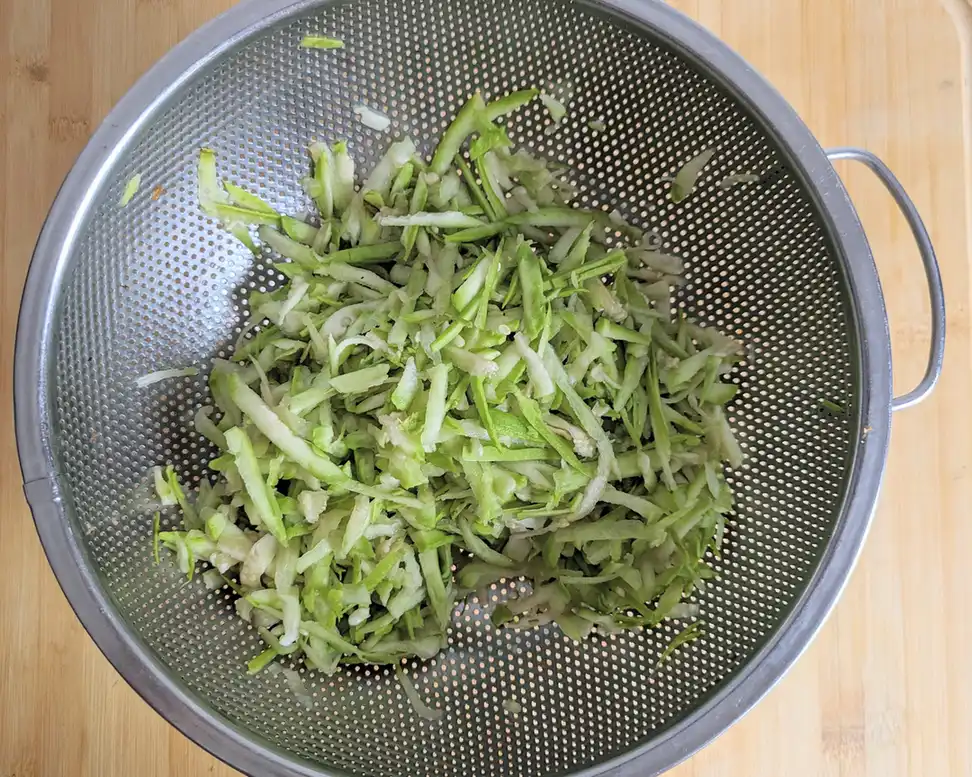
Coarsely grate the tromboncino squash, removing any developed seeds or spongy flesh first. Place in a colander, sprinkle with the salt and toss to distribute it evenly. Leave for 10 minutes to draw out excess moisture.
Prepare the remaining ingredients
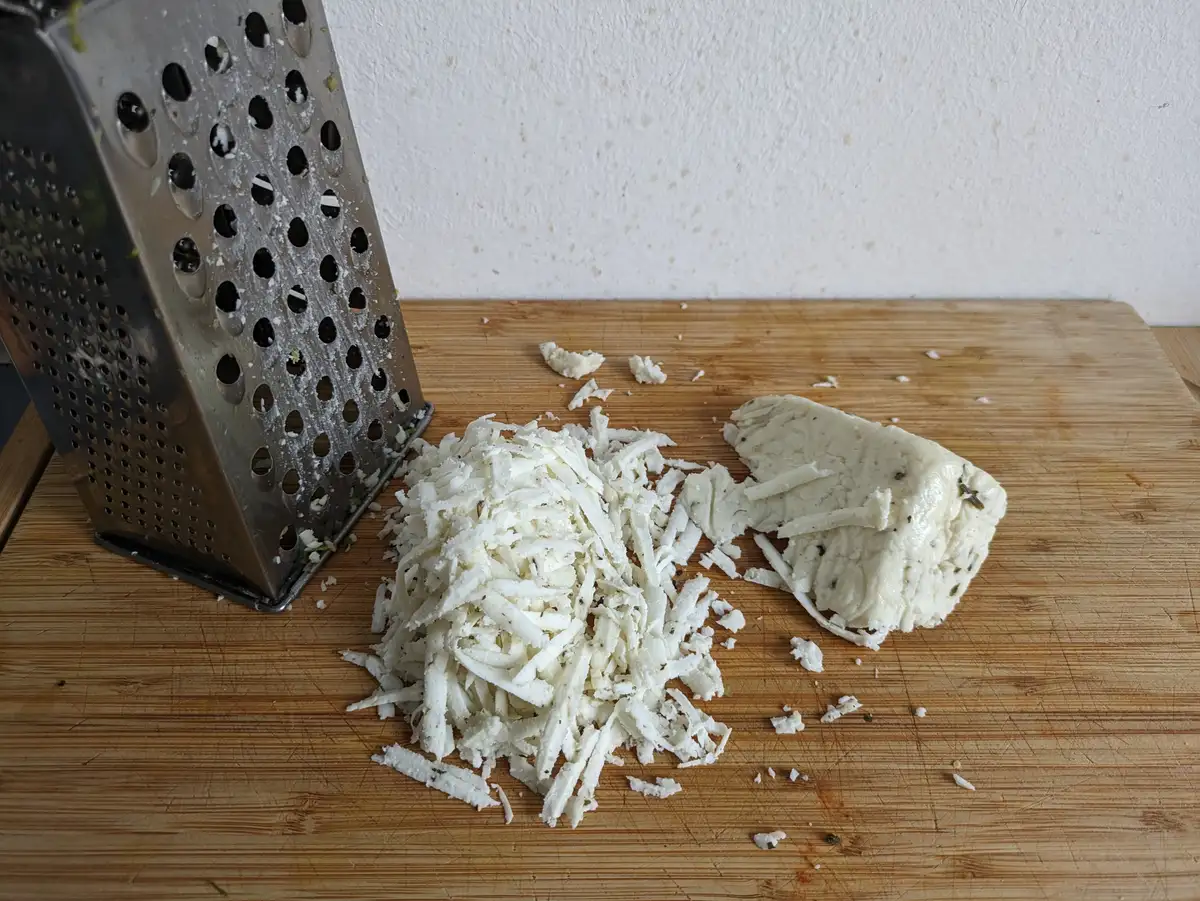
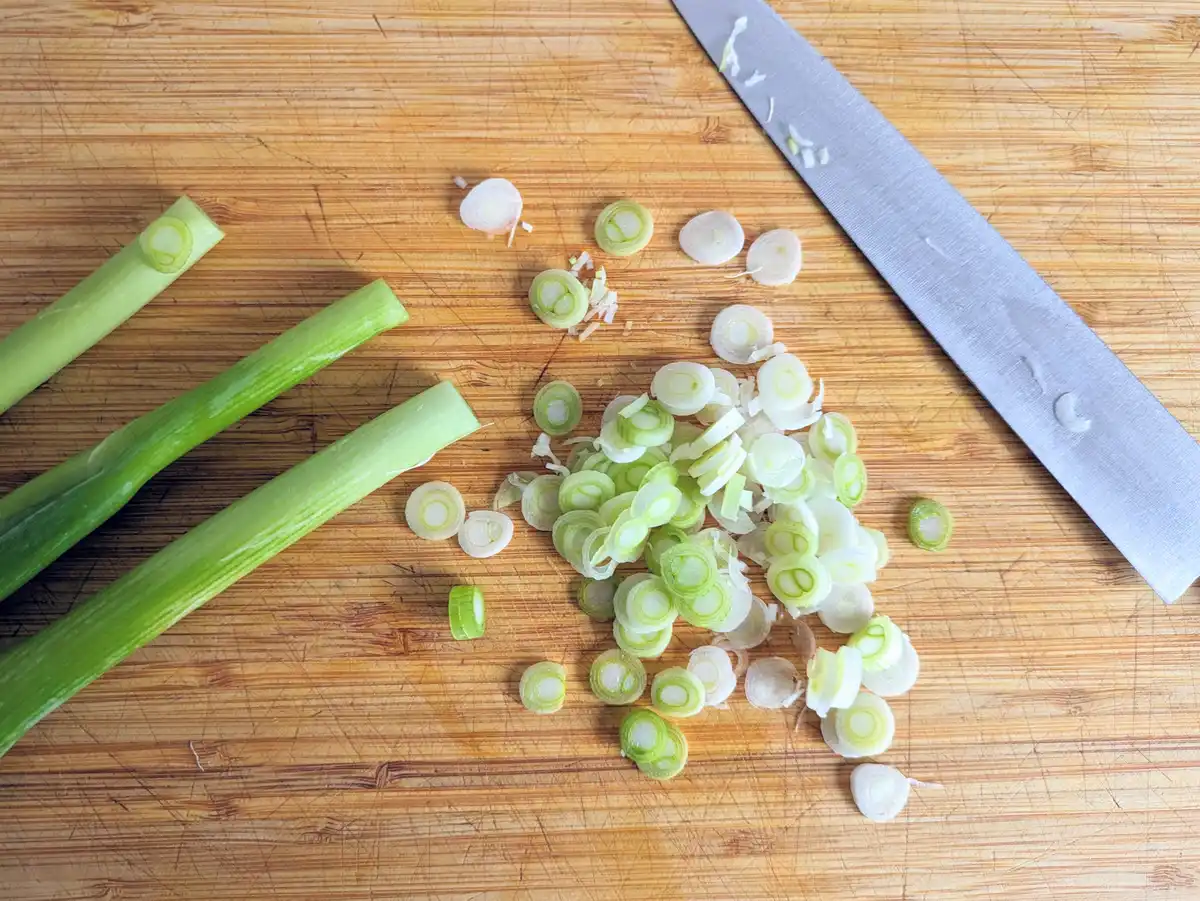
While the squash rests, coarsely grate the halloumi, finely slice the spring onions and chop the dill or parsley. Finely grate the lemon zest, beat the egg and measure out the plain flour and cornflour.
Squeeze out the liquid
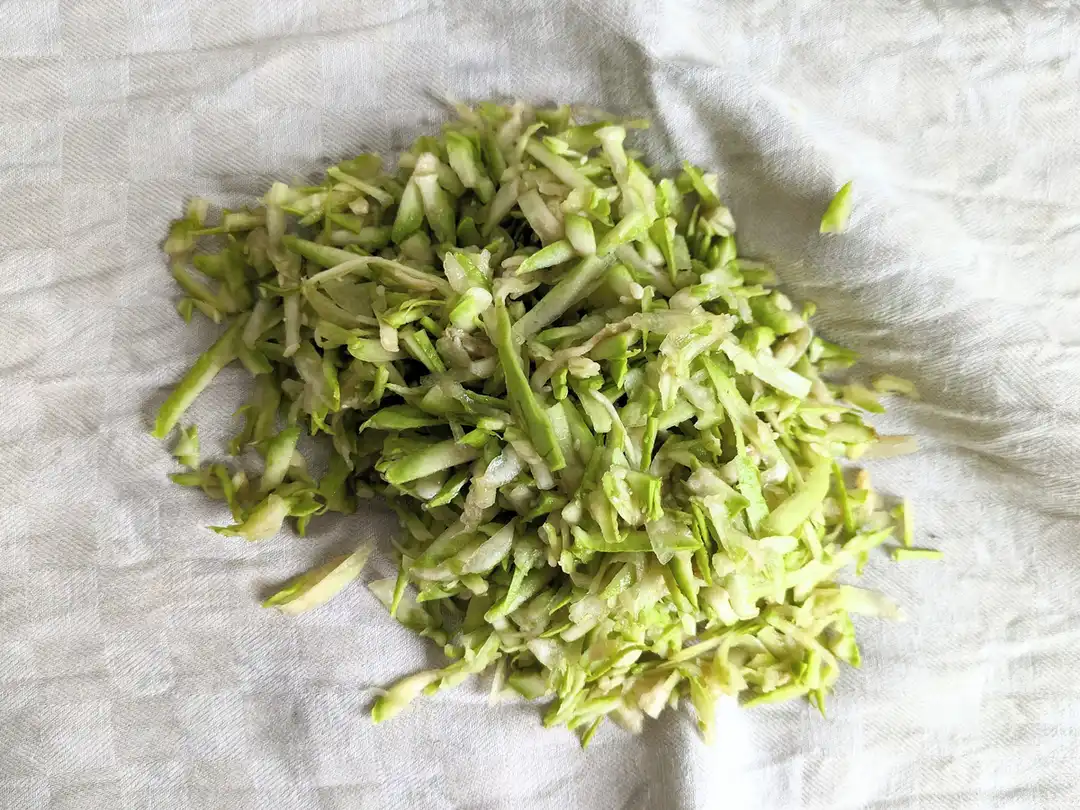
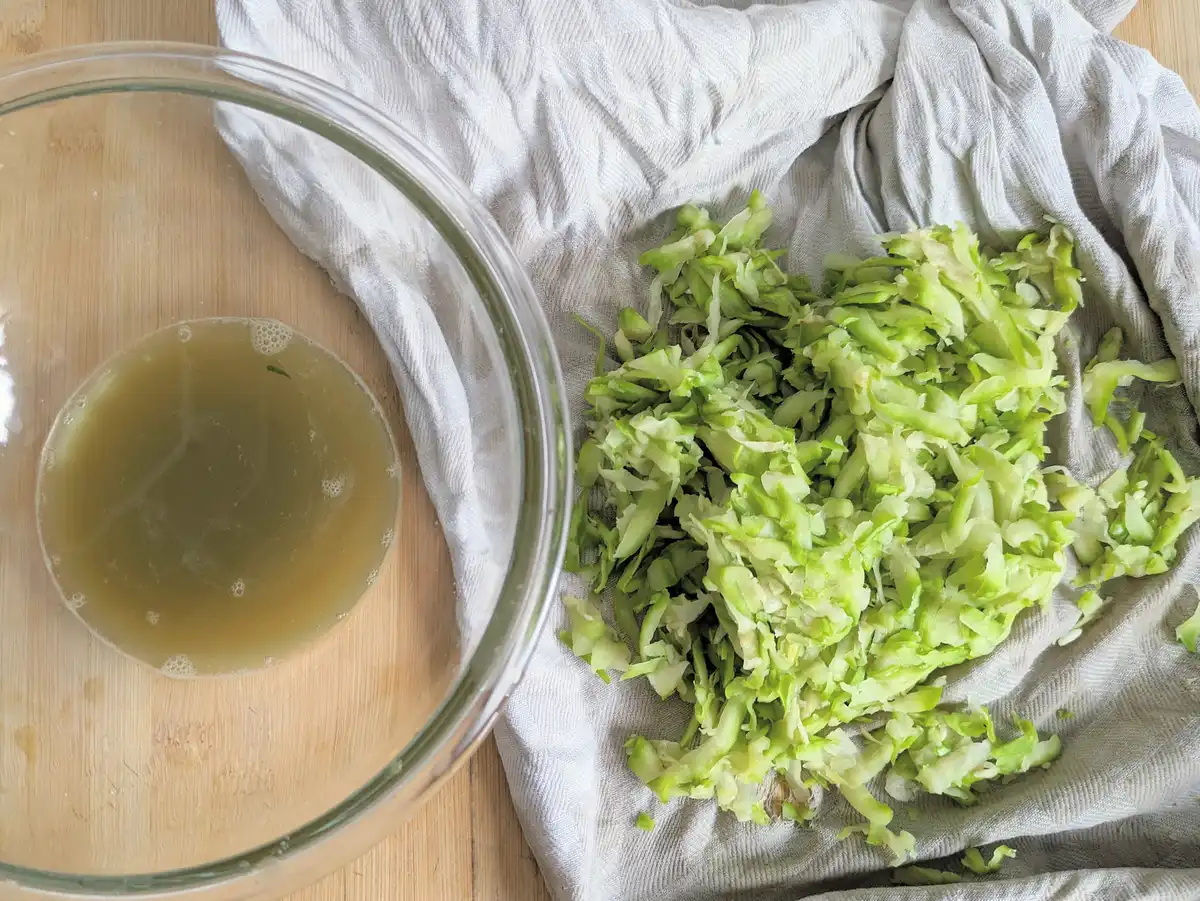
Transfer the salted squash to a clean tea towel. Gather the edges and squeeze firmly over the sink, repeating until very little liquid comes out. The squash should feel damp but compact, without dripping.
My 400 g of grated tromboncino weighed 250 g after squeezing. Use this as a guide rather than an exact target, as the moisture content will vary.
Mix the fritter batter
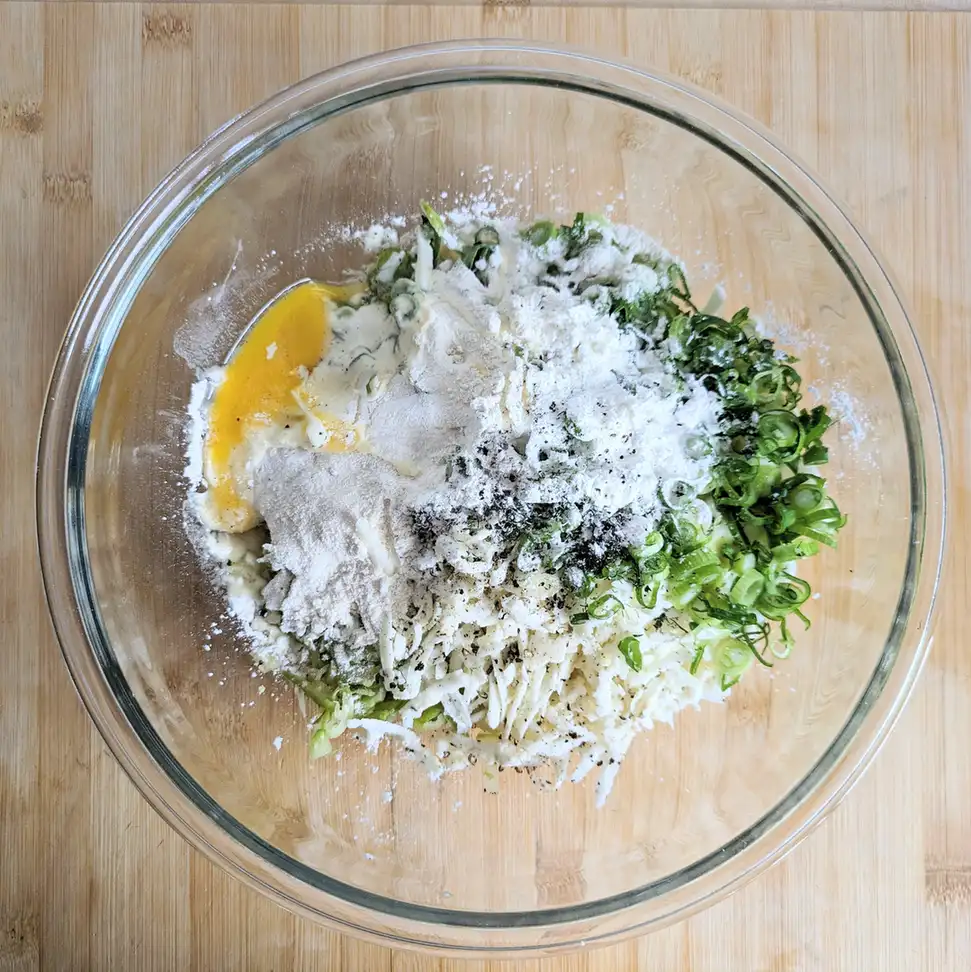
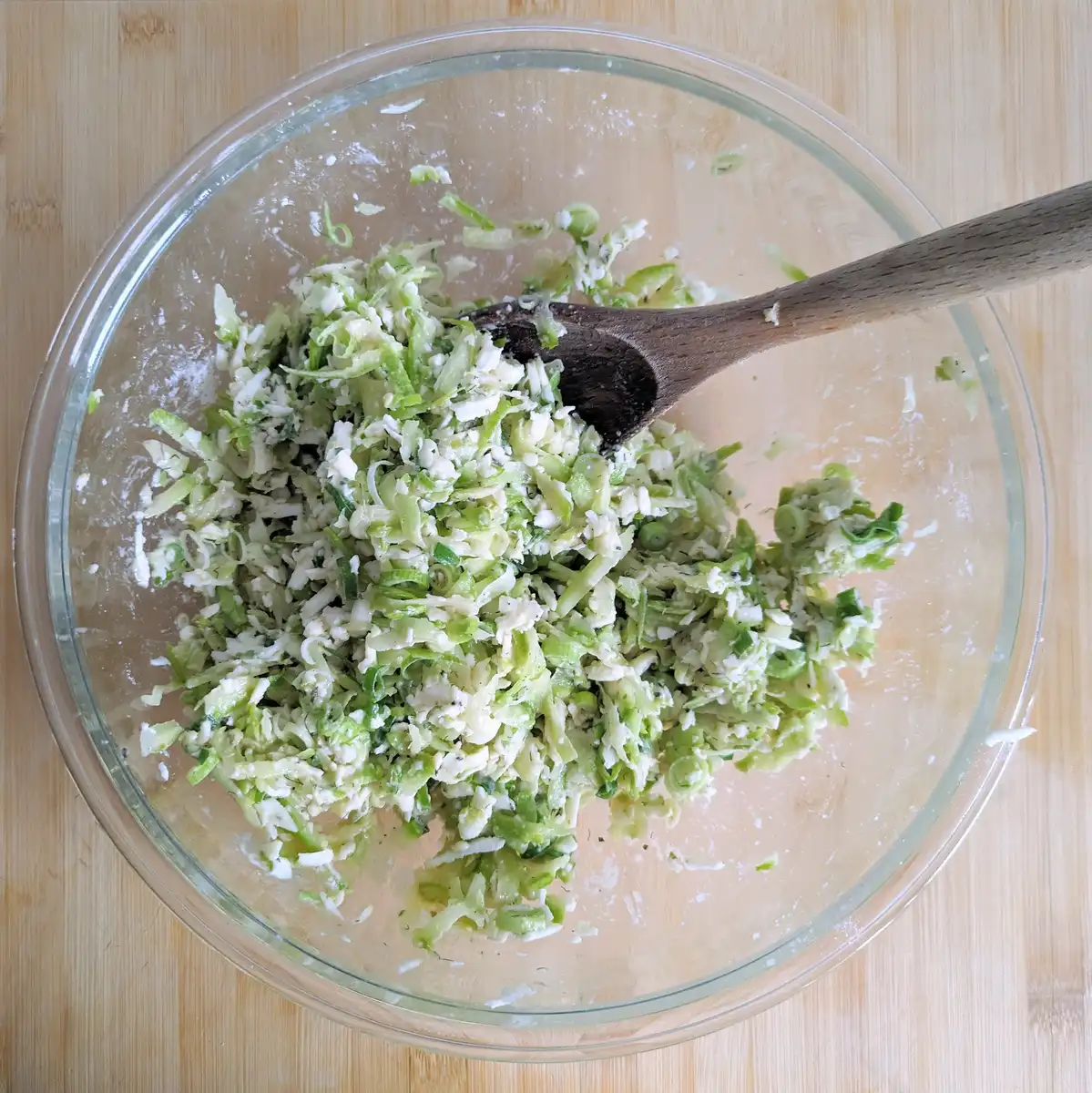
Place the squeezed squash in a bowl with the grated halloumi, spring onions, herbs, lemon zest and black pepper.
Stir in the beaten egg, then fold in the plain flour and cornflour until evenly combined. The mixture should hold together in a rough mound, with visible strands of squash and cheese.
If it seems loose, give the flour a couple of minutes to absorb moisture before making adjustments. Avoid adding flour simply to make the mixture stiff, as too much can make the centre heavy.
Shape and fry
Heat a generous coating of olive oil in a wide frying pan over medium heat. A little mixture should sizzle steadily when added.
Spoon portions into the pan and flatten to approximately 1 cm thick. Leave space between them so you can turn them easily, and keep the edges slightly irregular.
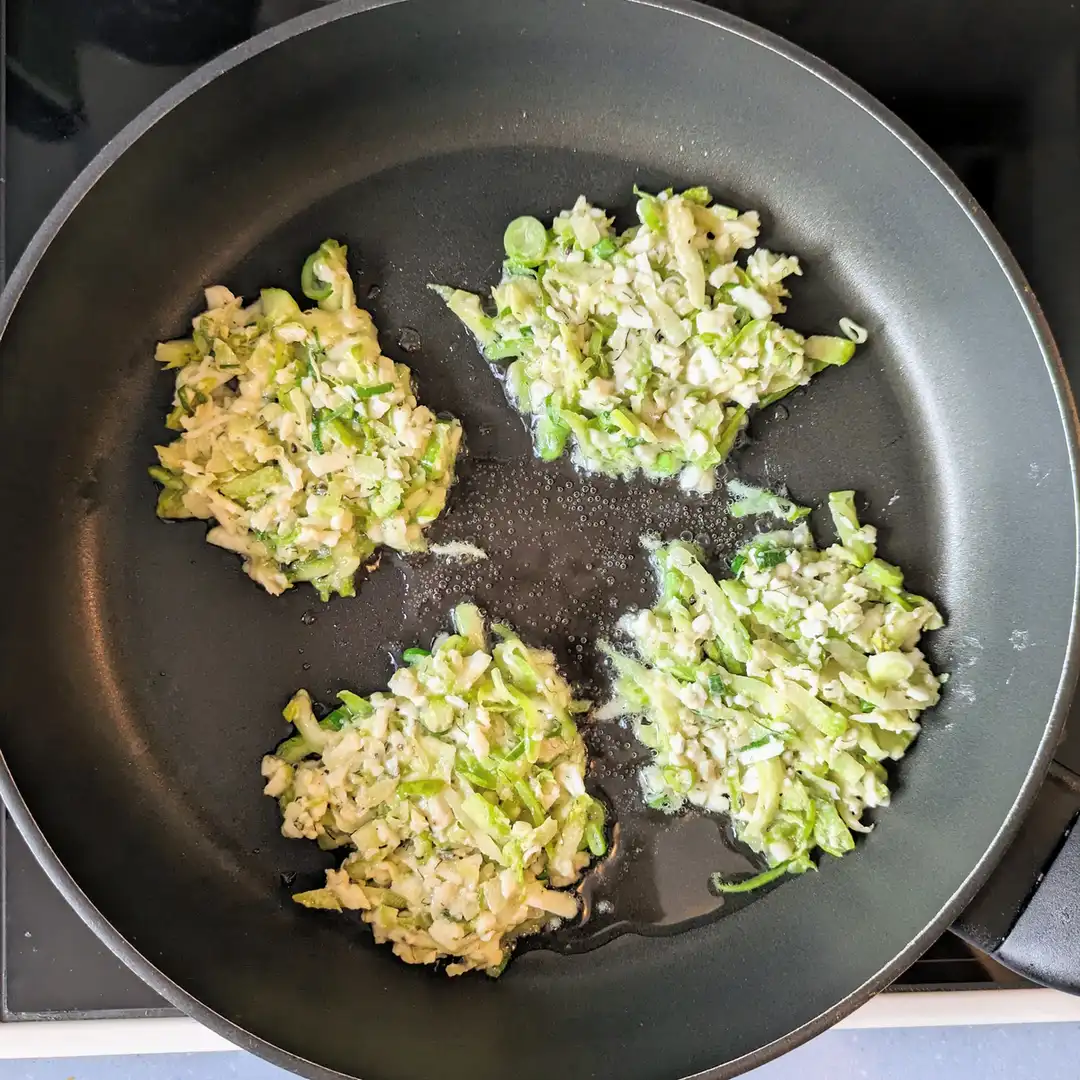
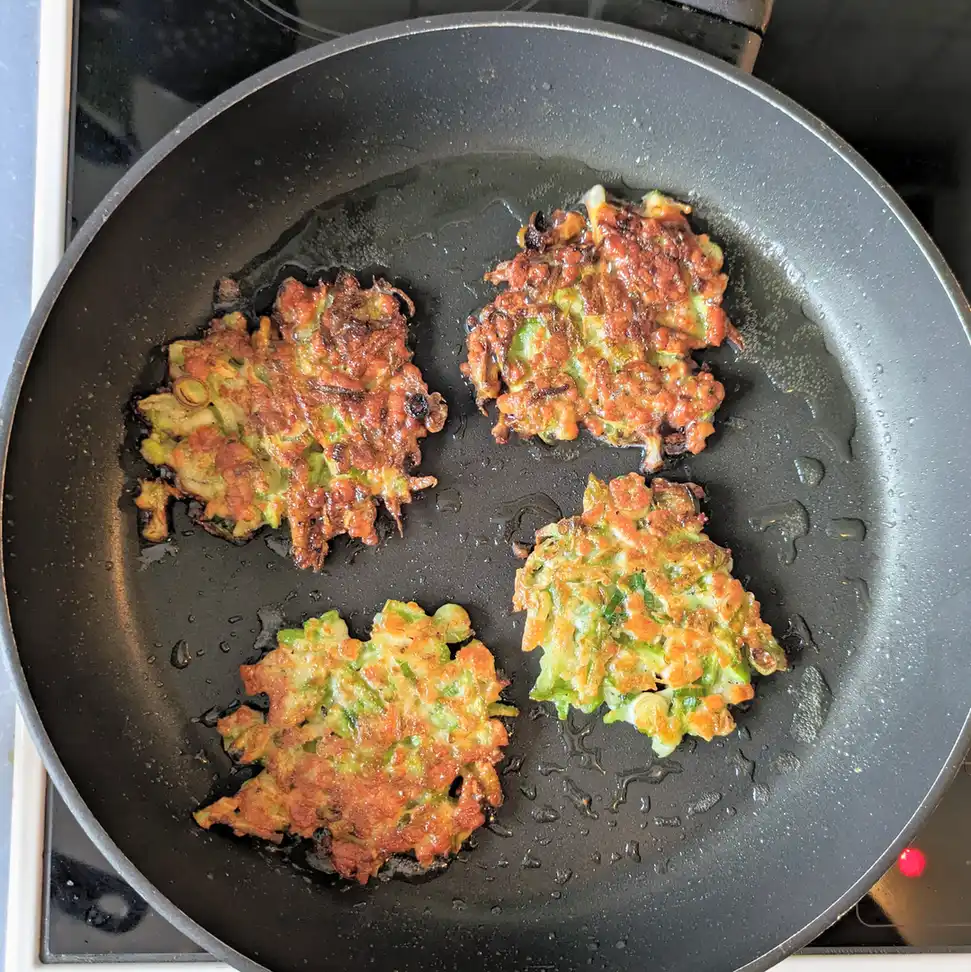
Start by frying one tester, allowing approximately 3–4 minutes per side. Turn once the underside is golden and firm enough to lift. Reduce the heat if it browns before the centre has cooked through.
Cut the tester open to check the centre before frying the rest. It should be tender and set, without wet batter.
Drain and serve
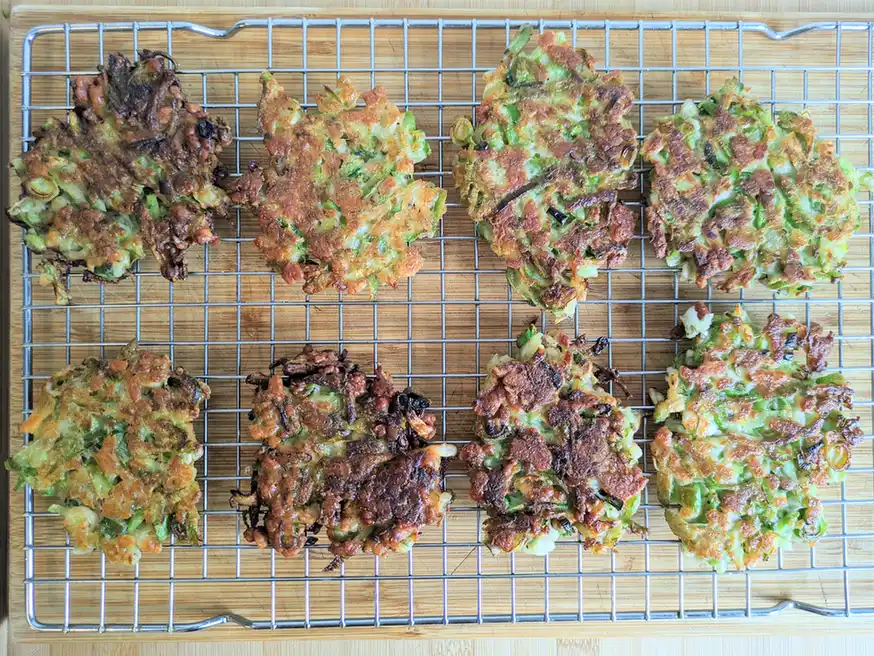
Transfer the cooked fritters to a wire rack while you finish the remaining batches. Avoid stacking them until serving, as trapped steam softens the crust.
Can I use zucchini instead of tromboncino?
Yes—replace the tromboncino with the same starting weight of courgette or zucchini: 400 g before squeezing. Keep the other ingredients the same to begin with.
Salt and squeeze it using the method above. Courgettes can release more water, so the final squeezed weight may differ from the 250 g recorded for my tromboncino batch.
Judge the mixture by its consistency rather than trying to force an exact drained weight. If it remains too loose after mixing and resting briefly, add another 5–10 g plain flour and fry a tester.
This substitution lets you make courgette and halloumi fritters even when tromboncino isn’t available.
Tips for crisp edges and a tender centre
- Squeeze thoroughly. Excess squash liquid makes the mixture harder to fry and encourages you to add more flour than necessary.
- Keep the fritters thin. Around 1 cm gives the centre time to cook while the outside browns.
- Use a steady sizzle. A cool pan encourages pale, oily fritters; excessive heat browns the cheese before the middle is ready.
- Leave space in the pan. Fry in batches rather than crowding them together.
- Turn once the underside has set. Moving them too early can break them apart.
- Serve promptly. The edges are at their crispest straight after cooking.
Storage and reheating
Fridge: Cool the fritters on a wire rack and refrigerate in an airtight container within two hours. Eat within two days.
Oven: Arrange in a single layer and reheat at 180°C fan (200°C conventional) for approximately 8–12 minutes, until steaming hot throughout.
Frying pan: Reheat over medium-low heat with a little oil, turning occasionally until the centre is steaming hot and the edges have crisped.
Microwave: Suitable for reheating, but the fritters will be softer. Heat until steaming hot throughout.
Only reheat once.
Tromboncino Squash Fritters Frequently Asked Questions
No, young green tromboncino has tender skin that can be left on. Remove any developed seeds or spongy flesh from the rounded end before grating. This recipe uses young squash rather than mature, hard-skinned tromboncino.
The most likely causes are excess moisture in the squash, fritters that are too thick or a pan that isn’t hot enough. Squeeze the grated squash thoroughly, flatten each fritter to about 1 cm thick and fry with a steady sizzle. Avoid stacking them while they’re waiting to be served, as trapped steam softens the edges.
They may need more binding, or you may be turning them before the underside has set. Let the first side form a golden crust before sliding a spatula underneath. If the mixture is too loose to hold together, stir in another 5–10 g of plain flour and fry a tester.
Yes, replace the 15 g cornflour with another 15 g plain flour, giving 60 g plain flour in total. The fritters should still bind, although the exterior may be a little less crisp. Cornflour is labelled cornstarch in the US.
More Tromboncino recipes to try
Tromboncino Squash and Halloumi Fritters
Ingredients
- 400 g young green tromboncino squash weighed before salting and squeezing
- ¼ tsp fine salt
- 200 g vegetarian halloumi drained and patted dry
- 3 spring onions
- 2 tbsp fresh dill or parsley
- 1 tsp finely grated lemon zest
- 1 large egg
- 45 g plain flour
- 15 g cornflour labelled cornstarch in the US
- Freshly ground black pepper to taste
- 2–3 tbsp olive oil for frying
Instructions
- Grate and salt the squash. Remove any developed seeds or spongy flesh, leaving tender skin on. Coarsely grate the squash and place in a colander. Toss with the salt and leave for 10 minutes.
- While the squash rests, coarsely grate the halloumi, finely slice the spring onions and chop the herbs. Grate the lemon zest, beat the egg and measure out both flours.
- Transfer the squash to a clean tea towel. Gather the edges and squeeze firmly over the sink, repeating until very little liquid comes out. The squash should be damp but compact.
- Combine the squeezed squash, halloumi, spring onions, herbs, lemon zest and black pepper in a bowl. Stir in the beaten egg, then fold in the plain flour and cornflour until evenly combined. The mixture should hold together in a rough mound.
- Add enough olive oil to coat the base of a wide frying pan generously and heat over medium heat. A little mixture should sizzle steadily when added.
- Spoon portions into the pan and flatten to approximately 7–8 cm wide and 1 cm thick. Fry in batches without crowding, allowing approximately 3–4 minutes per side, until golden and cooked through. Let the underside set before turning. Reduce the heat if the outside browns too quickly.
- Transfer the cooked fritters to a wire rack while you finish the remaining batches, adding more oil to the pan as needed. Avoid stacking until serving.