Quince Jelly Recipe: Simple, Without Added Pectin
A fragrant quince jelly made with ordinary sugar and no added pectin, with practical setting tips and an optional chilli variation.
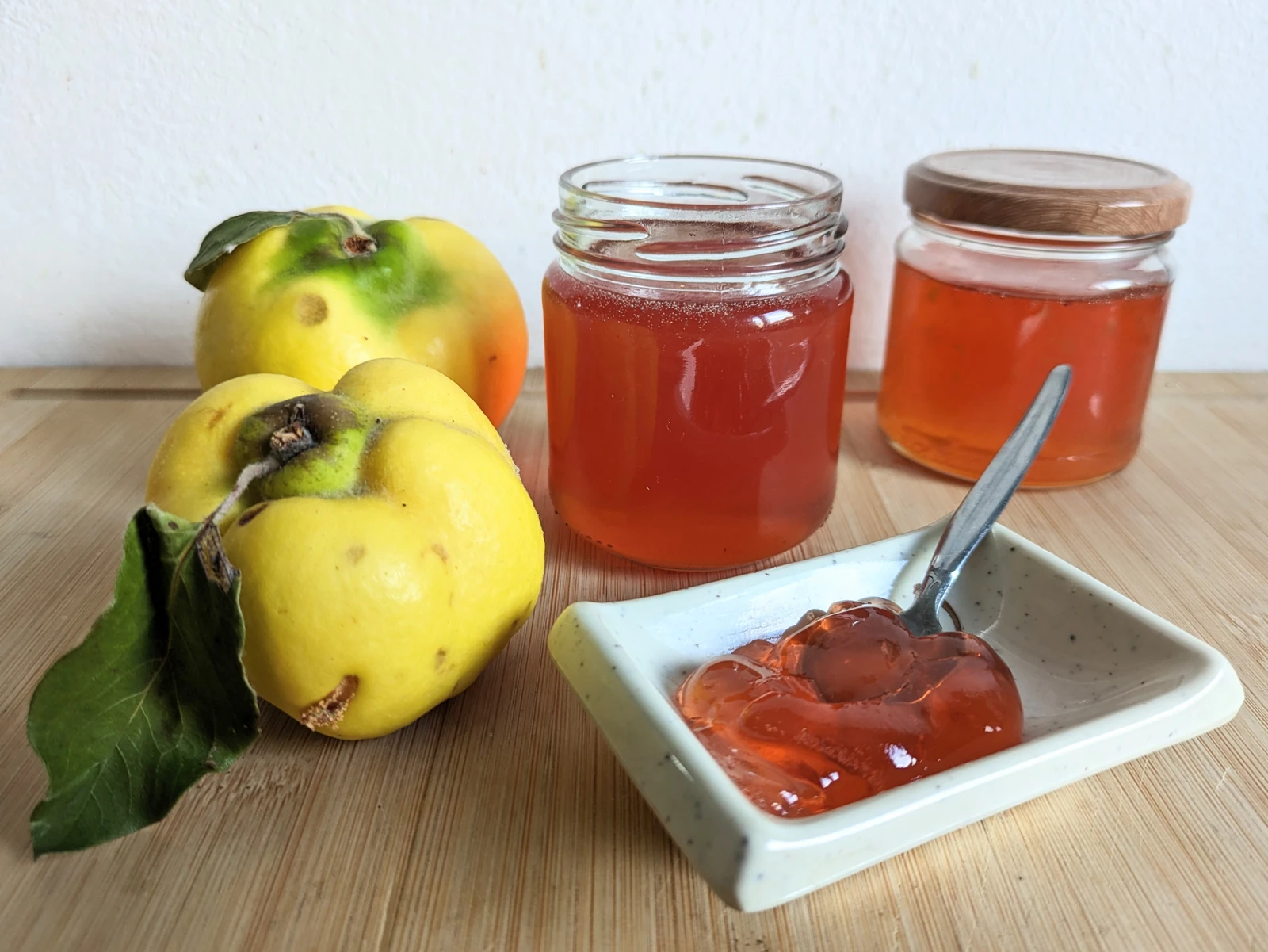
This quince jelly recipe brings out the fruit’s floral fragrance and gently tart flavour, using ordinary granulated sugar and lemon juice without added pectin. It’s a useful way to preserve an autumn quince harvest, making a soft jelly to spread on toast or serve with cheese. For a hotter variation, add finely chopped chillis to the final stage.
I love quince season. The smell of freshly picked quinces is incredible, and they keep so well that I can leave them around for weeks, enjoying their fragrance before cooking them. They’re hard work to chop, but making jelly means I can leave the skins and cores in and let the simmering do most of the work. This time, I split the juice into two batches: one plain and one with a couple of our home-grown chillies. Both set well, and the chilli version had a noticeable heat without overwhelming the quince.
Should I peel and core quinces for jelly?
It depends on whether you want to use the leftover fruit. If you have access to a quince tree, you’ll know how productive they can be, and you will probably never be able to use the entire harvest anyway. If you’re buying quinces, you may want to make the most of them by turning the strained pulp into quince paste.
Quinces are hard to peel and core, so I prefer to leave both the skins and cores in when making jelly. You can still use the cooked pulp afterwards: pass it through a food mill or sieve to remove the skins, seeds and tough core before making the paste.
Quince Jelly Ingredients
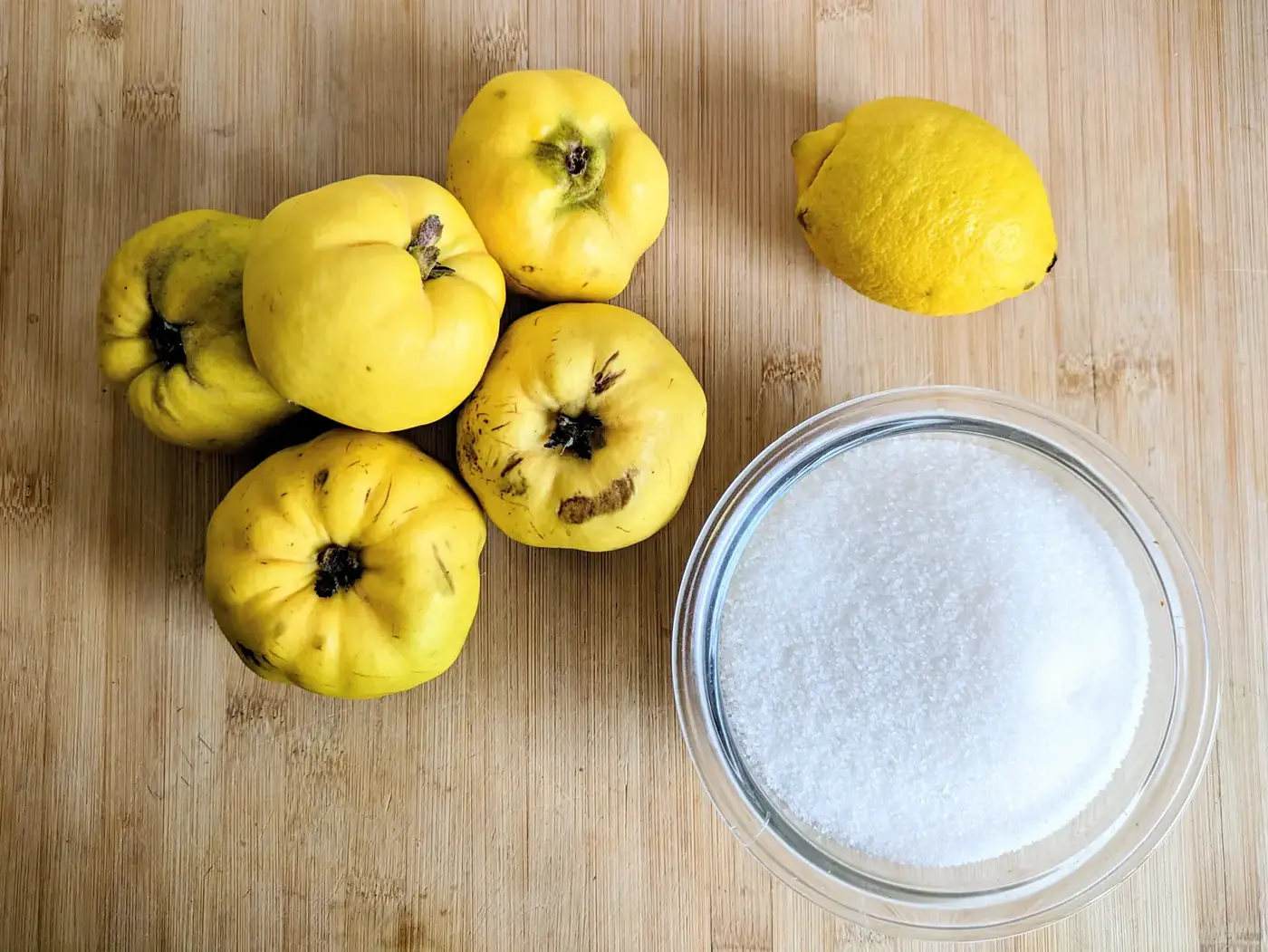
- Quinces: Give the jelly its floral flavour and natural pectin, with the skins and cores retained during cooking to help extract the pectin.
- Granulated sugar: Sweetens the tart quince juice and helps it form a gel; ordinary white sugar is sufficient, with no need for jam sugar containing added pectin.
- Lemon juice: Adds acidity to balance the sweetness and help the natural pectin set.
- Chillies (optional): Add heat to the jelly; I used Lemon Drops because I had them, but you can use another variety and adjust the quantity to its strength.
- Star anise (optional): Adds an anise flavour that I find works well with quince; use it whole and remove before filling the jars.
How to Make Quince Jelly with No Added Pectin
Prepare the quinces
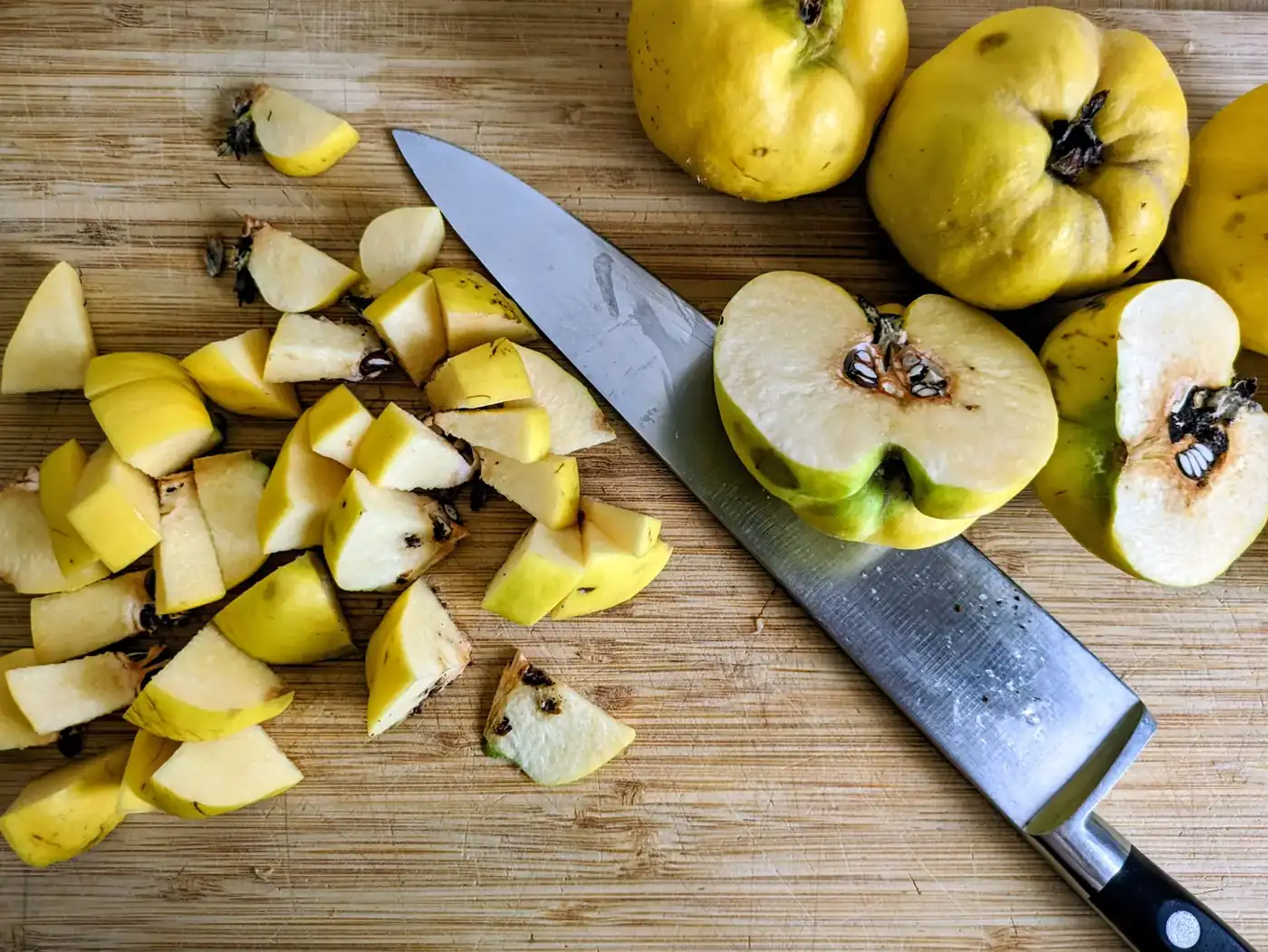
Rub off any fuzz and wash the quinces. Remove stems, blossom ends and damaged parts, then chop into roughly 1–2 cm pieces, leaving the skins and cores in.
Simmer until soft
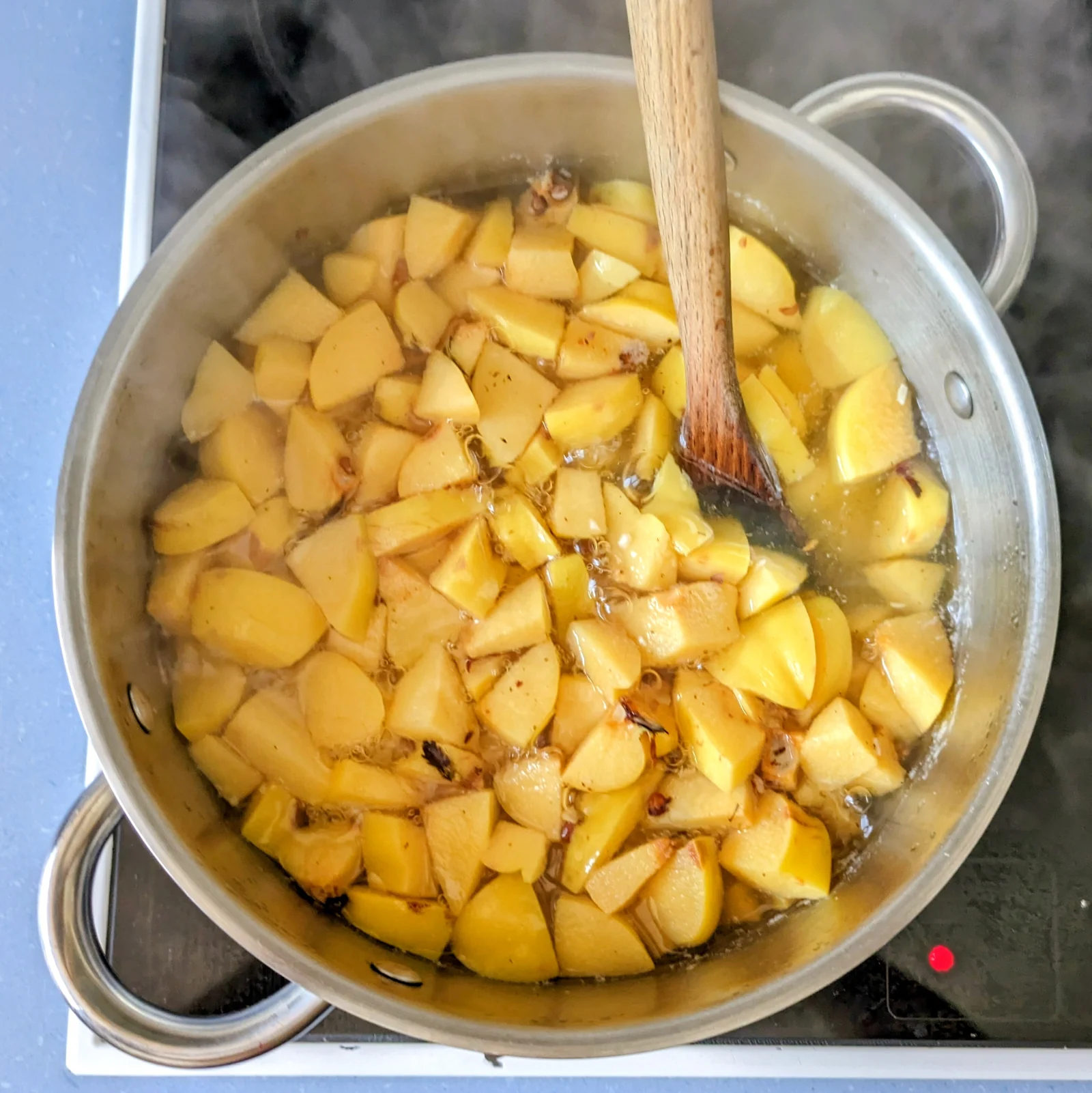
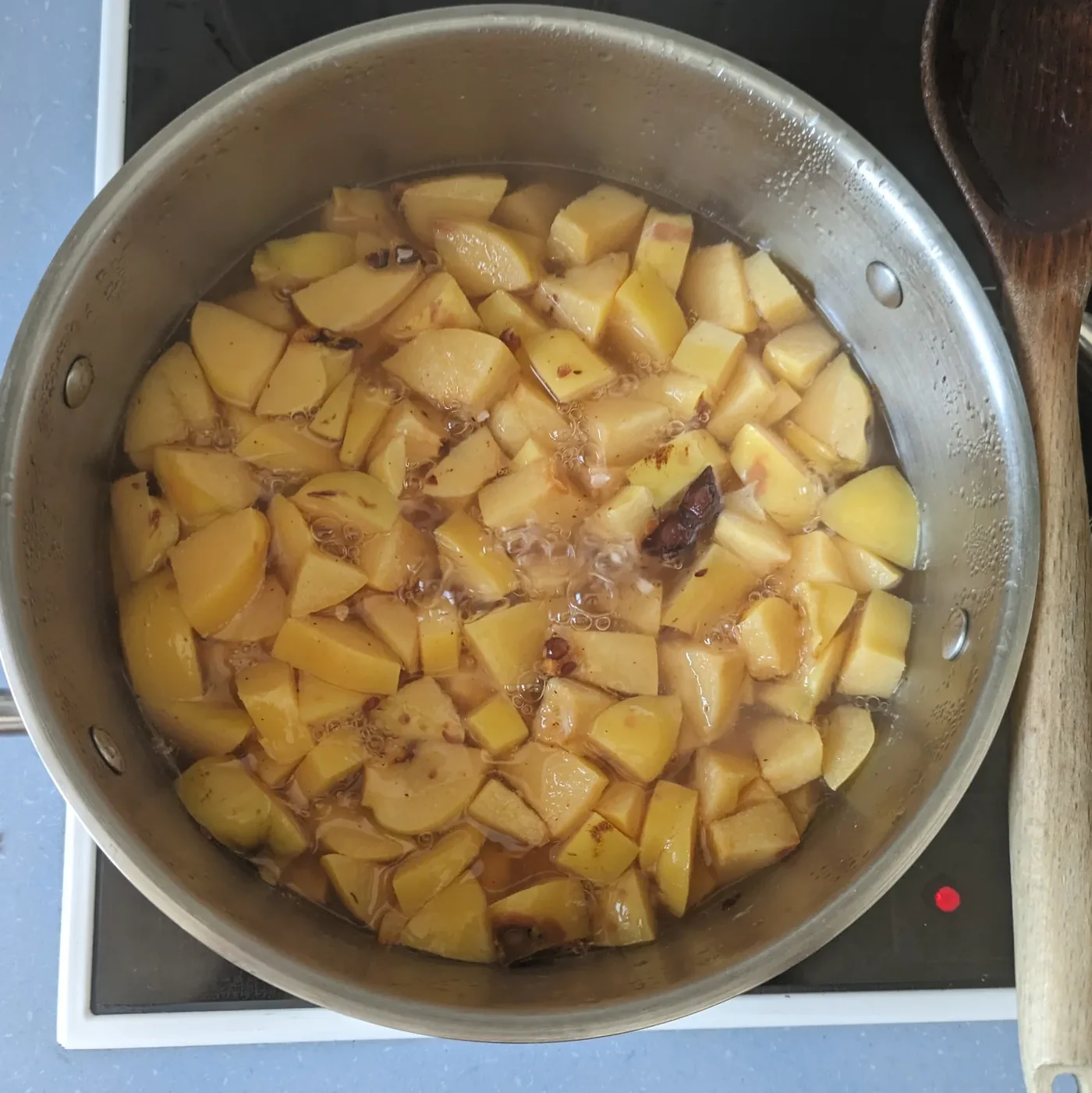
Put the quince and water in a large saucepan. Cover, bring to the boil, then reduce to a gentle simmer, stirring occasionally to prevent sticking. Start checking after 25 minutes; my batch took around 45 minutes. The pieces should crush easily with a spoon, and as they cook the water colour will deepen to an amber or pink.
Strain the juice
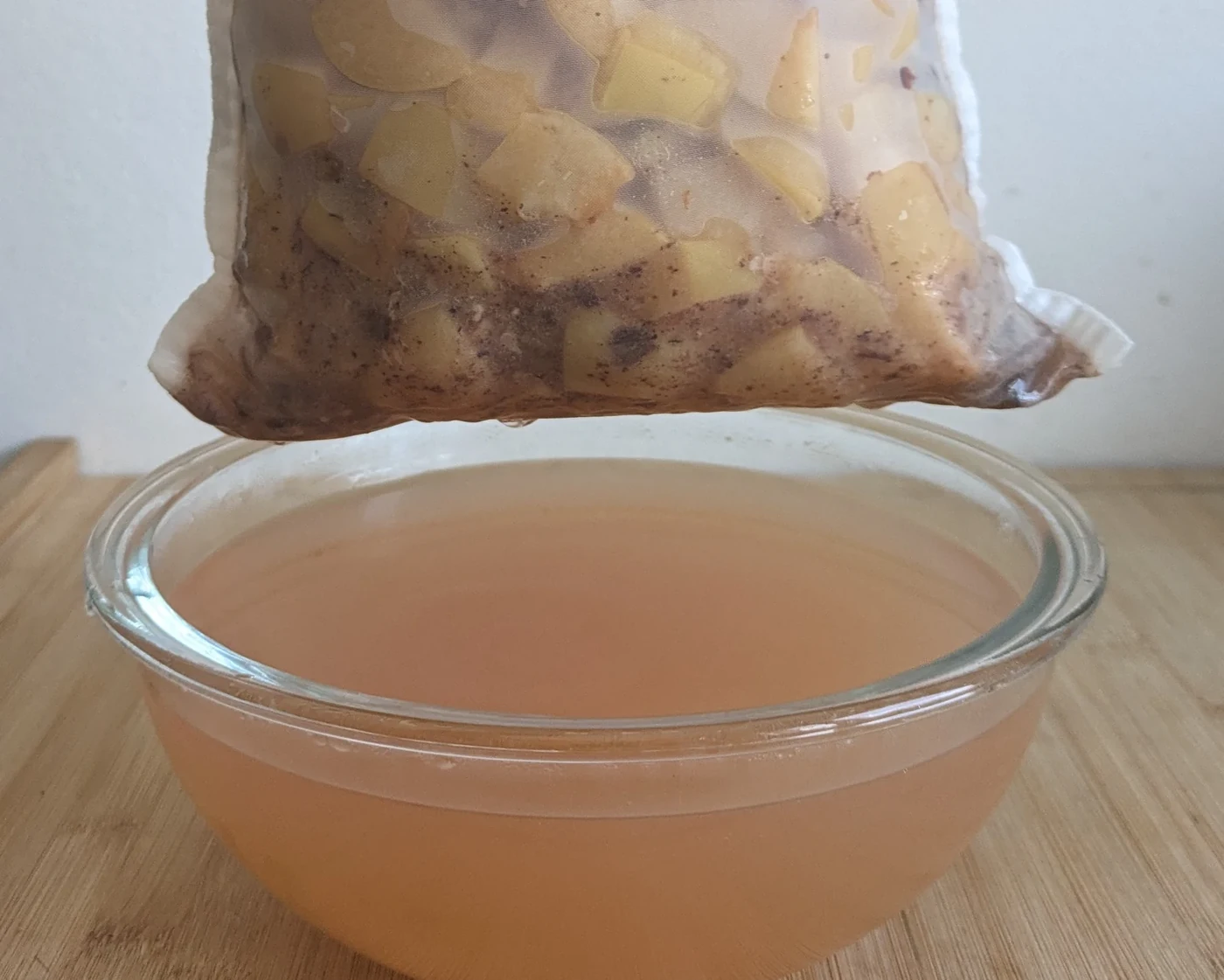
Pour the fruit and cooking liquid into a damp jelly bag or muslin-lined colander over a deep bowl. Let the juice drain naturally, keeping the bag above the collected liquid. Avoid pressing or squeezing if you want a clearer jelly, and allow it to drain until nothing really comes out anymore. Mine took 15 minutes to reach this stage.
Measure and add the sugar
Measure the strained juice and add 675 g granulated sugar and 4½ tablespoons (70 ml) lemon juice per litre of juice.
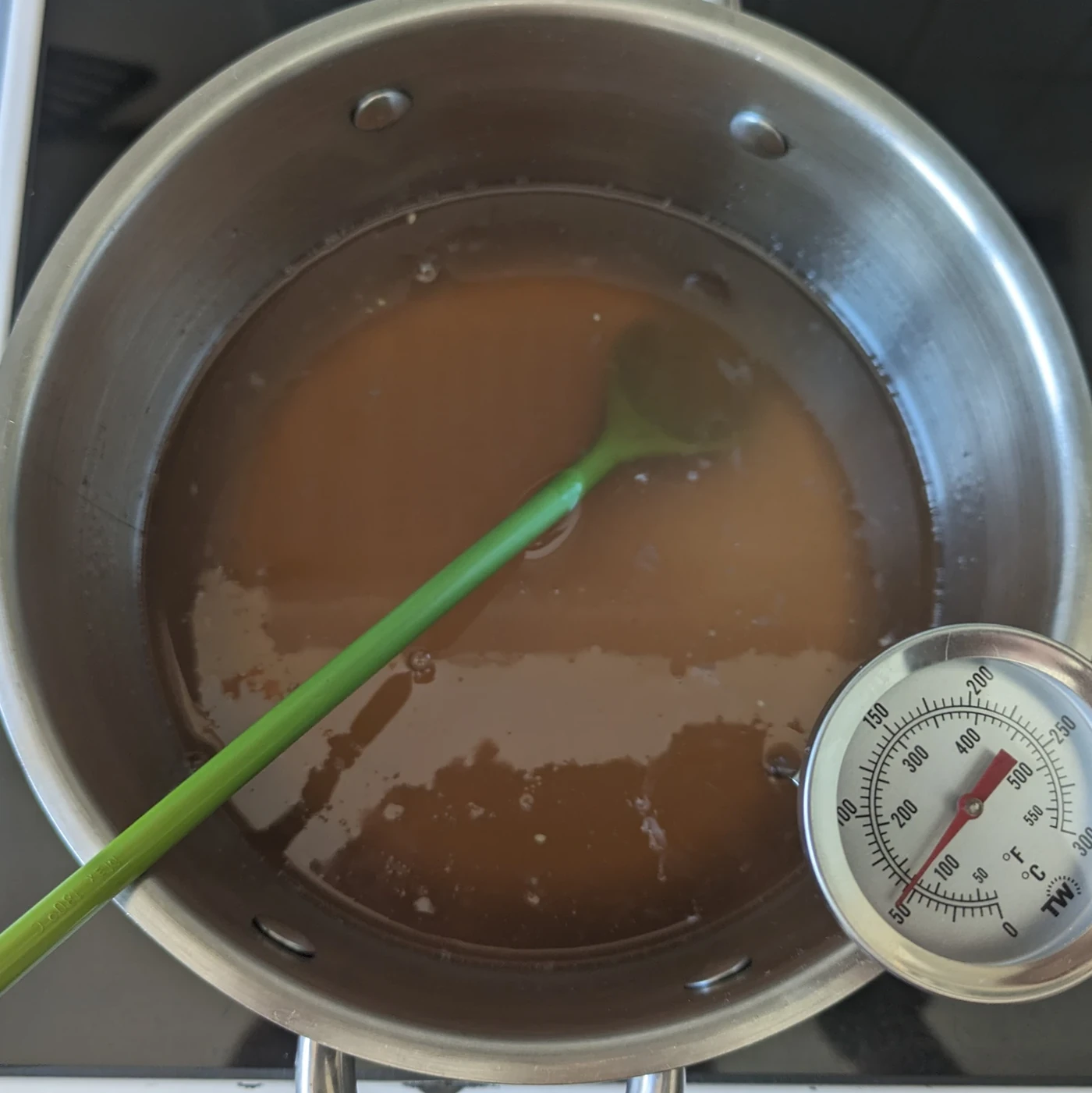
Transfer to a wide saucepan with plenty of room for the mixture to foam. Heat gently, stirring until the sugar has completely dissolved.
Boil and check the set
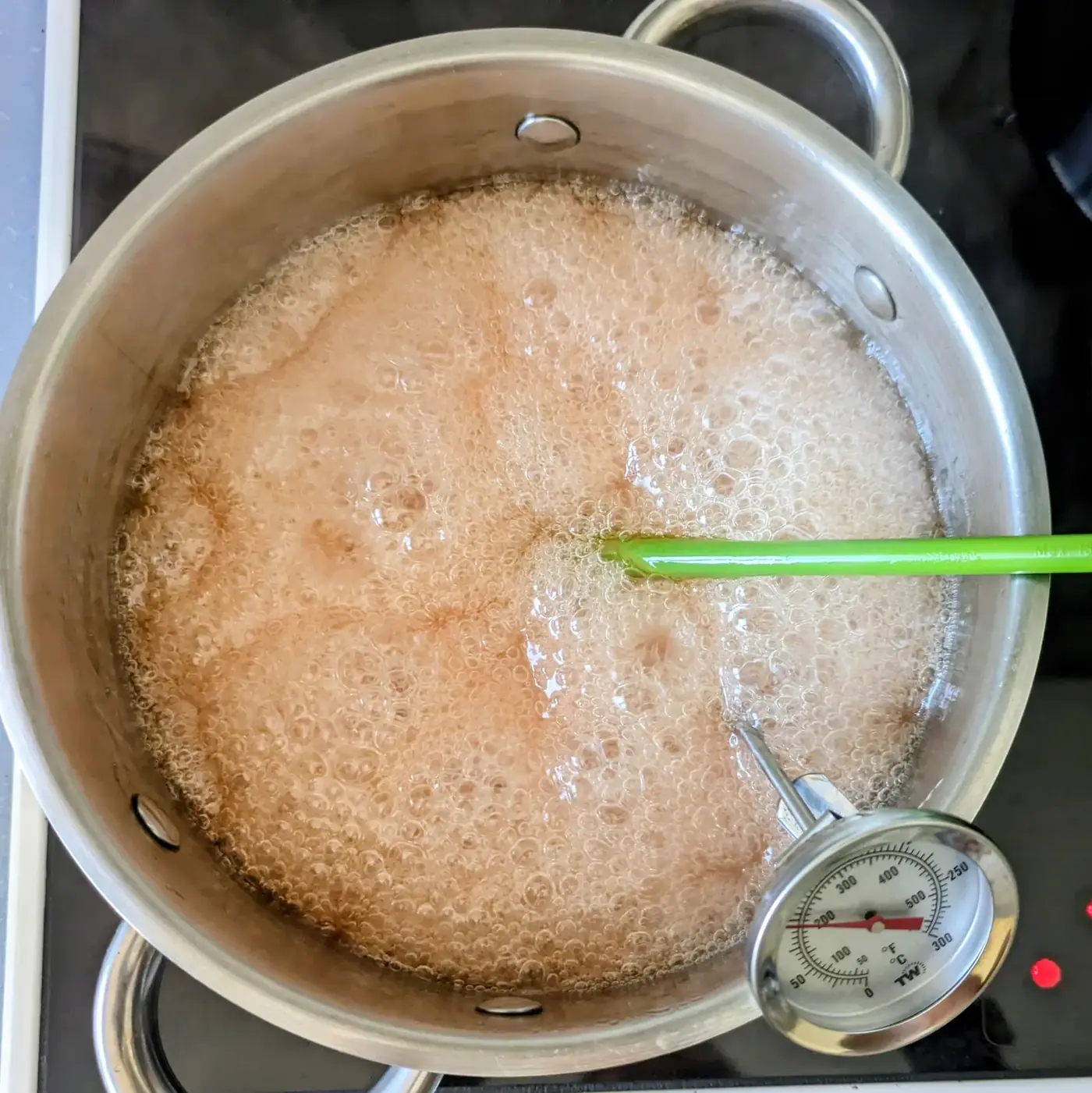
Put two small plates in the freezer, then bring the mixture to a full rolling boil. Begin testing after a few minutes; both my batches took around 10 minutes to reach a gel.
Take the pan off the heat while testing. Spoon a little jelly onto a chilled plate, allow it to cool for 1–2 minutes, then push it gently. Look for a slight wrinkle or a soft mound that holds together rather than flowing back immediately. If it remains runny, boil for another minute and retest.
Fill the jars
Ladle the hot jelly into clean, hot jars suitable for hot filling. The jelly will firm as it cools; allow about 24 hours before judging the final texture.
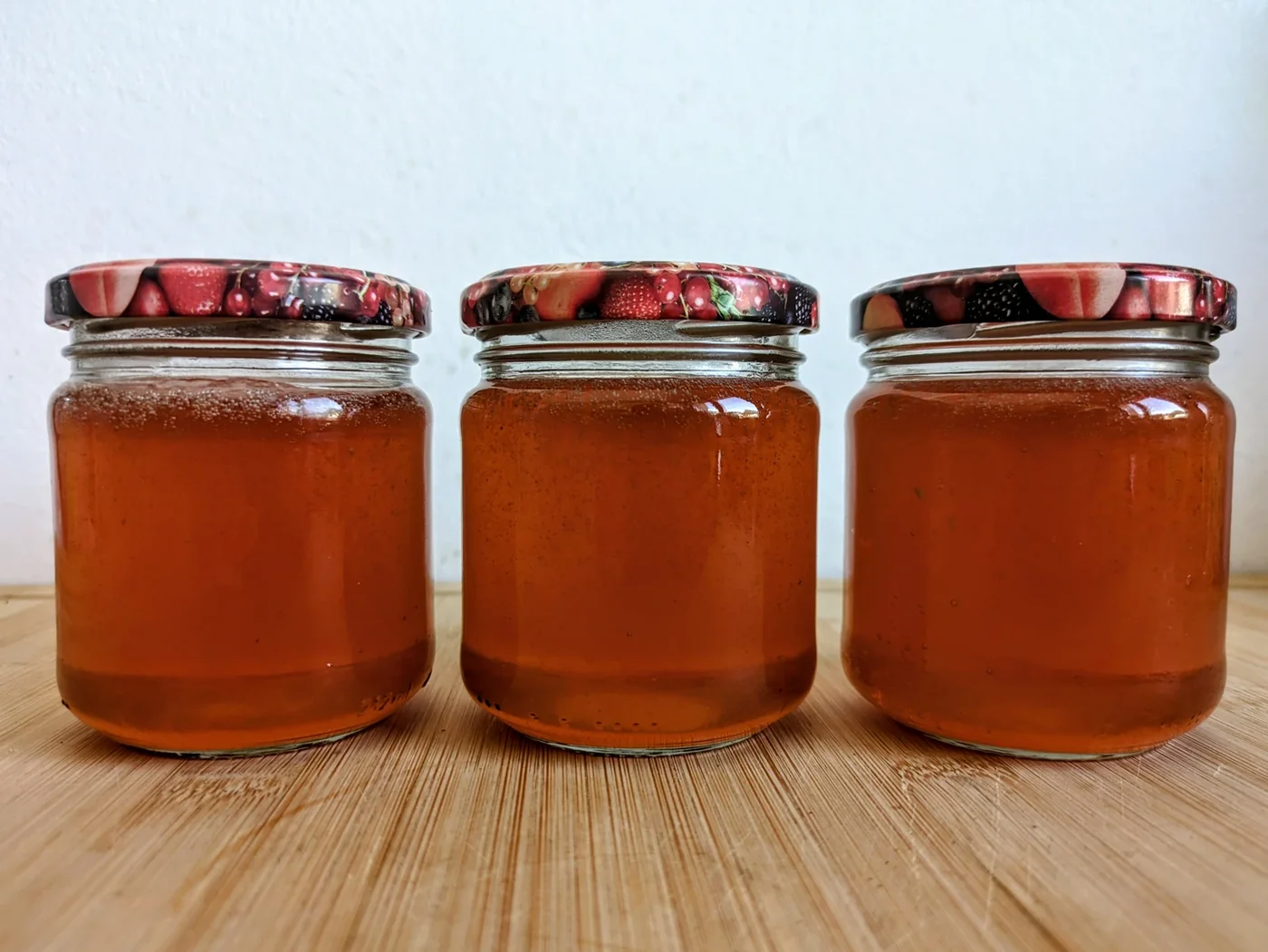
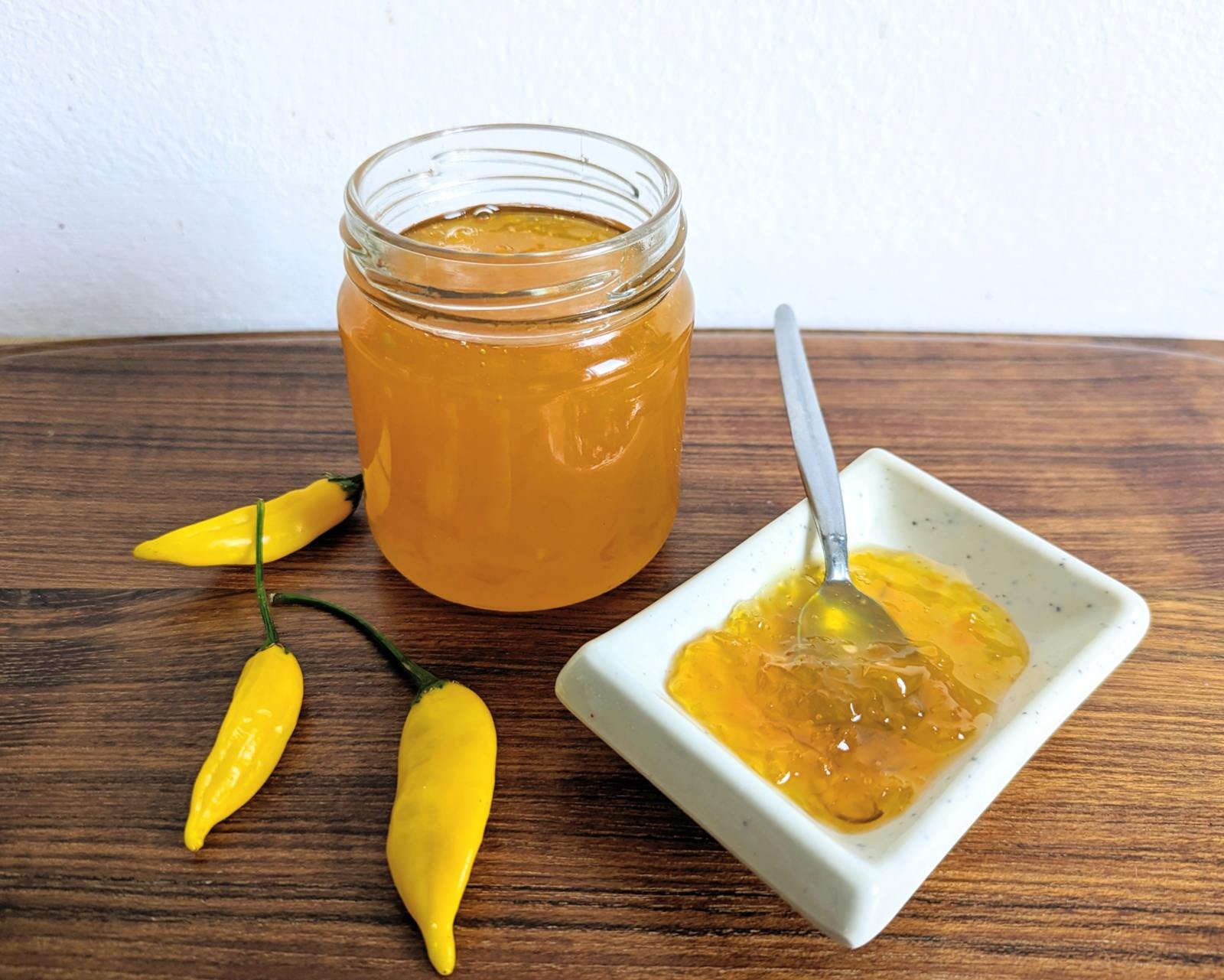
Quince and chilli jelly
To make quince and chilli jelly, add finely chopped fresh chillies when you add the sugar and lemon juice, then cook and test the set in the same way as the plain version.
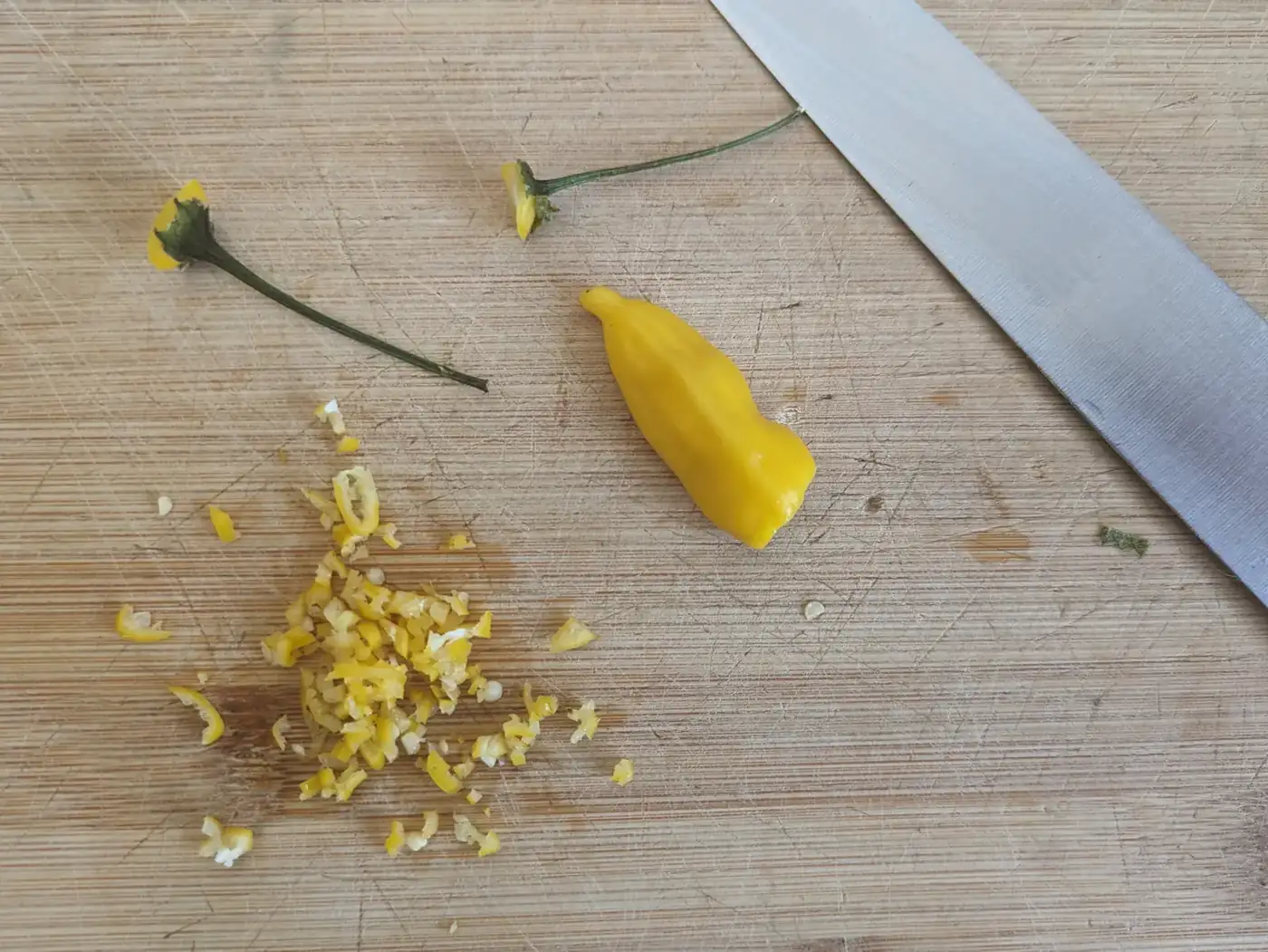
I used two Lemon Drop chillies (roughly the same heat level as a Thai chilli), weighing around 4.5 g, for 350 ml quince juice. The result was hot but not intense. Use whichever chillies you have, adjusting the quantity to their strength and your taste. Check the heat with a cooled sample, and keep this variation refrigerated.
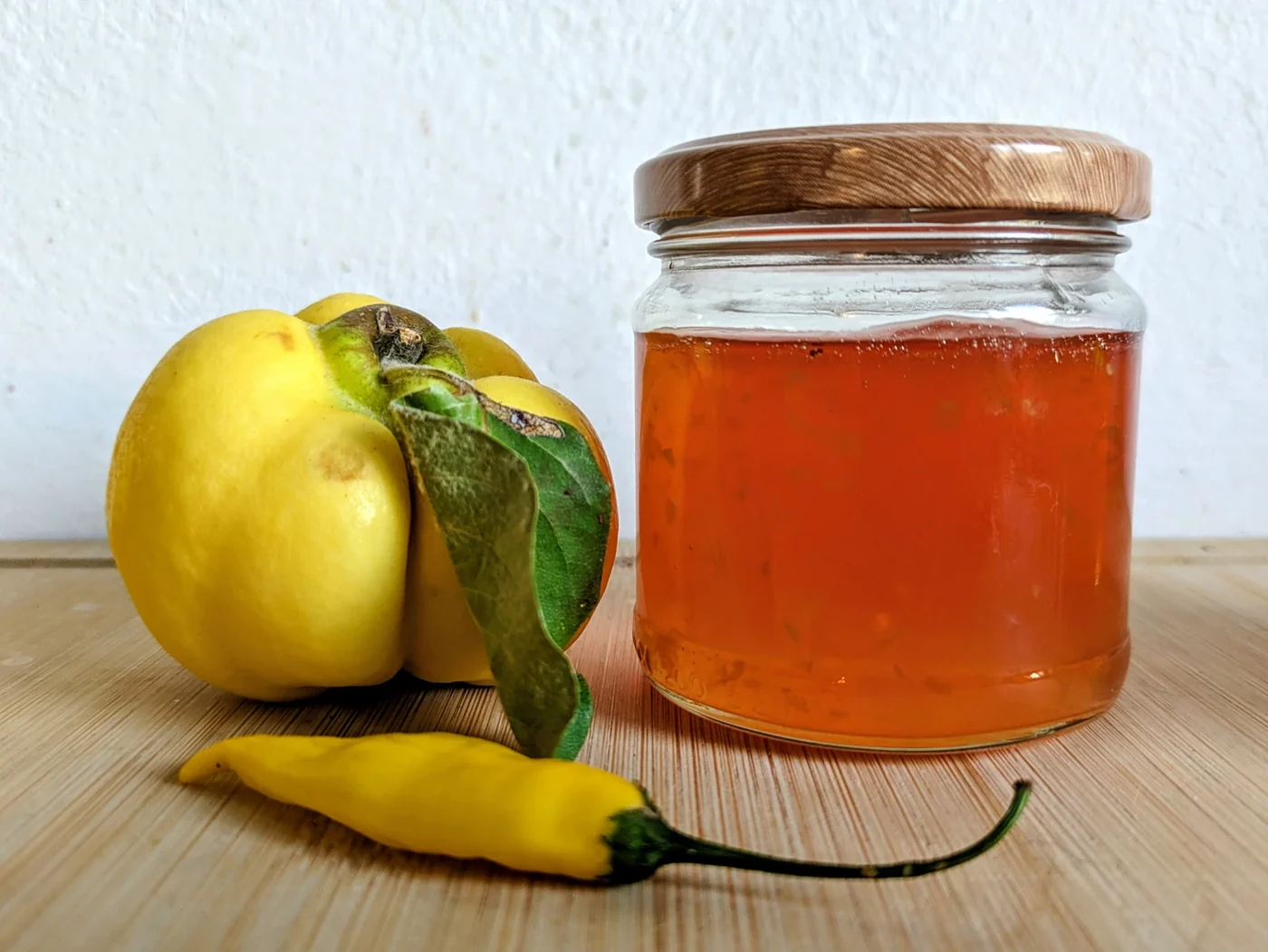
How to Store Quince Jelly
Keep quince jelly in the fridge at 6°C or below and use within approximately three weeks. Filling sterilised jars with hot jelly alone does not make it suitable for pantry storage.
Plain quince jelly prepared and water-bath canned can be stored unopened in a cool, dark place for up to a year. Refrigerate after opening. Keep the fresh-chilli variation refrigerated.
Other Quince Recipes to Try
- Homemade Quince Cordial
- Caramelised Onion and Quince Chutney
- Instant Pot Quince Butter
- Quince Compote with Vanilla and Cardamom
- Apple and Quince Ketchup
- Quince & Pumpkin Stew with Saffron
Quince Jelly Recipe Without Pectin
Ingredients
- 1.5 kg quinces
- 1.5 litres water
- granulated sugar adjusted to the strained juice yield
- lemon juice adjusted to the strained juice yield
Instructions
- Rub off any fuzz and wash thoroughly. Remove stems, blossom ends and damaged parts, then chop into roughly 1–2 cm pieces, retaining the skins and cores.
- Put the quinces and water in a large saucepan. Cover, bring to the boil, then reduce to a gentle simmer. Cook for approximately 45 minutes, stirring occasionally, until the pieces crush easily with a spoon.
- Pour the fruit and cooking liquid into a damp jelly bag or muslin-lined colander over a deep bowl. Let it drain naturally until the dripping has slowed substantially. Do not press or squeeze.
- Expect approximately 1 litre juice, although the yield will vary. For this quantity, add 710 g sugar and 75 ml lemon juice. For other yields, use approximately 675 g sugar and 70 ml lemon juice per litre of juice.
- Transfer the juice, sugar and lemon juice to a wide, deep saucepan with plenty of room for bubbling. Heat gently, stirring until the sugar has completely dissolved. Put two small plates in the freezer.
- Bring to a full rolling boil. Begin checking after 5 minutes; approximately 10 minutes may be sufficient, but use the setting test rather than time alone.
- Remove the pan from the heat. Spoon a little jelly onto a chilled plate and cool for 1–2 minutes, then push it gently. It should wrinkle slightly or form a soft mound that holds together rather than flowing back immediately. If still runny, boil for another minute and retest.
- Skim off surface foam and ladle the hot jelly into hot, sterilised jars.
Notes
- Juice yield: Measure the strained juice before adding sugar and lemon juice; the amount extracted depends on the fruit and draining method.
- Colour: The jelly may be golden, amber or pink. Stop at setting point rather than extending cooking to deepen the colour.
- Storage: Refrigerate at 6°C or below and use within approximately three weeks. When prepared and water-bath canned, plain quince jelly can be stored unopened in a cool, dark place for up to a year.
Quince Jelly No Added Pectin FAQs
Yes, ordinary white granulated sugar works well because quinces contain natural pectin. Jam sugar contains added pectin and isn’t needed for this recipe.
It may need more cooking, or the juice may contain less pectin than expected. Allow the finished jelly about 24 hours to set before deciding it needs correcting; if it remains runny, follow reliable jelly-remaking guidance rather than repeatedly boiling it.
Fine fruit particles can pass through the cloth, especially if you press or squeeze the bag. For a clearer finish, use a damp, tightly woven jelly bag and let the juice drain naturally.
The colour varies with the fruit and cooking conditions, so your jelly may be golden or amber rather than pink. Stop when it reaches its setting point instead of continuing to boil for a darker colour.
Yes, you can cook and strain the quinces before making the jelly. Cool the juice promptly and refrigerate it if making the jelly the following day, or freeze it for a later batch.
Spread it on toast, crumpets or scones, or serve it with mature cheddar, blue cheese or vegetarian Manchego-style cheese. The chilli version also works well in a cheese sandwich or alongside savoury pastries.