Toffee Apple Jam Recipe (With Real Caramel)
Chunky toffee apple jam made with caramelised sugar, tender apple pieces and butter. A softly set preserve for toast, crumpets or porridge, with no added pectin.
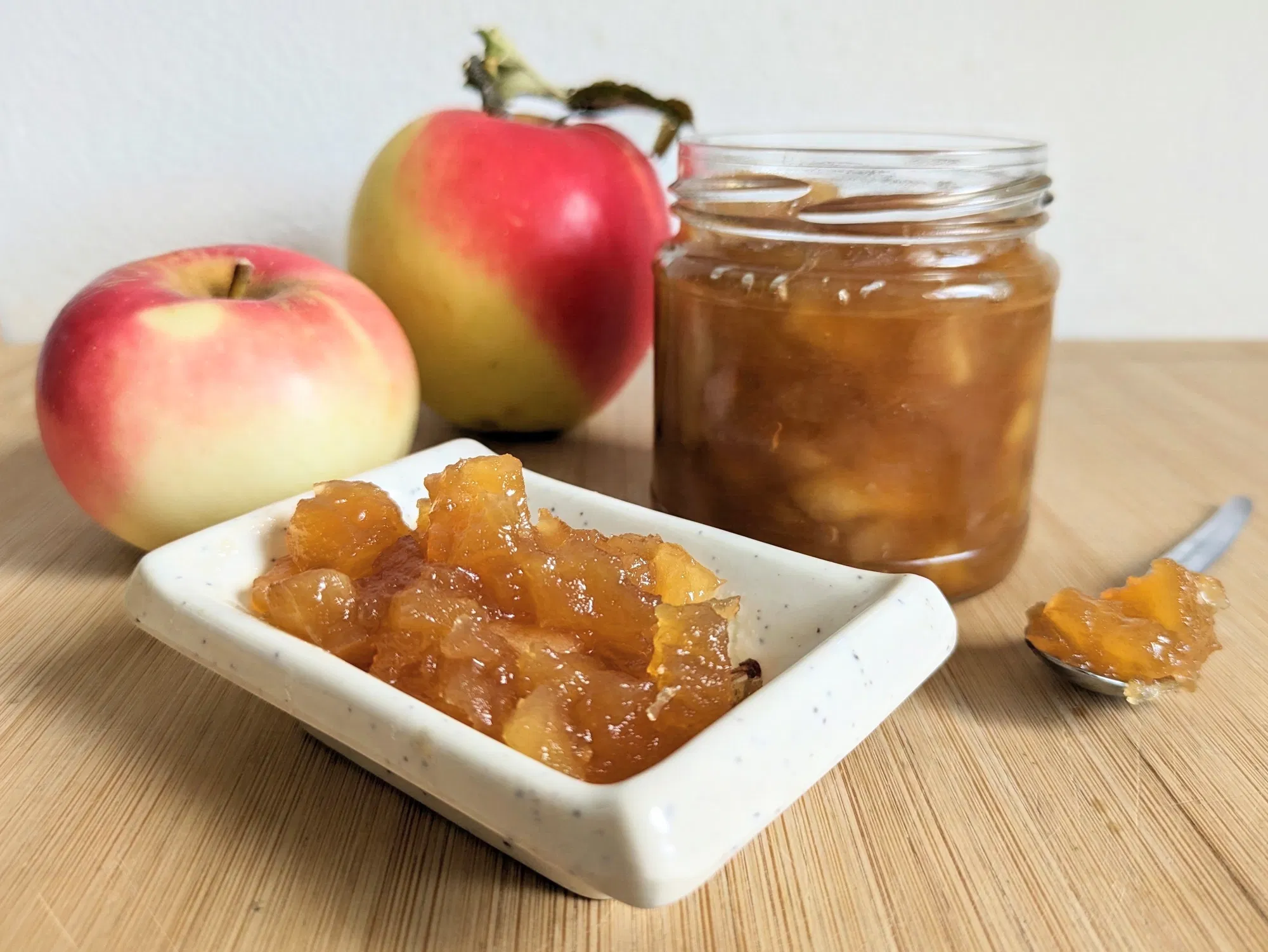
This toffee apple jam combines tender apple pieces with the rich flavour of caramelised sugar, balanced by lemon juice and finished with a little butter. It’s a useful way to turn spare apples into a chunky, golden preserve for toast, crumpets or spooning over porridge.
Growing up in Britain, toffee apples played a key role in Bonfire Night celebrations, and that combination of sweet caramel and sharp apple still takes me back to childhood. Making homemade toffee apple jam is my way of capturing that flavour in something I can spread on toast or stir into porridge or rice pudding, bringing a little of that November nostalgia to an ordinary breakfast.
Toffee Apple Jam Ingredients
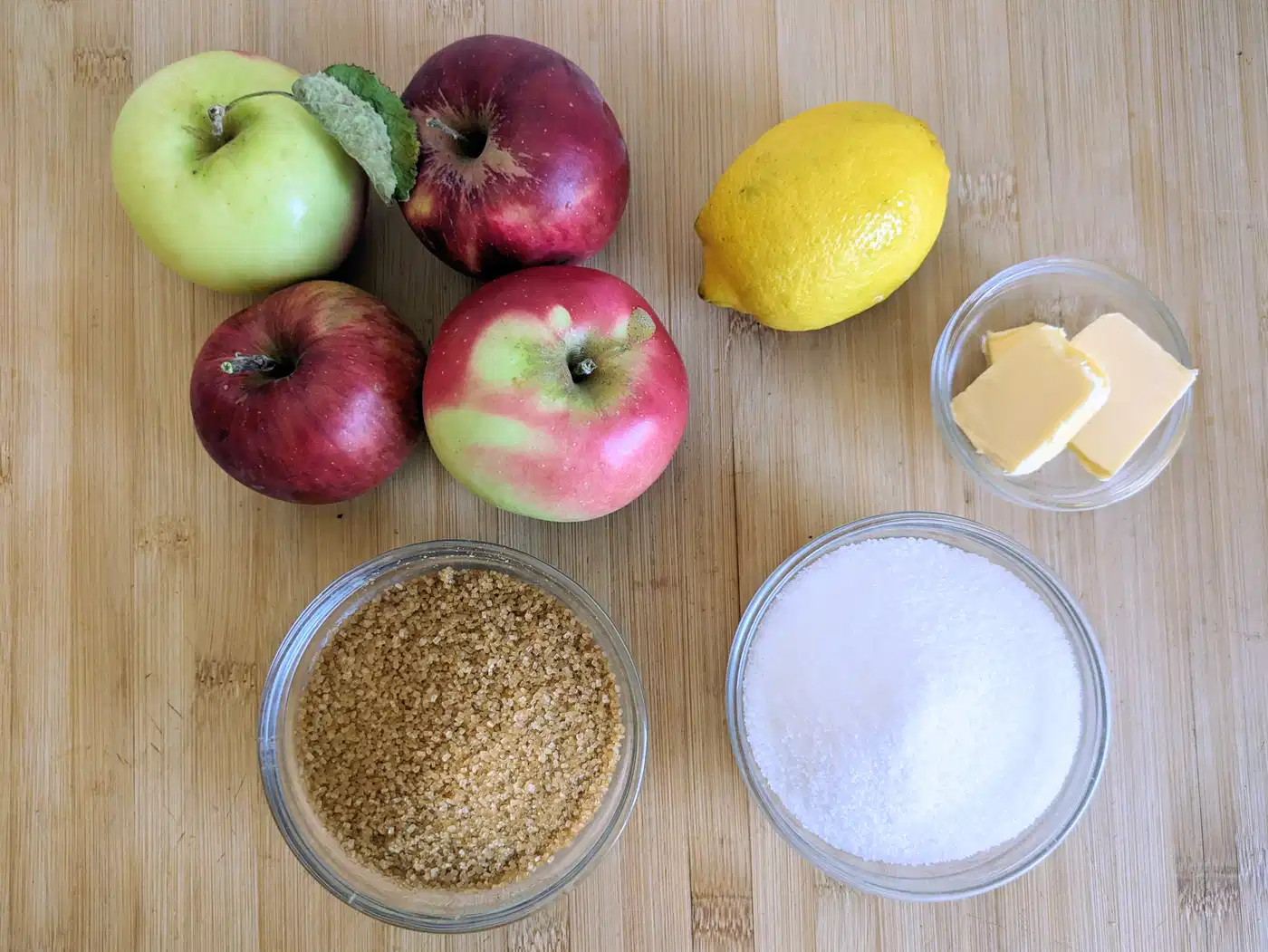
- Apples: Peeled, finely chopped apples give the jam its fruit flavour and chunky texture; choose firm apples that retain some shape during cooking.
- White granulated sugar: Caramelising the white sugar first creates the distinctive toffee flavour.
- Light brown sugar: Added after the apples, light brown sugar contributes sweetness and a mild molasses flavour.
- Lemon juice: Adds acidity to balance the caramel’s sweetness and helps the apples’ natural pectin form a set.
- Butter: Stirred in towards the end, butter adds richness and rounds out the caramel flavour.
- Cinnamon (optional): Adds a gentle spice that works well with apple and caramel, though I leave it out to keep the familiar toffee apple flavour.
How to Make Toffee Apple Jam
Prepare the apples
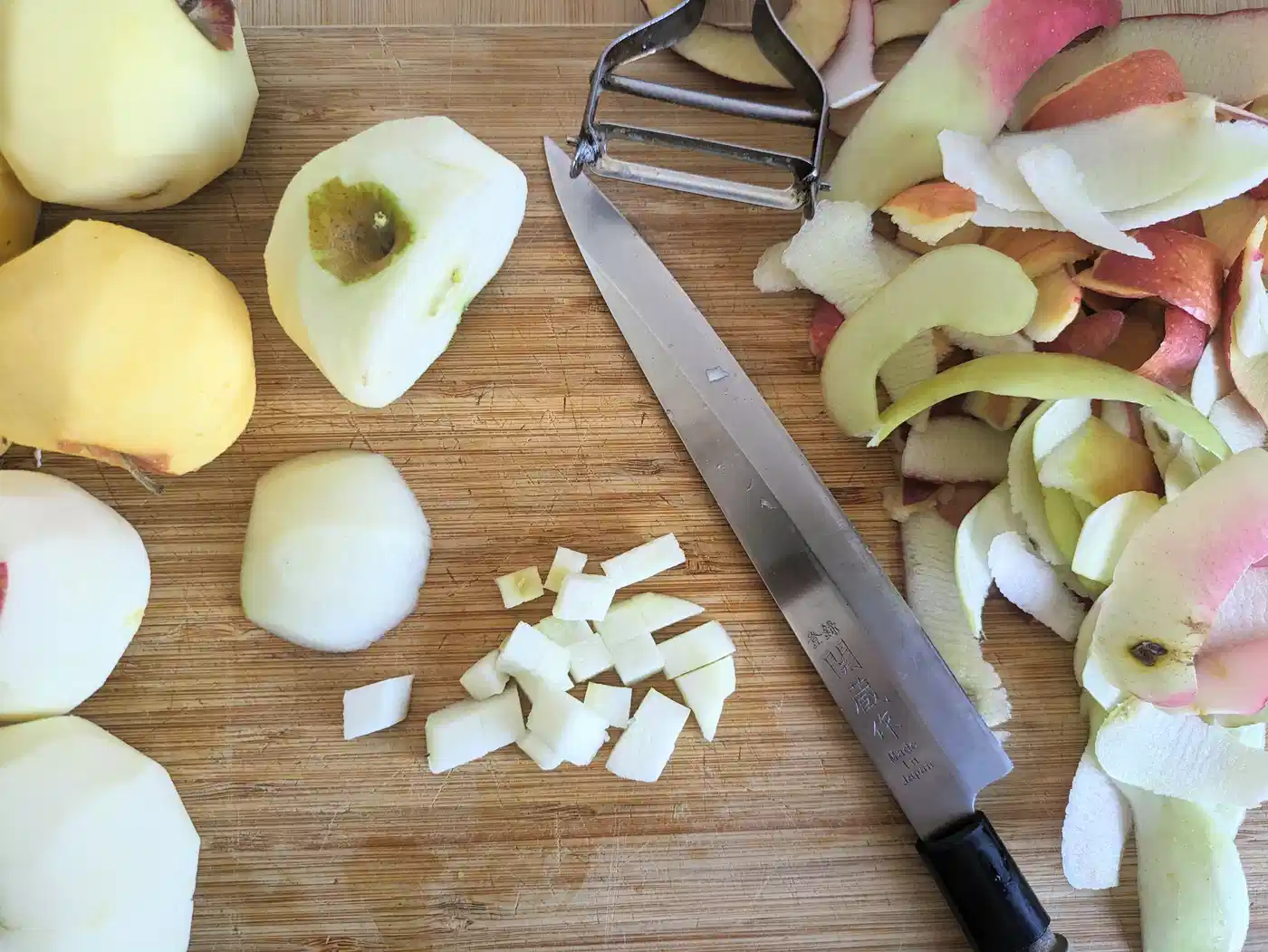
Peel and core the apples, then cut them into roughly 5mm pieces for a chunky finish. Don’t worry if you think this is too big, they will break down a little as they cook.
Quartering them first makes removing the cores easier. Toss with the measured lemon juice as you work to reduce browning.
Put two small plates in the freezer ready for testing the jam.
Soften the apples
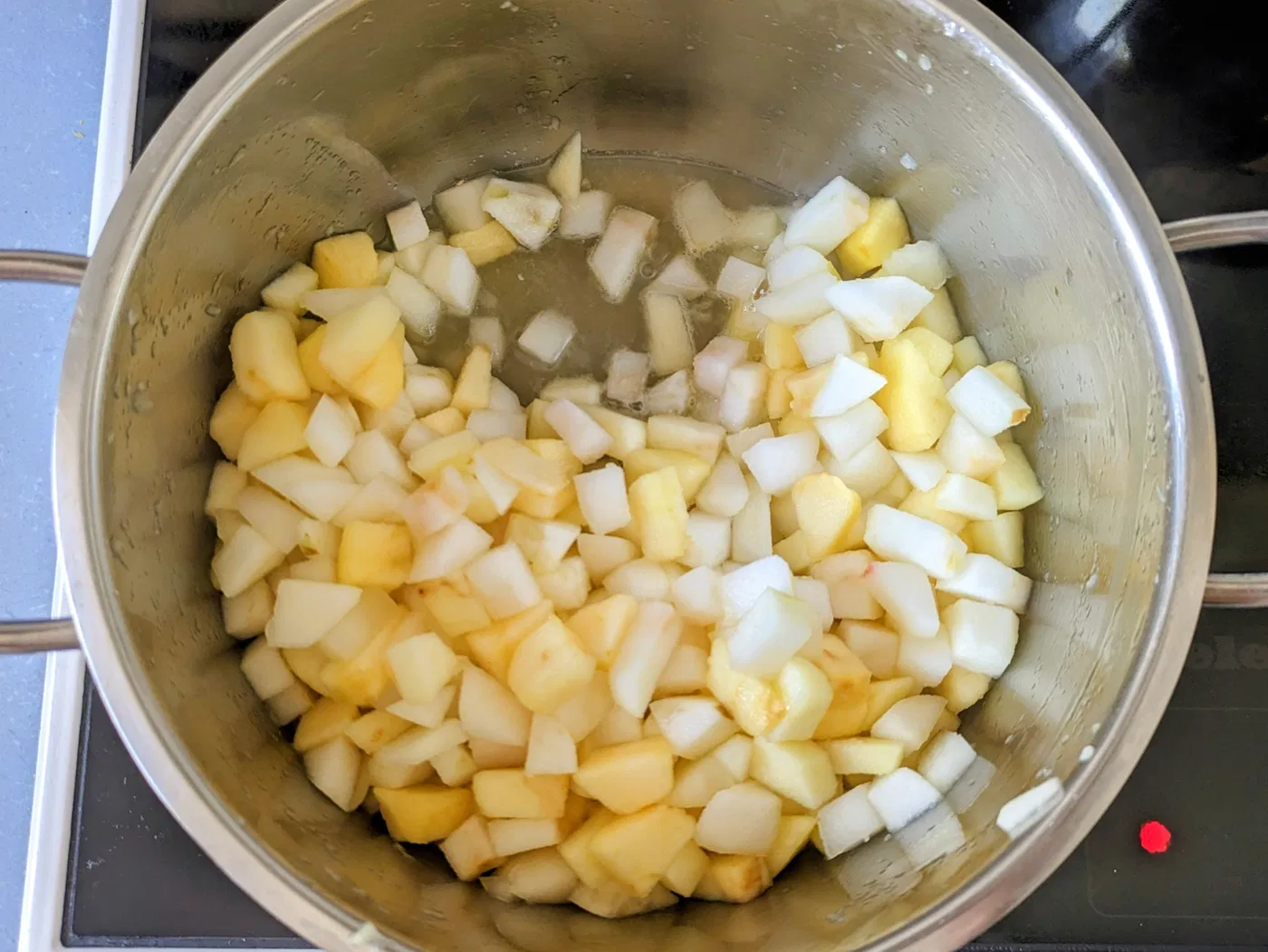
Place the chopped apples in a saucepan with the measured water and lemon juice. Bring to a gentle simmer and cook for a few minutes, stirring occasionally, until they begin to soften but still hold their shape.
Set aside while you make the caramel, keeping the cooking liquid to add with the apples.
Dissolve the white sugar
Combine the white granulated sugar only with the measured caramel water in a separate, deep, heavy-based saucepan. Keep the brown sugar aside until after you add the apples.
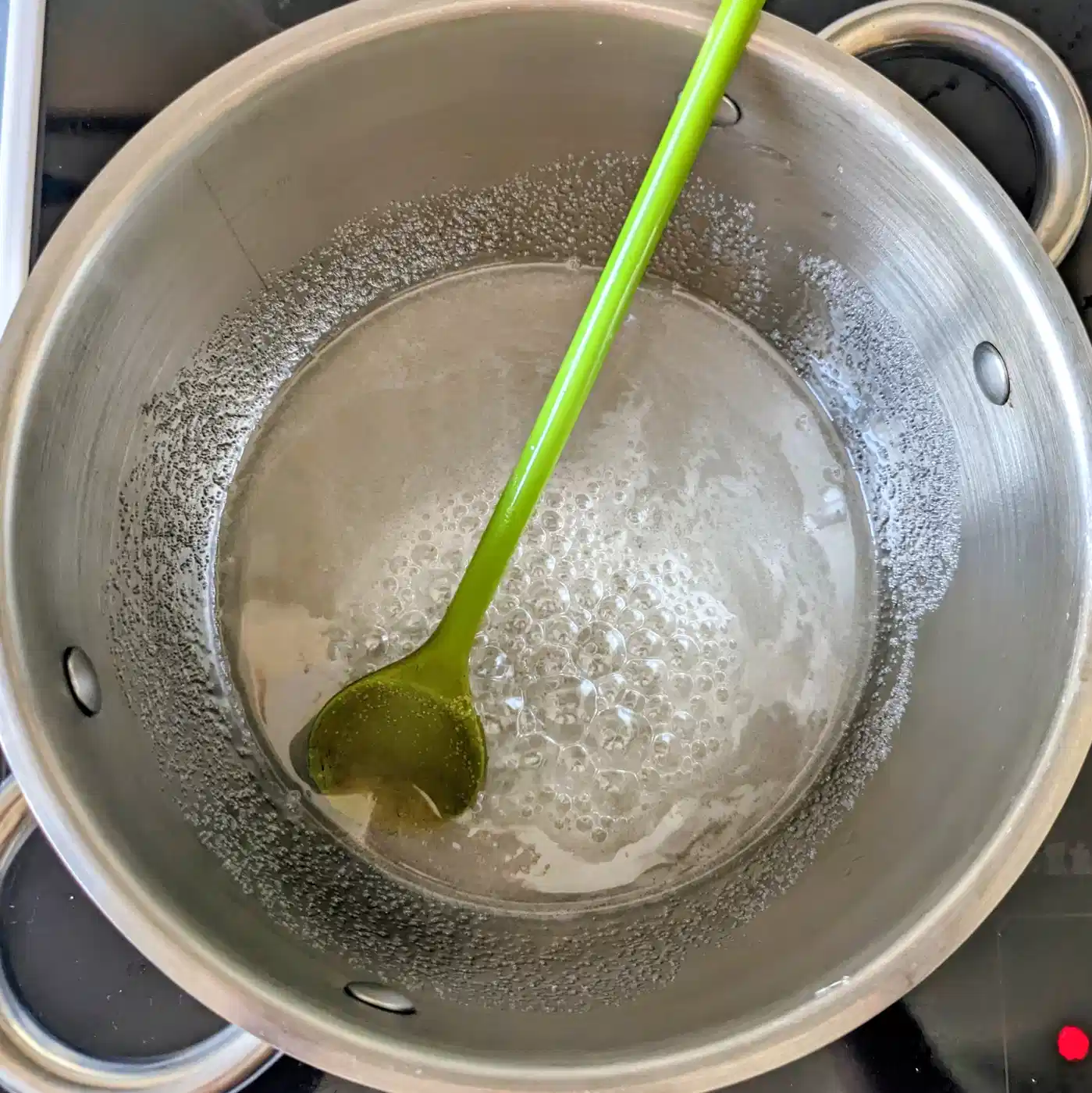
Choose a pan with plenty of space for the mixture to bubble up. Heat gently, stirring until the white sugar has completely dissolved.
Cook the caramel without stirring
Once the syrup starts boiling, stop stirring and remove the spoon. Do not stir the boiling caramel with a spoon or spatula, as this can encourage the sugar to crystallise.
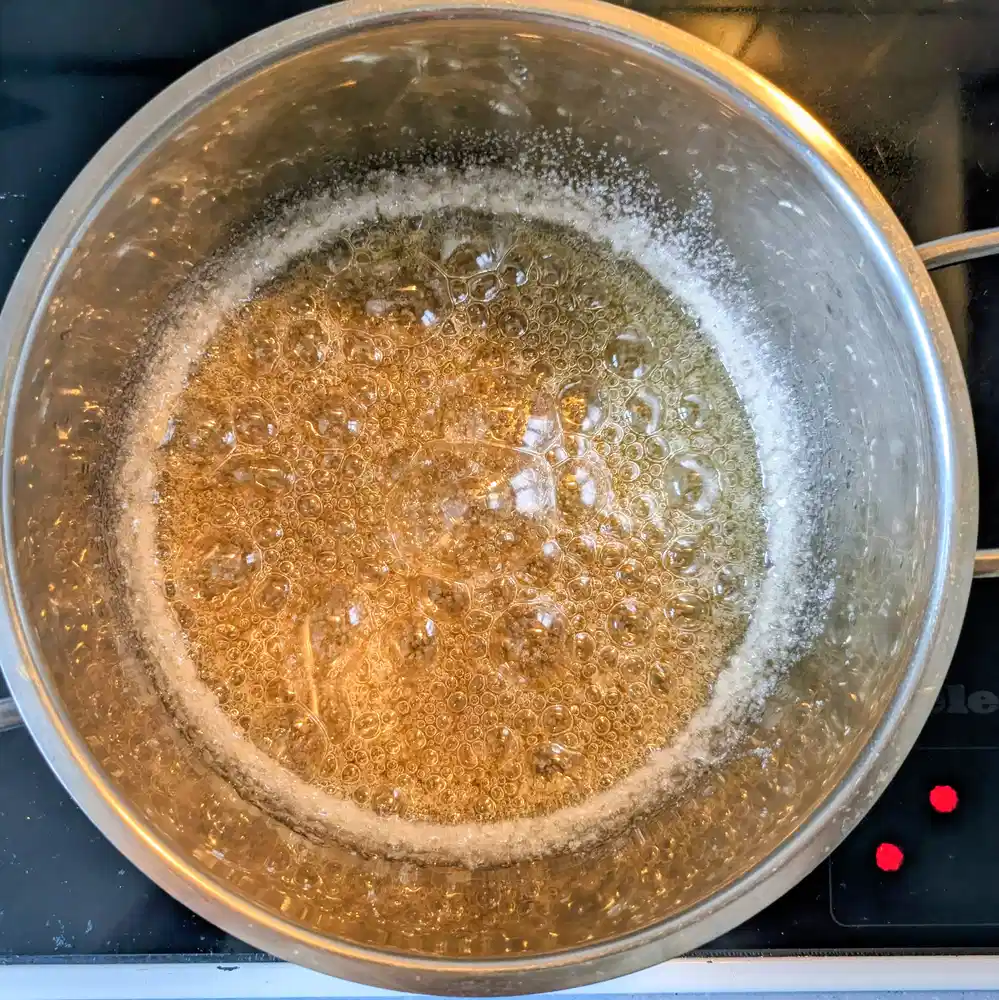
Cook uncovered over a medium heat until the syrup turns amber. If it colours unevenly, gently swirl the pan by its handle. Watch closely once the colour begins changing, then remove from the heat when it reaches a clear amber colour.
Add the softened apples
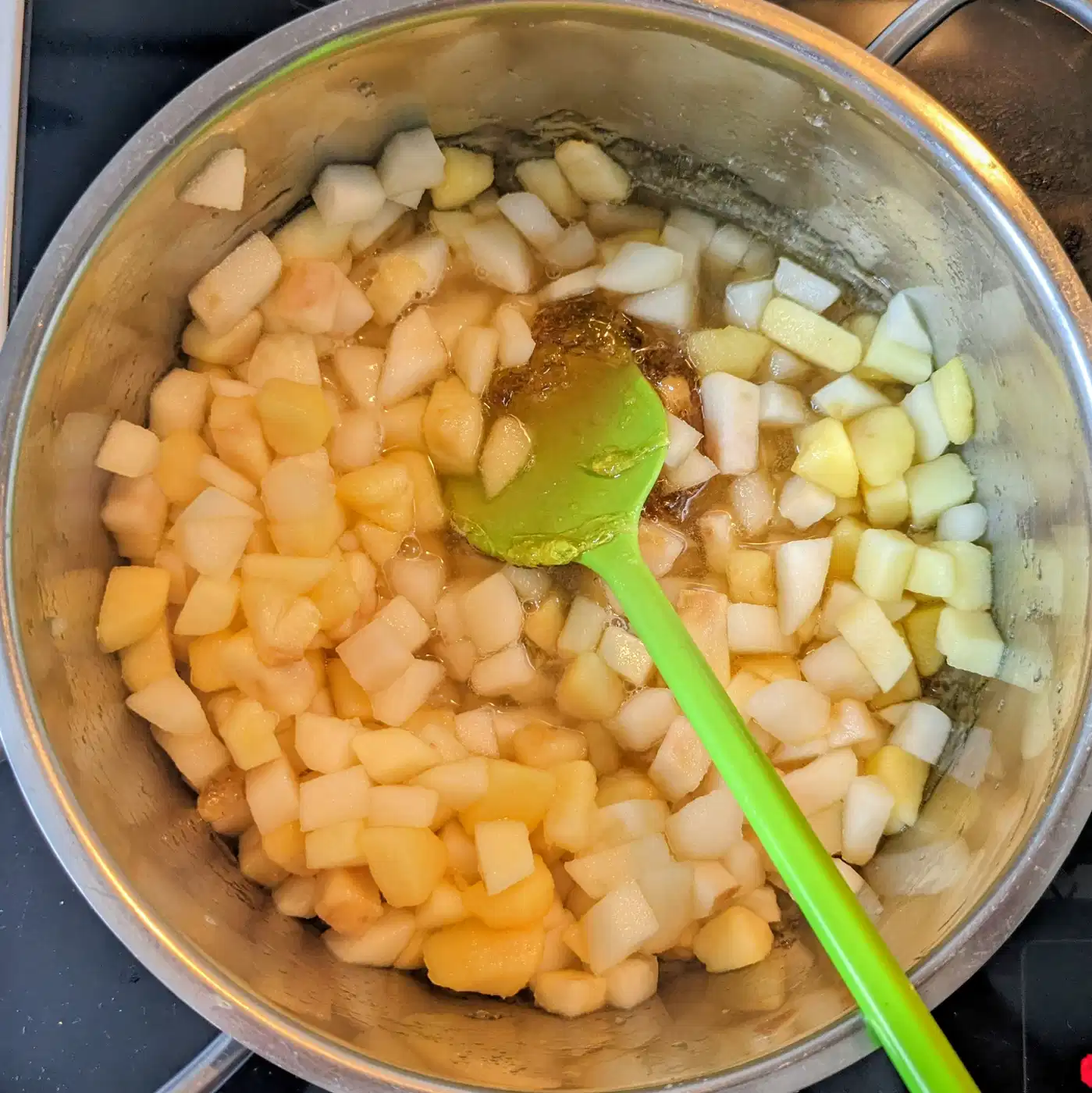
Carefully add the warm apples and their cooking liquid in several small additions. The caramel will bubble and release steam, so keep your hands away from the rising vapour.
Once the apples have been added, you can stir again. Return the pan to a low heat and stir gently until any hardened caramel dissolves.
Stir in the light brown sugar and the ground cinnamon, if using. Break up any sugar lumps and heat gently, stirring until the sugar has completely dissolved.
Cook until the jam thickens
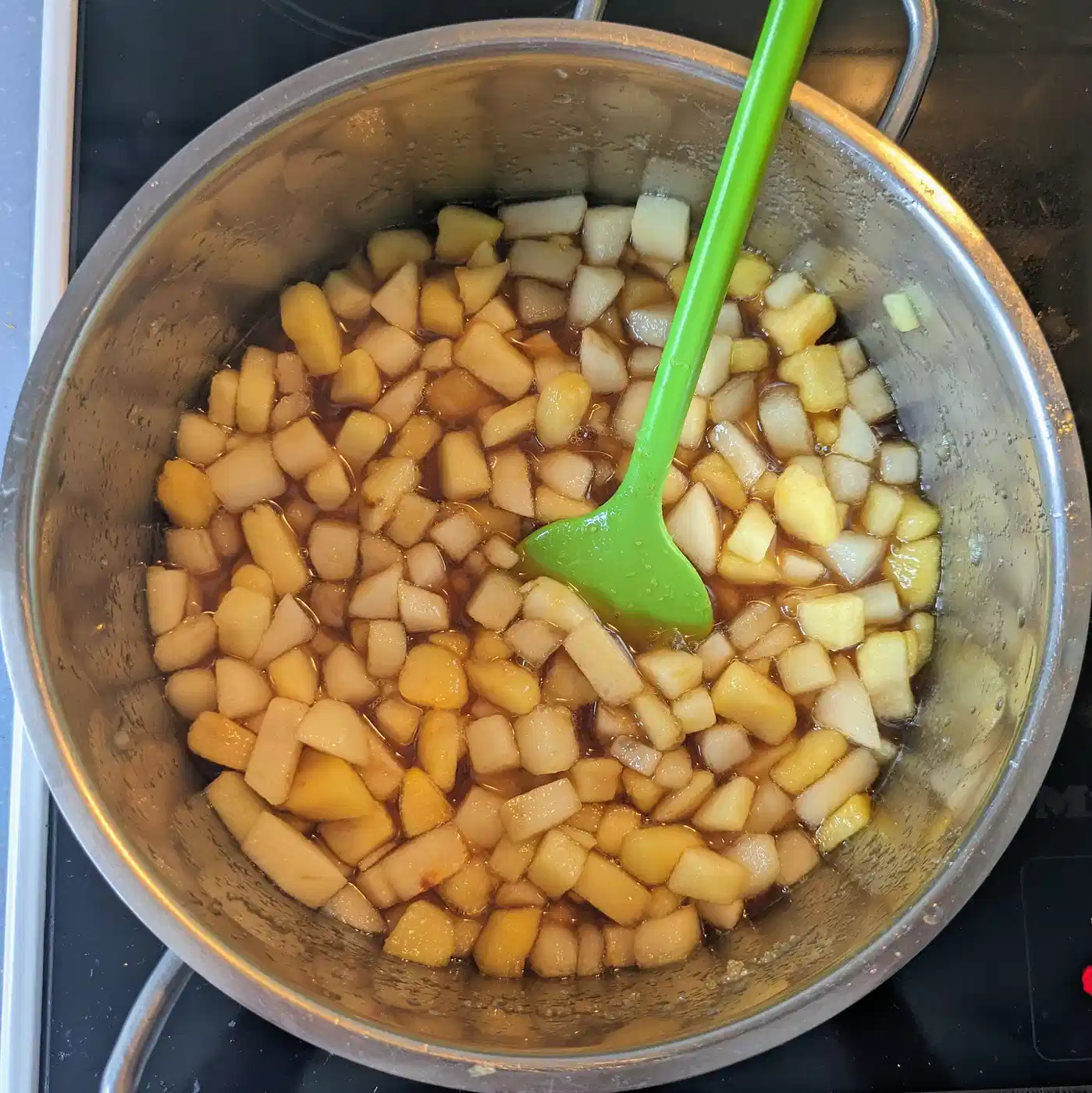
Increase the heat to maintain a steady bubble and cook uncovered, stirring regularly across the base of the pan. Begin checking after about 10 minutes; the time will depend on the batch size, apple variety and amount of liquid.
The apples should be tender, with some pieces still intact, and the syrup should become noticeably thicker. Stir more frequently as the mixture thickens to prevent it catching.
Check the set
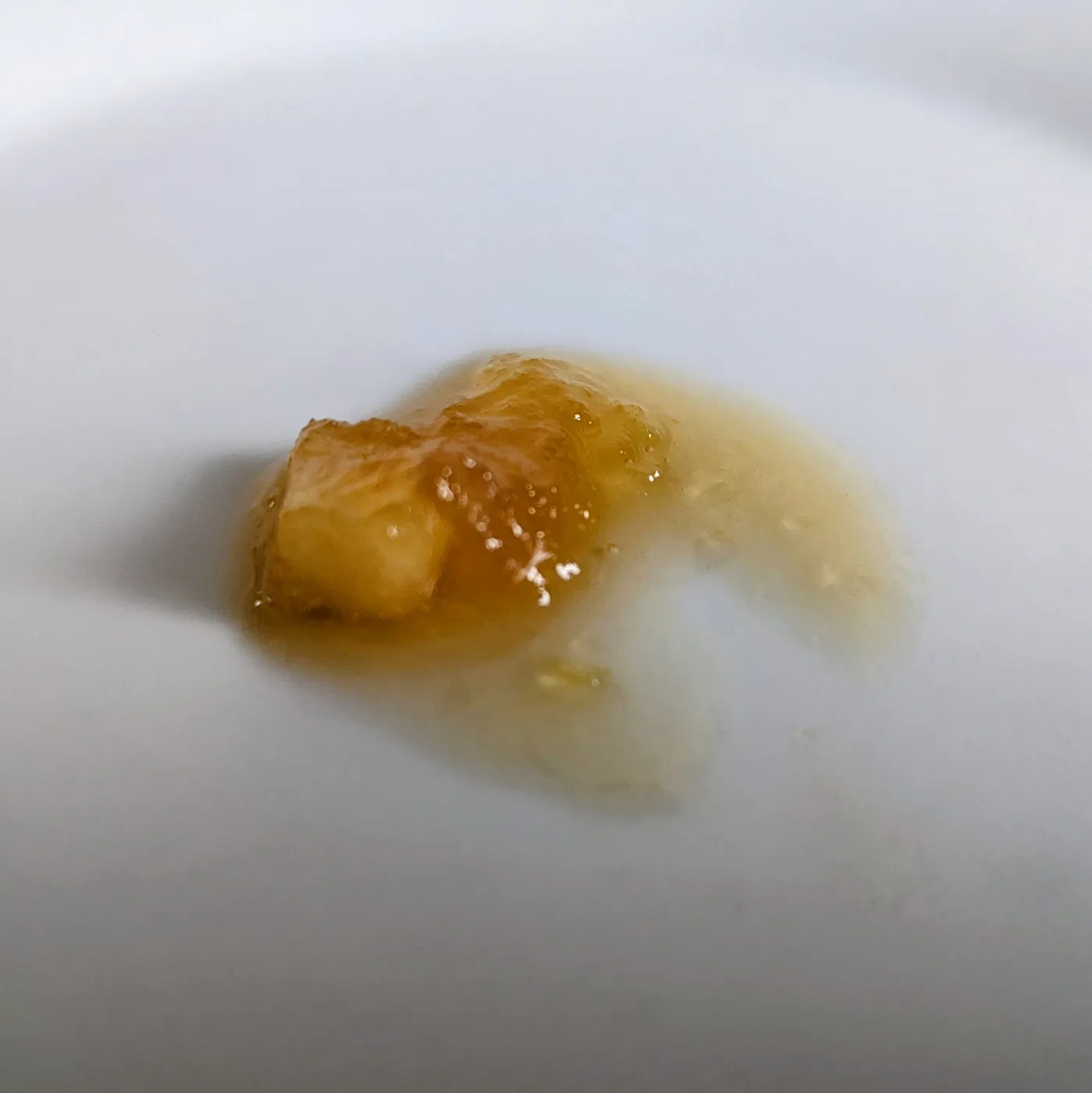
Remove the pan from the heat and spoon a little jam onto a cold plate. Leave for about a minute, then push the syrup with your finger. It should move slowly and wrinkle slightly, without watery liquid spreading around the apple pieces.
If it is too runny, cook for another 2–3 minutes and test again. If it is too thick, stir in a small splash of hot water, then cool another sample before checking.
Stir in the butter
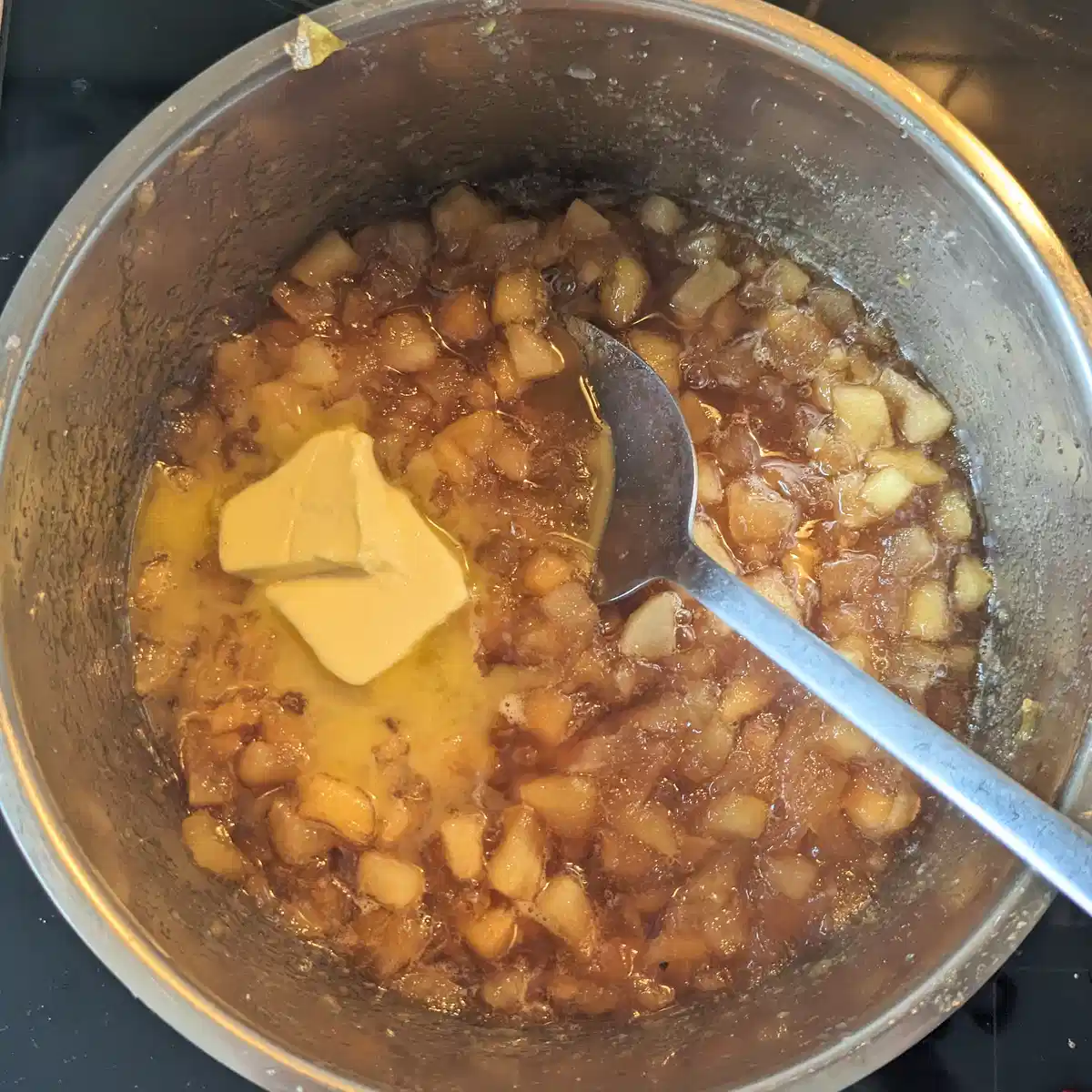
Once the jam has reached the right consistency, remove it from the heat and stir in the butter until melted.
Taste a cooled spoonful. For a sharper finish, stir in a little extra lemon juice. Let the jam stand for about 5 minutes, then stir again to distribute the apple pieces.
Fill the jars and store
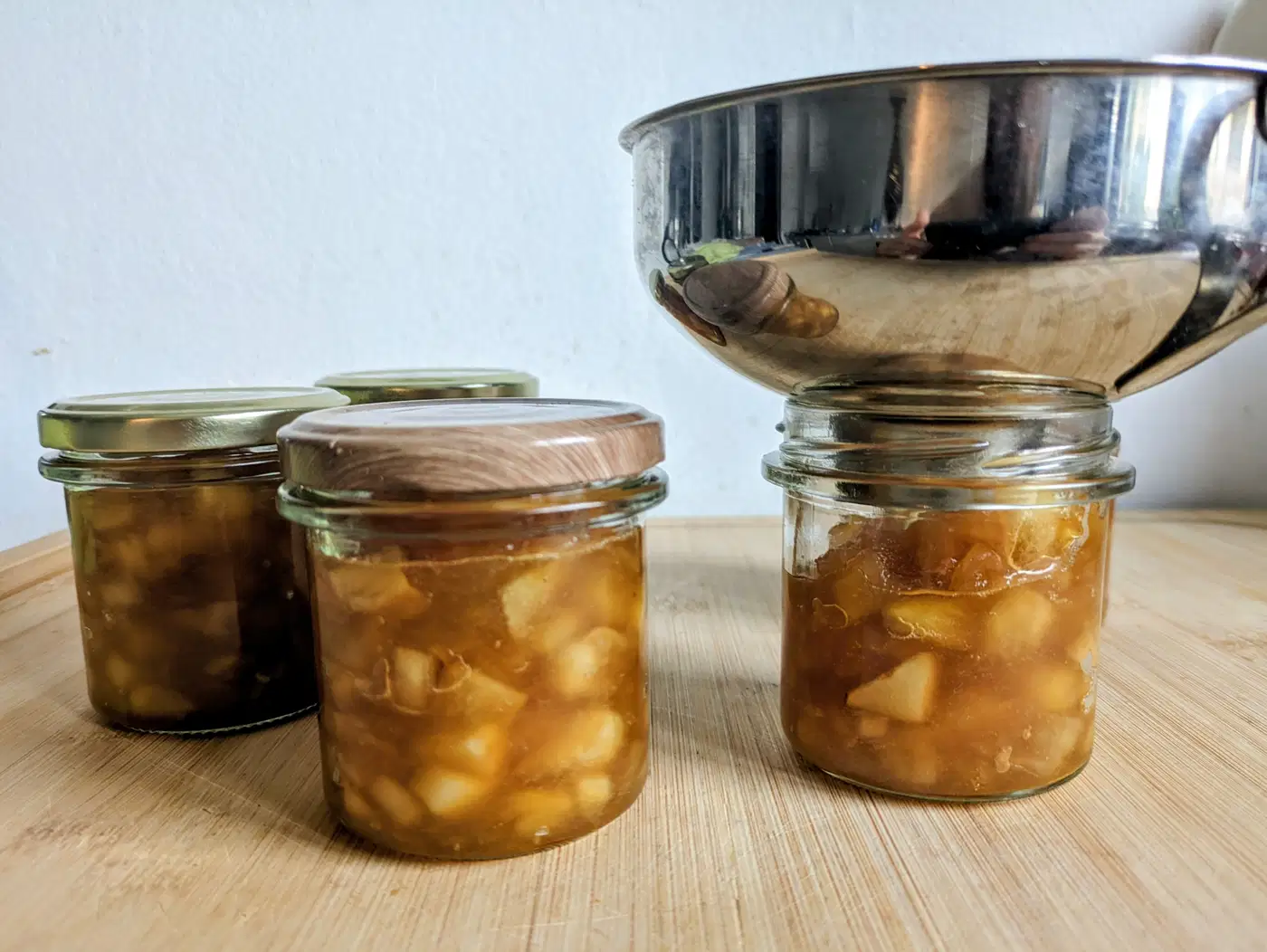
Spoon the jam into clean, warm, heatproof jars, wipe the rims and fit the lids. Cool and refrigerate promptly; the jam will thicken further as it chills.
For this butter-containing recipe, use a conservative fridge limit of two weeks.
Toffee Apple Jam
Ingredients
- 500 g apples weighed after peeling and coring, cut into approximately 5 mm pieces
- 150 g white granulated sugar
- 150 g light brown sugar
- 100 ml water divided: 60 ml for the apples and 40 ml for the caramel
- 30 ml lemon juice
- 30 g unsalted butter
- ¼ tsp salt
- ½ tsp vanilla extract optional
- ¼ tsp ground cinnamon optional
Instructions
- Put two small plates in the freezer. Place the chopped apples in a saucepan with 60 ml water and the lemon juice. Simmer gently for a few minutes, stirring occasionally, until beginning to soften but still holding their shape. Set aside with their cooking liquid.
- Combine the white granulated sugar and remaining 40 ml water in a separate, deep, heavy-based saucepan. Heat gently, stirring until the sugar dissolves.
- Once the syrup boils, remove the spoon. Do not stir with a spoon or spatula while the caramel is boiling. Cook uncovered over a medium heat until amber, gently swirling the pan if it colours unevenly. Remove from the heat.
- Carefully add the warm apples and their cooking liquid in small additions, allowing space for bubbling and steam. Return to a low heat and stir gently until any hardened caramel dissolves.
- Add the light brown sugar and optional cinnamon. Stir over a low heat until the sugar has dissolved.
- Increase the heat to maintain a steady bubble. Cook uncovered, stirring regularly and more frequently as the jam thickens. Begin testing after about 10 minutes; the apples should be tender and the surrounding syrup thickened.
- Remove from the heat and spoon a little jam onto a cold plate. Cool for one minute, then push with a finger: the syrup should move slowly and wrinkle slightly, without watery liquid spreading around it. If needed, cook for another 2–3 minutes and test again.
- Remove from the heat and stir in the butter, salt and vanilla. Rest for 5 minutes, stir to distribute the apple pieces, then spoon into clean, warm, heatproof jars. Fit the lids, cool and refrigerate promptly.
Notes
Variations and Substitutions
- Cinnamon: Add a little ground cinnamon with the brown sugar for a spiced version. I usually leave it out to keep the familiar toffee apple flavour.
- Ginger: Add a small amount of finely grated fresh ginger when softening the apples for a sharper spice note.
- Sharper apple flavour: Use tart apples, or replace some of the sweet apples with Granny Smith, while keeping the total prepared weight the same.
- No light brown sugar: Replace it with the same weight of white granulated sugar, adding it after the apples as usual. The jam will have less molasses flavour.
- Salted butter: Use the same weight of salted butter and omit the added salt initially, then taste a cooled spoonful before adjusting.
Toffee Apple Jam FAQs
Firm apples such as Braeburn or Granny Smith retain some texture as they cook. Cooking apples soften and break down more readily, so use them if you prefer a smoother jam.
The white sugar is caramelised first to create the toffee flavour, while the light brown sugar adds a mild molasses flavour after the apples go in. Using white sugar for the caramel also makes its colour easier to judge.
Adding the apples and their liquid lowers the caramel’s temperature, which can make it harden into lumps or solid strands. Return the pan to a low heat and stir gently: the caramel will dissolve into the apple juices as the mixture warms.
Test a cooled spoonful before adjusting it, as the jam thickens as it cools. If it is too runny, cook for another 2–3 minutes and repeat the plate test; if it is too thick, gently heat it with a small splash of water to loosen it.
Spread it on toast or crumpets, or spoon it into porridge or plain yoghurt. It also works alongside mature cheddar, or gently warmed over pancakes or vanilla ice cream.
You could also use it as a filling for a twist on a Bakewell tart.